Recent Articles

Scaling of pseudospectra in exponentially sensitive lattices

Ioannis Kiorpelidis and Konstantinos G. Makris

Phys. Rev. Research 7, L032043 (2025) - Published 22 August, 2025

Lattices with asymmetric couplings have ultrastrong non-normality and thus exhibit exponential sensitivity and directed topological amplification. An analysis shows that the scaling laws of the associated pseudospectra determine the underlying physics of these effects and provide a unified framework for spectral and dynamical exponential sensitivity.

Synthetic and cosmological axion hybridization: Entangled photons, Hanbury Brown–Twiss, and quantum beats

Daniel Boyanovsky

Phys. Rev. Research 7, 033164 (2025) - Published 18 August, 2025

Synthetic axions, excitations in topological materials, and the cosmological axion, a compelling dark matter candidate, both couple to two-photon states with a Chern-Simons interaction. The common two-photon intermediate state hybridizes the two excitations and displays quantum beats from interference accessible via intensity interferometry, thereby harnessing synthetic axions to probe the cosmological candidate.

Continuous generation of confined bubbles: Viscous effect on the gravito-capillary pinch off

Haruka Hitomi and Ko Okumura

Phys. Rev. Research 7, L032019 (2025) - Published 18 July, 2025

Continuous generation of bubbles is achieved in a confined space by a simple experimental setup, leading to substantial physics content. The convincing agreement between experiment and theory elucidates the dominant viscous force competing with buoyancy, while yet another viscous force plays a vital role for replacing in confined geometry the conventional pinch-off mechanism of Tate, proposed in 1864, in which buoyancy competes with capillarity.

Disentangling real space fluctuations: The diagnostics of metal-insulator transitions beyond single-particle spectral functions

Michael Meixner, Marcel Krämer, Nils Wentzell, Pietro M. Bonetti, Sabine Andergassen, Alessandro Toschi, and Thomas Schäfer

Phys. Rev. Research 7, 033073 (2025) - Published 18 July, 2025

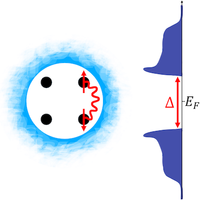
The mutual Coulomb interaction between electrons may cause a gap in the spectral function via different effective channels, such as spin, charge, or pairing fluctuations. This work clarifies that an effective dynamic nearest-neighbor spin boson causes the Mott metal-insulator transition in the two-dimensional Hubbard model. This cellular dynamical mean-field theory study analyzes the impact of the fermion-boson coupling vertex on the fermionic spectrum for different physical channels, an approach dubbed real-space fluctuation diagnostics.

Phonon hydrodynamic regimes in sapphire

Takuya Kawabata, Kosuke Shimura, Yuto Ishii, Minatsu Koike, Kentaro Yoshida, Shu Yonehara, Kohei Yokoi, Alaska Subedi, Kamran Behnia, and Yo Machida

Phys. Rev. Research 7, 033017 (2025) - Published 7 July, 2025

Experiments scanning a temperature window spread over 4 orders of magnitude find that thermal conductivity in sapphire peaks to 35 000 W/Km. This amplitude occurs at a temperature that marks the boundary between Ziman and Poiseuille hydrodynamic regimes. Such a large magnitude in the presence of natural isotopic impurity distinguishes sapphire from other simpler solids in which dimensionless thermal conductivity displays a universal scaling with isotopic impurity.

Quasi-one-dimensional supersolids in Luther-Emery liquids

Ying-Ming Xie and Naoto Nagaosa

Phys. Rev. Research 7, 023302 (2025) - Published 24 June, 2025

A variational approach is used to show that supersolid phases with coexisting charge-density wave and superconducting order are favored in finite Luttinger-Emery chains, and their collective dynamics are analyzed.

Prospecting for pluripotency in metamaterial design

Ryan van Mastrigt, Marjolein Dijkstra, Martin van Hecke, and Corentin Coulais

Phys. Rev. Research 7, 023299 (2025) - Published 24 June, 2025

A two-step design protocol for combinatorial mechanical metamaterials is proposed and applied to a metamaterial capable of multiple spatially extended zero-energy deformation modes. This protocol allows for the design of targeted modes with complex spatial structures.

Topological pathways to two-dimensional quantum turbulence

R. Panico, G. Ciliberto, G. I. Martone, T. Congy, D. Ballarini, A. S. Lanotte, and N. Pavloff

Phys. Rev. Research 7, L022063 (2025) - Published 11 June, 2025

A joint theoretical and experimental investigation of a two-dimensional quantum fluid of exciton polaritons highlights the crucial role of topological conservation laws in both the growth and decay of turbulence.

Fastest first-passage time statistics for time-dependent particle injection

Denis S. Grebenkov, Ralf Metzler, and Gleb Oshanin

Phys. Rev. Research 7, 023239 (2025) - Published 9 June, 2025

The competitive search for a target by diffusive searchers (for example, biomolecular messengers) in a finite domain (for example, a biological cell) is considered when these searchers are released according to a prescribed distribution over a window of time. For this scenario the full statistic of the fastest searcher is determined, finding a slow convergence to the limit of large numbers of searchers.

How to falsify string theory at a collider

Matthew Baumgart, Panagiotis Christeas, Jonathan J. Heckman, and Rebecca J. Hicks

Phys. Rev. Research 7, 023184 (2025) - Published 27 May, 2025

This article study phenomenologically well-motivated scenarios which would rule out string theory landscape. The main class of “string-killer” models explored are those in which the Standard Model is supplemented by a single new field in a high-dimensional representation of weak isospin.

Dynamic realization of Majorana zero modes in a particle-conserving ladder

Anaïs Defossez, Laurens Vanderstraeten, Lucila Peralta Gavensky, and Nathan Goldman

Phys. Rev. Research 7, 023183 (2025) - Published 27 May, 2025

A proposed scheme aims to realize pair-hopping processes on a ladder geometry by activating single-particle hopping processes between two decoupled fermionic chains. This method allows for a dynamic realization of Majorana zero modes within a particle-conserving framework.

Topology and manipulation of scattering singularities in complex non-Hermitian systems: Two-channel case

Jared Erb, Nadav Shaibe, Robert Calvo, Daniel P. Lathrop, Thomas M. Antonsen, Jr., Tsampikos Kottos, and Steven M. Anlage

Phys. Rev. Research 7, 023090 (2025) - Published 25 April, 2025

By harnessing tunable parameters, singularities of the scattering matrix can be actively manipulated, resulting in a deeper understanding of their topology, dynamics, and interactions in generic complex resonant systems. Through their deliberate manipulation, independent singularities can be brought into coincidence in parameter space, enabling unique applications in these systems, despite having no predesigned structure for such applications.

Inferring interaction potentials from stochastic particle trajectories

Ella M. King, Megan C. Engel, Caroline Martin, Alp M. Sunol, Qian-Ze Zhu, Sam S. Schoenholz, Vinothan N. Manoharan, and Michael P. Brenner

Phys. Rev. Research 7, 023075 (2025) - Published 22 April, 2025

A novel technique is introduced that extracts interparticle forces directly from trajectories of microscopic particles undergoing stochastic motion. The method is validated on both simulated and experimental data, and it is explicitly demonstrated that the method works on systems far from equilibrium.

Nonlinear transport of Wigner solid phase surrounding the two-flux composite fermion liquid

Yu-jiang Dong, Xinghao Wang, Jianmin Zheng, Weiliang Qiao, Rui-Rui Du, Loren N. Pfeiffer, Kenneth W. West, and Kirk W. Baldwin

Phys. Rev. Research 7, L022011 (2025) - Published 9 April, 2025

Nonlinear transport studies are performed to investigate the low-temperature behavior of a CF-2 Wigner solid surrounded by fractional quantum Hall liquid. The electric-field-temperature duality phenomenon of a Wigner solid was observed, which is interpreted within the Berezinskii-Kosterlitz-Thouless phase transition model.

Towards an accurate electronic structure of single photon emitters in hexagonal boron nitride

Yilin Chen, Haoxiang Chen, Nikolay Bogdanov, Kuang Yu, Ali Alavi, Enge Wang, and Ji Chen

Phys. Rev. Research 7, L012079 (2025) - Published 24 March, 2025

Advanced many-body calculations demonstrate the decisive role of electron correlation effects in single-photon emitters in hexagonal boron nitride, clarifying previously disputed defect properties and identifying new luminescent transitions.

Hallmarks of deception in asset-exchange models

Kristian Blom, Dmitrii E. Makarov, and Aljaž Godec

Phys. Rev. Research 7, 013279 (2025) - Published 17 March, 2025

The Bennati-Dragulescu-Yakovenko asset-exchange model is studied in the presence of probabilistic cheaters that can falsely claim they are bankrupt. It is shown how the presence of such (hidden) cheaters can be inferred from the variance of the overall wealth distribution and that there exists a critical cheating probability at which the money owned by a small pool of cheaters undergoes a second-order discontinuity.

Curved-edge vertex models and increased tissue fluidity

Michael F. Staddon and Carl D. Modes

Phys. Rev. Research 7, 013218 (2025) - Published 27 February, 2025

In the vertex model, an epithelial tissue is described as a tiling of polygons, each with elastic properties, and a solid-to-fluid phase transition can be exhibited. While most models enforce straight edges, it is shown that allowing curved edges, consistent with the Young-Laplace law, can significantly increase the fluidity of the tissue, allowing cells to rearrange more easily.

Tricriticality and finite-size scaling in the triangular Blume-Capel ferromagnet

Dimitrios Mataragkas, Alexandros Vasilopoulos, Nikolaos G. Fytas, and Dong-Hee Kim

Phys. Rev. Research 7, 013214 (2025) - Published 27 February, 2025

Tricriticality occurs when first- and second-order phase transitions meet on the phase boundary, making it difficult to study using a single numerical approach. A proposed combined strategy offers insights that lay the groundwork for a better understanding of tricriticality in condensed-matter physics.

Fiber optics in curved space-times

Thomas B. Mieling and Mario Hudelist

Phys. Rev. Research 7, 013162 (2025) - Published 13 February, 2025

A rigorous description of fiber optics in general stationary space-times is developed that accounts both for arbitrary fiber alignments and for gravity beyond the linearized regime. In addition to extending previous theoretical models of the Sagnac effect and the gravitational redshift, this work also predicts higher-order effects in the dynamics of the electromagnetic phase and polarization.

Interpreting convolutional neural networks' low-dimensional approximation to quantum spin systems

Yilong Ju, Shah Saad Alam, Jonathan Minoff, Fabio Anselmi, Han Pu, and Ankit Patel

Phys. Rev. Research 7, 013094 (2025) - Published 23 January, 2025

A convolutional neural network (CNN) is used to learn the ground state of a quantum spin Hamiltonian. Methodologies from information theory, group theory, and machine learning are employed to elucidate how a CNN captures the relevant physics of the system.

Sign In to Your Journals Account

Filter

Recent Issues

Vol. 8, Iss. 4
October - December 2026
Vol. 8, Iss. 3
July - September 2026
Vol. 8, Iss. 2
April - June 2026
Vol. 8, Iss. 1
January - March 2026
Category
Article Type

Filter

Article Lookup

Enter a citation