Recent Articles

Stochastic ion emission perturbation mechanisms in atom probe tomography: Linking simulations to experiment

Aslam Shaikh, Tero Mäkinen, François Vurpillot, Mikko Alava, and Ivan Lomakin

Phys. Rev. Materials 10, 033802 (2026) - Published 3 March, 2026

Subdegree twisting in bilayer SnTe films enables a large polarization switching

Tengang Liu, Hao Guo, Xianjiang Qin, Boyu Zuo, Haidong Fan, Xiandong Zhou, and Xiaobao Tian

Phys. Rev. Materials 10, 034001 (2026) - Published 3 March, 2026

Compensated ferrimagnetic Heusler alloys: A search for the forgotten Neel's L-type ferrimagnet

Gerhard H. Fecher, Shogo Yamashita, Esita Pandey, Atsufumi Hirohata, and Claudia Felser

Phys. Rev. Materials 10, 034403 (2026) - Published 3 March, 2026

In the middle of the last century, Nèel predicted the existence of a special type of ferrimagnet with vanishing magnetization: the L-type ferrimagnet. This fully compensated ferrimagnet differs from antiferromagnets in that its magnetic sublattices have different spin densities. Ab initio calculations reveal that certain Heusler alloys exhibit Nèel’s compensated ferrimagnetism in addition to half-metallic behavior. This means they possess a fully spin-polarized electronic structure, favorable for spintronics. Spin dynamics calculations demonstrate how to stabilize the vanishing magnetization at higher temperatures by altering the stoichiometry of the alloys.

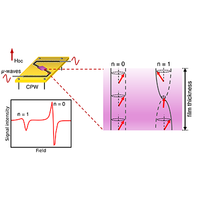
Ultrathin bismuth-yttrium iron garnet films with tunable magnetic anisotropy

Hanchen Wang, William Legrand, Davit Petrosyan, Min-Gu Kang, Emir Karadža, Hiroki Matsumoto, Richard Schlitz, Michaela Lammel, Myriam H. Aguirre, and Pietro Gambardella

Phys. Rev. Materials 10, 034404 (2026) - Published 3 March, 2026

Structure and magnetism of MnGe thin films grown with a nonmagnetic CrSi template

B. D. MacNeil, J. S. R. McCoombs, D. Kalliecharan, J. Myra, M. Pula, J. F. Britten, G. B. G. Stenning, K. Gupta, G. M. Luke, and T. L. Monchesky

Phys. Rev. Materials 10, 034405 (2026) - Published 3 March, 2026

Oxide-ion transport at low and high electric fields in brownmillerite Sr2Fe2O5 and perovskite SrFeO2.5: A molecular dynamics study

Sonja Ambaum, Stine Spinger, and Roger A. De Souza

Phys. Rev. Materials 10, 035001 (2026) - Published 3 March, 2026

Adsorbate effects on ductile-brittle transition in crystals

Anirudh Udupa, Koushik Viswanathan, Debapriya Pinaki Mohanty, Tatsuya Sugihara, Ronald Latanision, and Srinivasan Chandrasekar

Phys. Rev. Materials 10, 033601 (2026) - Published 2 March, 2026

Density functional theory-informed design of radiation-resistant dilute ternary Cu alloys

Vaibhav Vasudevan, Thomas Schuler, Pascal Bellon, and Robert Averback

Phys. Rev. Materials 10, 033602 (2026) - Published 2 March, 2026

Structural evolution of the Fe-Si binary system under extreme pressure

Bingxin Wu, Zepeng Wu, Peng Chen, Nan Huang, Tie-Yu Lü, Xinrui Cao, Yang Sun, Zi-Zhong Zhu, and Shunqing Wu

Phys. Rev. Materials 10, 033603 (2026) - Published 2 March, 2026

Identification of ferroelectric HfZrO2 from the distinct signature of O 1s spectra in polar and non-polar sublattices

Marius Adrian Husanu, Lucian Dragos Filip, Cristina Florentina Chirila, and Dana Georgeta Popescu

Phys. Rev. Materials 10, 034401 (2026) - Published 2 March, 2026

Temperature and magnetic field dependent grain boundary structures in skyrmion lattices via a quasiparticle-based mechanism

Kohta Kasai, Chang Liu, Akihiro Uematsu, Tatsuki Kawakane, Tao Xu, Yu Wang, Susumu Minami, and Takahiro Shimada

Phys. Rev. Materials 10, 034402 (2026) - Published 2 March, 2026

Ring structure analysis in calcium aluminophosphate glasses

Amirhossein F. Firooz, Christophe A. N. Biscio, Anders K. R. Christensen, Søren S. Sørensen, N. M. Anoop Krishnan, and Morten M. Smedskjaer

Phys. Rev. Materials 10, 035601 (2026) - Published 2 March, 2026

Interpretability of linear regression models of glassy dynamics

Anand Sharma, Chen Liu, Misaki Ozawa, and Daniele Coslovich

Phys. Rev. Materials 10, 035602 (2026) - Published 2 March, 2026

Skyrmionium metamatter: A topologically heterogeneous magnetic crystal with emergent hybrid dynamics

Andrey O. Leonov and Kaito Nakamura

Phys. Rev. Materials 10, 036001 (2026) - Published 2 March, 2026

This work introduces a paradigm of magnetic meta-matter in which topological chiral solitons—such as skyrmions and skyrmioniums—serve as distinct “atomic” species. In this framework, matter is defined not by chemical elements but by emergent, topologically protected building blocks. By arranging these solitonic units into ordered compound lattices, the resulting meta-matter can be engineered to exhibit well-defined stoichiometries, symmetry classes, and polymorphs, directly mirroring the principles of conventional materials design. Structural transformations between polymorphs enable reconfigurability at the quasiparticle level, establishing solitonic crystals as a fundamentally new form of designed matter with programmable collective behavior and broad potential for next-generation magnonic and spintronic technologies.

Direct evidence of a near-ideal Jeff=1/2 ground state in triangular-lattice Na2BaCo(PO4)2

M. M. Ferreira-Carvalho, S. H. Chen, Y. C. Ku, Anagha Jose, Ryan Morrow, C. Y. Kuo, C. F. Chang, Z. Hu, M. W. Haverkort, and L. H. Tjeng

Phys. Rev. Materials 10, 025004 (2026) - Published 26 February, 2026

Deep learning potential for accurate shock response simulations in tin

Yixin Chen, Xiaoyang Wang, Wanghui Li, Mohan Chen, and Han Wang

Phys. Rev. Materials 10, 023605 (2026) - Published 25 February, 2026

The shock loading responses of Sn have attracted significant interest. Although atomistic simulations have been useful for uncovering nano-scale mechanisms behind experimental observations, exiting potentials of Sn lack sufficient accuracy especially for predicting its complex high-pressure phase transitions. To overcome this challenge, the authors construct DP-SCAN-S, an machine learning potential trained on comprehensive DFT data spanning an extensive thermodynamic range from 0–100 GPa pressure and 0–5000 K temperature. It accurately reproduces DFT-derived basic properties, experimental melting curves, solid-solid phase boundaries, and shock Hugoniot results. This demonstrates the model’s potential to bridge ab initio precision with large-scale dynamic simulations.

Thermal evolution of exchange stiffness and Gilbert damping in magnetic Weyl semimetal Co2MnGa thin films

Ayomipo Israel Ojo, Vimukthi Deshan Ganepola Arachchige, Derick DeTellem, Anastasios Markou, Claudia Felser, Jacob Gayles, Sarath Witanachchi, Manh-Huong Phan, and Darío A. Arena

Phys. Rev. Materials 10, 024410 (2026) - Published 25 February, 2026

Magnetic Weyl semimetals such as Co2MnGa (CMG) are promising candidates for next-generation spintronic materials due to their exotic topological properties. Using ferromagnetic resonance spectroscopy, the authors investigate CMG thin films, revealing that the thermal evolution of the exchange stiffness is dominated by electron-magnon interactions. Furthermore, they demonstrate ultralow damping at room temperature in all the films, with the thickest film showing a temperature-independent damping behavior down to 10 K. These results highlight CMG’s potential for efficient room‑temperature and cryogenic magnonic circuits and provide critical parameters for micromagnetic modeling to support device engineering.

High-pressure synthesis of quantum magnet M−YbTaO4 with a stretched diamond lattice

Nicola D. Kelly, Xuan Liang, Siân E. Dutton, Kazunari Yamaura, and Yoshihiro Tsujimoto

Phys. Rev. Materials 10, 024411 (2026) - Published 25 February, 2026

A common origin of photoplastic and electroplastic effects in ZnS

Alexandra Fonseca Montenegro, Sevim Genlik Polat, Md Mohsinur Rahman Adnan, Maryam Ghazisaeidi, and Roberto C. Myers

Phys. Rev. Materials 10, 025003 (2026) - Published 25 February, 2026

Upward band gap bowing and negative mixing enthalpy in multi-component cubic halide perovskite alloys

Xiuwen Zhang, Fernando P. Sabino, Jia-Xin Xiong, and Alex Zunger

Phys. Rev. Materials 10, 025405 (2026) - Published 25 February, 2026

Semiconductor compounds are often alloyed to obtain target physical properties that are absent in the individual components. Conventional tetrahedral semiconductors generally have lower alloy gaps than the composition average gap of the constituents (“downward bowing”). We designed via DFT multi-component halide perovskite alloys that have significant upward bowing. Such alloys have a rather low mixing enthalpy, suggesting stability towards phase separation. The enabling idea is to mix perovskites with B atoms that have low lying s-orbitals in the valence band, with a compound that has IB atoms (e.g., Cd) with s-orbitals in the conduction band. The ensuing s-s repulsion opens the alloy gap with respect to the constituents’ gap.

Sign In to Your Journals Account

Filter

Recent Issues

Vol. 10, Iss. 10
October 2026
Vol. 10, Iss. 9
September 2026
Vol. 10, Iss. 8
August 2026
Vol. 10, Iss. 7
July 2026
Category
Article Type
Section

Filter

Article Lookup

Enter a citation