Highlights

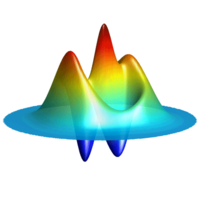
Optimal State Estimation for Cavity Optomechanical Systems

Witlef Wieczorek, Sebastian G. Hofer, Jason Hoelscher-Obermaier, Ralf Riedinger, Klemens Hammerer, and Markus Aspelmeyer

Phys. Rev. Lett. 114, 223601 (2015) - Published 4 June, 2015

Accounting for nontrivial experimental noise sources, optical measurements of a cavity optomechanical system demonstrate real-time optimal state estimation.

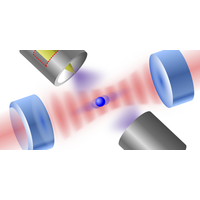
Site-Resolved Imaging of Fermionic Li6 in an Optical Lattice

Maxwell F. Parsons, Florian Huber, Anton Mazurenko, Christie S. Chiu, Widagdo Setiawan, Katherine Wooley-Brown, Sebastian Blatt, and Markus Greiner

Phys. Rev. Lett. 114, 213002 (2015) - Published 28 May, 2015

Two new quantum gas microscopes demonstrate the imaging of fermionic atoms in an optical lattice, providing a step towards simulating complex electronic systems.

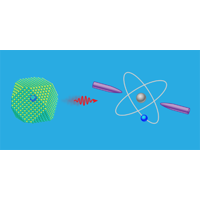
Strongly Correlated Growth of Rydberg Aggregates in a Vapor Cell

A. Urvoy, F. Ripka, I. Lesanovsky, D. Booth, J. P. Shaffer, T. Pfau, and R. Löw

Phys. Rev. Lett. 114, 203002 (2015) - Published 19 May, 2015

The strong interaction potential between multiple Rydberg atoms allow many-body effects to be observed in a room temperature atomic vapor.

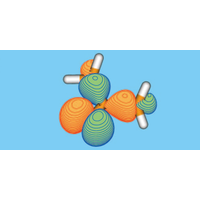
Rotation of Quantum Impurities in the Presence of a Many-Body Environment

Richard Schmidt and Mikhail Lemeshko

Phys. Rev. Lett. 114, 203001 (2015) - Published 18 May, 2015

Immersing a quantum impurity into a Bose-Einstein condensate causes a redistribution of the angular momentum between the impurity and the many-body environment leading to collective excitations. These excitations can be explained using a new quasiparticle: the “angulon”.

Tunable Subluminal Propagation of Narrow-band X-Ray Pulses

Kilian P. Heeg, Johann Haber, Daniel Schumacher, Lars Bocklage, Hans-Christian Wille, Kai S. Schulze, Robert Loetzsch, Ingo Uschmann, Gerhard G. Paulus, Rudolf Rüffer, Ralf Röhlsberger, and Jörg Evers

Phys. Rev. Lett. 114, 203601 (2015) - Published 18 May, 2015

Slow light effects have been measured for x rays using a cavity filled with iron nuclei, where the speed of light was reduced by a factor of 10,000.

Experimental Generation of Squeezed Cat States with an Operation Allowing Iterative Growth

Jean Etesse, Martin Bouillard, Bhaskar Kanseri, and Rosa Tualle-Brouri

Phys. Rev. Lett. 114, 193602 (2015) - Published 15 May, 2015

An optical setup is used to generate a mesoscopic state of light, called a cat state, which can be fed back into the system to increase its nonclassicality.

Quantum-Gas Microscope for Fermionic Atoms

Lawrence W. Cheuk, Matthew A. Nichols, Melih Okan, Thomas Gersdorf, Vinay V. Ramasesh, Waseem S. Bakr, Thomas Lompe, and Martin W. Zwierlein

Phys. Rev. Lett. 114, 193001 (2015) - Published 13 May, 2015

A quantum microscope able to image individual atoms of optically trapped fermionic potassium has been developed by combining 3D Raman sideband cooling along with high-resolution optics.

All-Optical Nanomechanical Heat Engine

Andreas Dechant, Nikolai Kiesel, and Eric Lutz

Phys. Rev. Lett. 114, 183602 (2015) - Published 6 May, 2015

A nanoparticle levitated in an optical cavity is proposed as a Stirling type heat engine – where the particle is driven through a cooling-heating sequence that changes the mechanical oscillations of the systems and generates heat.

Monoenergetic Positronium Emission from Metal-Organic Framework Crystals

A. C. L. Jones, H. J. Goldman, Q. Zhai, P. Feng, H. W. K. Tom, and A. P. Mills, Jr.

Phys. Rev. Lett. 114, 153201 (2015) - Published 17 April, 2015

A series of low-energy peaks are observed for positronium emitted by the metal-organic framework crystal ZIF-8.

Cavity-Enhanced Field-Free Molecular Alignment at a High Repetition Rate

Craig Benko, Linqiang Hua, Thomas K. Allison, François Labaye, and Jun Ye

Phys. Rev. Lett. 114, 153001 (2015) - Published 14 April, 2015

A frequency comb can align an ensemble of molecules 150 million times per second.

Matter Wave Lensing to Picokelvin Temperatures

Tim Kovachy, Jason M. Hogan, Alex Sugarbaker, Susannah M. Dickerson, Christine A. Donnelly, Chris Overstreet, and Mark A. Kasevich

Phys. Rev. Lett. 114, 143004 (2015) - Published 8 April, 2015

An optical dipole field is used as a collimating lens to cool Rubidium atoms to record-low kinetic temperatures of 50 picokelvin.

Storing keV Negative Ions for an Hour: The Lifetime of the Metastable P21/2o level in S32−

E. Bäckström, D. Hanstorp, O. M. Hole, M. Kaminska, R. F. Nascimento, M. Blom, M. Björkhage, A. Källberg, P. Löfgren, P. Reinhed, S. Rosén, A. Simonsson, R. D. Thomas, S. Mannervik, H. T. Schmidt, and H. Cederquist

Phys. Rev. Lett. 114, 143003 (2015) - Published 6 April, 2015

A cooled ring stores high-speed negative ions for more than 1000 seconds and enables new studies of atomic and molecular ions that are important in interstellar and atmospheric chemistry.

Cavity Cooling a Single Charged Levitated Nanosphere

J. Millen, P. Z. G. Fonseca, T. Mavrogordatos, T. S. Monteiro, and P. F. Barker

Phys. Rev. Lett. 114, 123602 (2015) - Published 27 March, 2015

Combining two trapping techniques reduces the motion of a levitated bead close to the point where quantum effects should become observable.

Direct Photonic Coupling of a Semiconductor Quantum Dot and a Trapped Ion

H. M. Meyer, R. Stockill, M. Steiner, C. Le Gall, C. Matthiesen, E. Clarke, A. Ludwig, J. Reichel, M. Atatüre, and M. Köhl

Phys. Rev. Lett. 114, 123001 (2015) - Published 23 March, 2015

Researchers show that a single photon can transfer an excitation from a quantum dot to an ion.

Sensitivity of Ultracold Atoms to Quantized Flux in a Superconducting Ring

P. Weiss, M. Knufinke, S. Bernon, D. Bothner, L. Sárkány, C. Zimmermann, R. Kleiner, D. Koelle, J. Fortágh, and H. Hattermann

Phys. Rev. Lett. 114, 113003 (2015) - Published 17 March, 2015

A cloud of atoms trapped close to a superconducting ring can detect the magnetic field inside the ring with single-quantum sensitivity.

Identification of a Previously Unobserved Dissociative Ionization Pathway in Time-Resolved Photospectroscopy of the Deuterium Molecule

Wei Cao, Guillaume Laurent, Itzik Ben-Itzhak, and C. Lewis Cocke

Phys. Rev. Lett. 114, 113001 (2015) - Published 16 March, 2015

Simultaneous time- and energy-resolved measurements of deuterium molecular dynamics have discovered a previously unobserved ionization mechanism.

Molecular Orbital Imaging of the Acetone S2 Excited State Using Time-Resolved (e, 2e) Electron Momentum Spectroscopy

Masakazu Yamazaki, Keiya Oishi, Hiroyuki Nakazawa, Chaoyuan Zhu, and Masahiko Takahashi

Phys. Rev. Lett. 114, 103005 (2015) - Published 13 March, 2015

A twist on an established imaging method has detected a molecule’s short-lived excited state, raising the possibility of movies of chemical reactions.

Composite-Light-Pulse Technique for High-Precision Atom Interferometry

P. Berg, S. Abend, G. Tackmann, C. Schubert, E. Giese, W. P. Schleich, F. A. Narducci, W. Ertmer, and E. M. Rasel

Phys. Rev. Lett. 114, 063002 (2015) - Published 9 February, 2015

By keeping its atomic components in the same state, a team was able to reduce one typical source of noise in a rotation-measuring device.

Storage and Retrieval of THz-Bandwidth Single Photons Using a Room-Temperature Diamond Quantum Memory

Duncan G. England, Kent A. G. Fisher, Jean-Philippe W. MacLean, Philip J. Bustard, Rune Lausten, Kevin J. Resch, and Benjamin J. Sussman

Phys. Rev. Lett. 114, 053602 (2015) - Published 5 February, 2015

Diamond crystals enable new ways of storing single photons at room temperature and detecting their entanglement.

Entangled Absorption of a Single Photon with a Single Spin in Diamond

Hideo Kosaka and Naeko Niikura

Phys. Rev. Lett. 114, 053603 (2015) - Published 5 February, 2015

Diamond crystals enable new ways of storing single photons at room temperature and detecting their entanglement.

Sign In to Your Journals Account

Filter

Section

Filter

Article Lookup

Enter a citation