Highlights

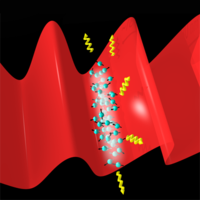
Observation of Suppression of Light Scattering Induced by Dipole-Dipole Interactions in a Cold-Atom Ensemble

J. Pellegrino, R. Bourgain, S. Jennewein, Y. R. P. Sortais, A. Browaeys, S. D. Jenkins, and J. Ruostekoski

Phys. Rev. Lett. 113, 133602 (2014) - Published 26 September, 2014

Light scattering by a cold atom cloud is reduced by exposing the cloud to near resonant laser light, where the size of the cloud is comparable to the wavelength of the light.

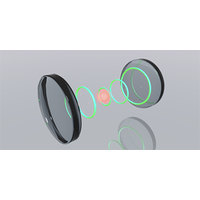
Efficiently Loading a Single Photon into a Single-Sided Fabry-Perot Cavity

Chang Liu, Yuan Sun, Luwei Zhao, Shanchao Zhang, M. M. T. Loy, and Shengwang Du

Phys. Rev. Lett. 113, 133601 (2014) - Published 23 September, 2014

A single photon with an optimally shaped waveform can be loaded into a cavity with near-unity efficiency.

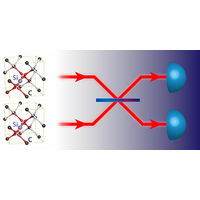
Indistinguishable Photons from Separated Silicon-Vacancy Centers in Diamond

A. Sipahigil, K. D. Jahnke, L. J. Rogers, T. Teraji, J. Isoya, A. S. Zibrov, F. Jelezko, and M. D. Lukin

Phys. Rev. Lett. 113, 113602 (2014) - Published 11 September, 2014

Two silicon-vacancy centers in diamond can emit photons that are indistinguishable—suggesting they have potential as building blocks for a diamond-based quantum computer.

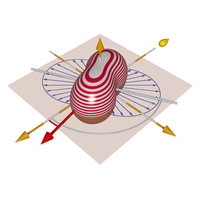
Observation of Coherence in the Time-Reversed Relativistic Photoelectric Effect

S. Tashenov, D. Banaś, H. Beyer, C. Brandau, S. Fritzsche, A. Gumberidze, S. Hagmann, P.-M. Hillenbrand, H. Jörg, I. Kojouharov, Ch. Kozhuharov, M. Lestinsky, Yu. A. Litvinov, A. V. Maiorova, H. Schaffner, V. M. Shabaev, U. Spillmann, Th. Stöhlker, A. Surzhykov, and S. Trotsenko

Phys. Rev. Lett. 113, 113001 (2014) - Published 9 September, 2014

The spin-orbit interaction has a prominent effect on the radiative recombination of a relativistic electron into the 2p shell of hydrogen-like Uranium.

Scalable Spin Squeezing for Quantum-Enhanced Magnetometry with Bose-Einstein Condensates

W. Muessel, H. Strobel, D. Linnemann, D. B. Hume, and M. K. Oberthaler

Phys. Rev. Lett. 113, 103004 (2014) - Published 5 September, 2014

A new technique uses up to 30 Bose-Einstein condensates simultaneously to make ultraprecise measurements.

On-Chip Generation and Manipulation of Entangled Photons Based on Reconfigurable Lithium-Niobate Waveguide Circuits

H. Jin, F. M. Liu, P. Xu, J. L. Xia, M. L. Zhong, Y. Yuan, J. W. Zhou, Y. X. Gong, W. Wang, and S. N. Zhu

Phys. Rev. Lett. 113, 103601 (2014) - Published 4 September, 2014

On a single chip, sources of entangled photons are combined with optical elements that can perform complex manipulations of quantum signals.

Generation of Macroscopic Singlet States in a Cold Atomic Ensemble

N. Behbood, F. Martin Ciurana, G. Colangelo, M. Napolitano, Géza Tóth, R. J. Sewell, and M. W. Mitchell

Phys. Rev. Lett. 113, 093601 (2014) - Published 25 August, 2014

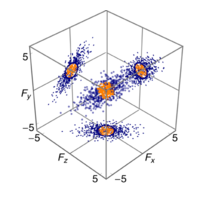
A spin entangled system of more than a million laser cooled atoms has been created using spin measurements along three orthogonal axes – the first measurement-induced spin squeezing to a singlet state.

Zeeman Effect Induced by Intense Laser Light

E. Stambulchik and Y. Maron

Phys. Rev. Lett. 113, 083002 (2014) - Published 19 August, 2014

The magnetic field of intense visible light should have a major effect on the spectra of plasmas made from a wide range of elements.

Microwave Control of Trapped-Ion Motion Assisted by a Running Optical Lattice

Shiqian Ding, Huanqian Loh, Roland Hablutzel, Meng Gao, Gleb Maslennikov, and Dzmitry Matsukevich

Phys. Rev. Lett. 113, 073002 (2014) - Published 11 August, 2014

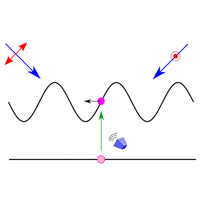
A scheme is proposed for motion control of trapped ions that allows ground-state cooling of the ions via coupled microwaves and a running optical lattice.

Microwave Down-Conversion with an Impedance-Matched Λ System in Driven Circuit QED

K. Inomata, K. Koshino, Z. R. Lin, W. D. Oliver, J. S. Tsai, Y. Nakamura, and T. Yamamoto

Phys. Rev. Lett. 113, 063604 (2014) - Published 8 August, 2014

Impedance matching between a microwave photon pulse and an artificial atom coupled to a waveguide is experimentally demonstrated - the incident photons are completely absorbed by the cavity.

High-Fidelity Rapid Ground-State Loading of an Ultracold Gas into an Optical Lattice

Shumpei Masuda, Katsuhiro Nakamura, and Adolfo del Campo

Phys. Rev. Lett. 113, 063003 (2014) - Published 7 August, 2014

A new method for preparing Bose-Einstein condensates in optical lattices is proposed, which limits detrimental effects such as decoherence, three-body losses and uncontrolled sources of noise.

Single-Photon Transistor Mediated by Interstate Rydberg Interactions

H. Gorniaczyk, C. Tresp, J. Schmidt, H. Fedder, and S. Hofferberth

Phys. Rev. Lett. 113, 053601 (2014) - Published 28 July, 2014

Researchers have used interactions between highly excited atoms to make an optical transistor that can be activated by a single photon.

Single-Photon Transistor Using a Förster Resonance

Daniel Tiarks, Simon Baur, Katharina Schneider, Stephan Dürr, and Gerhard Rempe

Phys. Rev. Lett. 113, 053602 (2014) - Published 28 July, 2014

Researchers have used interactions between highly excited atoms to make an optical transistor that can be activated by a single photon.

Observation and Symmetry-Based Coherent Control of Transient Two-Photon Absorption: The Bright Side of Dark Pulses

Andrey Gandman, Leonid Rybak, and Zohar Amitay

Phys. Rev. Lett. 113, 043003 (2014) - Published 23 July, 2014

Femtosecond coherent control of the time evolution of excited atomic state populations is demonstrated using phase-shaped light pulses.

Probe of Three-Dimensional Chiral Topological Insulators in an Optical Lattice

S.-T. Wang, D.-L. Deng, and L.-M. Duan

Phys. Rev. Lett. 113, 033002 (2014) - Published 16 July, 2014

An experimental scheme is proposed allowing the properties of topological insulators to be studied using cold fermionic atoms in an optical lattice.

Simplest Molecules as Candidates for Precise Optical Clocks

S. Schiller, D. Bakalov, and V. I. Korobov

Phys. Rev. Lett. 113, 023004 (2014) - Published 8 July, 2014

Researchers propose using one-electron molecules for a new class of ultrahigh precision clocks.

Exploring a New Regime for Processing Optical Qubits: Squeezing and Unsqueezing Single Photons

Yoshichika Miwa, Jun-ichi Yoshikawa, Noriaki Iwata, Mamoru Endo, Petr Marek, Radim Filip, Peter van Loock, and Akira Furusawa

Phys. Rev. Lett. 113, 013601 (2014) - Published 2 July, 2014

A single photon is reversibly transformed from a particle-like state to a continuous wave state via a squeezing gate, which operates by reducing fluctuations in one Heisenberg variable at the expense of another.

Two-Photon Rotational Action Spectroscopy of Cold OH− at 1 ppb Accuracy

Pavol Jusko, Oskar Asvany, Ann-Christin Wallerstein, Sandra Brünken, and Stephan Schlemmer

Phys. Rev. Lett. 112, 253005 (2014) - Published 26 June, 2014

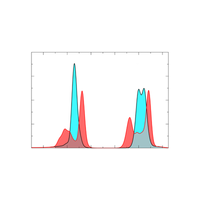
By cooling OH- ions to 15 K in a cold ion trap the lowest rotational transition frequency of OH- is measured to an accuracy of one part per billion.

Simultaneous Measurement of Complementary Observables with Compressive Sensing

Gregory A. Howland, James Schneeloch, Daniel J. Lum, and John C. Howell

Phys. Rev. Lett. 112, 253602 (2014) - Published 26 June, 2014

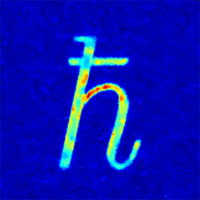
Coincident high-resolution position and momentum imaging of optical photons is achieved using a sequence of weak and strong measurements.

Hyperfine Splitting of the 2s1/2 and 2p1/2 Levels in Li- and Be-like Ions of Pr59141

P. Beiersdorfer, E. Träbert, G. V. Brown, J. Clementson, D. B. Thorn, M. H. Chen, K. T. Cheng, and J. Sapirstein

Phys. Rev. Lett. 112, 233003 (2014) - Published 13 June, 2014

Extreme ultraviolet spectroscopic measurements of the hyperfine splittings in high-Z ions provide insight into the fundamental interactions between light and atoms in strong fields.

Sign In to Your Journals Account

Filter

Section

Filter

Article Lookup

Enter a citation