Highlights

Experimental Realization of a One-Way Quantum Computer Algorithm Solving Simon’s Problem

M. S. Tame, B. A. Bell, C. Di Franco, W. J. Wadsworth, and J. G. Rarity

Phys. Rev. Lett. 113, 200501 (2014) - Published 11 November, 2014

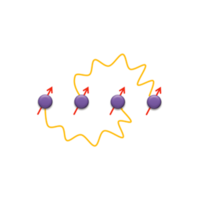
A function finder called Simon’s algorithm has been experimentally tested on a prototype quantum computer for the first time.

Search for a Dark Photon in e+e− Collisions at BaBar

J. P. Lees et al. (BaBar Collaboration)

Phys. Rev. Lett. 113, 201801 (2014) - Published 10 November, 2014

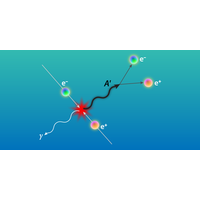
A search for a photonlike particle that could be related to dark matter has come up empty, putting new constraints on models that imagine a dark form of electromagnetism.

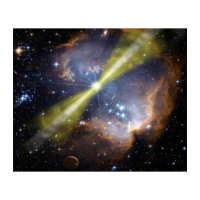
Origin of the High Energy Cosmic Neutrino Background

Shlomo Dado and Arnon Dar

Phys. Rev. Lett. 113, 191102 (2014) - Published 7 November, 2014

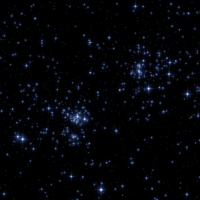
Collisions of ultrahigh energy cosmic rays within molecular clouds of star forming galaxies produce a diffuse background of very high energy neutrinos, consistent with that observed by the IceCube neutrino telescope.

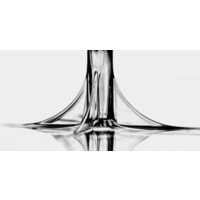
Viscoelasticity Breaks the Symmetry of Impacting Jets

H. Lhuissier, B. Néel, and L. Limat

Phys. Rev. Lett. 113, 194502 (2014) - Published 7 November, 2014

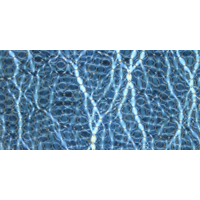
A high-speed jet of certain fluids will form multiple wings, or archlike structures, when hitting a solid surface.

Measurement-Device-Independent Quantum Key Distribution over 200 km

Yan-Lin Tang, Hua-Lei Yin, Si-Jing Chen, Yang Liu, Wei-Jun Zhang, Xiao Jiang, Lu Zhang, Jian Wang, Li-Xing You, Jian-Yu Guan, Dong-Xu Yang, Zhen Wang, Hao Liang, Zhen Zhang, Nan Zhou, Xiongfeng Ma, Teng-Yun Chen, Qiang Zhang, and Jian-Wei Pan

Phys. Rev. Lett. 113, 190501 (2014) - Published 6 November, 2014

Using stable, high-efficiency single photon detectors, a quantum key distribution protocol is demonstrated and shown to be secure over a distance of 200 km.

Statistical Diagnostics to Identify Galactic Foregrounds in B-Mode Maps

Marc Kamionkowski and Ely D. Kovetz

Phys. Rev. Lett. 113, 191303 (2014) - Published 6 November, 2014

Ongoing searches for primordial gravitational waves have a new way to identify possible contaminations from cosmic dust.

Cooperative Lamb Shift in a Mesoscopic Atomic Array

Z. Meir, O. Schwartz, E. Shahmoon, D. Oron, and R. Ozeri

Phys. Rev. Lett. 113, 193002 (2014) - Published 5 November, 2014

The roiling of the quantum vacuum tweaks the collective energy of far-apart ions.

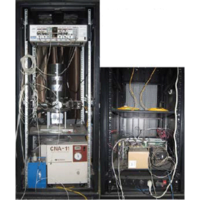
High-Precision Test of Landauer’s Principle in a Feedback Trap

Yonggun Jun, Momčilo Gavrilov, and John Bechhoefer

Phys. Rev. Lett. 113, 190601 (2014) - Published 4 November, 2014

New experiments confirm the theoretical prediction of Rolf Landauer, that there is a lower bound on the minimum energy needed to perform a single computation, such as erasing a single bit of information.

Landscape-Inversion Phase Transition in Dipolar Colloids: Tuning the Structure and Dynamics of 2D Crystals

Ricard Alert, Jaume Casademunt, and Pietro Tierno

Phys. Rev. Lett. 113, 198301 (2014) - Published 4 November, 2014

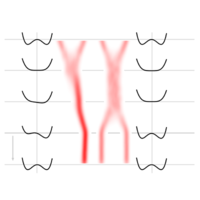
A new first order phase transition is seen in magnetic colloidal crystals, when the energy landscape is completely inverted.

Magnetic Resonance Detection of Individual Proton Spins Using Quantum Reporters

A. O. Sushkov, I. Lovchinsky, N. Chisholm, R. L. Walsworth, H. Park, and M. D. Lukin

Phys. Rev. Lett. 113, 197601 (2014) - Published 3 November, 2014

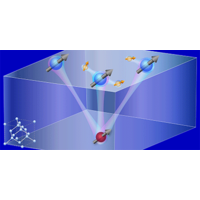
An NMR scheme based on nitrogen vacancies in diamond images the spins of individual protons.

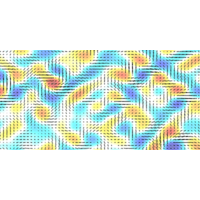
Shear Modulus and Dilatancy Softening in Granular Packings above Jamming

C. Coulais, A. Seguin, and O. Dauchot

Phys. Rev. Lett. 113, 198001 (2014) - Published 3 November, 2014

Experiments on a model “soil” give new insight into the elasticity of nonlinear materials.

Indications of a Late-Time Interaction in the Dark Sector

Valentina Salvatelli, Najla Said, Marco Bruni, Alessandro Melchiorri, and David Wands

Phys. Rev. Lett. 113, 181301 (2014) - Published 30 October, 2014

Discrepancies between different cosmological datasets could indicate interactions between dark matter and dark energy that occurred late in cosmological evolution, when the universe was approximately 6 billion years old.

Lorentz Invariance in Chiral Kinetic Theory

Jing-Yuan Chen, Dam T. Son, Mikhail A. Stephanov, Ho-Ung Yee, and Yi Yin

Phys. Rev. Lett. 113, 182302 (2014) - Published 30 October, 2014

A kinetic theory, with explicit Lorentz invariance, is derived for chiral fermions in an external electromagnetic field. This theory provides the correct form for the chiral vortical effect — the appearance of a current in a system undergoing rotation.

Frequency Comb Generation in Superconducting Resonators

R. P. Erickson, M. R. Vissers, M. Sandberg, S. R. Jefferts, and D. P. Pappas

Phys. Rev. Lett. 113, 187002 (2014) - Published 30 October, 2014

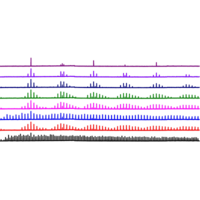
Superconducting niobium-titanium nitride resonators are used to generate multi-octave frequency combs in the microwave regime.

Two-Dimensional Analysis of the Double-Resonant 2D Raman Mode in Bilayer Graphene

Felix Herziger, Matteo Calandra, Paola Gava, Patrick May, Michele Lazzeri, Francesco Mauri, and Janina Maultzsch

Phys. Rev. Lett. 113, 187401 (2014) - Published 30 October, 2014

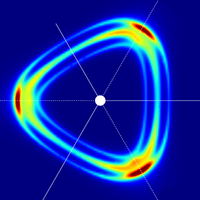
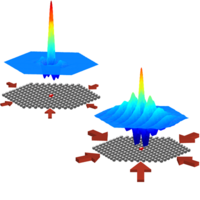
Raman spectroscopy, in particular the 2D Raman mode, is widely used to characterize bilayer graphene. The assumption that the 2D mode can be interpreted in terms of four independent scattering processes is shown to be incorrect.

Identification of a Gravitational Arrow of Time

Julian Barbour, Tim Koslowski, and Flavio Mercati

Phys. Rev. Lett. 113, 181101 (2014) - Published 29 October, 2014

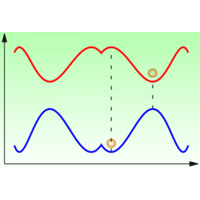
Masses evolving under Newtonian gravity have a preferred direction of time without special initial conditions.

Single Molecular Spectroscopy: Identification of Individual Fullerene Molecules

Luiz H. G. Tizei, Zheng Liu, Masanori Koshino, Yoko Iizumi, Toshiya Okazaki, and Kazu Suenaga

Phys. Rev. Lett. 113, 185502 (2014) - Published 29 October, 2014

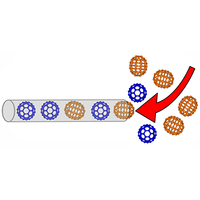
The energy lost by electrons passing through a material can reveal the symmetry of individual molecules inside the sample.

Local to Extended Transitions of Resonant Defect Modes

Joseph Lydon, Marc Serra-Garcia, and Chiara Daraio

Phys. Rev. Lett. 113, 185503 (2014) - Published 29 October, 2014

A linear chain of beads exhibits localized vibrational states when a defect is introduced into the chain. If the defect is resonant, the length of chain involved in this localized excitation can be tuned.

Terasaki Spiral Ramps in the Rough Endoplasmic Reticulum

Jemal Guven, Greg Huber, and Dulce María Valencia

Phys. Rev. Lett. 113, 188101 (2014) - Published 28 October, 2014

A model for the fundamental building blocks of fluid membranes addresses how chiral stacking occurs in the endoplasmic reticulum, an essential cellular organelle.

Programmable Mechanical Metamaterials

Bastiaan Florijn, Corentin Coulais, and Martin van Hecke

Phys. Rev. Lett. 113, 175503 (2014) - Published 24 October, 2014
Squeezing a holey rubber slab changes its stiffness over a wide range in the direction perpendicular to the squeeze.

Sign In to Your Journals Account

Filter

Section

Filter

Article Lookup

Enter a citation