Highlights

Storage and Retrieval of THz-Bandwidth Single Photons Using a Room-Temperature Diamond Quantum Memory

Duncan G. England, Kent A. G. Fisher, Jean-Philippe W. MacLean, Philip J. Bustard, Rune Lausten, Kevin J. Resch, and Benjamin J. Sussman

Phys. Rev. Lett. 114, 053602 (2015) - Published 5 February, 2015

Diamond crystals enable new ways of storing single photons at room temperature and detecting their entanglement.

Entangled Absorption of a Single Photon with a Single Spin in Diamond

Hideo Kosaka and Naeko Niikura

Phys. Rev. Lett. 114, 053603 (2015) - Published 5 February, 2015

Diamond crystals enable new ways of storing single photons at room temperature and detecting their entanglement.

Glow in the Dark Matter: Observing Galactic Halos with Scattered Light

Jonathan H. Davis and Joseph Silk

Phys. Rev. Lett. 114, 051303 (2015) - Published 4 February, 2015

The dark matter around galaxies might produce a detectable glow at infrared wavelengths.

Strange Nonchaotic Stars

John F. Lindner, Vivek Kohar, Behnam Kia, Michael Hippke, John G. Learned, and William L. Ditto

Phys. Rev. Lett. 114, 054101 (2015) - Published 3 February, 2015

The ratio of the frequencies of a pulsating star is approximately the golden mean, a clue that the pulsing is fractal in time.

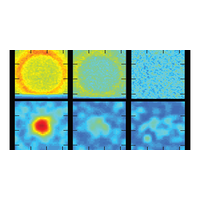
Full Multipartite Entanglement of Frequency-Comb Gaussian States

S. Gerke, J. Sperling, W. Vogel, Y. Cai, J. Roslund, N. Treps, and C. Fabre

Phys. Rev. Lett. 114, 050501 (2015) - Published 2 February, 2015

Researchers characterize the multiple ways of entanglement that exist between different frequency bands in a down-converted frequency comb.

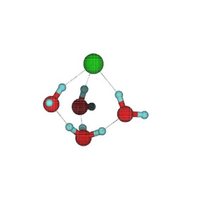
Electric Dipole Moments of Nanosolvated Acid Molecules in Water Clusters

Nicholas Guggemos, Petr Slavíček, and Vitaly V. Kresin

Phys. Rev. Lett. 114, 043401 (2015) - Published 30 January, 2015

A new experimental technique probes the dissociation of a single molecule in water and reveals more complexities than expected.

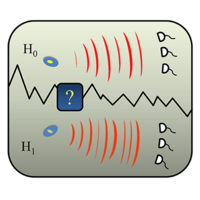
Hypothesis Testing with Open Quantum Systems

Klaus Mølmer

Phys. Rev. Lett. 114, 040401 (2015) - Published 29 January, 2015

Monitoring the emitted radiation and final state of an open quantum system could allow determination of the optimal Hamiltonian governing the system’s dynamics.

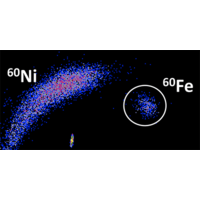
Settling the Half-Life of Fe60: Fundamental for a Versatile Astrophysical Chronometer

A. Wallner, M. Bichler, K. Buczak, R. Dressler, L. K. Fifield, D. Schumann, J. H. Sterba, S. G. Tims, G. Wallner, and W. Kutschera

Phys. Rev. Lett. 114, 041101 (2015) - Published 28 January, 2015

A better measure of an iron isotope’s half-life may lead to new ways of dating astrophysical events that unfold over millions of years.

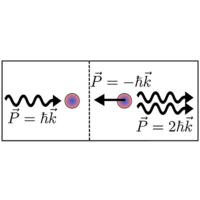
Laser Cooling without Spontaneous Emission

Christopher Corder, Brian Arnold, and Harold Metcalf

Phys. Rev. Lett. 114, 043002 (2015) - Published 28 January, 2015

Atom-light interactions using polychromatic laser fields permit energy and momentum exchange for laser cooling without spontaneous emission.

Gigabar Spherical Shock Generation on the OMEGA Laser

R. Nora, W. Theobald, R. Betti, F. J. Marshall, D. T. Michel, W. Seka, B. Yaakobi, M. Lafon, C. Stoeckl, J. Delettrez, A. A. Solodov, A. Casner, C. Reverdin, X. Ribeyre, A. Vallet, J. Peebles, F. N. Beg, and M. S. Wei

Phys. Rev. Lett. 114, 045001 (2015) - Published 27 January, 2015

A two-step scheme for inertial confinement fusion generates gigabar shock pressures in a fuel target.

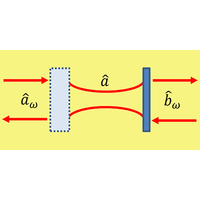
Observation of Generalized Optomechanical Coupling and Cooling on Cavity Resonance

Andreas Sawadsky, Henning Kaufer, Ramon Moghadas Nia, Sergey P. Tarabrin, Farid Ya. Khalili, Klemens Hammerer, and Roman Schnabel

Phys. Rev. Lett. 114, 043601 (2015) - Published 26 January, 2015

A new scheme for cooling a mechanical oscillator in a cavity may allow the observation of quantum effects on macroscopic objects and the realization of ultrasensitive gravitational-wave detectors.

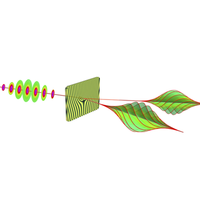
Holographic Generation of Highly Twisted Electron Beams

Vincenzo Grillo, Gian Carlo Gazzadi, Erfan Mafakheri, Stefano Frabboni, Ebrahim Karimi, and Robert W. Boyd

Phys. Rev. Lett. 114, 034801 (2015) - Published 23 January, 2015

Researchers generated an electron beam with very high orbital angular momentum—potentially good for atomic-scale images of the magnetism in materials.

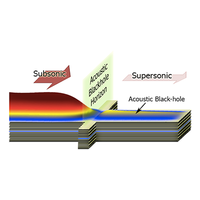
Acoustic Black Hole in a Stationary Hydrodynamic Flow of Microcavity Polaritons

H. S. Nguyen, D. Gerace, I. Carusotto, D. Sanvitto, E. Galopin, A. Lemaître, I. Sagnes, J. Bloch, and A. Amo

Phys. Rev. Lett. 114, 036402 (2015) - Published 22 January, 2015

The flow of hybrid electron-photon states through a black-hole-like “acoustic horizon” may produce an observable signature of Hawking radiation.

Sound Velocity Bound and Neutron Stars

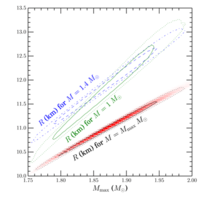
Paulo Bedaque and Andrew W. Steiner

Phys. Rev. Lett. 114, 031103 (2015) - Published 21 January, 2015

A conjectured bound on the nonrelativistic sound velocity may be violated in a massive enough neutron star.

Quasiparticle Interference, Quasiparticle Interactions, and the Origin of the Charge Density Wave in 2H−NbSe2

C. J. Arguello, E. P. Rosenthal, E. F. Andrade, W. Jin, P. C. Yeh, N. Zaki, S. Jia, R. J. Cava, R. M. Fernandes, A. J. Millis, T. Valla, R. M. Osgood, Jr., and A. N. Pasupathy

Phys. Rev. Lett. 114, 037001 (2015) - Published 21 January, 2015

Photoemission and tunneling measurements show that the charge-density wave in 2H-NbSe2 is governed by quasiparticles coupling to phonon modes.

Critical Casimir Forces and Colloidal Phase Transitions in a Near-Critical Solvent: A Simple Model Reveals a Rich Phase Diagram

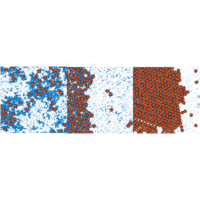
John R. Edison, Nikos Tasios, Simone Belli, Robert Evans, René van Roij, and Marjolein Dijkstra

Phys. Rev. Lett. 114, 038301 (2015) - Published 21 January, 2015

Computer simulations of the phase behavior of dense colloidal suspensions in a near-critical solvent show that the solvent mediated interactions can drive colloidal gas-liquid and fluid-solid phase transitions.

Explosive Synchronization in Adaptive and Multilayer Networks

Xiyun Zhang, Stefano Boccaletti, Shuguang Guan, and Zonghua Liu

Phys. Rev. Lett. 114, 038701 (2015) - Published 21 January, 2015

In networks of coupled oscillators, the condition for explosive synchronization is shown not be correlations between the networks’ nodes, but rather that giant synchronized cluster formation is suppressed.

Simple Model for Identifying Critical Regions in Atrial Fibrillation

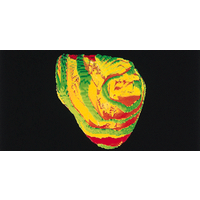
Kim Christensen, Kishan A. Manani, and Nicholas S. Peters

Phys. Rev. Lett. 114, 028104 (2015) - Published 16 January, 2015

A simple model of heart tissue that represents the architecture of cell-cell communication more realistically than previous models spontaneously develops faulty electrical waves that mimic a dangerous heart condition.

Sequence Determines Degree of Knottedness in a Coarse-Grained Protein Model

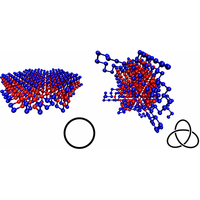
Thomas Wüst, Daniel Reith, and Peter Virnau

Phys. Rev. Lett. 114, 028102 (2015) - Published 15 January, 2015

The sequence of amino acids in certain biomolecules could be a factor in ensuring that they remain free of knots.

Nonlocality and Conflicting Interest Games

Anna Pappa, Niraj Kumar, Thomas Lawson, Miklos Santha, Shengyu Zhang, Eleni Diamanti, and Iordanis Kerenidis

Phys. Rev. Lett. 114, 020401 (2015) - Published 14 January, 2015

Quantum nonlocality gives players an advantage in conflicting interest games, as demonstrated by the Battle of the Sexes game implemented with entangled photons.

Sign In to Your Journals Account

Filter

Section

Filter

Article Lookup

Enter a citation