Highlights

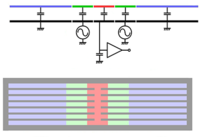
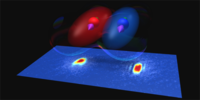
Mapping Twisted Light into and out of a Photonic Chip

Yuan Chen, Jun Gao, Zhi-Qiang Jiao, Ke Sun, Wei-Guan Shen, Lu-Feng Qiao, Hao Tang, Xiao-Feng Lin, and Xian-Min Jin

Phys. Rev. Lett. 121, 233602 (2018) - Published 7 December, 2018

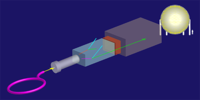
Light waves capable of storing fragile quantum information can propagate through a photonic chip waveguide and potentially be used for on-chip computation.

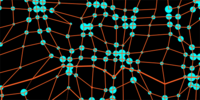
Skyrmions and Clustering in Light Nuclei

Carlos Naya and Paul Sutcliffe

Phys. Rev. Lett. 121, 232002 (2018) - Published 6 December, 2018

Theorists extend a nearly six-decades-old model for the atomic nucleus and use it to predict shape effects that the traditional model misses.

Confinement of Positrons Exceeding 1 s in a Supported Magnetic Dipole Trap

J. Horn-Stanja, S. Nißl, U. Hergenhahn, T. Sunn Pedersen, H. Saitoh, E. V. Stenson, M. Dickmann, C. Hugenschmidt, M. Singer, M. R. Stoneking, and J. R. Danielson

Phys. Rev. Lett. 121, 235003 (2018) - Published 5 December, 2018

Applying a repulsive electrostatic bias to the edge of a magnetic trap suppresses particle losses and confines a low-energy positron cloud for more than one second.

Lossless Positron Injection into a Magnetic Dipole Trap

E. V. Stenson, S. Nißl, U. Hergenhahn, J. Horn-Stanja, M. Singer, H. Saitoh, T. Sunn Pedersen, J. R. Danielson, M. R. Stoneking, M. Dickmann, and C. Hugenschmidt

Phys. Rev. Lett. 121, 235005 (2018) - Published 5 December, 2018

Applying a repulsive electrostatic bias to the edge of a magnetic trap suppresses particle losses and confines a low-energy positron cloud for more than one second.

Thermopower-Based Hot Electron Thermometry of Helium Surface States at 1.6 K

Ethan I. Kleinbaum and Stephen A. Lyon

Phys. Rev. Lett. 121, 236801 (2018) - Published 5 December, 2018

New thermometry technique probes the temperature of surface state electrons above superfluid helium despite the absence of a detailed understanding of the electron interactions.

Gravitational Redshift Test Using Eccentric Galileo Satellites

P. Delva, N. Puchades, E. Schönemann, F. Dilssner, C. Courde, S. Bertone, F. Gonzalez, A. Hees, Ch. Le Poncin-Lafitte, F. Meynadier, R. Prieto-Cerdeira, B. Sohet, J. Ventura-Traveset, and P. Wolf

Phys. Rev. Lett. 121, 231101 (2018) - Published 4 December, 2018

Two satellites erroneously placed in elliptical orbits have been used to test general relativity with unprecedented precision.

Test of the Gravitational Redshift with Galileo Satellites in an Eccentric Orbit

Sven Herrmann, Felix Finke, Martin Lülf, Olga Kichakova, Dirk Puetzfeld, Daniela Knickmann, Meike List, Benny Rievers, Gabriele Giorgi, Christoph Günther, Hansjörg Dittus, Roberto Prieto-Cerdeira, Florian Dilssner, Francisco Gonzalez, Erik Schönemann, Javier Ventura-Traveset, and Claus Lämmerzahl

Phys. Rev. Lett. 121, 231102 (2018) - Published 4 December, 2018

Two satellites erroneously placed in elliptical orbits have been used to test general relativity with unprecedented precision.

Variational Principle for Mass Transport

Dallas R. Trinkle

Phys. Rev. Lett. 121, 235901 (2018) - Published 3 December, 2018

A new theory provides a way to compare the accuracy of different mass-transport calculations, which are widely used to evaluate the performance of materials.

Optomechanical Bell Test

Igor Marinković, Andreas Wallucks, Ralf Riedinger, Sungkun Hong, Markus Aspelmeyer, and Simon Gröblacher

Phys. Rev. Lett. 121, 220404 (2018) - Published 29 November, 2018

Researchers have experimentally demonstrated two cornerstones of quantum physics—entanglement and Bell inequality violations—with two macroscopic mechanical resonators.

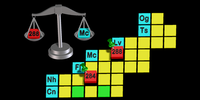
First Direct Measurements of Superheavy-Element Mass Numbers

J. M. Gates, G. K. Pang, J. L. Pore, K. E. Gregorich, J. T. Kwarsick, G. Savard, N. E. Esker, M. Kireeff Covo, M. J. Mogannam, J. C. Batchelder, D. L. Bleuel, R. M. Clark, H. L. Crawford, P. Fallon, K. K. Hubbard, A. M. Hurst, I. T. Kolaja, A. O. Macchiavelli, C. Morse, R. Orford, L. Phair, and M. A. Stoyer

Phys. Rev. Lett. 121, 222501 (2018) - Published 28 November, 2018

A new measurement technique directly determines the masses of two superheavy isotopes, providing confirmation that previous indirect measurements were correct.

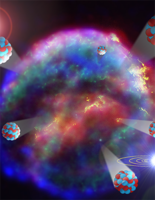
Limits on Supernova-Associated Fe60/Al26 Nucleosynthesis Ratios from Accelerator Mass Spectrometry Measurements of Deep-Sea Sediments

Jenny Feige, Anton Wallner, Randolf Altmeyer, L. Keith Fifield, Robin Golser, Silke Merchel, Georg Rugel, Peter Steier, Stephen G. Tims, and Stella Winkler

Phys. Rev. Lett. 121, 221103 (2018) - Published 27 November, 2018

Using accelerator mass spectrometry to measure the 26Al content of deep-sea sediments, a limit is established on 60Fe/26Al nucleosynthesis ratios from recent and local supernova events.

Constraints on Primordial Gravitational Waves Using Planck, WMAP, and New BICEP2/Keck Observations through the 2015 Season

P. A. R. Ade et al. (Keck Array and bicep2 Collaborations)

Phys. Rev. Lett. 121, 221301 (2018) - Published 27 November, 2018

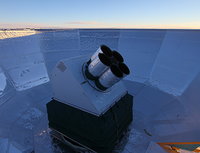
An analysis of all data taken by the BICEP2/Keck Array have put the strongest constraints to date on primordial gravitational waves.

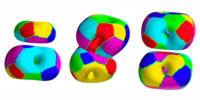
Percolation through Voids around Randomly Oriented Polyhedra and Axially Symmetric Grains

D. J. Priour, Jr. and N. J. McGuigan

Phys. Rev. Lett. 121, 225701 (2018) - Published 27 November, 2018

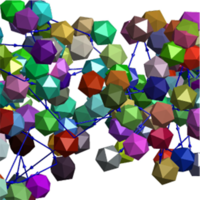
Percolation thresholds for randomly oriented interpenetrating polyhedra were calculated for each of the five Platonic solids, from tetrahedra to icosahedra, and it was determined that only for cubic grains does orientational disorder affect the percolation threshold.

Significant Excess of Electronlike Events in the MiniBooNE Short-Baseline Neutrino Experiment

A. A. Aguilar-Arevalo et al. (MiniBooNE Collaboration)

Phys. Rev. Lett. 121, 221801 (2018) - Published 26 November, 2018

Confirming previous controversial results, the MiniBooNE experiment detects a signal that is incompatible with neutrino oscillations involving just the three known flavors of neutrinos.

Enhanced Interactions between Dipolar Polaritons

Emre Togan, Hyang-Tag Lim, Stefan Faelt, Werner Wegscheider, and Atac Imamoglu

Phys. Rev. Lett. 121, 227402 (2018) - Published 26 November, 2018

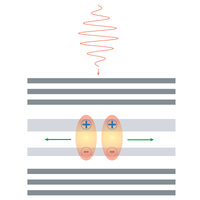
The observation of increased interaction strength between dipolar polaritons in a semiconductor cavity with coupled quantum wells makes polaritonic devices a more realistic prospect.

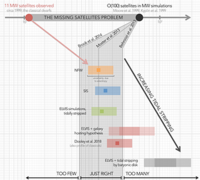
Missing Satellites Problem: Completeness Corrections to the Number of Satellite Galaxies in the Milky Way are Consistent with Cold Dark Matter Predictions

Stacy Y. Kim, Annika H. G. Peter, and Jonathan R. Hargis

Phys. Rev. Lett. 121, 211302 (2018) - Published 21 November, 2018

An analytic correction to the detection efficiency of observed satellite populations in the Milky Way is consistent with cold dark matter predictions.

Dipolar Quantum Mixtures of Erbium and Dysprosium Atoms

A. Trautmann, P. Ilzhöfer, G. Durastante, C. Politi, M. Sohmen, M. J. Mark, and F. Ferlaino

Phys. Rev. Lett. 121, 213601 (2018) - Published 21 November, 2018

A condensate mixing two species of strongly magnetic atoms provides a new experimental window into many-body phenomena.

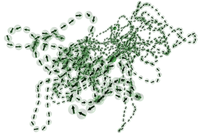
Globulelike Conformation and Enhanced Diffusion of Active Polymers

Valentino Bianco, Emanuele Locatelli, and Paolo Malgaretti

Phys. Rev. Lett. 121, 217802 (2018) - Published 21 November, 2018

Brownian dynamics simulations on active polymers show that both conformation and diffusion are strongly affected by monomer activity, particularly when the direction of monomer movement is aligned with the polymer backbone.

Nonequilibrium Energetics of Molecular Motor Kinesin

Takayuki Ariga, Michio Tomishige, and Daisuke Mizuno

Phys. Rev. Lett. 121, 218101 (2018) - Published 21 November, 2018

A detailed study of kinesin—a molecular motor responsible for transporting cellular cargo—shows that it loses 80% of input energy to heat.

Combination of the Searches for Pair-Produced Vectorlike Partners of the Third-Generation Quarks at s=13  TeV with the ATLAS Detector

M. Aaboud et al. (ATLAS Collaboration)

Phys. Rev. Lett. 121, 211801 (2018) - Published 20 November, 2018
Seven analyses are combined to put the strongest constraints yet on third-generation vectorlike quarks, which arise in models where the Higgs boson is a pseudo-Nambu–Goldstone boson.

Sign In to Your Journals Account

Filter

Section

Filter

Article Lookup

Enter a citation