Highlights

Protocol Dependence and State Variables in the Force-Moment Ensemble

Ephraim S. Bililign, Jonathan E. Kollmer, and Karen E. Daniels

Phys. Rev. Lett. 122, 038001 (2019) - Published 23 January, 2019

Experiments with a granular system have confirmed a temperature-like variable that could lead to an equation of state for this class of materials

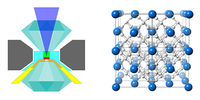
Nanomolding of Crystalline Metals: The Smaller the Easier

Ze Liu, Guoxing Han, Sungwoo Sohn, Naijia Liu, and Jan Schroers

Phys. Rev. Lett. 122, 036101 (2019) - Published 22 January, 2019

Molding crystalline metals like silver into nanopillar structures is both possible and easier to achieve for narrower pillars, in contrast with other materials.

Competing Fractional Quantum Hall and Electron Solid Phases in Graphene

Shaowen Chen, Rebeca Ribeiro-Palau, Kang Yang, Kenji Watanabe, Takashi Taniguchi, James Hone, Mark O. Goerbig, and Cory R. Dean

Phys. Rev. Lett. 122, 026802 (2019) - Published 18 January, 2019

Graphene shows a many-body phase arising from competition between an electron solid and the fractional quantum Hall effect.

Heterogeneous Activation, Local Structure, and Softness in Supercooled Colloidal Liquids

Xiaoguang Ma, Zoey S. Davidson, Tim Still, Robert J. S. Ivancic, S. S. Schoenholz, A. J. Liu, and A. G. Yodh

Phys. Rev. Lett. 122, 028001 (2019) - Published 18 January, 2019

Multiple exponential relaxation channels in a glass-forming supercooled liquid give rise to non-exponential behavior in a local order parameter associated with “softness.”

Black-Box Quantum State Preparation without Arithmetic

Yuval R. Sanders, Guang Hao Low, Artur Scherer, and Dominic W. Berry

Phys. Rev. Lett. 122, 020502 (2019) - Published 16 January, 2019

A new algorithm for quantum state preparation uses fewer gates than existing ones, by two orders of magnitude.

Curving to Fly: Synthetic Adaptation Unveils Optimal Flight Performance of Whirling Fruits

Jean Rabault, Richard A. Fauli, and Andreas Carlson

Phys. Rev. Lett. 122, 024501 (2019) - Published 16 January, 2019

Whirling fruits have evolved wing-like structures that are optimized to generate maximum lift, according to a new study.

Experimental Observation of Momentum-Space Chiral Edge Currents in Room-Temperature Atoms

Han Cai, Jinhong Liu, Jinze Wu, Yanyan He, Shi-Yao Zhu, Jun-Xiang Zhang, and Da-Wei Wang

Phys. Rev. Lett. 122, 023601 (2019) - Published 14 January, 2019

Topological effects were observed for the first time in an ensemble of atoms at room temperature.

Evidence for Superconductivity above 260 K in Lanthanum Superhydride at Megabar Pressures

Maddury Somayazulu, Muhtar Ahart, Ajay K. Mishra, Zachary M. Geballe, Maria Baldini, Yue Meng, Viktor V. Struzhkin, and Russell J. Hemley

Phys. Rev. Lett. 122, 027001 (2019) - Published 14 January, 2019

Two independent studies report superconductivity at record high temperatures in hydrogen-rich materials under extreme pressure.

How Difficult is it to Prepare a Quantum State?

Davide Girolami

Phys. Rev. Lett. 122, 010505 (2019) - Published 11 January, 2019

A key computational resource to prepare a quantum system in a target state, an important subroutine of quantum information protocols, is identified and quantified.

Inwardly Rotating Spirals in a Nonoscillatory Medium

Harunori N. Yoshikawa, Christian Mathis, Shu Satoh, and Yuji Tasaka

Phys. Rev. Lett. 122, 014502 (2019) - Published 10 January, 2019

Liquid falling from a horizontal film displays an intriguing pattern of inwardly rotating spirals.

Temperature Rise Associated with Adiabatic Shear Band: Causality Clarified

Yazhou Guo, Qichao Ruan, Shengxin Zhu, Q. Wei, Haosen Chen, Jianan Lu, Bo Hu, Xihui Wu, Yulong Li, and Daining Fang

Phys. Rev. Lett. 122, 015503 (2019) - Published 10 January, 2019

High speed photography and thermometry answer whether shear bands, the localized deformation of metals under extreme strain, are caused by heat or cause heat themselves.

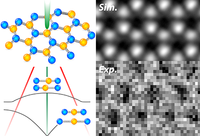
Phonon Spectroscopy at Atomic Resolution

F. S. Hage, D. M. Kepaptsoglou, Q. M. Ramasse, and L. J. Allen

Phys. Rev. Lett. 122, 016103 (2019) - Published 10 January, 2019

Phonon spectroscopy at atomic resolution is demonstrated with scanning transmission electron microscopy.

Observation of Stimulated Hawking Radiation in an Optical Analogue

Jonathan Drori, Yuval Rosenberg, David Bermudez, Yaron Silberberg, and Ulf Leonhardt

Phys. Rev. Lett. 122, 010404 (2019) - Published 9 January, 2019

An optical analogue of stimulated Hawking radiation is observed in nonlinear fiber optics used as a laboratory analogue of black holes.

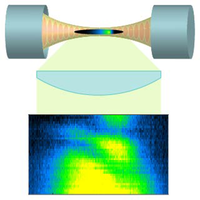
Photon-Mediated Spin-Exchange Dynamics of Spin-1 Atoms

Emily J. Davis, Gregory Bentsen, Lukas Homeier, Tracy Li, and Monika H. Schleier-Smith

Phys. Rev. Lett. 122, 010405 (2019) - Published 9 January, 2019

Spin dynamics induced by nonlocal interactions are imaged for the first time in a system of cold atoms trapped in an optical cavity.

Experimental Demonstration of Acoustic Chern Insulators

Yujiang Ding, Yugui Peng, Yifan Zhu, Xudong Fan, Jing Yang, Bin Liang, Xuefeng Zhu, Xiangang Wan, and Jianchun Cheng

Phys. Rev. Lett. 122, 014302 (2019) - Published 9 January, 2019

An array of air channels behaves as an “acoustic Chern insulator” in which sound waves travel only around the edges and only in one direction.

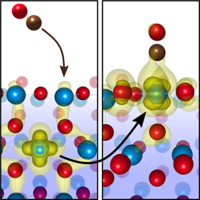
Interplay between Adsorbates and Polarons: CO on Rutile TiO2(110)

Michele Reticcioli, Igor Sokolović, Michael Schmid, Ulrike Diebold, Martin Setvin, and Cesare Franchini

Phys. Rev. Lett. 122, 016805 (2019) - Published 9 January, 2019

By taking into account interactions with polarons, ambiguities in previous studies of adsorbed carbon monoxide can be resolved.

High-Frequency Mechanical Properties of Tumors Measured by Brillouin Light Scattering

Jérémie Margueritat, Angélique Virgone-Carlotta, Sylvain Monnier, Hélène Delanoë-Ayari, Hichem C. Mertani, Alice Berthelot, Quentin Martinet, Xavier Dagany, Charlotte Rivière, Jean-Paul Rieu, and Thomas Dehoux

Phys. Rev. Lett. 122, 018101 (2019) - Published 8 January, 2019

A new experiment uses a light probe to measure the mechanical response of a tumor, which provides information about its anatomy and the efficacy of therapeutic agents.

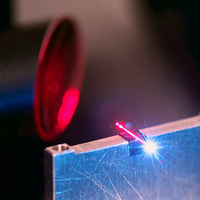
Generation of High-Power, Reversed-Cherenkov Wakefield Radiation in a Metamaterial Structure

Xueying Lu, Michael A. Shapiro, Ivan Mastovsky, Richard J. Temkin, Manoel Conde, John G. Power, Jiahang Shao, Eric E. Wisniewski, and Chunguang Jing

Phys. Rev. Lett. 122, 014801 (2019) - Published 7 January, 2019

An experiment reveals the potential of custom-engineered metamaterials to yield higher accelerating gradients than current particle accelerator technology allows.

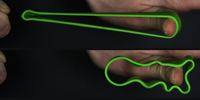
Shooting Rubber Bands: Two Self-Similar Retractions for a Stretched Elastic Wedge

Alexandros T. Oratis and James C. Bird

Phys. Rev. Lett. 122, 014102 (2019) - Published 4 January, 2019

Videos of a moving rubber band show that the band takes on previously unpredicted wavy shapes when it is shot through the air.

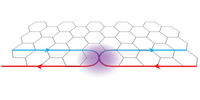
Failure of Conductance Quantization in Two-Dimensional Topological Insulators due to Nonmagnetic Impurities

Pietro Novelli, Fabio Taddei, Andre K. Geim, and Marco Polini

Phys. Rev. Lett. 122, 016601 (2019) - Published 2 January, 2019

Theorists predict that backscattering of electrons by nonmagnetic impurities can disrupt current flow in a 2D topological insulator, in agreement with experiments.

Sign In to Your Journals Account

Filter

Section

Filter

Article Lookup

Enter a citation