Highlights

Identifying a First-Order Phase Transition in Neutron-Star Mergers through Gravitational Waves

Andreas Bauswein, Niels-Uwe F. Bastian, David B. Blaschke, Katerina Chatziioannou, James A. Clark, Tobias Fischer, and Micaela Oertel

Phys. Rev. Lett. 122, 061102 (2019) - Published 12 February, 2019

Two theoretical studies quantify how gravitational waves may serve as probes of phases of nuclear matter in neutron stars.

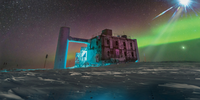
Universe’s Worth of Electrons to Probe Long-Range Interactions of High-Energy Astrophysical Neutrinos

Mauricio Bustamante and Sanjib Kumar Agarwalla

Phys. Rev. Lett. 122, 061103 (2019) - Published 12 February, 2019

Researchers place new limits on hypothetical interactions between neutrinos and large electron populations on galactic scales.

Experimental Realization of a Quantum Autoencoder: The Compression of Qutrits via Machine Learning

Alex Pepper, Nora Tischler, and Geoff J. Pryde

Phys. Rev. Lett. 122, 060501 (2019) - Published 11 February, 2019

Classical machine learning is used to experimentally compress quantum information in a photonic system.

Experimental Observation of Superscattering

Chao Qian, Xiao Lin, Yi Yang, Xiaoyan Xiong, Huaping Wang, Erping Li, Ido Kaminer, Baile Zhang, and Hongsheng Chen

Phys. Rev. Lett. 122, 063901 (2019) - Published 11 February, 2019

A team has engineered a subwavelength structure that features a greatly enhanced capacity to scatter microwave light.

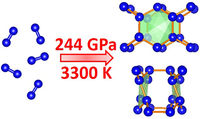
Hexagonal Layered Polymeric Nitrogen Phase Synthesized near 250 GPa

D. Laniel, G. Geneste, G. Weck, M. Mezouar, and P. Loubeyre

Phys. Rev. Lett. 122, 066001 (2019) - Published 11 February, 2019

A new solid nitrogen structure of two-dimensional interconnected hexagons emerges at pressures of 180–250 GPa.

Environment-Assisted Quantum Transport in a 10-qubit Network

Christine Maier, Tiff Brydges, Petar Jurcevic, Nils Trautmann, Cornelius Hempel, Ben P. Lanyon, Philipp Hauke, Rainer Blatt, and Christian F. Roos

Phys. Rev. Lett. 122, 050501 (2019) - Published 8 February, 2019

A quantum effect in which random fluctuations help waves to propagate has been demonstrated in a chain of ten atoms.

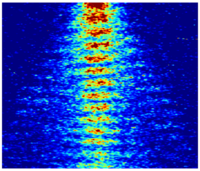
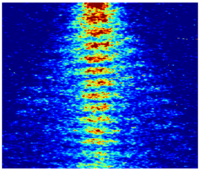
Experimental Observation of Plasma Wakefield Growth Driven by the Seeded Self-Modulation of a Proton Bunch

M. Turner et al. (AWAKE Collaboration)

Phys. Rev. Lett. 122, 054801 (2019) - Published 8 February, 2019

The seeded self-modulation of a relativistic, charged particle bunch in a plasma is shown to grow both along the bunch and along the plasma, resulting in transverse wakefield amplitudes that far exceed the initial seed values.

Experimental Observation of Proton Bunch Modulation in a Plasma at Varying Plasma Densities

E. Adli et al. (AWAKE Collaboration)

Phys. Rev. Lett. 122, 054802 (2019) - Published 8 February, 2019

The seeded self-modulation of a relativistic, charged particle bunch in a plasma is shown to grow both along the bunch and along the plasma, resulting in transverse wakefield amplitudes that far exceed the initial seed values.

Deep Into the Amplituhedron: Amplitude Singularities at All Loops and Legs

Nima Arkani-Hamed, Cameron Langer, Akshay Yelleshpur Srikant, and Jaroslav Trnka

Phys. Rev. Lett. 122, 051601 (2019) - Published 7 February, 2019

Geometric insights make it possible to mathematically probe scattering amplitudes in gauge theories at all perturbative orders and particle multiplicities for the first time.

First Spectroscopy of the Near Drip-line Nucleus Mg40

H. L. Crawford et al.

Phys. Rev. Lett. 122, 052501 (2019) - Published 7 February, 2019

The low-lying excited states of 40Mg have been studied for the first time following a one-proton removal reaction from 41Al.

Near Ground-State Cooling of Two-Dimensional Trapped-Ion Crystals with More than 100 Ions

Elena Jordan, Kevin A. Gilmore, Athreya Shankar, Arghavan Safavi-Naini, Justin G. Bohnet, Murray J. Holland, and John J. Bollinger

Phys. Rev. Lett. 122, 053603 (2019) - Published 7 February, 2019

A laser scheme cools more than a hundred vibrational modes of a 2D crystal to close to their quantum mechanical ground state.

Experimental Reconstruction of Entanglement Quasiprobabilities

J. Sperling, E. Meyer-Scott, S. Barkhofen, B. Brecht, and C. Silberhorn

Phys. Rev. Lett. 122, 053602 (2019) - Published 6 February, 2019

The first experimental reconstruction of an entanglement quasiprobability distribution is achieved using a Bell state.

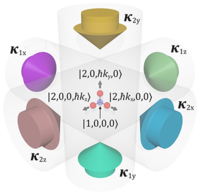
Multidimensional Atom Optics and Interferometry

B. Barrett, P. Cheiney, B. Battelier, F. Napolitano, and P. Bouyer

Phys. Rev. Lett. 122, 043604 (2019) - Published 1 February, 2019

A theoretical proposal for making inertial measurements along more than one dimension with a single atom interferometer could significantly reduce the complexity of a 6 degree-of-freedom inertial system.

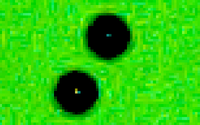
Juggling with Light

Albert J. Bae, Dag Hanstorp, and Kelken Chang

Phys. Rev. Lett. 122, 043902 (2019) - Published 1 February, 2019

A pair of microscopic liquid droplets suspended by a laser beam can execute a surprisingly stable “juggling” pattern for up to 30 minutes.

Matter-Wave Diffraction from a Periodic Array of Half Planes

Ju Hyeon Lee, Lee Yeong Kim, Yun-Tae Kim, Chang Young Lee, Wieland Schöllkopf, and Bum Suk Zhao (조범석)

Phys. Rev. Lett. 122, 040401 (2019) - Published 31 January, 2019

Reflection and diffraction of He atoms and D2 molecules change to edge diffraction behavior as the grating becomes thinner, an effect also seen in radio wave scattering in dense areas and quantum billiards.

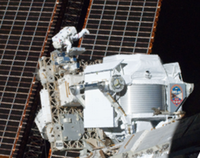
Towards Understanding the Origin of Cosmic-Ray Positrons

M. Aguilar et al. (AMS Collaboration)

Phys. Rev. Lett. 122, 041102 (2019) - Published 29 January, 2019

Measurements of cosmic-ray positrons up to a TeV are consistent with a new source of high energy positrons with a characteristic energy cutoff.

Landauer’s Erasure Principle in a Squeezed Thermal Memory

Jan Klaers

Phys. Rev. Lett. 122, 040602 (2019) - Published 28 January, 2019

A future computer might reduce heat production by timing operations to match naturally occurring temperature swings within the device.

Doping-Induced Second-Harmonic Generation in Centrosymmetric Graphene from Quadrupole Response

Yu Zhang, Di Huang, Yuwei Shan, Tao Jiang, Zhihong Zhang, Kaihui Liu, Lei Shi, Jinluo Cheng, John E. Sipe, Wei-Tao Liu, and Shiwei Wu

Phys. Rev. Lett. 122, 047401 (2019) - Published 28 January, 2019

A monolayer of graphene yields strong second-harmonic generation when electrically doped and excited at oblique incidence.

Using Polarons for sub-nK Quantum Nondemolition Thermometry in a Bose-Einstein Condensate

Mohammad Mehboudi, Aniello Lampo, Christos Charalambous, Luis A. Correa, Miguel Ángel García-March, and Maciej Lewenstein

Phys. Rev. Lett. 122, 030403 (2019) - Published 24 January, 2019

A proposed nondestructive method for measuring the temperature of an ultracold atomic gas could do so in a way that is more accurate than other possible techniques.

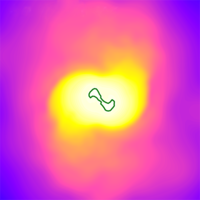
First-Principles Plasma Simulations of Black-Hole Jet Launching

Kyle Parfrey, Alexander Philippov, and Benoît Cerutti

Phys. Rev. Lett. 122, 035101 (2019) - Published 23 January, 2019

Simulations of the environment around a spinning black hole give new insight into the formation of luminous jets seen from Earth.

Sign In to Your Journals Account

Filter

Section

Filter

Article Lookup

Enter a citation