Highlights

Universal Hall Response in Interacting Quantum Systems

Sebastian Greschner, Michele Filippone, and Thierry Giamarchi

Phys. Rev. Lett. 122, 083402 (2019) - Published 28 February, 2019

An extended regime of quantum phases is identified in which the Hall response becomes independent of the interaction strength and particle statistics, a result which remains true for both interacting bosons and fermions.

Density Oscillations Induced by Individual Ultracold Two-Body Collisions

Q. Guan, V. Klinkhamer, R. Klemt, J. H. Becher, A. Bergschneider, P. M. Preiss, S. Jochim, and D. Blume

Phys. Rev. Lett. 122, 083401 (2019) - Published 27 February, 2019

A new experimental setup allows researchers to observe collisions between two ultracold atoms while tuning how hard they hit.

Evidence for a Spatially Modulated Superfluid Phase of He3 under Confinement

Lev V. Levitin, Ben Yager, Laura Sumner, Brian Cowan, Andrew J. Casey, John Saunders, Nikolay Zhelev, Robert G. Bennett, and Jeevak M. Parpia

Phys. Rev. Lett. 122, 085301 (2019) - Published 27 February, 2019

A surprising two-dimensional pattern appears in superfluid helium-3 when the liquid is confined to a micrometer-thick cell and exposed to a magnetic field.

Severe Constraints on New Physics Explanations of the MiniBooNE Excess

Johnathon R. Jordan, Yonatan Kahn, Gordan Krnjaic, Matthew Moschella, and Joshua Spitz

Phys. Rev. Lett. 122, 081801 (2019) - Published 26 February, 2019

Explanations of the MiniBooNE excess involving new particles are severely constrained by existing data.

Shaping Electron Wave Functions in a Carbon Nanotube with a Parallel Magnetic Field

M. Margańska, D. R. Schmid, A. Dirnaichner, P. L. Stiller, Ch. Strunk, M. Grifoni, and A. K. Hüttel

Phys. Rev. Lett. 122, 086802 (2019) - Published 26 February, 2019

Lattice structure, topology, and confinement combine in carbon nanotube quantum dots to allow a magnetic field to shape the electronic wave function.

Can We Probe Planckian Corrections at the Horizon Scale with Gravitational Waves?

Andrea Addazi, Antonino Marcianò, and Nicolás Yunes

Phys. Rev. Lett. 122, 081301 (2019) - Published 25 February, 2019

A theoretical study quantifies future challenges for probing the horizon structure of merging black holes using gravitational waves as a tool to study quantum gravity.

Petawatt Laser Guiding and Electron Beam Acceleration to 8 GeV in a Laser-Heated Capillary Discharge Waveguide

A. J. Gonsalves, K. Nakamura, J. Daniels, C. Benedetti, C. Pieronek, T. C. H. de Raadt, S. Steinke, J. H. Bin, S. S. Bulanov, J. van Tilborg, C. G. R. Geddes, C. B. Schroeder, Cs. Tóth, E. Esarey, K. Swanson, L. Fan-Chiang, G. Bagdasarov, N. Bobrova, V. Gasilov, G. Korn, P. Sasorov, and W. P. Leemans

Phys. Rev. Lett. 122, 084801 (2019) - Published 25 February, 2019

A method for accelerating particles, called wakefield acceleration, has notched up its output energy, bringing it closer to its goal of shrinking the size of accelerator facilities.

Relating Hadronic CP Violation to Higher-Twist Distributions

Chien-Yeah Seng

Phys. Rev. Lett. 122, 072001 (2019) - Published 22 February, 2019

A theoretical analysis indicates that nucleon distribution functions carry information about charge and parity violation.

Pressure Distribution and Shear Forces inside the Proton

P. E. Shanahan and W. Detmold

Phys. Rev. Lett. 122, 072003 (2019) - Published 22 February, 2019

The distribution of pressure and shear forces within the proton are determined using lattice QCD computations for the first time.

Wettability-Independent Droplet Transport by Bendotaxis

Alexander T. Bradley, Finn Box, Ian J. Hewitt, and Dominic Vella

Phys. Rev. Lett. 122, 074503 (2019) - Published 22 February, 2019

A drop of liquid can pull itself along a narrow channel by causing the channel walls to flex.

Quantum Measurement Cooling

Lorenzo Buffoni, Andrea Solfanelli, Paola Verrucchi, Alessandro Cuccoli, and Michele Campisi

Phys. Rev. Lett. 122, 070603 (2019) - Published 21 February, 2019

A proposed noise-tolerant approach to quantum refrigeration eliminates the need for feedback control by exploiting the invasiveness of quantum measurements.

Distinguishing Nonlinear Terahertz Excitation Pathways with Two-Dimensional Spectroscopy

Courtney L. Johnson, Brittany E. Knighton, and Jeremy A. Johnson

Phys. Rev. Lett. 122, 073901 (2019) - Published 21 February, 2019

This first example of 2D-THz vibrational spectroscopy shows that 2D spectroscopy is needed to distinguish a dominant energy-flow pathway when nonlinearly exciting CdWO4 with intense THz radiation.

Observation of Chiral Fermions with a Large Topological Charge and Associated Fermi-Arc Surface States in CoSi

Daichi Takane, Zhiwei Wang, Seigo Souma, Kosuke Nakayama, Takechika Nakamura, Hikaru Oinuma, Yuki Nakata, Hideaki Iwasawa, Cephise Cacho, Timur Kim, Koji Horiba, Hiroshi Kumigashira, Takashi Takahashi, Yoichi Ando, and Takafumi Sato

Phys. Rev. Lett. 122, 076402 (2019) - Published 20 February, 2019

Photoemission spectroscopy provides the first experimental evidence of spin-1 chiral fermions and double Weyl fermions.

Demonstration of Displacement Sensing of a mg-Scale Pendulum for mm- and mg-Scale Gravity Measurements

Nobuyuki Matsumoto, Seth B. Cataño-Lopez, Masakazu Sugawara, Seiya Suzuki, Naofumi Abe, Kentaro Komori, Yuta Michimura, Yoichi Aso, and Keiichi Edamatsu

Phys. Rev. Lett. 122, 071101 (2019) - Published 19 February, 2019

Researchers demonstrate a key element of a proposed scheme for determining the gravitational pull of an object with a mass of just 100 milligrams.

Signatures of Enhanced Superconducting Phase Coherence in Optimally Doped Bi2Sr2Y0.08Ca0.92Cu2O8+δ Driven by Midinfrared Pulse Excitations

F. Giusti, A. Marciniak, F. Randi, G. Sparapassi, F. Boschini, H. Eisaki, M. Greven, A. Damascelli, A. Avella, and D. Fausti

Phys. Rev. Lett. 122, 067002 (2019) - Published 15 February, 2019

Ultrashort mid-infrared laser pulses can drive the superconducting state of an optimally doped bismuth cuprate to about 10K above its thermodynamic transition temperature.

Bending to Kinetic Energy Transfer in Adhesive Peel Front Microinstability

V. De Zotti, K. Rapina, P.-P. Cortet, L. Vanel, and S. Santucci

Phys. Rev. Lett. 122, 068005 (2019) - Published 15 February, 2019

Exhaustive experiments lead to a theory that describes the microscale, jerky process involved in the seemingly smooth peeling of tape from a surface.

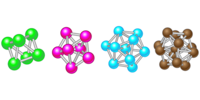
Morphometric Approach to Many-Body Correlations in Hard Spheres

Joshua F. Robinson, Francesco Turci, Roland Roth, and C. Patrick Royall

Phys. Rev. Lett. 122, 068004 (2019) - Published 14 February, 2019

Reconciling the high viscosity of “supercooled” liquids with their microstructure has stumped existing theory, but an advance in liquid-state theory may lead to a resolution.

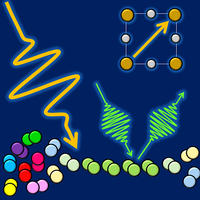
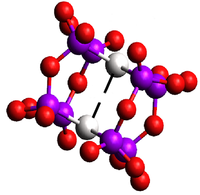
Ultrafast X-Ray Scattering Measurements of Coherent Structural Dynamics on the Ground-State Potential Energy Surface of a Diplatinum Molecule

Kristoffer Haldrup, Gianluca Levi, Elisa Biasin, Peter Vester, Mads Goldschmidt Laursen, Frederik Beyer, Kasper Skov Kjær, Tim Brandt van Driel, Tobias Harlang, Asmus O. Dohn, Robert J. Hartsock, Silke Nelson, James M. Glownia, Henrik T. Lemke, Morten Christensen, Kelly J. Gaffney, Niels E. Henriksen, Klaus B. Møller, and Martin M. Nielsen

Phys. Rev. Lett. 122, 063001 (2019) - Published 13 February, 2019

Using an x-ray free electron laser, the first direct, sub-picosecond measurements of ground-state bond-length dynamics in a prototypical metal complex in solution suggest an advance in methods of probing the structural dynamics of molecules in general.

Fermi-Arc-Induced Vortex Structure in Weyl Beam Shifts

Udvas Chattopadhyay, Li-kun Shi, Baile Zhang, Justin C. W. Song, and Y. D. Chong

Phys. Rev. Lett. 122, 066602 (2019) - Published 13 February, 2019

A striking variant of the Goos-Hänchen shift linked to topological Fermi arc surface states in Weyl media provides a novel observable signature of topological surface states.

Signatures of Quark-Hadron Phase Transitions in General-Relativistic Neutron-Star Mergers

Elias R. Most, L. Jens Papenfort, Veronica Dexheimer, Matthias Hanauske, Stefan Schramm, Horst Stöcker, and Luciano Rezzolla

Phys. Rev. Lett. 122, 061101 (2019) - Published 12 February, 2019

Two theoretical studies quantify how gravitational waves may serve as probes of phases of nuclear matter in neutron stars.

Sign In to Your Journals Account

Filter

Section

Filter

Article Lookup

Enter a citation