Highlights

Random Language Model

E. DeGiuli

Phys. Rev. Lett. 122, 128301 (2019) - Published 29 March, 2019

The transition a young child makes in acquiring complex language might be a kind of phase transition.

Unique Fingerprints of Alternatives to Inflation in the Primordial Power Spectrum

Xingang Chen, Abraham Loeb, and Zhong-Zhi Xianyu

Phys. Rev. Lett. 122, 121301 (2019) - Published 28 March, 2019

A proposed cosmological signature, called a clock signal, could provide a way to study the first ticks of cosmic time.

Complex Crystals from Size-Disperse Spheres

Praveen K. Bommineni, Nydia Roxana Varela-Rosales, Marco Klement, and Michael Engel

Phys. Rev. Lett. 122, 128005 (2019) - Published 28 March, 2019

Simulation of hard spheres with size dispersity of up to 19% show that they crystallize into complex structures.

Matching the Nonequilibrium Initial Stage of Heavy Ion Collisions to Hydrodynamics with QCD Kinetic Theory

Aleksi Kurkela, Aleksas Mazeliauskas, Jean-François Paquet, Sören Schlichting, and Derek Teaney

Phys. Rev. Lett. 122, 122302 (2019) - Published 27 March, 2019

The application of non-equilibrium linear response theory to early pre-equilibrium dynamics of high-energy heavy-ion collisions establishes new constraints for the formation of a hydrodynamic Quark Gluon Plasma in small systems.

Cavity-Based 3D Cooling of a Levitated Nanoparticle via Coherent Scattering

Dominik Windey, Carlos Gonzalez-Ballestero, Patrick Maurer, Lukas Novotny, Oriol Romero-Isart, and René Reimann

Phys. Rev. Lett. 122, 123601 (2019) - Published 27 March, 2019

Researchers performed 3D cavity cooling of levitated nanoparticles, reaching record low temperatures by utilizing light that scatters off the particles.

Cavity Cooling of a Levitated Nanosphere by Coherent Scattering

Uroš Delić, Manuel Reisenbauer, David Grass, Nikolai Kiesel, Vladan Vuletić, and Markus Aspelmeyer

Phys. Rev. Lett. 122, 123602 (2019) - Published 27 March, 2019

Researchers performed 3D cavity cooling of levitated nanoparticles, reaching record low temperatures by utilizing light that scatters off the particles.

Crystallinelike Ordering of Confined Liquids at the Moving Contact Line

Kumar Nanjundiah, Anish Kurian, Sukhmanjot Kaur, Saranshu Singla, and Ali Dhinojwala

Phys. Rev. Lett. 122, 128004 (2019) - Published 27 March, 2019

Pentadecane liquid confined between a soft lens and a sapphire substrate orders at the moving edges at ~70°C above the bulk melting temperature during friction and adhesion experiments.

Structured-Pump-Enabled Quantum Pattern Recognition

Xiaodong Qiu, Dongkai Zhang, Wuhong Zhang, and Lixiang Chen

Phys. Rev. Lett. 122, 123901 (2019) - Published 26 March, 2019

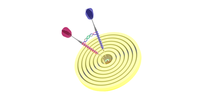
Using a variation of a technique known as ghost imaging, researchers demonstrate a face recognition protocol that works without complex image analysis algorithms.

Zeeman-Induced Valley-Sensitive Photocurrent in Monolayer MoS2

Xiao-Xiao Zhang, You Lai, Emma Dohner, Seongphill Moon, Takashi Taniguchi, Kenji Watanabe, Dmitry Smirnov, and Tony F. Heinz

Phys. Rev. Lett. 122, 127401 (2019) - Published 26 March, 2019

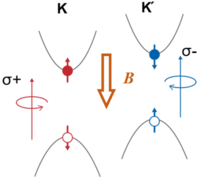
Optoelectronic response in the 2D material MoS2 is controlled by the interplay of an external magnetic field and particular features of the electron band structure (valleytronics).

Broadband-Enhanced Transmission through Symmetric Diffusive Slabs

Élie Chéron, Simon Félix, and Vincent Pagneux

Phys. Rev. Lett. 122, 125501 (2019) - Published 25 March, 2019

An opaque barrier in a waveguide transmits more when sandwiched between disordered diffusive slabs.

Higgs Mode of Planar Coupled Spin Ladders and its Observation in C9H18N2CuBr4

T. Ying, K. P. Schmidt, and S. Wessel

Phys. Rev. Lett. 122, 127201 (2019) - Published 25 March, 2019

Using large-scale quantum Monte Carlo simulations, the Higgs mode in the metal-organic compound C9H18N2CuBr4 is explained as a two-magnon bound state in the strongly anisotropic (Ising) limit.

On-Demand Semiconductor Source of Entangled Photons Which Simultaneously Has High Fidelity, Efficiency, and Indistinguishability

Hui Wang, Hai Hu, T.-H. Chung, Jian Qin, Xiaoxia Yang, J.-P. Li, R.-Z. Liu, H.-S. Zhong, Y.-M. He, Xing Ding, Y.-H. Deng, Qing Dai, Y.-H. Huo, Sven Höfling, Chao-Yang Lu, and Jian-Wei Pan

Phys. Rev. Lett. 122, 113602 (2019) - Published 22 March, 2019

A quantum-dot-based device combines all of the attributes necessary for producing a reliable source of entangled photons for quantum information applications.

Probing the Melting of a Two-Dimensional Quantum Wigner Crystal via its Screening Efficiency

H. Deng, L. N. Pfeiffer, K. W. West, K. W. Baldwin, L. W. Engel, and M. Shayegan

Phys. Rev. Lett. 122, 116601 (2019) - Published 21 March, 2019

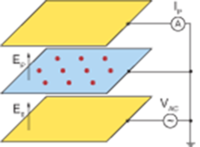
Penetration capacitance measurements of screening efficiencies allows for the mapping of a precise temperature versus filling phase diagram for the melting of Wigner crystals.

Matter-Wave Diffraction from a Quasicrystalline Optical Lattice

Konrad Viebahn, Matteo Sbroscia, Edward Carter, Jr-Chiun Yu, and Ulrich Schneider

Phys. Rev. Lett. 122, 110404 (2019) - Published 20 March, 2019

Experimentalists realize a Bose-Einstein condensate on a 2D quasicrystal optical lattice, opening the path for simulations of a variety of quantum many-body phenomena in these fractal structures.

Genuine 12-Qubit Entanglement on a Superconducting Quantum Processor

Ming Gong, Ming-Cheng Chen, Yarui Zheng, Shiyu Wang, Chen Zha, Hui Deng, Zhiguang Yan, Hao Rong, Yulin Wu, Shaowei Li, Fusheng Chen, Youwei Zhao, Futian Liang, Jin Lin, Yu Xu, Cheng Guo, Lihua Sun, Juno Clark, Haohua Wang, Chengzhi Peng, Chao-Yang Lu, Xiaobo Zhu, and Jian-Wei Pan

Phys. Rev. Lett. 122, 110501 (2019) - Published 20 March, 2019

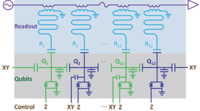
Twelve superconducting qubits are entangled, forming a linear cluster state, by using a carefully calibrated sequence of single and 2-qubit quantum gates.

Experimental Demonstration of Quantum Effects in the Operation of Microscopic Heat Engines

James Klatzow, Jonas N. Becker, Patrick M. Ledingham, Christian Weinzetl, Krzysztof T. Kaczmarek, Dylan J. Saunders, Joshua Nunn, Ian A. Walmsley, Raam Uzdin, and Eilon Poem

Phys. Rev. Lett. 122, 110601 (2019) - Published 20 March, 2019

Experiments demonstrate a quantum-coherence-induced power increase for quantum heat engines over their classical counterparts.

Longitudinal Phase-Space Manipulation with Beam-Driven Plasma Wakefields

V. Shpakov et al.

Phys. Rev. Lett. 122, 114801 (2019) - Published 19 March, 2019

A new device removes the time-energy correlation or energy chirp on a plasma wakefield, reducing the overall energy spread of the beam.

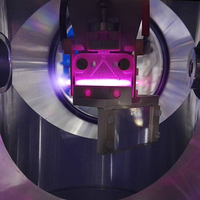
Achievement of Reactor-Relevant Performance in Negative Triangularity Shape in the DIII-D Tokamak

M. E. Austin, A. Marinoni, M. L. Walker, M. W. Brookman, J. S. deGrassie, A. W. Hyatt, G. R. McKee, C. C. Petty, T. L. Rhodes, S. P. Smith, C. Sung, K. E. Thome, and A. D. Turnbull

Phys. Rev. Lett. 122, 115001 (2019) - Published 18 March, 2019

Tokamak experiments show that confining the plasma in an elongated inverse D-shape could reduce energy transport at reactor-relevant plasma pressure without disruptive instabilities.

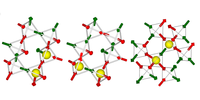
Spectrum of Itinerant Fractional Excitations in Quantum Spin Ice

Masafumi Udagawa and Roderich Moessner

Phys. Rev. Lett. 122, 117201 (2019) - Published 18 March, 2019

Calculations uncover the neutron-scattering signature of the magnetic monopoles that propagate through quantum spin ices.

Adaptive Compressive Tomography with No a priori Information

D. Ahn, Y. S. Teo, H. Jeong, F. Bouchard, F. Hufnagel, E. Karimi, D. Koutný, J. Řeháček, Z. Hradil, G. Leuchs, and L. L. Sánchez-Soto

Phys. Rev. Lett. 122, 100404 (2019) - Published 15 March, 2019

Sign In to Your Journals Account

Filter

Section

Filter

Article Lookup

Enter a citation