Highlights

Cosmological Constraints from Multiple Probes in the Dark Energy Survey

T. M. C. Abbott et al. (DES Collaboration)

Phys. Rev. Lett. 122, 171301 (2019) - Published 1 May, 2019

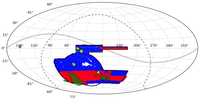
The Dark Energy Survey has combined its analysis of four cosmological observables to constrain the properties of dark energy—paving the way for cosmological surveys that will run in the next decade.

2000-Times Repeated Imaging of Strontium Atoms in Clock-Magic Tweezer Arrays

Jacob P. Covey, Ivaylo S. Madjarov, Alexandre Cooper, and Manuel Endres

Phys. Rev. Lett. 122, 173201 (2019) - Published 1 May, 2019

2000-times repeated high-fidelity low-loss imaging of a single alkaline earth atom has been demonstrated using magic wavelength optical tweezers.

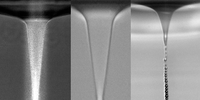
Conical Interfaces between Two Immiscible Fluids Induced by an Optical Laser Beam

A. Girot, J. Petit, R. Saiseau, T. Guérin, H. Chraibi, U. Delabre, and J. P. Delville

Phys. Rev. Lett. 122, 174501 (2019) - Published 1 May, 2019

Researchers deform the interface between two immiscible liquids using a laser beam, creating a cone-shaped structure that can emit a fluid jet from its tip.

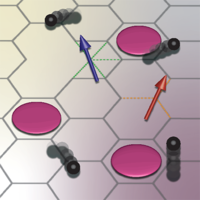
Discrete Electronic Subbands due to Bragg Scattering at Molecular Edges

A. Martín-Jiménez, J. M. Gallego, R. Miranda, and R. Otero

Phys. Rev. Lett. 122, 176801 (2019) - Published 30 April, 2019

A periodic structure deposited on copper produces an electron density pattern that could affect the chemical and physical properties of the surface.

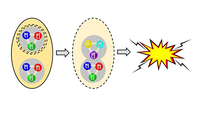
Baryon-Number Violation by Two Units and the Deuteron Lifetime

F. Oosterhof, B. Long, J. de Vries, R. G. E. Timmermans, and U. van Kolck

Phys. Rev. Lett. 122, 172501 (2019) - Published 29 April, 2019

An otherwise stable deuteron decays due to a neutron-to-antineutron transition that violates baryon number by two units, and results in antineutron-proton annihilation.

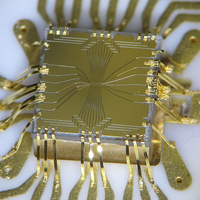
Trapped-Ion Spin-Motion Coupling with Microwaves and a Near-Motional Oscillating Magnetic Field Gradient

R. Srinivas, S. C. Burd, R. T. Sutherland, A. C. Wilson, D. J. Wineland, D. Leibfried, D. T. C. Allcock, and D. H. Slichter

Phys. Rev. Lett. 122, 163201 (2019) - Published 26 April, 2019

A new method of spin-motion coupling for trapped ions using microwaves and a magnetic field gradient oscillating close to the ions’ motional frequency is presented.

Exotic Low-Energy Excitations Emergent in the Random Kitaev Magnet Cu2IrO3

Y. S. Choi, C. H. Lee, S. Lee, Sungwon Yoon, W.-J. Lee, J. Park, Anzar Ali, Yogesh Singh, Jean-Christophe Orain, Gareoung Kim, Jong-Soo Rhyee, Wei-Tin Chen, Fangcheng Chou, and Kwang-Yong Choi

Phys. Rev. Lett. 122, 167202 (2019) - Published 26 April, 2019

Combined dc/ac susceptibility, specific heat, and muon spin relaxation experiments show evidence consistent with a spin-liquid-like state in Cu2IrO3 down to 260 mK.

Surface Pair-Density-Wave Superconducting and Superfluid States

Mats Barkman, Albert Samoilenka, and Egor Babaev

Phys. Rev. Lett. 122, 165302 (2019) - Published 25 April, 2019

The phase transition from the FFLO to the normal state goes through an intermediate state where pair-density-wave superconductivity or superfluidity exists only on the boundaries of the system.

Detecting Fractional Chern Insulators through Circular Dichroism

C. Repellin and N. Goldman

Phys. Rev. Lett. 122, 166801 (2019) - Published 25 April, 2019

The fractional nature of the Hall conductance of an atomic cloud can be revealed by measuring its excitation rates upon circular driving.

Material Size Dependence on Fundamental Constants

Lukáš F. Pašteka, Yongliang Hao, Anastasia Borschevsky, Victor V. Flambaum, and Peter Schwerdtfeger

Phys. Rev. Lett. 122, 160801 (2019) - Published 24 April, 2019

Searching for variations in fundamental constants—which are predicted by some theories of dark matter—might potentially be done by monitoring the sizes of solid crystals.

Cherenkov Radiation from the Quantum Vacuum

Alexander J. Macleod, Adam Noble, and Dino A. Jaroszynski

Phys. Rev. Lett. 122, 161601 (2019) - Published 24 April, 2019

The quantum vacuum of QED may facilitate Cherenkov radiation under the influence of strong electromagnetic fields.

SENSEI: Direct-Detection Constraints on Sub-GeV Dark Matter from a Shallow Underground Run Using a Prototype Skipper CCD

Orr Abramoff, Liron Barak, Itay M. Bloch, Luke Chaplinsky, Michael Crisler, Dawa, Alex Drlica-Wagner, Rouven Essig, Juan Estrada, Erez Etzion, Guillermo Fernandez, Daniel Gift, Miguel Sofo-Haro, Joseph Taenzer, Javier Tiffenberg, Tomer Volansky, and Tien-Tien Yu (SENSEI Collaboration)

Phys. Rev. Lett. 122, 161801 (2019) - Published 24 April, 2019

World-leading constraints are placed on dark-matter–electron scattering for 0.5–5 MeV masses, and dark photons absorbed by electrons for masses below 12.4 eV.

Layering Transition in Superfluid Helium Adsorbed on a Carbon Nanotube Mechanical Resonator

Adrien Noury, Jorge Vergara-Cruz, Pascal Morfin, Bernard Plaçais, Maria C. Gordillo, Jordi Boronat, Sébastien Balibar, and Adrian Bachtold

Phys. Rev. Lett. 122, 165301 (2019) - Published 23 April, 2019

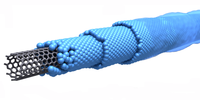
Experiments show that a superfluid helium film forming on a carbon nanotube grows layer by layer, with one layer fully forming before the next one starts.

Observation of Atom Number Fluctuations in a Bose-Einstein Condensate

M. A. Kristensen, M. B. Christensen, M. Gajdacz, M. Iglicki, K. Pawłowski, C. Klempt, J. F. Sherson, K. Rzążewski, A. J. Hilliard, and J. J. Arlt

Phys. Rev. Lett. 122, 163601 (2019) - Published 22 April, 2019

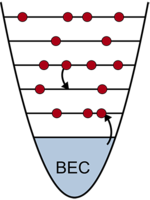
The first experimental observation of atom number fluctuations in atomic Bose-Einstein condensates demonstrates that the preparation of ultracold gases has reached a point where the fundamental fluctuations of the system have to be considered in precision experiments.

Geometric Mechanics of Origami Patterns Exhibiting Poisson’s Ratio Switch by Breaking Mountain and Valley Assignment

Phanisri P. Pratapa, Ke Liu, and Glaucio H. Paulino

Phys. Rev. Lett. 122, 155501 (2019) - Published 19 April, 2019

A folding pattern produces a metamaterial with properties that can be tuned over a wide range.

Optimal Probabilistic Work Extraction beyond the Free Energy Difference with a Single-Electron Device

Olivier Maillet, Paolo A. Erdman, Vasco Cavina, Bibek Bhandari, Elsa T. Mannila, Joonas T. Peltonen, Andrea Mari, Fabio Taddei, Christopher Jarzynski, Vittorio Giovannetti, and Jukka P. Pekola

Phys. Rev. Lett. 122, 150604 (2019) - Published 18 April, 2019

In very small systems like a single electron transistor, sometimes thermal fluctuations allow single shot extraction of work from the system beyond the bounds of the second law of thermodynamics.

Bouncing Oil Droplet in a Stratified Liquid and its Sudden Death

Yanshen Li, Christian Diddens, Andrea Prosperetti, Kai Leong Chong, Xuehua Zhang, and Detlef Lohse

Phys. Rev. Lett. 122, 154502 (2019) - Published 17 April, 2019

Oil drops falling through a layered liquid with ethanol at the top and water at the bottom repeatedly jump inside the fluid.

Free-Surface Variational Principle for an Incompressible Fluid with Odd Viscosity

Alexander G. Abanov and Gustavo M. Monteiro

Phys. Rev. Lett. 122, 154501 (2019) - Published 16 April, 2019

Fluids in which both time-reversal and parity are broken can exhibit odd viscosity, which is dissipationless and affects the free fluid surface rather than the bulk.

Strength of Mechanical Memories is Maximal at the Yield Point of a Soft Glass

Srimayee Mukherji, Neelima Kandula, A. K. Sood, and Rajesh Ganapathy

Phys. Rev. Lett. 122, 158001 (2019) - Published 16 April, 2019

Cyclic shearing of a bubble raft shows that memory formation persists beyond the yield strain.

Transitions across Melancholia States in a Climate Model: Reconciling the Deterministic and Stochastic Points of View

Valerio Lucarini and Tamás Bódai

Phys. Rev. Lett. 122, 158701 (2019) - Published 16 April, 2019

Calculations show that small fluctuations in solar radiation could cause a transition between a warm Earth and an icy Earth.

Sign In to Your Journals Account

Filter

Section

Filter

Article Lookup

Enter a citation