Highlights

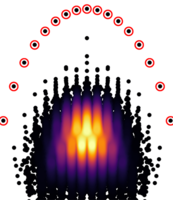
Neural-Network Approach to Dissipative Quantum Many-Body Dynamics

Michael J. Hartmann and Giuseppe Carleo

Phys. Rev. Lett. 122, 250502 (2019) - Published 28 June, 2019

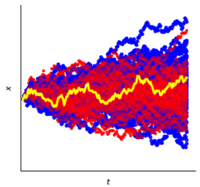
Simulating a quantum system that exchanges energy with the outside world is notoriously hard, but the necessary computations might be easier with the help of neural networks.

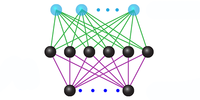
Variational Neural-Network Ansatz for Steady States in Open Quantum Systems

Filippo Vicentini, Alberto Biella, Nicolas Regnault, and Cristiano Ciuti

Phys. Rev. Lett. 122, 250503 (2019) - Published 28 June, 2019

Simulating a quantum system that exchanges energy with the outside world is notoriously hard, but the necessary computations might be easier with the help of neural networks.

Rejuvenation and Memory Effects in a Structural Glass

Camille Scalliet and Ludovic Berthier

Phys. Rev. Lett. 122, 255502 (2019) - Published 28 June, 2019

A structural glass experiences rejuvenation and memory effects when the temperature is cycled, analogous to what is already known for spin glasses, emphasizing the link between mean field models of these two types of glasses.

Colossal Elastocaloric Effect in Ferroelastic Ni-Mn-Ti Alloys

Daoyong Cong, Wenxin Xiong, Antoni Planes, Yang Ren, Lluís Mañosa, Peiyu Cao, Zhihua Nie, Xiaoming Sun, Zhi Yang, Xiufeng Hong, and Yandong Wang

Phys. Rev. Lett. 122, 255703 (2019) - Published 26 June, 2019

A newly designed alloy exhibits a “colossal” elastocaloric effect—a temperature change under strain—making it a good candidate for an environmentally friendly type of cooling.

Modulating the Electrical Transport in the Two-Dimensional Electron Gas at LaAlO3/SrTiO3 Heterostructures by Interfacial Flexoelectricity

Fan Zhang, Peng Lv, Yiteng Zhang, Shujin Huang, Chi-Man Wong, Hei-Man Yau, Xinxin Chen, Zheng Wen, Xiaoning Jiang, Changgan Zeng, Jiawang Hong, and Ji-yan Dai

Phys. Rev. Lett. 122, 257601 (2019) - Published 26 June, 2019

Bending a stack of metal oxide sheets can alter the electrical resistance of a 2D electron gas that resides within.

Sub-ballistic Growth of Rényi Entropies due to Diffusion

Tibor Rakovszky, Frank Pollmann, and C. W. von Keyserlingk

Phys. Rev. Lett. 122, 250602 (2019) - Published 25 June, 2019

Higher order Rényi entropies are sensitive to physics not captured by the von Neumann entropy, in particular they work for systems with locally conserved quantities that diffuse as a consequence of quantum fluctuations.

Observation of Interference between Resonant and Detuned stirap in the Adiabatic Creation of Na23K40 Molecules

Lan Liu, De-Chao Zhang, Huan Yang, Ya-Xiong Liu, Jue Nan, Jun Rui, Bo Zhao, and Jian-Wei Pan

Phys. Rev. Lett. 122, 253201 (2019) - Published 25 June, 2019

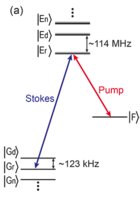
New measurements of resonant and detuned STIRAP (stimulated Raman adiabatic passage) in the creation of ground-state molecules reveal that contribution from detuned STIRAP to the resonant case leads to a quantum interference effect between different passage paths which cannot be neglected.

Measurement of the Weak Axial-Vector Coupling Constant in the Decay of Free Neutrons Using a Pulsed Cold Neutron Beam

B. Märkisch, H. Mest, H. Saul, X. Wang, H. Abele, D. Dubbers, M. Klopf, A. Petoukhov, C. Roick, T. Soldner, and D. Werder

Phys. Rev. Lett. 122, 242501 (2019) - Published 21 June, 2019

The most precise measurement of the axial-vector coupling constant has been made using a pulsed neutron beam.

Making a Simple A+B→C Reaction Oscillate by Coupling to Hydrodynamic Effect

M. A. Budroni, V. Upadhyay, and L. Rongy

Phys. Rev. Lett. 122, 244502 (2019) - Published 20 June, 2019

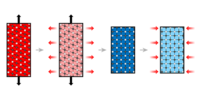
Any chemical reaction of the type A + B -> C, between two reactant species (A and B), can be made to oscillate in time and space if the interface region where C forms obeys certain fluid convection properties.

Polarons from First Principles, without Supercells

Weng Hong Sio, Carla Verdi, Samuel Poncé, and Feliciano Giustino

Phys. Rev. Lett. 122, 246403 (2019) - Published 19 June, 2019

A new way to model polarons combines the intuition of modeling with the realism of simulations, allowing these quasiparticles to be studied in a broader range of materials.

Elastocapillary Ridge as a Noninteger Disclination

Robin Masurel, Matthieu Roché, Laurent Limat, Ioan Ionescu, and Julien Dervaux

Phys. Rev. Lett. 122, 248004 (2019) - Published 18 June, 2019

A new theory that incorporates nonlinear properties of rubber-like materials correctly describes the shape of the ridge that forms when the material is strongly deformed by an object.

Stability Limit of Electrified Droplets

J. Beroz, A. J. Hart, and J. W. M. Bush

Phys. Rev. Lett. 122, 244501 (2019) - Published 17 June, 2019

A theory of the breakup of conducting droplets subjected to an electric field can produce design criteria for industrial processes.

Anomalous Supersymmetry

Georgios Katsianis, Ioannis Papadimitriou, Kostas Skenderis, and Marika Taylor

Phys. Rev. Lett. 122, 231602 (2019) - Published 14 June, 2019

A theoretical analysis shows that that for certain classes of theories global supersymmetry may be violated upon quantization even when it is realized classically.

Finite-Temperature Conformal Field Theory Results for All Couplings: O(N) Model in 2+1 Dimensions

Paul Romatschke

Phys. Rev. Lett. 122, 231603 (2019) - Published 14 June, 2019

An analytic computation quantifies the notion that quantum field theories can lose degrees of freedom in the strongly coupled phase by showing that the entropy of O(N) model in d=2+1 decreases at strong coupling to 4/5 of its value in the weak coupling regime.

Topological Insulators by Topology Optimization

Rasmus E. Christiansen, Fengwen Wang, and Ole Sigmund

Phys. Rev. Lett. 122, 234502 (2019) - Published 14 June, 2019

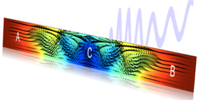
Topological insulators can be inversely designed top-down based on the global response goals without imposing explicit interfacial requirements.

Fabrication of High-Temperature Quasi-Two-Dimensional Superconductors at the Interface of a Ferroelectric Ba0.8Sr0.2TiO3 Film and an Insulating Parent Compound of La2CuO4

Dmitrii P. Pavlov, Rustem R. Zagidullin, Vladimir M. Mukhortov, Viktor V. Kabanov, Tadashi Adachi, Takayuki Kawamata, Yoji Koike, and Rinat F. Mamin

Phys. Rev. Lett. 122, 237001 (2019) - Published 14 June, 2019

The two-dimensional electron gas at the interface between a ferroelectric and its parent compound can be made to superconduct below 30K when the carrier concentration in the parent compound is increased.

Mirror Coating Solution for the Cryogenic Einstein Telescope

Kieran Craig, Jessica Steinlechner, Peter G. Murray, Angus S. Bell, Imogen Birney, Karen Haughian, Jim Hough, Ian MacLaren, Steve Penn, Stuart Reid, Raymond Robie, Sheila Rowan, and Iain W. Martin

Phys. Rev. Lett. 122, 231102 (2019) - Published 13 June, 2019

Gravitational-wave detectors may benefit from an alternative coating material that is less noisy at low temperatures than currently used materials.

Terahertz Vortex Beam as a Spectroscopic Probe of Magnetic Excitations

A. A. Sirenko, P. Marsik, C. Bernhard, T. N. Stanislavchuk, V. Kiryukhin, and S.-W. Cheong

Phys. Rev. Lett. 122, 237401 (2019) - Published 12 June, 2019

A light “corkscrew” is sensitive to the local magnetic field direction, so it can be used to probe magnetism in a material.

Systematic Study of L-Shell Opacity at Stellar Interior Temperatures

T. Nagayama, J. E. Bailey, G. P. Loisel, G. S. Dunham, G. A. Rochau, C. Blancard, J. Colgan, Ph. Cossé, G. Faussurier, C. J. Fontes, F. Gilleron, S. B. Hansen, C. A. Iglesias, I. E. Golovkin, D. P. Kilcrease, J. J. MacFarlane, R. C. Mancini, R. M. More, C. Orban, J.-C. Pain, M. E. Sherrill, and B. G. Wilson

Phys. Rev. Lett. 122, 235001 (2019) - Published 10 June, 2019

Experiments that replicate conditions in the Sun’s interior have found that the light absorption by certain elements doesn’t match expectations, raising questions about the accuracy of solar models.

Emergent SU(2) Dynamics and Perfect Quantum Many-Body Scars

Soonwon Choi, Christopher J. Turner, Hannes Pichler, Wen Wei Ho, Alexios A. Michailidis, Zlatko Papić, Maksym Serbyn, Mikhail D. Lukin, and Dmitry A. Abanin

Phys. Rev. Lett. 122, 220603 (2019) - Published 7 June, 2019
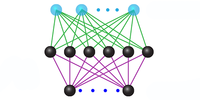
Long-lived dynamics in a constrained spin model suggests that quantum scars are stable in the thermodynamic limit.

Sign In to Your Journals Account

Filter

Section

Filter

Article Lookup

Enter a citation