Highlights

Quantum Electrodynamical Bloch Theory with Homogeneous Magnetic Fields

Vasil Rokaj, Markus Penz, Michael A. Sentef, Michael Ruggenthaler, and Angel Rubio

Phys. Rev. Lett. 123, 047202 (2019) - Published 23 July, 2019

A general theory of quantum electrodynamics shows that translational symmetry can be restored for Bloch electrons in a homogeneous magnetic field by including its fluctuations.

Optical Tomography of Chemical Elements Synthesized in Type Ia Supernovae

I. R. Seitenzahl, P. Ghavamian, J. M. Laming, and F. P. A. Vogt

Phys. Rev. Lett. 123, 041101 (2019) - Published 22 July, 2019

A new optical spectroscopy method can characterize the chemical composition of different layers of the material ejected from type Ia supernovae, delivering clues to the star’s history.

Approaching Quantization in Macroscopic Quantum Spin Hall Devices through Gate Training

Lukas Lunczer, Philipp Leubner, Martin Endres, Valentin L. Müller, Christoph Brüne, Hartmut Buhmann, and Laurens W. Molenkamp

Phys. Rev. Lett. 123, 047701 (2019) - Published 22 July, 2019

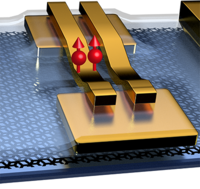
Using controlled gate training, the scattering lengths in HgTe edge channels can be extended by an order of magnitude, opening up the feasibility of macroscopic applications.

In-Orbit Performance of the GRACE Follow-on Laser Ranging Interferometer

Klaus Abich et al.

Phys. Rev. Lett. 123, 031101 (2019) - Published 19 July, 2019

A pair of satellites 200 km apart has demonstrated a record-high precision in distance determination, which will be useful for mapping out Earth’s gravitational field.

Einstein Rings in Holography

Koji Hashimoto, Shunichiro Kinoshita, and Keiju Murata

Phys. Rev. Lett. 123, 031602 (2019) - Published 19 July, 2019

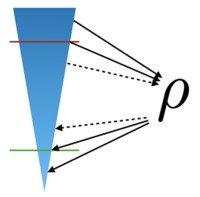
The AdS/CFT correspondence is used to show that response functions of quantum field theories can be used to “image” the black holes of the field theory’s gravitational duals.

All Magic Angles in Twisted Bilayer Graphene are Topological

Zhida Song, Zhijun Wang, Wujun Shi, Gang Li, Chen Fang, and B. Andrei Bernevig

Phys. Rev. Lett. 123, 036401 (2019) - Published 16 July, 2019

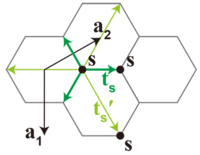
Particle-hole symmetry dictates that bands at low energy in twisted bilayer graphene are always topological, as long as the lowest two are gapped from the rest.

Al+27 Quantum-Logic Clock with a Systematic Uncertainty below 10−18

S. M. Brewer, J.-S. Chen, A. M. Hankin, E. R. Clements, C. W. Chou, D. J. Wineland, D. B. Hume, and D. R. Leibrandt

Phys. Rev. Lett. 123, 033201 (2019) - Published 15 July, 2019

An aluminum ion clock has a fractional-frequency uncertainty of less than one part in 1018, a four-decades-long goal in precision.

Can Three-Body Recombination Purify a Quantum Gas?

Lena H. Dogra, Jake A. P. Glidden, Timon A. Hilker, Christoph Eigen, Eric A. Cornell, Robert P. Smith, and Zoran Hadzibabic

Phys. Rev. Lett. 123, 020405 (2019) - Published 12 July, 2019

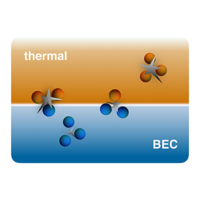
Three-body recombination in a cold Bose gas reduces entropy, providing a novel way to cool the gas efficiently.

Order-Disorder Phase Transition in Black-Hole Star Clusters

Jihad Touma, Scott Tremaine, and Mher Kazandjian

Phys. Rev. Lett. 123, 021103 (2019) - Published 12 July, 2019

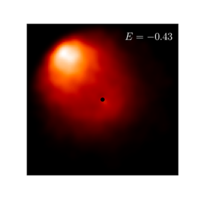
Star clusters surrounding a black hole can undergo an order-disorder phase transition leading to an increase in transient events such as flares from tidally disrupted stars.

Superwalking Droplets

Rahil N. Valani, Anja C. Slim, and Tapio Simula

Phys. Rev. Lett. 123, 024503 (2019) - Published 12 July, 2019

Liquid droplets bouncing on a vibrating liquid surface can execute a surprising cycle, alternating between moving and standing still.

Radiative Thermal Memristor

Jose Ordonez-Miranda, Younès Ezzahri, Jose A. Tiburcio-Moreno, Karl Joulain, and Jérémie Drevillon

Phys. Rev. Lett. 123, 025901 (2019) - Published 12 July, 2019

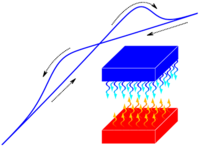
Thermal hysteresis in a phase change material makes it possible to build a radiative thermal memristor, a fast thermal circuit element whose response is dependent on its history.

Thermal Forces from a Microscopic Perspective

Pietro Anzini, Gaia Maria Colombo, Zeno Filiberti, and Alberto Parola

Phys. Rev. Lett. 123, 028002 (2019) - Published 11 July, 2019

Physicists develop a theory to make the seemingly random, thermal-driven motion of clumps and colloids in fluids predictable.

Ultralight Boson Dark Matter and Event Horizon Telescope Observations of M87*

Hooman Davoudiasl and Peter B. Denton

Phys. Rev. Lett. 123, 021102 (2019) - Published 10 July, 2019

An interpretation of the black hole image taken by the Event Horizon Telescope hints of new constraints on the mass of dark matter.

One-Shot Operational Quantum Resource Theory

Zi-Wen Liu, Kaifeng Bu, and Ryuji Takagi

Phys. Rev. Lett. 123, 020401 (2019) - Published 9 July, 2019

A wide class of resource theories are considered for the practical case where one has only one or a few copies of the quantum state.

Topologically Protected Quantization of Work

Bruno Mera, Krzysztof Sacha, and Yasser Omar

Phys. Rev. Lett. 123, 020601 (2019) - Published 9 July, 2019

Using ideas from topological materials, researchers propose a way to quantize work.

Excited States in Bilayer Graphene Quantum Dots

A. Kurzmann, M. Eich, H. Overweg, M. Mangold, F. Herman, P. Rickhaus, R. Pisoni, Y. Lee, R. Garreis, C. Tong, K. Watanabe, T. Taniguchi, K. Ensslin, and T. Ihn

Phys. Rev. Lett. 123, 026803 (2019) - Published 9 July, 2019

Measurements of spin and valley relaxation and decoherence times in quantum dots of graphene encapsulated by edges and back gates may lead to implementations of qubits.

Active Phase Separation in Mixtures of Chemically Interacting Particles

Jaime Agudo-Canalejo and Ramin Golestanian

Phys. Rev. Lett. 123, 018101 (2019) - Published 3 July, 2019

When particles such as cells or a biological molecules leave chemical trails, a variety of clustering behaviors result, according to simulations.

Tests of General Relativity with GW170817

B. P. Abbott et al. (LIGO Scientific Collaboration and Virgo Collaboration)

Phys. Rev. Lett. 123, 011102 (2019) - Published 1 July, 2019

The LIGO and Virgo collaborations announce constraints on deviations from general relativity using strong field dynamics of the binary neutron star merger GW170817.

Synchronization of Optomechanical Nanobeams by Mechanical Interaction

M. F. Colombano, G. Arregui, N. E. Capuj, A. Pitanti, J. Maire, A. Griol, B. Garrido, A. Martinez, C. M. Sotomayor-Torres, and D. Navarro-Urrios

Phys. Rev. Lett. 123, 017402 (2019) - Published 1 July, 2019

Researchers synchronize the motion of two nanosized photonic crystals, showing that their “swings” match those seen for larger oscillators, such as the pendulums in grandfather clocks.

Variational Quantum Monte Carlo Method with a Neural-Network Ansatz for Open Quantum Systems

Alexandra Nagy and Vincenzo Savona

Phys. Rev. Lett. 122, 250501 (2019) - Published 28 June, 2019

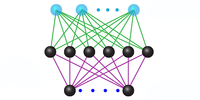
Simulating a quantum system that exchanges energy with the outside world is notoriously hard, but the necessary computations might be easier with the help of neural networks.

Sign In to Your Journals Account

Filter

Section

Filter

Article Lookup

Enter a citation