Highlights

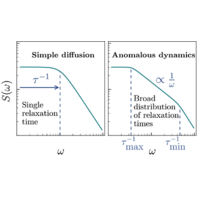
Low-Frequency Excess Vibrational Modes in Two-Dimensional Glasses

Lijin Wang, Grzegorz Szamel, and Elijah Flenner

Phys. Rev. Lett. 127, 248001 (2021) - Published 7 December, 2021

The number of excess vibrational modes in glasses scales differently in two dimensions than it does in three.

Cutting Depth Dictates the Transition from Continuous to Segmented Chip Formation

Ramin Aghababaei, Mohammad Malekan, and Michal Budzik

Phys. Rev. Lett. 127, 235502 (2021) - Published 3 December, 2021

A theory confirmed by experiments explains what has been an unpredictable cutting process.

Control of the Bose-Einstein Condensation of Magnons by the Spin Hall Effect

Michael Schneider, David Breitbach, Rostyslav O. Serha, Qi Wang, Alexander A. Serga, Andrei N. Slavin, Vasyl S. Tiberkevich, Björn Heinz, Bert Lägel, Thomas Brächer, Carsten Dubs, Sebastian Knauer, Oleksandr V. Dobrovolskiy, Philipp Pirro, Burkard Hillebrands, and Andrii V. Chumak

Phys. Rev. Lett. 127, 237203 (2021) - Published 2 December, 2021

By combining the spin Hall effect and spin-transfer torque effect the magnon Bose-Einstein condensate formation triggered by rapid cooling can be controlled.

Phenomenology of Spectral Functions in Disordered Spin Chains at Infinite Temperature

Lev Vidmar, Bartosz Krajewski, Janez Bonča, and Marcin Mierzejewski

Phys. Rev. Lett. 127, 230603 (2021) - Published 1 December, 2021

Interacting spin chains at moderate and large disorder close to a noninteracting point may display properties that resemble the onset of many-body localization.

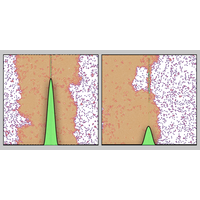
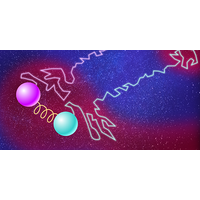
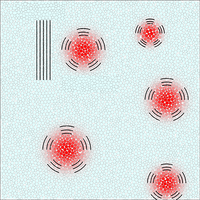
Wetting Transition of Active Brownian Particles on a Thin Membrane

Francesco Turci and Nigel B. Wilding

Phys. Rev. Lett. 127, 238002 (2021) - Published 1 December, 2021

The conditions that make liquid stick to a permeable membrane could elucidate how bacteria form films, and help researchers design tiny swimming robots.

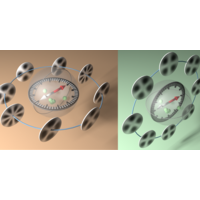
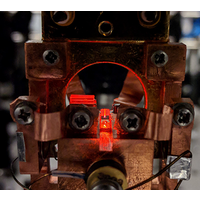
Atomic Compass: Detecting 3D Magnetic Field Alignment with Vector Vortex Light

Francesco Castellucci, Thomas W. Clark, Adam Selyem, Jinwen Wang, and Sonja Franke-Arnold

Phys. Rev. Lett. 127, 233202 (2021) - Published 30 November, 2021

An update to the polarization of the laser light used in an atom-based compass allows the technology to reveal the 3D alignment of a magnetic field in one snapshot, rather than many.

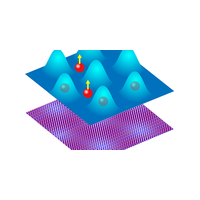
Moiré Tuning of Spin Excitations: Individual Fe Atoms on MoS2/Au(111)

Sergey Trishin, Christian Lotze, Nils Bogdanoff, Felix von Oppen, and Katharina J. Franke

Phys. Rev. Lett. 127, 236801 (2021) - Published 29 November, 2021

The interactions of the spins of single atoms with a substrate can be controlled via the moiré lattice created by depositing a 2D material on top of the substrate.

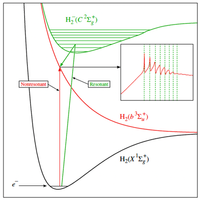
Electronic and Vibrational Close-Coupling Method for Resonant Electron-Molecule Scattering

Liam H. Scarlett, Igor Bray, and Dmitry V. Fursa

Phys. Rev. Lett. 127, 223401 (2021) - Published 24 November, 2021

Incorporation of resonant phenomena into a molecular close-coupling method allows calculation of electron-molecule scattering and interference effects in a single theoretical framework.

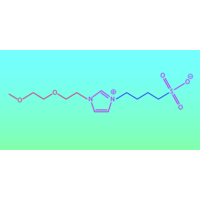
Zwitterions Raise the Dielectric Constant of Soft Materials

Wenwen Mei, August J. Rothenberger, Joshua E. Bostwick, Joshua M. Rinehart, Robert J. Hickey, and Ralph H. Colby

Phys. Rev. Lett. 127, 228001 (2021) - Published 24 November, 2021

The strong polar nature of bonded molecular pairs called zwitterions boosts the dielectric constants of polar fluids.

Mutual Information Disentangles Interactions from Changing Environments

Giorgio Nicoletti and Daniel Maria Busiello

Phys. Rev. Lett. 127, 228301 (2021) - Published 22 November, 2021

Mutual information provides a promising method for disentangling intrinsic from extrinsic sources of noise in biological systems.

Entanglement between a Telecom Photon and an On-Demand Multimode Solid-State Quantum Memory

Jelena V. Rakonjac, Dario Lago-Rivera, Alessandro Seri, Margherita Mazzera, Samuele Grandi, and Hugues de Riedmatten

Phys. Rev. Lett. 127, 210502 (2021) - Published 19 November, 2021

On-demand entanglement storage is achieved for a telecom photon and a long-lived, solid state, multimode quantum memory.

Unifying Description of the Vibrational Anomalies of Amorphous Materials

Shivam Mahajan and Massimo Pica Ciamarra

Phys. Rev. Lett. 127, 215504 (2021) - Published 19 November, 2021

A long-standing controversy regarding vibrational anomalies in amorphous materials is settled by resolving the conflict between theories that attribute the anomalies to elastic disorder and localized defects.

Coexistence of Photoelectric Conversion and Storage in van der Waals Heterojunctions

Yucheng Jiang, Anpeng He, Run Zhao, Yu Chen, Guozhen Liu, Hao Lu, Jinlei Zhang, Qing Zhang, Zhuo Wang, Chen Zhao, Mingshen Long, Weida Hu, Lin Wang, Yaping Qi, Ju Gao, Quanying Wu, Xiaotian Ge, Jiqiang Ning, Andrew T. S. Wee, and Cheng-Wei Qiu

Phys. Rev. Lett. 127, 217401 (2021) - Published 19 November, 2021

A new photoelectric device can convert light into charge that it can then store indefinitely.

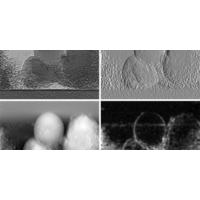
Dynamic Multicontrast X-Ray Imaging Method Applied to Additive Manufacturing

Lorenzo Massimi, Samuel J. Clark, Sebastian Marussi, Adam Doherty, Joachim Schulz, Shashidhara Marathe, Christoph Rau, Marco Endrizzi, Peter D. Lee, and Alessandro Olivo

Phys. Rev. Lett. 127, 215503 (2021) - Published 18 November, 2021

Researchers have developed a technique for simultaneously monitoring the attenuation, phase shift, and dark-field scattering of an x-ray beam as it passes through a melting metal powder.

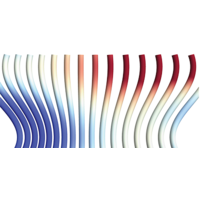
Mechanics of Metric Frustration in Contorted Filament Bundles: From Local Symmetry to Columnar Elasticity

Daria W. Atkinson, Christian D. Santangelo, and Gregory M. Grason

Phys. Rev. Lett. 127, 218002 (2021) - Published 18 November, 2021

Exploiting local symmetries, a formalism is derived which allows an assessment of the cost of a geometric frustration between structural factors in filament bundles.

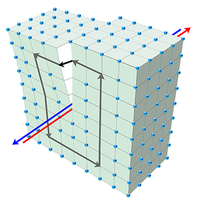
Observation of Dislocation-Induced Topological Modes in a Three-Dimensional Acoustic Topological Insulator

Haoran Xue, Ding Jia, Yong Ge, Yi-jun Guan, Qiang Wang, Shou-qi Yuan, Hong-xiang Sun, Y. D. Chong, and Baile Zhang

Phys. Rev. Lett. 127, 214301 (2021) - Published 16 November, 2021

Screw dislocations induce topological helical modes in an acoustic analog of a weak three-dimensional topological insulator.

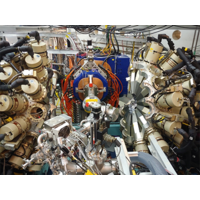
Solving the Puzzles of the Decay of the Heaviest Known Proton-Emitting Nucleus Bi185

D. T. Doherty et al.

Phys. Rev. Lett. 127, 202501 (2021) - Published 12 November, 2021

Two complementary experiments confirm the inversion of high- and low-spin states in 185Bi, results that act as a key benchmark for the theory of proton emitters.

Triple Leidenfrost Effect: Preventing Coalescence of Drops on a Hot Plate

F. Pacheco-Vázquez, R. Ledesma-Alonso, J. L. Palacio-Rangel, and F. Moreau

Phys. Rev. Lett. 127, 204501 (2021) - Published 12 November, 2021

Droplets floating on vapor cushions can bounce off each other when they are composed of different liquids.

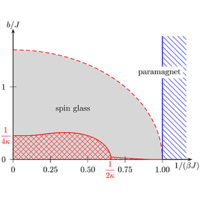
Existence of Replica-Symmetry Breaking in Quantum Glasses

Hajo Leschke, Chokri Manai, Rainer Ruder, and Simone Warzel

Phys. Rev. Lett. 127, 207204 (2021) - Published 12 November, 2021

A rigorous proof shows for the first time that the replica-symmetry-breaking phase is not immediately destroyed by adding a finite transverse field to a Sherrington-Kirkpatrick model.

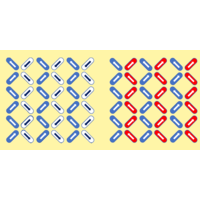
Experimental Realization of the 1D Random Field Ising Model

N. S. Bingham, S. Rooke, J. Park, A. Simon, W. Zhu, X. Zhang, J. Batley, J. D. Watts, C. Leighton, K. A. Dahmen, and P. Schiffer

Phys. Rev. Lett. 127, 207203 (2021) - Published 11 November, 2021
Researchers accurately replicate the predictions of the 1D random-field Ising model in an artificial spin ice.

Sign In to Your Journals Account

Filter

Section

Filter

Article Lookup

Enter a citation