Highlights

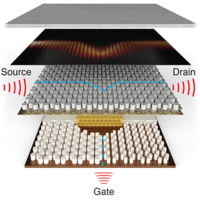
Electrically Controllable Kondo Correlation in Spin-Orbit-Coupled Quantum Point Contacts

Luke W. Smith, Hong-Bin Chen, Che-Wei Chang, Chien-Wei Wu, Shun-Tsung Lo, Shih-Hsiang Chao, I. Farrer, H. E. Beere, J. P. Griffiths, G. A. C. Jones, D. A. Ritchie, Yueh-Nan Chen, and Tse-Ming Chen

Phys. Rev. Lett. 128, 027701 (2022) - Published 10 January, 2022

Spin-polarized electrons can suppress the experimental signature of the quantum many-body phenomenon known as the Kondo effect.

Guiding Self-Assembly of Active Colloids by Temporal Modulation of Activity

Bo Zhang, Alexey Snezhko, and Andrey Sokolov

Phys. Rev. Lett. 128, 018004 (2022) - Published 7 January, 2022

Active particles organize into mesmerizing patterns in response to a time-varying electric field.

Nonreciprocal and Non-Hermitian Material Response Inspired by Semiconductor Transistors

Sylvain Lannebère, David E. Fernandes, Tiago A. Morgado, and Mário G. Silveirinha

Phys. Rev. Lett. 128, 013902 (2022) - Published 6 January, 2022

A new metamaterial device can amplify and manipulate electromagnetic waves, a capability necessary for advancing photonics platforms.

Fate of Measurement-Induced Phase Transition in Long-Range Interactions

Takaaki Minato, Koudai Sugimoto, Tomotaka Kuwahara, and Keiji Saito

Phys. Rev. Lett. 128, 010603 (2022) - Published 5 January, 2022

A new study predicts the measurement-induced phase-transition behavior for quantum systems that have long-range coupling between their qubits.

Measurement-Induced Transition in Long-Range Interacting Quantum Circuits

Maxwell Block, Yimu Bao, Soonwon Choi, Ehud Altman, and Norman Y. Yao

Phys. Rev. Lett. 128, 010604 (2022) - Published 5 January, 2022

A new study predicts the measurement-induced phase-transition behavior for quantum systems that have long-range coupling between their qubits.

Measurement-Induced Dark State Phase Transitions in Long-Ranged Fermion Systems

T. Müller, S. Diehl, and M. Buchhold

Phys. Rev. Lett. 128, 010605 (2022) - Published 5 January, 2022

A new study predicts the measurement-induced phase-transition behavior for quantum systems that have long-range coupling between their qubits.

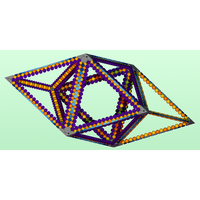
Topological Phononic Logic

Harris Pirie, Shuvom Sadhuka, Jennifer Wang, Radu Andrei, and Jennifer E. Hoffman

Phys. Rev. Lett. 128, 015501 (2022) - Published 5 January, 2022

The degeneracy of a topological acoustic logic gate exploiting a large phase space of accidental degeneracies in a honeycomb lattice can be broken by tuning parameters such as temperature.

Dionysian Hard Sphere Packings Are Mechanically Stable at Vanishingly Low Densities

R. C. Dennis and E. I. Corwin

Phys. Rev. Lett. 128, 018002 (2022) - Published 5 January, 2022

A new strategy for packing hard spheres of different sizes could lead to novel ways of creating strong, lightweight materials.

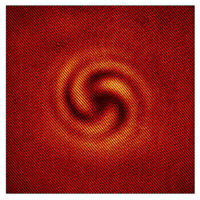
Measurement of Penrose Superradiance in a Photon Superfluid

Maria Chiara Braidotti, Radivoje Prizia, Calum Maitland, Francesco Marino, Angus Prain, Ilya Starshynov, Niclas Westerberg, Ewan M. Wright, and Daniele Faccio

Phys. Rev. Lett. 128, 013901 (2022) - Published 4 January, 2022

The analogue of Penrose superradiance is observed in a nonlinear photonics platform.

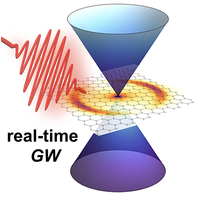
Real-Time GW: Toward an Ab Initio Description of the Ultrafast Carrier and Exciton Dynamics in Two-Dimensional Materials

E. Perfetto, Y. Pavlyukh, and G. Stefanucci

Phys. Rev. Lett. 128, 016801 (2022) - Published 4 January, 2022

The GW method, a popular tool to calculate electronic and optical properties of correlated ground states, is extended to the time domain to study ultrafast quantum phenomena in 2D materials.

Self-Consistent-Field Method for Correlated Many-Electron Systems with an Entropic Cumulant Energy

Jian Wang and Evert Jan Baerends

Phys. Rev. Lett. 128, 013001 (2022) - Published 3 January, 2022

A self-consistent method based on density matrix functional theory delivers accurate and computationally efficient calculation of many-electron correlations.

Direct Atomic-Scale Observation of Ultrasmall Ag Nanowires that Exhibit fcc, bcc, and hcp Structures under Bending

Shiduo Sun, Dongwei Li, Chenpeng Yang, Libo Fu, Deli Kong, Yan Lu, Yizhong Guo, Danmin Liu, Pengfei Guan, Ze Zhang, Jianghua Chen, Wenquan Ming, Lihua Wang, and Xiaodong Han

Phys. Rev. Lett. 128, 015701 (2022) - Published 3 January, 2022

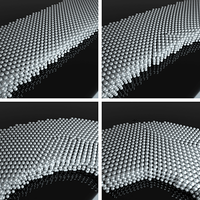
Bending silver nanowires leads to a previously unseen series of phase transformations, FCC→BCC→HCP→FCC, where the last is a twin version of the starting FCC structure.

Dark Matter Search Results from the PandaX-4T Commissioning Run

Yue Meng et al. (PandaX-4T Collaboration)

Phys. Rev. Lett. 127, 261802 (2021) - Published 23 December, 2021

New dark matter results strengthen constraints on axions and WIMPs.

Search for Invisible Axion Dark Matter in the 3.3–4.2  μeV Mass Range

C. Bartram et al. (ADMX Collaboration)

Phys. Rev. Lett. 127, 261803 (2021) - Published 23 December, 2021

New dark matter results strengthen constraints on axions and WIMPs.

Superfluid β phase of He3

V. V. Dmitriev, M. S. Kutuzov, A. A. Soldatov, and A. N. Yudin

Phys. Rev. Lett. 127, 265301 (2021) - Published 23 December, 2021

Confining helium-3 in an aerogel container and subjecting it to a magnetic field reveals a long-predicted superfluid phase.

First Observation of the Four-Proton Unbound Nucleus Mg18

Y. Jin et al.

Phys. Rev. Lett. 127, 262502 (2021) - Published 22 December, 2021

Experimental detection of the unstable nucleus magnesium-18 hints at a weakening of the so-called magic number for the closed shell of eight neutrons.

Picometer-Resolved Photoemission Position within the Molecule by Strong-Field Photoelectron Holography

Wenhai Xie, Jiaqing Yan, Min Li, Chuanpeng Cao, Keyu Guo, Yueming Zhou, and Peixiang Lu

Phys. Rev. Lett. 127, 263202 (2021) - Published 22 December, 2021

A new technique pinpoints, with picometer resolution, the location from which an emitted electron originates within a molecule.

High Phase-Space Density of Laser-Cooled Molecules in an Optical Lattice

Yewei Wu, Justin J. Burau, Kameron Mehling, Jun Ye, and Shiqian Ding

Phys. Rev. Lett. 127, 263201 (2021) - Published 21 December, 2021

Researchers achieve the lowest temperature yet for laser-cooled molecules trapped in an optical lattice.

Topographic Control of Order in Quasi-2D Granular Phase Transitions

J. G. Downs, N. D. Smith, K. K. Mandadapu, J. P. Garrahan, and M. I. Smith

Phys. Rev. Lett. 127, 268002 (2021) - Published 21 December, 2021

Modifying surface and boundary features lets researchers control how a 2D model system transitions from a fluid to a crystalline phase.

Zeeman-Sisyphus Deceleration of Molecular Beams

Benjamin L. Augenbraun, Alexander Frenett, Hiromitsu Sawaoka, Christian Hallas, Nathaniel B. Vilas, Abdullah Nasir, Zack D. Lasner, and John M. Doyle

Phys. Rev. Lett. 127, 263002 (2021) - Published 20 December, 2021

A magnetic-field based method can slow molecular beams that cannot be slowed using other techniques, unlocking the door to ultracold polyatomic molecular physics.

Sign In to Your Journals Account

Filter

Section

Filter

Article Lookup

Enter a citation