Highlights

Ruling Out Real-Valued Standard Formalism of Quantum Theory

Ming-Cheng Chen, Can Wang, Feng-Ming Liu, Jian-Wen Wang, Chong Ying, Zhong-Xia Shang, Yulin Wu, M. Gong, H. Deng, F.-T. Liang, Qiang Zhang, Cheng-Zhi Peng, Xiaobo Zhu, Adán Cabello, Chao-Yang Lu, and Jian-Wei Pan

Phys. Rev. Lett. 128, 040403 (2022) - Published 24 January, 2022

Studies demonstrate that a formulation of quantum mechanics involving complex rather than real numbers is necessary to reproduce experimental results.

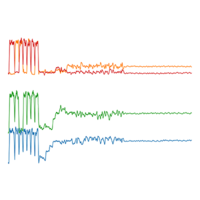
Solving Conformal Field Theories with Artificial Intelligence

Gergely Kántor, Constantinos Papageorgakis, and Vasilis Niarchos

Phys. Rev. Lett. 128, 041601 (2022) - Published 24 January, 2022

Machine learning is shown to provide a road to solving conformal field theories by efficiently exploiting numerical bootstrap methods.

Superionic Silica-Water and Silica-Hydrogen Compounds in the Deep Interiors of Uranus and Neptune

Hao Gao, Cong Liu, Jiuyang Shi, Shuning Pan, Tianheng Huang, Xiancai Lu, Hui-Tian Wang, Dingyu Xing, and Jian Sun

Phys. Rev. Lett. 128, 035702 (2022) - Published 21 January, 2022

Computer simulations uncover new high-pressure minerals that may explain the origin of Earth’s water and of Uranus’ and Neptune’s magnetic fields.

Ultrahigh-Pressure Magnesium Hydrosilicates as Reservoirs of Water in Early Earth

Han-Fei Li, Artem R. Oganov, Haixu Cui, Xiang-Feng Zhou, Xiao Dong, and Hui-Tian Wang

Phys. Rev. Lett. 128, 035703 (2022) - Published 21 January, 2022

Computer simulations uncover new high-pressure minerals that may explain the origin of Earth’s water and of Uranus’ and Neptune’s magnetic fields.

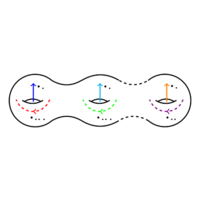
Geometric Test for Topological States of Matter

S. Klevtsov and D. Zvonkine

Phys. Rev. Lett. 128, 036602 (2022) - Published 21 January, 2022

A geometric criterion applicable to degenerate system ground states distinguishes between topological and nontopological states of matter.

Cosmic Coincidences of Primordial-Black-Hole Dark Matter

Yi-Peng Wu, Elena Pinetti, and Joseph Silk

Phys. Rev. Lett. 128, 031102 (2022) - Published 20 January, 2022

A scenario where baryogenesis is triggered by single-field inflation models for primordial black hole formation can explain the cosmic coincidence between the densities of dark matter and baryons.

Intrinsic Superconducting Diode Effect

Akito Daido, Yuhei Ikeda, and Youichi Yanase

Phys. Rev. Lett. 128, 037001 (2022) - Published 20 January, 2022

A proposed diode effect in intrinsic bulk superconductors permits electric current flow in one direction and blocks current flow in the opposite direction.

Simulation of Quantum Circuits Using the Big-Batch Tensor Network Method

Feng Pan and Pan Zhang

Phys. Rev. Lett. 128, 030501 (2022) - Published 19 January, 2022

A tensor network method is used to compute amplitudes and probabilities for a large number of correlated bitstrings in the final state of a quantum circuit.

Magnetic Fields with Precise Quasisymmetry for Plasma Confinement

Matt Landreman and Elizabeth Paul

Phys. Rev. Lett. 128, 035001 (2022) - Published 18 January, 2022

Magnetic-field configurations that improve confinement of fusion plasmas in stellarators can be achieved more precisely than previously thought, according to a numerical study.

Efficient Experimental Verification of Quantum Gates with Local Operations

Rui-Qi Zhang, Zhibo Hou, Jun-Feng Tang, Jiangwei Shang, Huangjun Zhu, Guo-Yong Xiang, Chuan-Feng Li, and Guang-Can Guo

Phys. Rev. Lett. 128, 020502 (2022) - Published 14 January, 2022

A quantum gate verification protocol is experimentally demonstrated for a two-qubit controlled-NOT gate and a three-qubit Toffoli gate, using only local state preparations and measurements.

Ultrastable Free-Space Laser Links for a Global Network of Optical Atomic Clocks

D. R. Gozzard, L. A. Howard, B. P. Dix-Matthews, S. F. E. Karpathakis, C. T. Gravestock, and S. W. Schediwy

Phys. Rev. Lett. 128, 020801 (2022) - Published 14 January, 2022

Researchers demonstrated an optical link for communication between distant atomic clocks that is 100 times more stable than previous links and that could enable new precision tests of general relativity.

Magnetic-Field Effect in High-Order Above-Threshold Ionization

Kang Lin, Simon Brennecke, Hongcheng Ni, Xiang Chen, Alexander Hartung, Daniel Trabert, Kilian Fehre, Jonas Rist, Xiao-Min Tong, Joachim Burgdörfer, Lothar Ph. H. Schmidt, Markus S. Schöffler, Till Jahnke, Maksim Kunitski, Feng He, Manfred Lein, Sebastian Eckart, and Reinhard Dörner

Phys. Rev. Lett. 128, 023201 (2022) - Published 14 January, 2022

A target-sensitive nondipole effect is experimentally observed for the first time in strong-field ionization.

Exact Coherent Structures and Phase Space Geometry of Preturbulent 2D Active Nematic Channel Flow

Caleb G. Wagner, Michael M. Norton, Jae Sung Park, and Piyush Grover

Phys. Rev. Lett. 128, 028003 (2022) - Published 13 January, 2022

The study of exact coherent structures in an active nematic system allows the characterization and control of far-from-equilibrium dynamics.

When Elasticity Affects Drop Coalescence

Pim J. Dekker, Michiel A. Hack, Walter Tewes, Charu Datt, Ambre Bouillant, and Jacco H. Snoeijer

Phys. Rev. Lett. 128, 028004 (2022) - Published 13 January, 2022

The shape of a liquid bridge in coalescing droplets is very sensitive to the presence of aqueous polymers, whereas the time evolution of a liquid bridge is not.

Sliding Naturalness: New Solution to the Strong-CP and Electroweak-Hierarchy Problems

Raffaele Tito D’Agnolo and Daniele Teresi

Phys. Rev. Lett. 128, 021803 (2022) - Published 12 January, 2022

A new model that assumes that a multitude of universes existed when our Universe first formed may explain why the Higgs mass is smaller than traditional models predict.

Fluctuation-Induced Interaction in Turbulent Flows

M. Davoodianidalik, H. Punzmann, H. Kellay, H. Xia, M. Shats, and N. Francois

Phys. Rev. Lett. 128, 024503 (2022) - Published 12 January, 2022

Two-dimensional hydrodynamic turbulence is experimentally shown to exert a fluctuation-induced attractive force on confining walls.

Explicit Analytical Solution for Random Close Packing in d=2 and d=3

Alessio Zaccone

Phys. Rev. Lett. 128, 028002 (2022) - Published 12 January, 2022

Using a simple approach that relies only on the statistical properties of jammed packings, the random close packing volume fraction of hard spheres in two and three dimensions can be analytically derived.

Morphological Attractors in Natural Convective Dissolution

Jinzi Mac Huang and Nicholas J. Moore

Phys. Rev. Lett. 128, 024501 (2022) - Published 11 January, 2022

The shape and curvature evolution of dissolving rocks can be predicted using a new theory.

Laboratory Observations of Electron Heating and Non-Maxwellian Distributions at the Kinetic Scale during Electron-Only Magnetic Reconnection

Peiyun Shi, Prabhakar Srivastav, M. Hasan Barbhuiya, Paul A. Cassak, Earl E. Scime, and M. Swisdak

Phys. Rev. Lett. 128, 025002 (2022) - Published 11 January, 2022

In a first for a laboratory plasma experiment, non-Maxwellian electron velocity distribution functions have been measured during electron-only magnetic reconnection, showing evidence of bidirectional flows away from the X-point that are consistent with magnetospheric observations.

Turbulence Statistics of Arbitrary Moments of Wall-Bounded Shear Flows: A Symmetry Approach

Martin Oberlack, Sergio Hoyas, Stefanie V. Kraheberger, Francisco Alcántara-Ávila, and Jonathan Laux

Phys. Rev. Lett. 128, 024502 (2022) - Published 10 January, 2022

Validated with simulations at an unprecedentedly high Reynolds number, a strategy based on symmetries can be used to overcome challenges related to the closure problem in turbulence.

Sign In to Your Journals Account

Filter

Section

Filter

Article Lookup

Enter a citation