Highlights

Phase-Programmable Gaussian Boson Sampling Using Stimulated Squeezed Light

Han-Sen Zhong et al.

Phys. Rev. Lett. 127, 180502 (2021) - Published 25 October, 2021

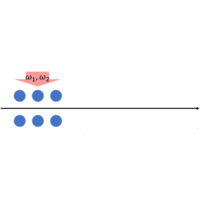
Two experimental quantum computers tackle the most complex problems yet, suggesting an end to the debate on whether quantum “primacy”—the point at which a quantum computer outperforms the best possible classical computer—can be reached.

Acoustic-Phonon-Mediated Superconductivity in Rhombohedral Trilayer Graphene

Yang-Zhi Chou, Fengcheng Wu, Jay D. Sau, and Sankar Das Sarma

Phys. Rev. Lett. 127, 187001 (2021) - Published 25 October, 2021

Electron interactions with acoustic phonons can explain recent observations of exotic non-spin-singlet superconductivity in trilayer graphene.

High Efficiency Uniform Wakefield Acceleration of a Positron Beam Using Stable Asymmetric Mode in a Hollow Channel Plasma

Shiyu Zhou, Jianfei Hua, Weiming An, Warren B. Mori, Chan Joshi, Jie Gao, and Wei Lu

Phys. Rev. Lett. 127, 174801 (2021) - Published 22 October, 2021

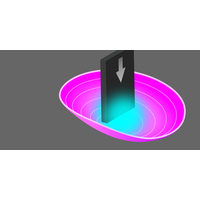
Simulations validate a scheme for accelerating and focusing a positron beam with narrow energy spread using an electron beam to drive the wake in a hollow plasma channel.

Odd Diffusivity of Chiral Random Motion

Cory Hargus, Jeffrey M. Epstein, and Kranthi K. Mandadapu

Phys. Rev. Lett. 127, 178001 (2021) - Published 22 October, 2021

Odd diffusivity, corresponding to an antisymmetric component of the diffusivity tensor, emerges as a result of breaking time-reversal and parity symmetries in chiral active matter.

Noise-Induced Acceleration of Single Molecule Kinesin-1

Takayuki Ariga, Keito Tateishi, Michio Tomishige, and Daisuke Mizuno

Phys. Rev. Lett. 127, 178101 (2021) - Published 22 October, 2021

Kinesin, which moves cargo around inside cells, travels more rapidly with constant buffeting than without, perhaps because it’s adapted to the crowded cellular environment.

Deceleration and Trapping of SrF Molecules

P. Aggarwal, Y. Yin, K. Esajas, H. L. Bethlem, A. Boeschoten, A. Borschevsky, S. Hoekstra, K. Jungmann, V. R. Marshall, T. B. Meijknecht, M. C. Mooij, R. G. E. Timmermans, A. Touwen, W. Ubachs, and L. Willmann (NL−eEDM Collaboration)

Phys. Rev. Lett. 127, 173201 (2021) - Published 21 October, 2021

Electric deceleration brings a beam of the largest molecules yet to a standstill.

Efficient Narrow-Band Terahertz Radiation from Electrostatic Wakefields in Nonuniform Plasmas

Alexander Pukhov, Anton Golovanov, and Igor Kostyukov

Phys. Rev. Lett. 127, 175001 (2021) - Published 21 October, 2021

A wakefield excited by a single laser pulse in a plasma with a smooth positive density gradient is an efficient source of narrowband THz radiation.

Floquet Prethermalization with Lifetime Exceeding 90 s in a Bulk Hyperpolarized Solid

William Beatrez, Otto Janes, Amala Akkiraju, Arjun Pillai, Alexander Oddo, Paul Reshetikhin, Emanuel Druga, Maxwell McAllister, Mark Elo, Benjamin Gilbert, Dieter Suter, and Ashok Ajoy

Phys. Rev. Lett. 127, 170603 (2021) - Published 20 October, 2021

Researchers have kept a Floquet system in a prethermal state for a record length of time.

Experimental Evidence for an Attractive p−ϕ Interaction

S. Acharya et al. (ALICE Collaboration)

Phys. Rev. Lett. 127, 172301 (2021) - Published 20 October, 2021

Evidence for an attractive interaction between a proton and a ϕ meson is inferred from two-particle correlations.

Intermediate-Range Casimir-Polder Interaction Probed by High-Order Slow Atom Diffraction

C. Garcion, N. Fabre, H. Bricha, F. Perales, S. Scheel, M. Ducloy, and G. Dutier

Phys. Rev. Lett. 127, 170402 (2021) - Published 19 October, 2021

A new technique in which atoms move slowly through a diffraction grating lets researchers measure the tiny Casimir-Polder interaction, a force that arises from quantum vacuum fluctuations.

Neural Network Representation of Tensor Network and Chiral States

Yichen Huang (黄溢辰) and Joel E. Moore

Phys. Rev. Lett. 127, 170601 (2021) - Published 18 October, 2021

Neural networks, with stronger expressive power than traditional tensor networks, lead to practical understanding of chiral systems such as the p-wave superconductor.

New Relativistic Theory for Modified Newtonian Dynamics

Constantinos Skordis and Tom Złośnik

Phys. Rev. Lett. 127, 161302 (2021) - Published 15 October, 2021

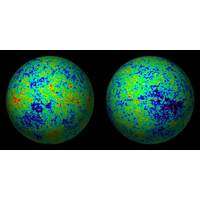
A cosmological model that doesn’t require dark matter has passed a major hurdle in matching observations from the cosmic microwave background.

Electron Pulse Compression with Optical Beat Note

Zhexin Zhao, Kenneth J. Leedle, Dylan S. Black, Olav Solgaard, Robert L. Byer, and Shanhui Fan

Phys. Rev. Lett. 127, 164802 (2021) - Published 14 October, 2021

The beat note generated by two near-infrared lasers can be used to compress an electron pulse with the duration of hundreds of optical cycles into a single density peak.

Atomic Structure Optimization with Machine-Learning Enabled Interpolation between Chemical Elements

Sami Kaappa, Casper Larsen, and Karsten Wedel Jacobsen

Phys. Rev. Lett. 127, 166001 (2021) - Published 14 October, 2021

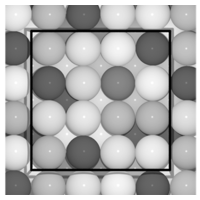
A machine learning technique that includes interpolation between chemical elements provides an efficient means to identify likely candidates for minimum-energy bulk, surface, and cluster structures.

Stretch-Induced Bending of Soft Ribbed Strips

Emmanuel Siéfert, Nicolas Cattaud, Etienne Reyssat, Benoît Roman, and José Bico

Phys. Rev. Lett. 127, 168002 (2021) - Published 14 October, 2021

Patterning grooves into the surface of an elastic ribbon can cause the ribbon to curl into a tube shape when it is stretched.

Improved Neutron Lifetime Measurement with UCNτ

F. M. Gonzalez et al. (UCNτ Collaboration)

Phys. Rev. Lett. 127, 162501 (2021) - Published 13 October, 2021

An improved version of a “bottle” experiment lets researchers lower the uncertainty on this important parameter—but a tantalizing discrepancy remains.

Probing Magnetic Exchange Interactions with Helium

C. Trainer, C. M. Yim, C. Heil, L. S. Farrar, V. Tsurkan, A. Loidl, and P. Wahl

Phys. Rev. Lett. 127, 166803 (2021) - Published 12 October, 2021

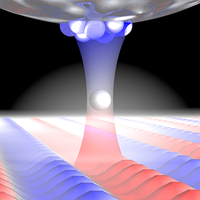
The presence of helium reduces the spin-polarization in a magnetic tunnel junction. Ejecting the helium through the application of a voltage reverses the effect, providing electrical control of spin polarization.

Individual Barkhausen Pulses of Ferroelastic Nanodomains

Reinis Ignatans, Dragan Damjanovic, and Vasiliki Tileli

Phys. Rev. Lett. 127, 167601 (2021) - Published 12 October, 2021

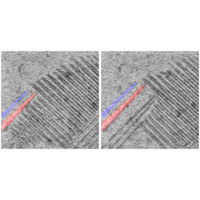
Researchers have visualized the nanoscale jumps in a ferroelectric’s polarization that are thought to play a key role in how well some ferroelectric devices function.

Thermodynamic Uncertainty Relation and Thermodynamic Speed Limit in Deterministic Chemical Reaction Networks

Kohei Yoshimura and Sosuke Ito

Phys. Rev. Lett. 127, 160601 (2021) - Published 11 October, 2021

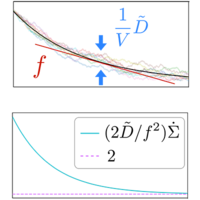
The thermodynamic uncertainty relation and speed limit provide fundamental bounds relating basic properties of chemical reaction networks and their diffusion coefficients.

Superfluidity of Light and Its Breakdown in Optical Mesh Lattices

Martin Wimmer, Monika Monika, Iacopo Carusotto, Ulf Peschel, and Hannah M. Price

Phys. Rev. Lett. 127, 163901 (2021) - Published 11 October, 2021

Researchers have turned light into a superfluid by using a “synthetic” dimension, which is created by using temporal degrees of freedom to mimic spatial degrees of freedom

Sign In to Your Journals Account

Filter

Section

Filter

Article Lookup

Enter a citation