Highlights

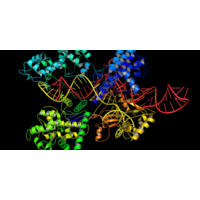
Search and Localization Dynamics of the CRISPR-Cas9 System

Qiao Lu (路桥), Deepak Bhat, Darya Stepanenko, and Simone Pigolotti

Phys. Rev. Lett. 127, 208102 (2021) - Published 10 November, 2021

A model of facilitated diffusion and the theory of Anderson localization help explain how the Cas9 protein explores DNA in search of its targets.

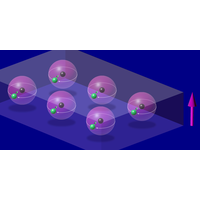
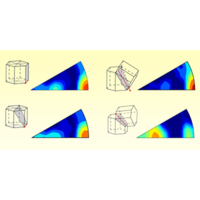
Femtosecond Visualization of hcp-Iron Strength and Plasticity under Shock Compression

Sébastien Merkel, Sovanndara Hok, Cynthia Bolme, Dylan Rittman, Kyle James Ramos, Benjamin Morrow, Hae Ja Lee, Bob Nagler, Eric Galtier, Eduardo Granados, Akel Hashim, Wendy L Mao, and Arianna E Gleason

Phys. Rev. Lett. 127, 205501 (2021) - Published 9 November, 2021

Femtosecond-resolved x-ray diffraction images of iron’s crystals as they deform under an extreme load show that the material’s elastic-plastic transition comes after a surprisingly long elastic phase.

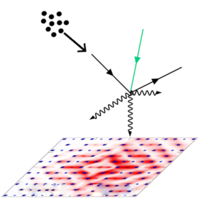
Efficient First-Principles Methodology for the Calculation of the All-Phonon Inelastic Scattering in Solids

Marios Zacharias, Hélène Seiler, Fabio Caruso, Daniela Zahn, Feliciano Giustino, Pantelis C. Kelires, and Ralph Ernstorfer

Phys. Rev. Lett. 127, 207401 (2021) - Published 9 November, 2021

First-principles methodology explains diffuse inelastic phonon scattering in black phosphorous and other solid materials.

Möbius Strip Microlasers: A Testbed for Non-Euclidean Photonics

Yalei Song, Yann Monceaux, Stefan Bittner, Kimhong Chao, Héctor M. Reynoso de la Cruz, Clément Lafargue, Dominique Decanini, Barbara Dietz, Joseph Zyss, Alain Grigis, Xavier Checoury, and Melanie Lebental

Phys. Rev. Lett. 127, 203901 (2021) - Published 8 November, 2021

Laser modes in Möbius strip microlasers are shown to be localized on periodic geodesics.

Quantifying Spin-Mixed States in Ferromagnets

Justin M. Shaw, Ronny Knut, Abigail Armstrong, Sumanta Bhandary, Yaroslav Kvashnin, Danny Thonig, Erna K. Delczeg-Czirjak, Olof Karis, T. J. Silva, Eugen Weschke, Hans T. Nembach, Olle Eriksson, and Dario A. Arena

Phys. Rev. Lett. 127, 207201 (2021) - Published 8 November, 2021

Experiments with thin magnetic films show that mixing between spin states has a larger than expected effect on spectroscopic measurements used to probe magnetic interactions in materials.

Superconducting-like Heat Current: Effective Cancellation of Current-Dissipation Trade-Off by Quantum Coherence

Hiroyasu Tajima and Ken Funo

Phys. Rev. Lett. 127, 190604 (2021) - Published 4 November, 2021

Predictions indicate that introducing quantum coherence into quantum heat engines can significantly reduce the friction in these systems.

Dark Matter from Exponential Growth

Torsten Bringmann, Paul Frederik Depta, Marco Hufnagel, Joshua T. Ruderman, and Kai Schmidt-Hoberg

Phys. Rev. Lett. 127, 191802 (2021) - Published 3 November, 2021

A new model explains the current density of dark matter by proposing that conventional matter converted to dark matter in the early Universe.

Topology of Orientational Defects in Confined Smectic Liquid Crystals

Paul A. Monderkamp, René Wittmann, Louis B. G. Cortes, Dirk G. A. L. Aarts, Frank Smallenburg, and Hartmut Löwen

Phys. Rev. Lett. 127, 198001 (2021) - Published 3 November, 2021

The orientation boundaries in a liquid crystal can be characterized by a topological charge that always sums to one, no matter the shape of the container.

Universal Magnetic Oscillations of dc Conductivity in the Incoherent Regime of Correlated Systems

Jakša Vučičević and Rok Žitko

Phys. Rev. Lett. 127, 196601 (2021) - Published 2 November, 2021

At high temperatures, quantum oscillations are predicted to emerge in materials containing correlated electrons, with the oscillations behaving differently from those seen at low temperatures.

Competing Zero-Field Chern Insulators in Superconducting Twisted Bilayer Graphene

Petr Stepanov, Ming Xie, Takashi Taniguchi, Kenji Watanabe, Xiaobo Lu, Allan H. MacDonald, B. Andrei Bernevig, and Dmitri K. Efetov

Phys. Rev. Lett. 127, 197701 (2021) - Published 2 November, 2021

The discovery of a correlated Chern insulator state in twisted bilayer graphene without hBN alignment makes it possible to tune between the superconducting and the quantum anomalous Hall state by simply applying a gate voltage.

Realizing Optical Persistent Spin Helix and Stern-Gerlach Deflection in an Anisotropic Liquid Crystal Microcavity

Mateusz Król, Katarzyna Rechcińska, Helgi Sigurdsson, Przemysław Oliwa, Rafał Mazur, Przemysław Morawiak, Wiktor Piecek, Przemysław Kula, Pavlos G. Lagoudakis, Michał Matuszewski, Witold Bardyszewski, Barbara Piętka, and Jacek Szczytko

Phys. Rev. Lett. 127, 190401 (2021) - Published 1 November, 2021

Spin patterns corresponding to the persistent spin helix and the Stern-Gerlach experiment are realized in an optically anisotropic liquid crystal microcavity.

Selective Ion Acceleration by Intense Radiation Pressure

A. McIlvenny, D. Doria, L. Romagnani, H. Ahmed, N. Booth, E. J. Ditter, O. C. Ettlinger, G. S. Hicks, P. Martin, G. G. Scott, S. D. R. Williamson, A. Macchi, P. McKenna, Z. Najmudin, D. Neely, S. Kar, and M. Borghesi

Phys. Rev. Lett. 127, 194801 (2021) - Published 1 November, 2021

A new laser technique could lead to ultrashort-pulse, high-energy ion beams for medical use.

Tip Charge Dependence of Three-Dimensional AFM Mapping of Concentrated Ionic Solutions

Simone Benaglia, Manuel R. Uhlig, Jose Hernández-Muñoz, Enrique Chacón, Pedro Tarazona, and Ricardo Garcia

Phys. Rev. Lett. 127, 196101 (2021) - Published 1 November, 2021

At a liquid-solid interface, atomic force microscopy with an uncharged tip gives total particle distribution while a charged tip gives the charge density distribution.

Estimating Entropy Production from Waiting Time Distributions

Dominic J. Skinner and Jörn Dunkel

Phys. Rev. Lett. 127, 198101 (2021) - Published 1 November, 2021

Theorists place bounds on the energy consumption of a mesoscopic nonequilibrium system using parameters that are experimentally accessible.

Temperature-Driven Self-Doping in Magnetite

Hebatalla Elnaggar, Silvester Graas, Sara Lafuerza, Blanka Detlefs, Wojciech Tabiś, Mateusz A. Gala, Ahmed Ismail, Ad van der Eerden, Marcin Sikora, Jurgen M. Honig, P. Glatzel, and Frank de Groot

Phys. Rev. Lett. 127, 186402 (2021) - Published 29 October, 2021

Self-doping of the octahedral sites is at the heart of the origin of the Verwey and Curie transitions in magnetite.

Efficient Nonthermal Ion and Electron Acceleration Enabled by the Flux-Rope Kink Instability in 3D Nonrelativistic Magnetic Reconnection

Qile Zhang, Fan Guo, William Daughton, Hui Li, and Xiaocan Li

Phys. Rev. Lett. 127, 185101 (2021) - Published 28 October, 2021

Charged particles accelerated by magnetic reconnection in astrophysical plasmas should get stuck in flux ropes. Simulations show that kink instabilities set them free.

Kondo Cloud in a Superconductor

Cătălin Paşcu Moca, Ireneusz Weymann, Miklós Antal Werner, and Gergely Zaránd

Phys. Rev. Lett. 127, 186804 (2021) - Published 27 October, 2021

Researchers explore the question of whether a Kondo cloud—a phenomenon common in conventional metals—can also occur in superconductors.

Mechanically Modulated Sideband and Squeezing Effects of Membrane Resonators

Fan Yang, Mengqi Fu, Bojan Bosnjak, Robert H. Blick, Yuxuan Jiang, and Elke Scheer

Phys. Rev. Lett. 127, 184301 (2021) - Published 26 October, 2021

Micro- and nanomechanical resonators exhibit extreme sensitivity, but are also vulnerable to external noise — a way to squeeze the output of nonlinear resonators improves detector performance.

Observation of Nodal-Line Plasmons in ZrSiS

Siwei Xue, Maoyuan Wang, Yong Li, Shuyuan Zhang, Xun Jia, Jianhui Zhou, Youguo Shi, Xuetao Zhu, Yugui Yao, and Jiandong Guo

Phys. Rev. Lett. 127, 186802 (2021) - Published 26 October, 2021

The observed three plasmons in the near- to the mid-infrared regime in the prototypical node-line semimetal ZrSiS are isotropic and temperature-independent, so provide a platform for infrared plasmonic applications with high thermal stability.

Strong Quantum Computational Advantage Using a Superconducting Quantum Processor

Yulin Wu et al.

Phys. Rev. Lett. 127, 180501 (2021) - Published 25 October, 2021
Two experimental quantum computers tackle the most complex problems yet, suggesting an end to the debate on whether quantum “primacy”—the point at which a quantum computer outperforms the best possible classical computer—can be reached.

Sign In to Your Journals Account

Filter

Section

Filter

Article Lookup

Enter a citation