Recent Articles

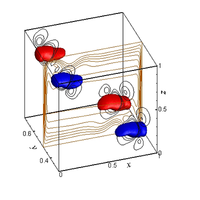
Sequence of bifurcations of natural convection of air in a laterally heated cube with perfectly insulated horizontal and spanwise boundaries

Alexander Gelfgat

Phys. Rev. Fluids 8, 043902 (2023) - Published 12 April, 2023

Three consequent bifurcations of buoyancy convection in a laterally heated cube with perfectly thermally insulated boundaries are studied. With the growth of the Grashof number, the flow becomes oscillatory unstable, then the stability reinstates at a larger Grashof number, with further increase of which the flow finally becomes unstable. It is shown that all three transitions result from an interaction between the destabilizing centrifugal mechanism and the stabilizing effect of thermal stratification.

Reactive-infiltration instability in a Hele-Shaw cell influenced by initial aperture and flow rate

Ting Wang, Ran Hu, Zhibing Yang, Yi-Feng Chen, Yanlong Li, and Chuang-Bing Zhou

Phys. Rev. Fluids 8, 043901 (2023) - Published 11 April, 2023

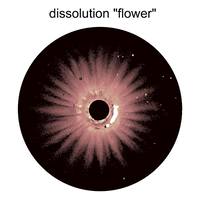
We experimentally investigate dissolution morphologies in a radial Hele-Shaw cell. We observe a unique phenomenon where the dissolution front shifts from stable to unstable and uncover the role of buoyancy-driven convection in forming radial stripes (dissolution “flower”) on the solid surface. We propose a phase diagram to predict the transitions of dissolution patterns.

Data-driven low-dimensional dynamic model of Kolmogorov flow

Carlos E. Pérez De Jesús and Michael D. Graham

Phys. Rev. Fluids 8, 044402 (2023) - Published 10 April, 2023

Minimal dimensional models are desirable for reduced computational costs in simulations as well as for applications such as model-based control. Long-time dynamics of flows often evolve on a low-dimensional manifold M in the full state space. We use neural networks to estimate M and the dynamics on it for two-dimensional Kolmogorov flow in a chaotic bursting regime. Outcomes include: a minimal dimension estimate, good short-time tracking and long-time statistics, as well as accurate predictions of bursting events.

Droplet capture in a fiber array

Karl Cardin, Christophe Josserand, and Raúl Bayoán Cal

Phys. Rev. Fluids 8, 043601 (2023) - Published 7 April, 2023

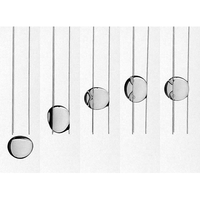
An experiment is conducted investigating the dynamics of a droplet as it impacts a fiber array. To remove gravitational effects, experiments are conducted in the unique low gravity environment of a drop tower. The droplet dynamics are described with a model showing the dominating role of contact line dissipation. The model shows good agreement with experiments for important metrics such as the droplet penetration length.

Axial dispersion of red blood cells in microchannels

Sylvain Losserand, Gwennou Coupier, and Thomas Podgorski

Phys. Rev. Fluids 8, 043102 (2023) - Published 6 April, 2023

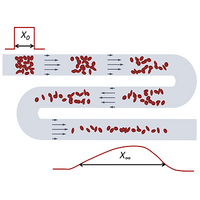
The dispersion of red blood cell transit times in capillaries and microvascular networks is strongly correlated with their deformability. In this paper, we show that a pulse of red blood cells undergoes axial dispersion as it flows along a narrow channel and that the evolution of the pulse length is mainly determined by the transverse migration of cells. This simple macroscopic axial dispersion measurement can be used to derive microscopic cell migration parameters which are a signature of red blood cell deformability.

Dynamics and rheological properties of suspensions of paramagnetic spherical particles under constant magnetic fields

Mingyang Tan, Joshua A. Adeniran, and Travis W. Walker

Phys. Rev. Fluids 8, 043701 (2023) - Published 6 April, 2023

In this work, we simulated the coarsening of magnetic particles under a shear flow and for different magnetic fields. We found that particle assembly varied in fully three-dimensional simulations and constrained two-dimensional simulations, which affected the corresponding rheological properties.

Mitigation of energy waste in pulsed jetting via valve-controlled auxiliary inlet

Xiaobo Bi and Qiang Zhu

Phys. Rev. Fluids 8, 043101 (2023) - Published 5 April, 2023

Pulsed jetting through cyclic refilling and discharging of a pressure chamber is an effective method to achieve high swimming speed. Inspired by squids, we demonstrate that an auxiliary inlet that opens during refilling and closes during discharging greatly reduces the energy expenditure and improves efficiency. The opening and closing actions of this inlet is controlled by a passive valve which is mechanically simple.

Interfacial flows past arrays of elastic fibers

C. Ushay, E. Jambon-Puillet, and P.-T. Brun

Phys. Rev. Fluids 8, 044001 (2023) - Published 5 April, 2023

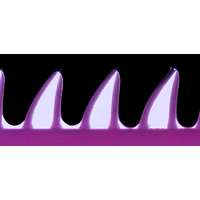
Confined capillary flows can have dramatic effects on systems containing structures soft enough to be deformed by surface tension. In this work, we study the drainage of a defending oil phase by an immiscible water phase through channels textured with arrays of elastic beams, which constitute a compliant porous medium. The coupling of flow dynamics with elastocapillarity causes the entrapment of the defending phase within periodic self-assembled bundles.

Inertial loads on a finite-length cylinder embedded in a steady uniform flow

Nicolas Fintzi, Lionel Gamet, and Jean-Lou Pierson

Phys. Rev. Fluids 8, 044302 (2023) - Published 5 April, 2023

In this work, we numerically investigate the loads on a finite-length cylinder embedded in a steady flow. We demonstrate that Khayat \& Cox (JFM 1989) slender-body theory can predict with reasonable accuracy the drag force on the cylinder for a large range of aspect ratios. However, for moderately long cylinders, this theory is not accurate in predicting lift force and torque. Therefore, we develop semi-empirical models based on small but finite inertia theory to improve the match between our numerical predictions and theoretical results. Finally, we compare our entire model, with experimental data on settling cylinders.

Probabilistic forecasts of extreme heatwaves using convolutional neural networks in a regime of lack of data

George Miloshevich, Bastien Cozian, Patrice Abry, Pierre Borgnat, and Freddy Bouchet

Phys. Rev. Fluids 8, 040501 (2023) - Published 4 April, 2023

Forecasting extreme climate events, for instance extreme heat waves, is key for society and a scientific challenge. In this paper we propose a novel machine learning approach that successfully forecasts extreme heat waves up to 45 days before the end of the event. The approach allows for dynamical process studies. A key message is that optimal machine learning forecasts require a large amount of data. The image shows temperature (colors) and geopotential height (lines) anomalies for a typical atmospheric situation.

Rheology of concentrated fiber suspensions with a load-dependent friction coefficient

Monsurul Khan, Rishabh V. More, Arash Alizad Banaei, Luca Brandt, and Arezoo M. Ardekani

Phys. Rev. Fluids 8, 044301 (2023) - Published 3 April, 2023

We numerically investigate the rheology of concentrated suspensions of fibers by modeling them as continuous slender bodies suspended in an incompressible fluid, including surface roughness. We model contact dynamics and friction in the suspension using a normal load-dependent friction coefficient and investigate the shear rate-dependent rheology of suspensions for different aspect ratios, volume fractions, roughness, and flexibility values.

Scaling the thrust and deformations of a rotor with flexible blades

Tristan Aurégan, Benjamin Thiria, and Sylvain Courrech du Pont

Phys. Rev. Fluids 8, 044401 (2023) - Published 3 April, 2023

We experimentally investigate the problem of a propulsive rotor submerged in water with flexible blades in both spanwise and chordwise directions. When we rotate the propeller and set an incoming flow, the blades bend and twist. We report measurements of forces and associated blade deformations. We show how the direction and magnitude of the deformation can be understood through simple geometric arguments, and highlight a relationship between the thrust and bending angle.

Downslope granular flow through a forest of obstacles

Baptiste Darbois Texier, Yann Bertho, and Philippe Gondret

Phys. Rev. Fluids 8, 034303 (2023) - Published 31 March, 2023

This work investigates the role played by a forest of pillars on the steady flow of a granular layer down an inclined plane. We realized experiments for different inter-pillar distances to observe how the forest density slows down the granular flow. These observations are rationalized by an average approach that considers a granular rheology for the flow and includes the additional force exerted by the pillars on the granular layer.

Theoretical model of confined thermoviscous flows for artificial cytoplasmic streaming

Weida Liao, Elena Erben, Moritz Kreysing, and Eric Lauga

Phys. Rev. Fluids 8, 034202 (2023) - Published 30 March, 2023

Recent experiments in cell biology have probed the impact of artificially induced intracellular flows, known as focused-light-induced cytoplasmic streaming (FLUCS), in cell division. Here, we present a fully analytical, theoretical model of FLUCS experiments, describing the instantaneous fluid flow and resulting transport of tracers at all length scales under two-dimensional confinement. In agreement with recent experimental measurements, we show that the average velocity of tracers is a hydrodynamic source dipole in the far field. Our quantitative findings will enable the design of new controlled experiments to establish the physiological role of physical transport processes inside cells.

Towards quantum turbulence theory: A simple model with interaction of vortex loops

S. V. Talalov

Phys. Rev. Fluids 8, 034607 (2023) - Published 30 March, 2023

This work investigates a quantized system of thin vortex rings with a flow in the core. Examples show that the set of permissible circulation values has a fractal structure. Circulation values in the domain of a round tube with a radius R0 in the shape of a torus of radius R1≫R0 are given by the accompanying expression where quantities ζk(l) stand for zeros of the Bessel function Jl(ρ). A general expression for the partition function of a turbulent flow is also suggested.

Elongation enhances migration through hydrodynamic shear

R. N. Bearon and W. M. Durham

Phys. Rev. Fluids 8, 033101 (2023) - Published 29 March, 2023

Many of the microscopic plankton that live in aquatic environments perform vertical migrations up and down through the water column each day to reach sunlight, acquire nutrients and avoid predators. However, these daily migrations can be thwarted by flow, which is ubiquitous in these environments, because it redirects their motility in other directions. This study explores how the shape of swimmers affects their ability to vertically migrate through hydrodynamic shear. Our results suggest that the highly elongated body morphologies observed in many species of swimming phytoplankton and zooplankton is an adaptation to help them navigate through flow.

Systematic parameterizations of minimal models of microswimming

Benjamin J. Walker, Kenta Ishimoto, and Eamonn A. Gaffney

Phys. Rev. Fluids 8, 034102 (2023) - Published 29 March, 2023

Minimal models are used frequently when building up intuition for microswimmers and their behaviors. In this paper, we highlight how the commonplace omission of rapid variation in the parameters used in these models can lead to qualitatively incorrect predictions, even in the simplest and most common models of swimmers near boundaries. Further, we show how appropriate, effective parameterizations can be found through an often-straightforward multiscale analysis.

Steady-state extensional rheology of a dilute suspension of spheres in a dilute polymer solution

Arjun Sharma and Donald L. Koch

Phys. Rev. Fluids 8, 033303 (2023) - Published 27 March, 2023

It is well-known and intuitive that addition of a dilute volume concentration of spheres increases the viscosity of a Newtonian liquid. We find that a viscoelastic liquid undergoing uniaxial extensional flow at small De (extension rate times the polymer relaxation time) experiences a larger increase in viscosity than the Newtonian case due to wakes of extra polymer stretch produced downstream of the spheres. However, when De≳0.6, the highly stretched polymer in the bulk fluid collapses near the particle surface and the suspension deforms more easily than the particle-free viscoelastic fluid.

Energy dissipation rate in the inertial sublayer of turbulent channel flow at large but finite Reτ

Yoshinobu Yamamoto, Yukio Kaneda, and Yoshiyuki Tsuji

Phys. Rev. Fluids 8, 034606 (2023) - Published 27 March, 2023

A theory of the position dependence of the statistical average of the energy dissipation rate per unit mass (<ϵ>) in the inertial sublayer of turbulent channel flow is proposed on the basis of the spirit of the Linear Response Theory (LRT) of turbulence. The theory with data consisting of a series of direct numerical simulations up to Reτ≈ 8000 suggests κϵ≈ 0.44 for the von Kármán constant of <ϵ>.

Modeling and numerical simulations of Brownian rodlike particles with anisotropic translational diffusion

Hamza Issa, Giovanniantonio Natale, Gilles Ausias, and Julien Férec

Phys. Rev. Fluids 8, 033302 (2023) - Published 24 March, 2023
The suspension of Brownian rods in flow has a major effect in many engineering applications. We numerically examine Brownian rod suspensions through a rectangular channel with and without the effect of circular obstacles, taking into consideration the isotropic translational diffusion tensor using the finite element method. We develop a kinetic macro-model that reduces the computational effort of the Brownian rod suspensions and it gives a good approximation with errors less than 5%.

Sign In to Your Journals Account

Filter

Recent Issues

Vol. 11, Iss. 10
October 2026
Vol. 11, Iss. 9
September 2026
Vol. 11, Iss. 8
August 2026
Vol. 11, Iss. 7
July 2026
Category
Article Type
Section

Filter

Article Lookup

Enter a citation