Highlights

Sequence-dependent biomolecular phase separation driven by short-range interaction: From material properties to coarsening dynamics

Jun-Qi Li, Zeng-Shuai Yan, Yu-Qiang Ma, and Hong-Ming Ding

Phys. Rev. E 111, 054403 (2025) - Published 8 May, 2025

Liquid-liquid phase separation of biomacromolecules often focuses on nonspecific interactions, but the role of short ranged, specific interactions in biomolecular condensates is unclear. This study introduces a new parameter, linking sequence-specific interactions to key material or structural properties of condensates, such as radius of gyration, viscosity, or surface tension.

#BiophysicsSpotlight #SoftMatterSpotlight #TimelyTopic

Out-of-equilibrium critical dynamics of the three-dimensional Z2 gauge model along critical relaxational flows

Claudio Bonati, Haralambos Panagopoulos, and Ettore Vicari

Phys. Rev. E 111, 054107 (2025) - Published 2 May, 2025

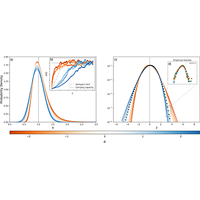
The Z2 gauge model on a three-dimensional lattice undergoes a continuous phase transition. Because of a duality relation with the Ising model, its static critical properties are well known. The authors show that this analogy between the critical properties of the two models does not extend to the critical dynamics, and they calculate a dynamic critical exponent for the Z2 gauge model within an out-of-equilibrium finite-size scaling framework.

#AdvancingField #UniversalBehavior

Nonanalytic Landau functionals shaping the finite-size scaling of fluctuations and response functions in and out of equilibrium

Krzysztof Ptaszyński and Massimiliano Esposito

Phys. Rev. E 111, 044142 (2025) - Published 29 April, 2025

Landau theory describes phase transitions in terms of a free energy that is a functional of an order parameter. A common assumption is that this functional is analytic, but it can be expanded to include nonanalytic terms. Here the authors show for two specific examples that such terms can control the scaling of quantities such as the fluctuations of the order parameter at the critical point.

#UniversalBehavior #ClassicalProblem

Unified theoretical framework for wide neural network learning dynamics

Yehonatan Avidan, Qianyi Li, and Haim Sompolinsky

Phys. Rev. E 111, 045310 (2025) - Published 29 April, 2025

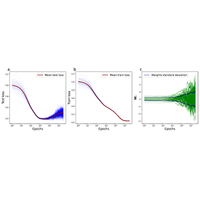
Drawing upon methods from out-of-equilibrium statistical mechanics, the authors develop an exact analytical theory of learning dynamics in wide deep neural networks, unifying two previously disparate approaches: the Neural Tangent Kernel and the Neural Network Gaussian Process. They arrive at a novel time-dependent kernel, the Neural Dynamical Kernel. They identify two distinct learning phases, one characterized by deterministic minimization of the training error, followed by stochastic exploration of the solution subspace, ultimately converging to Gibbs equilibrium. The results reveal the mechanisms that enable neural networks to maintain robust performance despite noise.

#LandmarkContribution #MachineLearningSpotlight

Low-resolution descriptions of model neural activity reveal hidden features and underlying system properties

Riccardo Aldrigo, Roberto Menichetti, and Raffaello Potestio

Phys. Rev. E 111, 044315 (2025) - Published 21 April, 2025

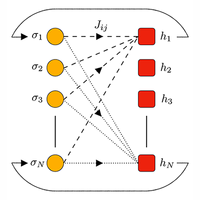
Understanding the complex behavior of biological neural networks is hampered by their large size and intricate nature. To tackle such systems, simplified and computationally manageable models are often employed that aim at capturing specific aspects of neural activity, one notable example being the Hopfield model. This study uses an information-theoretic method, mapping entropy optimization workflow, in the Hopfield model to identify and characterize subsets of constituent neurons that provide significant information about the entire system’s behavior, given only the time series of the neural network states.

#WellStructured #Interdisciplinary

Statistical mechanics of multiplectoneme phases in DNA

Midas Segers, Enrico Skoruppa, Helmut Schiessel, and Enrico Carlon

Phys. Rev. E 111, 044408 (2025) - Published 17 April, 2025

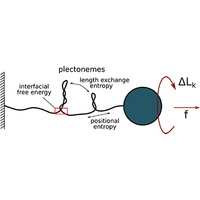
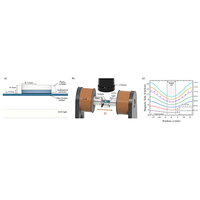
Stretched supercoiled DNA undergoes a buckling transition, forming intertwined looped domains called plectonemes. Supercoiling of DNA is important for a number of biological processes, such as the regulation of gene expression. This paper reports a detailed study of the statistical mechanics of stretched supercoiled DNA that allows for multiple plectonemic domains. The authors study this phenomenon in the context of magnetic tweezers, a common tool for experimental studies. They develop a simple two-phase model that can provide an understanding of experimental findings.

#SoftMatterSpotlight #ClassicalProblem #WellStructured

Speeding the directed self-assembly under toggled magnetic fields

Guillermo Camacho and Juan de Vicente

Phys. Rev. E 111, 045414 (2025) - Published 15 April, 2025

In magnetorheological fluids, phase separation kinetics can be dramatically accelerated using high-field magnetic pulses. This study reports on directed self-assembly under toggled uniaxial fields. The authors investigate the influence of the frequency and strength of the magnetic field, focusing on the strong field regime and reveal hitherto unknown coarsening mechanisms and final states. The experimental results are complemented by simulation insights. Overall, the study highlights that strong toggled fields dramatically accelerate self-assembly.

#AdvancingField #TheoryExperiment #SoftMatterSpotlight

Phase separation on deformable membranes: Interplay of mechanical coupling and dynamic surface geometry

Antonia Winter, Yuhao Liu, Alexander Ziepke, George Dadunashvili, and Erwin Frey

Phys. Rev. E 111, 044405 (2025) - Published 10 April, 2025

Combining theoretical analysis with numerical simulations, this study shows that long-range membrane-mediated interactions in phase-separating proteins alter equilibrium states, driving pattern formation instead of simple phase separation. This work provides a systematic framework for describing phase-separation dynamics on membranes modulated by protein density.

#BiophysicsSpotlight #Interdisciplinary #WellStructured

Data augmentation using diffusion models to enhance inverse Ising inference

Yechan Lim, Sangwon Lee, and Junghyo Jo

Phys. Rev. E 111, 045302 (2025) - Published 9 April, 2025

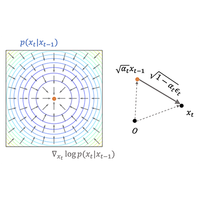
In the context of generative machine learning, diffusion models, inspired by principles of statistical mechanics, have shown exceptional capability in representing data probability distributions. This study demonstrates that diffusion models can effectively learn sample distributions and generate new samples that closely resemble the observed data. The work highlights a promising new avenue where machine learning models can contribute to solving complex problems in physics.

#AdvancingField #TimelyTopic #MachineLearningSpotlight

Athermal tricriticality

Mauro Sellitto

Phys. Rev. E 111, L042101 (2025) - Published 7 April, 2025

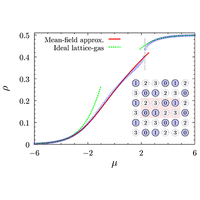
It is well known that phase transitions can be driven by entropy alone, without involving temperature, but an interesting question is what other types of critical behavior can be found in such athermal systems. This Letter shows that a tricritical point can be realized in a monodisperse lattice gas with only excluded volume interactions.

#ClassicalProblem #UniversalBehavior

Microbial populations hardly ever grow logistically and never sublinearly

José Camacho-Mateu, Aniello Lampo, Mario Castro, and José A. Cuesta

Phys. Rev. E 111, 044404 (2025) - Published 4 April, 2025

Challenging the conventional logistic model, this study shows that microbial growth follows a generalized θ-logistic model, accounting for environmental fluctuations. The findings show microbial growth is never sublinear, with significant implications for macroecological patterns and the mechanisms governing microbial ecosystem stability.

#BiophysicsSpotlight #TimelyTopic #AdvancingField

Hyperbolic embedding of brain networks detects regions disrupted by neurodegeneration in Alzheimer's disease

Alice Longhena, Martin Guillemaud, Fabrizio De Vico Fallani, Raffaella Migliaccio, and Mario Chavez

Phys. Rev. E 111, 044402 (2025) - Published 2 April, 2025

Alzheimer’s disease disrupts the brain’s connectivity structure, through processes such as progressive neuronal loss and brain atrophy. In this study, the authors propose a method based on a hyperbolic representation of brain networks to characterize brain regions with connectivity anomalies. They show that the method successfully identifies regions affected by neurodegeneration, opening the door to use it as a biomarker for disease progression.

#BiophysicsSpotlight #Interdisciplinary

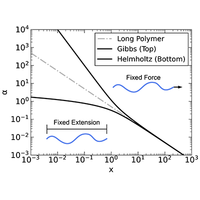
Stretching semiflexible polymers: Gibbs versus Helmholtz ensembles

Nigel T. Andersen and Jeff Z. Y. Chen

Phys. Rev. E 111, 045402 (2025) - Published 1 April, 2025

Stretching experiments have long been used to investigate the physical properties of single polymers and biopolymers by measuring their response to end-to-end separation. Despite decades of experimental and simulation data, a unifying theoretical framework remains elusive. This paper provides a universal perspective, revealing that for semiflexible polymers like DNA, all such data collapse onto two fundamental scaling curves.

#UniversalBehavior #SoftMatterSpotlight #ClassicalProblem

Three-dimensional construction of hyperuniform, nonhyperuniform, and antihyperuniform disordered heterogeneous materials and their transport properties via spectral density functions

Wenlong Shi, Yang Jiao, and Salvatore Torquato

Phys. Rev. E 111, 035310 (2025) - Published 21 March, 2025

Heterogeneous materials are of importance in many applications, and designing them with certain properties is a crucial inverse problem. The authors develop a method to construct three-dimensional disordered heterogeneous materials by enforcing a given spectral density function, which determines a number of effective properties. They generate various microstructures including hyperuniform, nonhyperuniform, and antihyperuniform ones, with a significantly lower computational cost than existing methods.

#AdvancingField #TechnicalAdvancement

From noisy cell size control to population growth: When variability can be beneficial

Arthur Genthon

Phys. Rev. E 111, 034407 (2025) - Published 20 March, 2025

This paper demonstrates a method to determine the dependence of population growth on single-cell variability. The authors consider fluctuations in single-cell growth rate, size added, and size partitioning. Results reveal how different growth control mechanisms affect population growth.

#BiophysicsSpotlight

Resonance broadening effects of weak turbulence on Earth's radiation belt electrons

Xiongdong Yu, Zhigang Yuan, Dedong Wang, Oliver Allanson, and Samuel Hunter

Phys. Rev. E 111, L033201 (2025) - Published 18 March, 2025

The dynamics of electrons in space plasmas, such as the earth’s radiation belts, are affected by the presence of wave turbulence, even when a resonance condition is not satisfied. The authors propose an expression to describe this resonance broadening effect, and find that it compares well with test particle simulation results. The study is applied to whistler-mode chorus waves in the radiation belt’s electrons, but can be easily extended to a wide range of systems.

#AdvancingField #TechnicalAdvancement

Programmable time crystals from higher-order packing fields

R. Hurtado-Gutiérrez, C. Pérez-Espigares, and P. I. Hurtado

Phys. Rev. E 111, 034119 (2025) - Published 17 March, 2025

Time crystals are being investigated both in classical and quantum settings. This work advances this area by demonstrating how to engineer and control custom continuous time crystals in driven diffusive fluids. This enables one to build different time crystals on demand, characterized by an arbitrary number of rotating condensates. The authors’ findings leverage an external packing field coupled to density fluctuations, showcasing the versatility and potential of the approach.

#AdvancingField #TimelyTopic

Recovery of activation propagation and self-sustained oscillation abilities in stroke brain networks

Yingpeng Liu, Jiao Wu, Kesheng Xu, and Muhua Zheng

Phys. Rev. E 111, 034309 (2025) - Published 17 March, 2025

The understanding of the relationship between brain architecture and function is one of the central themes in network neuroscience. The authors investigate how the brain network structure is affected in patients who suffered focal injuries (strokes). By analyzing a large amount of brain network data both for stroke patients and healthy controls, they found that strokes change network properties such as connection weights, average degree, clustering, community, etc. Yet, they also observe a partial recovery over time. The findings help understand the structure-function relationship in brain disorders.

#ClearMotivation #OutstandingDataset #Interdisciplinary

Optimal reduction of an epidemic outbreak size via temporary quarantine

Eyal Atias and Michael Assaf

Phys. Rev. E 111, 034305 (2025) - Published 13 March, 2025

The authors address a question related to epidemic control strategy: Is there an optimal initiation time for a single quarantine, such that the final outbreak size is minimized? They use the susceptible-infected-recovered (SIR) model to explore heterogenous and well-mixed social networks. Surprisingly, their results reveal that the optimal quarantine initiation time is closely related to the so-called “herd immunity” threshold, occurring at the onset of epidemic decline.

#TimelyTopic

Physical limits on chemical sensing in bounded domains

Daniel R. McCusker and David K. Lubensky

Phys. Rev. E 111, 034404 (2025) - Published 12 March, 2025

This work investigates how boundaries and sensor geometry affect the precision of diffusion-limited sensing. The authors derive exact analytical solutions and calculate results in one and three dimensions and for various sensor configurations. They find that the precision limit can vary substantially depending on the placement and size of the sensor. In general, proximity to a boundary degrades the precision compared to that far from any boundary.

#Interdisciplinary #BiophysicsSpotlight

Sign In to Your Journals Account

Filter

Section

Filter

Article Lookup

Enter a citation