Recent Articles

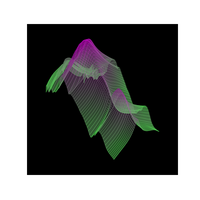
Bose-Einstein condensation of magnons under coherent pumping by light

Liang Li and Tianyu Liu

Phys. Rev. B 109, 184447 (2024) - Published 31 May, 2024

Room-temperature quantum computing and solid-state quantum simulations have been long-standing goals in the field of quantum information science. Magnon Bose-Einstein condensation at room temperature may provide a key advance towards these objectives. Normally, the magnon Bose-Einstein condensation is driven by microwave pumping and detected by light. Here, the authors propose a method to create stable magnon condensate using lasers in a magneto-optical cavity, opening new avenues for all-optical control in quantum magnonics.

Relevant long-range interaction of the entanglement Hamiltonian emerges from a short-range gapped system

Chuhao Li, Rui-Zhen Huang, Yi-Ming Ding, Zi Yang Meng, Yan-Cheng Wang, and Zheng Yan

Phys. Rev. B 109, 195169 (2024) - Published 31 May, 2024

Coupling strongly correlated electron systems to a tunable electronic reservoir

S. Bag, L. Fratino, A. Camjayi, M. Civelli, and M. Rozenberg

Phys. Rev. B 109, 195171 (2024) - Published 31 May, 2024

Electronic and optical properties of the fully and partially inverse CoFe2O4 spinel from first principles calculations including many-body effects

Shohreh Rafiezadeh, Vijaya Begum-Hudde, and Rossitza Pentcheva

Phys. Rev. B 109, 195172 (2024) - Published 31 May, 2024

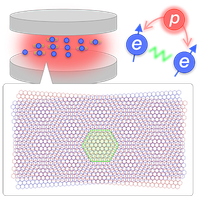
Cavity moiré materials: Controlling magnetic frustration with quantum light-matter interaction

Kanta Masuki and Yuto Ashida

Phys. Rev. B 109, 195173 (2024) - Published 31 May, 2024

Cavity quantum electrodynamics (QED) studies the interaction between light and matter at the single quantum level and has played a central role in quantum science and technology. Combining the idea of cavity QED with moiré materials, the authors develop here a theory of cavity moiré materials, i.e., moiré materials confined in a cavity. These results indicate that the cavity confinement enables one to control magnetic frustration of moiré materials and might allow the realization of various exotic phases, such as the quantum spin liquid.

Constructing helical edge states with two-dimensional C6 and C6-like symmetric photonic crystals

Xiaolong Wang, Wenjie Sui, Yu Zhang, Zirui Zhang, Yongxi Yao, Xinqi Meng, Hongfang Zhang, Yujing Wang, and Bing Yang

Phys. Rev. B 109, 195305 (2024) - Published 31 May, 2024

Graphene plasmonic skyrmion lattices generated by radially polarized light beams

Lei Wang, Lixin Ge, Ke Gong, Wei Cai, Xinzheng Zhang, and Jingjun Xu

Phys. Rev. B 109, 195434 (2024) - Published 31 May, 2024

Giant spin transport anisotropy in magnetic topological insulators

Marc Vila, Aron W. Cummings, and Stephan Roche

Phys. Rev. B 109, 195435 (2024) - Published 31 May, 2024

Coexistence of one-dimensional and two-dimensional topology and genesis of Dirac cones in the chiral Aubry-André model

T. V. C. Antão, D. A. Miranda, and N. M. R. Peres

Phys. Rev. B 109, 195436 (2024) - Published 31 May, 2024

The chiral Aubry-André model is introduced as an atomic chain with staggered hoppings and a superimposed hopping modulation, revealing a unique interplay of one-dimensional and two-dimensional topological properties. Here, the authors describe the model’s phases and the coexistence of a 2D Chern number and a 1D winding number, combining features of the integer and half-integer quantum Hall effect with SSH-type 1D protected edge modes, motivating the engineering of complex topological insulators using the physics of quasicrystallinity.

Superconducting triangular islands as a platform for manipulating Majorana zero modes

Aidan Winblad and Hua Chen

Phys. Rev. B 109, 205158 (2024) - Published 31 May, 2024

Resilient intraparticle entanglement and its manifestation in spin dynamics of disordered Dirac materials

Jorge Martínez Romeral, Aron W. Cummings, and Stephan Roche

Phys. Rev. B 109, 174313 (2024) - Published 30 May, 2024

First-principles study of inner-electron excitation of tungsten under proton and helium ion irradiation

Ge-Ge Xiong, Wen-Qi Jin, Feng Wang, and Fei Mao

Phys. Rev. B 109, 174314 (2024) - Published 30 May, 2024

Accounting for quantum effects in atomistic spin dynamics

M. Berritta, S. Scali, F. Cerisola, and J. Anders

Phys. Rev. B 109, 174441 (2024) - Published 30 May, 2024

Thermal Hall effect incorporating magnon damping in localized spin systems

Shinnosuke Koyama and Joji Nasu

Phys. Rev. B 109, 174442 (2024) - Published 30 May, 2024

Intrinsic nonlinear Hall effect in two-dimensional honeycomb topological antiferromagnets

Zheng-Yang Zhuang and Zhongbo Yan

Phys. Rev. B 109, 174443 (2024) - Published 30 May, 2024

Tailoring the ultrafast dynamics and electromagnetic surface modes on silicon upon irradiation with mid-infrared femtosecond laser pulses using SiO2 coatings

G. D. Tsibidis and E. Stratakis

Phys. Rev. B 109, 184113 (2024) - Published 30 May, 2024

Relationship between magnetic asymmetry and magnetization in ultrafast transverse magneto-optical Kerr effect spectroscopy in the extreme ultraviolet spectral range

Johanna Richter, Somnath Jana, Martin Hennecke, Daniel Schick, Clemens von Korff Schmising, and Stefan Eisebitt

Phys. Rev. B 109, 184440 (2024) - Published 30 May, 2024

Ultrafast transverse magneto-optical Kerr effect (T-MOKE) spectroscopy in the extreme ultraviolet provides element-specific insights into magnetization dynamics. However, the relationship between T-MOKE magnetic asymmetry and sample magnetization can be complex, even in the absence of nonequilibrium magnetization dynamics. Here, the authors present static and time-resolved data, together with wave propagation simulations, for a prototypical magnetic heterostructure that shows significant deviations from linearity, including increasing asymmetry despite decreasing magnetization. They also propose sample structures and experimental geometries in which a linear T-MOKE response remains valid.

Switching of the RKKY coupling on a topological crystalline insulating surface

Bui Dinh Hoi

Phys. Rev. B 109, 184441 (2024) - Published 30 May, 2024

Electronic structure and magnetism in P4/nmm KCoO2

Ozan Dernek, Santosh Kumar Radha, Jerome Jackson, and Walter R. L. Lambrecht

Phys. Rev. B 109, 184442 (2024) - Published 30 May, 2024

Zero to ultralow magnetic field NMR of [1−13C]pyruvate and [2−13C]pyruvate enabled by SQUID sensors and hyperpolarization

John Z. Myers, Friedemann Bullinger, Nicolas Kempf, Markus Plaumann, Adam Ortmeier, Thomas Theis, Pavel Povolni, Jannik Romanowski, Jörn Engelmann, Klaus Scheffler, Jan-Bernd Hövener, Kai Buckenmaier, Rainer Körber, and Andrey N. Pravdivtsev

Phys. Rev. B 109, 184443 (2024) - Published 30 May, 2024
Nuclear magnetic resonance is typically performed at high magnetic fields, where heteronuclei are weakly coupled and resonate at their own frequences. This paper presents how hyperpolarization enables detection in the intermediate and strong-coupling regimes by using ultrasensitive SQUID setups. The authors also analytically derived product operators for this system (13C-labeled pyruvate) at arbitrary magnetic field. This confirms that spin precession does not occur at zero field, but rather that spins oscillate along an axis, demonstrating the importance of detection direction.

Sign In to Your Journals Account

Filter

Recent Issues

Vol. 114, Iss. 24
15 October 2026
Vol. 114, Iss. 23
15 October 2026
Vol. 114, Iss. 22
15 October 2026
Vol. 114, Iss. 21
1 October 2026
Category
Article Type
Section

Filter

Article Lookup

Enter a citation