Recent Articles

Accurate electron correlation energy functional: Expansion in the interaction renormalized by the random-phase approximation

Mario Benites, Angel Rosado, and Efstratios Manousakis

Phys. Rev. B 110, 195151 (2024) - Published 26 November, 2024

Resonant phonons: Localization in a structurally ordered crystal

Albert Beardo, Paul Desmarchelier, Chia-Nien Tsai, Prajit Rawte, Konstantinos Termentzidis, and Mahmoud I. Hussein

Phys. Rev. B 110, 195438 (2024) - Published 26 November, 2024

Hydrodynamics of spin transport in the Haldane-Shastry chain

Vir B. Bulchandani and Hyunsoo Ha

Phys. Rev. B 110, 195439 (2024) - Published 26 November, 2024

Electronic correlations and spin frustration in the molecular conductors κ-(BEDT-TTF)2X probed by magnetic quantum oscillations

S. Erkenov, S. Fust, S. Oberbauer, W. Biberacher, N. D. Kushch, H. Müller, F. L. Pratt, R. Gross, and M. V. Kartsovnik

Phys. Rev. B 110, 205149 (2024) - Published 26 November, 2024

Flat plane based double-counting free and parameter free many-body DFT+U

Andrew C. Burgess and David D. O'Regan

Phys. Rev. B 110, 205150 (2024) - Published 26 November, 2024

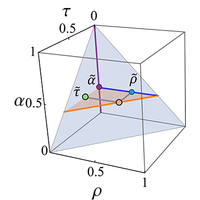
The authors construct here a DFT+U type corrective functional using exact quantum conditions instead of the Hubbard model. DFT+U is widely used in density functional theory, particularly for transition-metal and rare-earth bearing materials. In several small molecules, providing stringent, near-ideal test cases, traditional DFT+U worsens the total energy. The introduced mBLOR functional, with parameters calculated in situ, instead reduces errors significantly. It incorporates simplified interorbital error corrections, is free of double-counting approximations, and opens gaps without unphysical symmetry breaking.

Truncated Coulomb potential for planar channeling

M. V. Bondarenco and N. S. Moskvitin

Phys. Rev. B 110, 205205 (2024) - Published 26 November, 2024

Point defects and doping in wurtzite LaN

A. J. E. Rowberg, S. Mu, and C. G. Van de Walle

Phys. Rev. B 110, 205206 (2024) - Published 26 November, 2024

Passivity constraints on the relations between transmission, reflection, and absorption eigenvalues

Cheng Guo and Shanhui Fan

Phys. Rev. B 110, 205431 (2024) - Published 26 November, 2024

Passivity is a fundamental property of many physical systems, characterizing their inability to generate energy. The authors investigate here passivity constraints on the relations between transmission, reflection, and absorption eigenvalues in linear time-invariant systems. The analysis shows that the set of allowable eigenvalue combinations forms a convex polyhedron. The theory reveals a surprising connection to Horn’s inequalities, a fundamental result in matrix theory. It has significant implications for the design and optimization of passive devices in optics, acoustics, and mesoscopic physics.

Optimization of ionic configurations in battery materials by quantum annealing

Tobias Binninger, Yin-Ying Ting, Piotr M. Kowalski, and Michael H. Eikerling

Phys. Rev. B 110, L180202 (2024) - Published 26 November, 2024

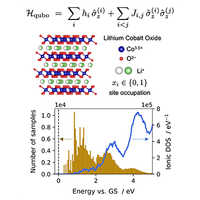
Configurational sampling is an exponentially scaling problem widely encountered in computational materials research. Quantum computing techniques can provide new solutions to such classically hard-to-solve problems. Here, the authors introduce a method that enables the use of quantum annealing to determine the ionic ground state configuration in a battery material. The method relies on a grand-canonical transformation of the energy cost function that strongly reduces the effective coupling strengths of the interaction graph, which is essential for effectiveness of quantum annealing.

Interfacial spin-orbit coupling driven enhancement of superconductivity by parallel magnetic field

Zh. Devizorova and A. I. Buzdin

Phys. Rev. B 110, L180504 (2024) - Published 26 November, 2024

Unveiling higher-order topology via polarized topological charges

Wei Jia, Bao-Zong Wang, Ming-Jian Gao, and Jun-Hong An

Phys. Rev. B 110, L201117 (2024) - Published 26 November, 2024

Origin of nonlinear photocurrents in chiral multifold semimetal CoSi unveiled by terahertz emission spectroscopy

Yao-Jui Chan, Syed Mohammed Faizanuddin, Raju Kalaivanan, Sankar Raman, Hsin Lin, Uddipta Kar, Akhilesh Kr. Singh, Wei-Li Lee, Ranganayakulu K. Vankayala, Min-Nan Ou, and Yu-Chieh Wen

Phys. Rev. B 110, L201118 (2024) - Published 26 November, 2024

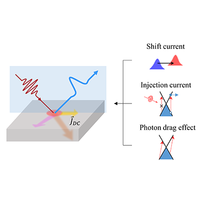
Nonlinear photocurrents in topological semimetals encode quantum geometric characters of Bloch wavefunctions and band topology, and offer a new opportunity for advanced photovoltaics. Here, the authors characterize the nonlinear photoconductivities of chiral multifold semimetal CoSi through a refined terahertz emission spectroscopy analysis. The results reveal a large linear shift conductivity and confirm a giant nonquantized circular injection conductivity in the mid-infrared range. Bulk transverse injection currents and relatively weak photon drag effect are also identified.

Residual quantum coherent electron transport in doped graphene leads

R. Delagrange, G. Le Breton, K. Watanabe, T. Taniguchi, P. Roulleau, P. Roche, and F. D. Parmentier

Phys. Rev. B 110, L201408 (2024) - Published 26 November, 2024

Phonon realization of real triple points

X. X. Kong, Dongze Fan, Xiangang Wan, and Feng Tang

Phys. Rev. B 110, 174111 (2024) - Published 25 November, 2024

Ultralow lattice thermal conductivity in quasi-one-dimensional BiI3 with suppressed phonon coherence

Chenxin Zhang, Jie Sun, Jiewei Cheng, and Qian Wang

Phys. Rev. B 110, 174309 (2024) - Published 25 November, 2024

Investigation of phonon anharmonicity in Se-doped Bi2Te3 via temperature-dependent Raman spectroscopy

Ruian Liu and Mikio Koyano

Phys. Rev. B 110, 174310 (2024) - Published 25 November, 2024

Case for Bragg diffraction by a noncollinear PT-symmetric antiferromagnet Cu2(MoO4)(SeO3)

S. W. Lovesey and G. van der Laan

Phys. Rev. B 110, 174442 (2024) - Published 25 November, 2024

Bond disorder in extended Heisenberg-Kitaev models: Spin textures and in-gap states in the high-field regime

Georgia Fragkopoulou and Matthias Vojta

Phys. Rev. B 110, 174444 (2024) - Published 25 November, 2024

Motivated by experimental results obtained for the layered Kitaev magnet α-RuCl3, the authors investigate here the effect of quenched disorder in extended Heisenberg-Kitaev models. Defects are shown to introduce local spin textures and to induce magnetic states inside the excitation gap of the high-field phase, with both phenomena strongly depending on the direction of the applied magnetic field. The study highlights the nontrivial defect physics in strongly spin-orbit coupled magnets in general, and Kitaev materials in particular.

Lattice dynamics of the frustrated kagome compound Y-kapellasite

P. Doležal, T. Biesner, Y. Li, R. Mathew Roy, S. Roh, R. Valentí, M. Dressel, P. Puphal, and A. Pustogow

Phys. Rev. B 110, 174445 (2024) - Published 25 November, 2024

Effect of low-temperature compression on superconductivity and crystal structure in strontium metal

J. Lim, S. Sinha, D. E. Jackson, R. S. Kumar, C. Park, R. J. Hemley, D. VanGennep, Y. K. Vohra, R. G. Hennig, P. J. Hirschfeld, G. R. Stewart, and J. J. Hamlin

Phys. Rev. B 110, 174519 (2024) - Published 25 November, 2024
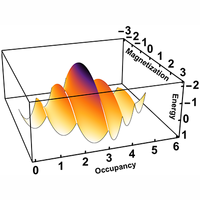
The superconducting and structural properties of strontium metal are examined under pressures up to 60 GPa at cryogenic temperatures. Low-temperature pressure application doubles the superconducting critical temperature between 35–42 GPa compared to previous results with cryogenic cooling after room-temperature compression. Low-temperature x-ray diffraction shows that the Sr-IV phase remains stable up to 60 GPa, suggesting that thermal energy aids in overcoming kinetic barriers to the Sr-V phase, which appears above 46 GPa under room-temperature compression.

Sign In to Your Journals Account

Filter

Recent Issues

Vol. 114, Iss. 24
15 October 2026
Vol. 114, Iss. 23
15 October 2026
Vol. 114, Iss. 22
15 October 2026
Vol. 114, Iss. 21
1 October 2026
Category
Article Type
Section

Filter

Article Lookup

Enter a citation