Recent Articles

Probing the critical behavior of a sign-problematic model with Monte Carlo simulations

Ye Ling, Yuting Wang, Wenan Guo, and Yuhai Liu

Phys. Rev. B 113, 115144 (2026) - Published 20 March, 2026

Ideal nodal-sphere semimetal in the three-dimensional boron allotrope CT-B24

Xiao-Jing Gao, Yanfeng Ge, and Yan Gao

Phys. Rev. B 113, 115145 (2026) - Published 20 March, 2026

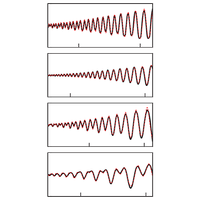
Study of exciton-photon coupling in CuCl semiconductor microcavities with large decay of cavity photons

Rintaro Miyanaga, Goro Oohata, Satoshi Tanaka, and Kohji Mizoguchi

Phys. Rev. B 113, 115309 (2026) - Published 20 March, 2026

Magnetotransport properties of an unconventional Rashba spin-orbit coupled two-dimensional electronic system

Aryan Pandita and SK Firoz Islam

Phys. Rev. B 113, 115419 (2026) - Published 20 March, 2026

Report on reproducibility in condensed matter physics

A. Akrap, D. Bordelon, S. Chatterjee, E. D. Dahlberg, R. P. Devaty, S. M. Frolov, C. Gould, L. H. Greene, S. Guchhait, J. J. Hamlin, B. M. Hunt, M. J. A. Jardine, M. Kayyalha, R. C. Kurchin, V. Kozii, H. F. Legg, I. I. Mazin, V. Mourik, A. B. Özgüler, J. Peñuela-Parra, B. Seradjeh, B. Skinner, K. F. Quader, and J. P. Zwolak

Phys. Rev. B 113, 119601 (2026) - Published 20 March, 2026

This report from a diverse collaboration of experts addresses community concerns around reproducibility in condensed matter physics by establishing clear best practices for researchers, publishers, and institutions. It advocates for mandatory sharing of primary data, code, and full experimental parameters to enhance and safeguard the field’s scientific integrity.

Bulk plasmons in elemental metals

Dario A. Leon, Claudia Cardoso, and Kristian Berland

Phys. Rev. B 113, 125138 (2026) - Published 20 March, 2026

Here, the authors present first-principles plasmonic band structures for 26 elemental metals, revealing complex dispersion and spectral features beyond simple free-electron models, including nonparabolic dispersion, anisotropy-induced discontinuities, and band crossings. Moreover, they introduce an effective momentum- and frequency-dependent representation of the dielectric response, MPA(q), that accurately reproduces the calculated spectra and constitute a quantitative reference for plasmonic spectroscopy and modeling.

Interplay of Rashba and valley Zeeman splittings in weak localization of spin-orbit coupled graphene

L. E. Golub

Phys. Rev. B 113, 125306 (2026) - Published 20 March, 2026

Terahertz radiation induced attractive-repulsive Fermi polaron conversion in transition metal dichalcogenide monolayers

A. M. Shentsev and M. M. Glazov

Phys. Rev. B 113, 125307 (2026) - Published 20 March, 2026

Universal classes of disorder scattering for the in-plane anomalous Hall effect

Guoao Yang, Tao Qin, and Jianhui Zhou

Phys. Rev. B 113, 125426 (2026) - Published 20 March, 2026

Chiral spin liquid and quantum phase transition in the triangular-lattice Hofstadter-Hubbard model

Stefan Divic, Tomohiro Soejima (副島智大), Valentin Crépel, Michael P. Zaletel, and Andrew Millis

Phys. Rev. B 113, L121107 (2026) - Published 20 March, 2026

Quasi-one-dimensional Coulomb drag between spin-polarized quantum wires

Mingyang Zheng, Rebika Makaju, Rasul Gazizulin, Alex Levchenko, Sadhvikas J. Addamane, and Dominique Laroche

Phys. Rev. B 113, L121408 (2026) - Published 20 March, 2026

Here, the authors present one-dimensional Coulomb drag measurements in the spin-polarized regime, achieved by applying a large magnetic field along the axis of the quantum wire. The temperature dependence of the drag is well described by a power law beyond a crossover temperature. Despite the presence of both reciprocal and nonreciprocal drag signals, the authors demonstrate a scaling of the power law exponent between the spinful and spin-polarized regimes, in agreement with predictions for clean ballistic quantum wires in the reciprocal regime.

Projectification of point group symmetries with a background flux and the Lieb-Schultz-Mattis theorem

Yasuhiro Tada and Masaki Oshikawa

Phys. Rev. B 113, 094439 (2026) - Published 19 March, 2026

Near room temperature magnetoelectric response and tunable magnetic anisotropy in the two-dimensional magnet 1T−CrTe2

Fengping Li, Bheema Lingam Chittari, Chao Lei, and Jeil Jung

Phys. Rev. B 113, 094440 (2026) - Published 19 March, 2026

Scanning tunneling microscopy study of helimagnetic monolayer CrBr2 on the s-wave superconductor NbSe2: A topologically trivial system due to weak interfacial coupling

Yuanji Li, Ruotong Yin, Mingzhe Li, Shiyuan Wang, Jiashuo Gong, Ziyuan Chen, Jiakang Zhang, Dong-Lai Feng, and Ya-Jun Yan

Phys. Rev. B 113, 094519 (2026) - Published 19 March, 2026

Twofold symmetric vortex core states in nematic superconductors with anisotropic Fermi surface and pairing functions

Masanori Ichioka and Hiroto Adachi

Phys. Rev. B 113, 094520 (2026) - Published 19 March, 2026

Singularities at load-induced moiré locking transitions in twist grain boundaries

Jin Wang and Erio Tosatti

Phys. Rev. B 113, 104107 (2026) - Published 19 March, 2026

Field theory of linear spin waves in finite textured ferromagnets

T. Valet, K. Yamamoto, B. Pigeau, G. de Loubens, and O. Klein

Phys. Rev. B 113, 104437 (2026) - Published 19 March, 2026

Incommensurate twisted bilayer graphene: Emerging quasiperiodicity and stability

Ian Jauslin and Vieri Mastropietro

Phys. Rev. B 113, 115142 (2026) - Published 19 March, 2026

Theoretical study of the origin of x-ray atomic background anomalies by a full-potential multiple scattering approach

Kazuki Yoshikawa, Fabio Iesari, Yoshiaki Tamura, Naoki Nakatani, Fukiko Ota, Andrea Di Cicco, and Keisuke Hatada

Phys. Rev. B 113, 115143 (2026) - Published 19 March, 2026

Shubnikov–de Haas oscillations in two-dimensional hole gases with competing cyclotron and Zeeman energy

Davide Costa, Lucas E. A. Stehouwer, Davide Degli Esposti, and Giordano Scappucci

Phys. Rev. B 113, 115418 (2026) - Published 19 March, 2026

Evaluating fundamental properties of two-dimensional hole gases in strained germanium quantum wells is a complex task due to the competition between cyclotron and Zeeman energies. Here, the authors present a self-consistent framework to accurately extract the effective mass, g factor, and quantum lifetime from Shubnikov–de Haas oscillations at a single temperature. By applying this procedure to a low-disorder Ge/SiGe heterostructure, the authors demonstrate a benchmark quantum mobility for holes in group-IV semiconductors, with clean fractional quantum Hall states observed.

Sign In to Your Journals Account

Filter

Recent Issues

Vol. 114, Iss. 30
15 November 2026
Vol. 114, Iss. 29
15 November 2026
Vol. 114, Iss. 28
15 November 2026
Vol. 114, Iss. 27
1 November 2026
Category
Article Type
Section

Filter

Article Lookup

Enter a citation