Highlights

Static and dynamic properties of self-bound droplets of light in hot vapors

Heitor da Silva, Robin Kaiser, and Tommaso Macrì

Phys. Rev. A 107, 033519 (2023) - Published 24 March, 2023

The authors explore analogies between self-bound droplet states in Bose-Einstein condensates (BECs) and the propagation of light in nonlinear hot vapor mediums. They establish a mapping between the experimental parameters used in BEC experiments and those needed to observe the analogous phenomenon in hot atomic vapors.

Lee-Yang theory of Bose-Einstein condensation

Fredrik Brange, Tuomas Pyhäranta, Eppu Heinonen, Kay Brandner, and Christian Flindt

Phys. Rev. A 107, 033324 (2023) - Published 23 March, 2023

Bose gases form into Bose-Einstein condensates at a certain transition temperature, at which a large fraction of bosons in the gas become cool enough to occupy the lowest quantum state together. Here, taking inspiration from recent advances in Lee-Yang theories of phase transitions, the authors demonstrate a method to predict this condensation temperature for an ideal gas of billions of bosons using the energy fluctuations of less than a hundred bosons.

Accuracy of quantum simulators with ultracold dipolar molecules: A quantitative comparison between continuum and lattice descriptions

Michael Hughes, Axel U. J. Lode, Dieter Jaksch, and Paolo Molignini

Phys. Rev. A 107, 033323 (2023) - Published 22 March, 2023

The authors perform a quantitative comparison between the continuum description of a one-dimensional gas of dipolar bosons in an optical lattice and the single-band Bose-Hubbard lattice model that it simulates. Discrepancies are found in regimes with strong dipole-dipole interactions and high densities in the continuum system.

Anisotropic acoustics in dipolar Fermi gases

Reuben R. W. Wang and John L. Bohn

Phys. Rev. A 107, 033321 (2023) - Published 20 March, 2023

The authors theoretically study the propagation of plane wave modes in ultracold dipolar Fermi gases in the hydrodynamic limit, including collisions and mean-field dipolar interactions. The authors find that longitudinal waves present anisotropies in both the speed of sound and damping. In addition, two types of shear waves are predicted, which could be used as an experimental means to measure the viscosity coefficients.

Robust quantum control with disorder-dressed evolution

Tenzan Araki, Franco Nori, and Clemens Gneiting

Phys. Rev. A 107, 032609 (2023) - Published 17 March, 2023

Quantum control pulses, used to produce desired states in quantum technology applications, can be problematically sensitive to disorder. Here, the authors develop a systematic approach to finding quantum control pulses that are robust in realistic scenarios by translating disorder into a quantum master equation and maximizing the purity of the resulting density matrix.

Macroscopic quantum electrodynamics theory of resonance energy transfer involving chiral molecules

Janine Christine Franz, Stefan Yoshi Buhmann, and A. Salam

Phys. Rev. A 107, 032809 (2023) - Published 10 March, 2023

The authors develop an approach for studying resonant energy transfer between two chiral molecules embedded in a homogeneous medium as a means for chiral discrimination. They find that the degree of discrimination is usually larger for large intermolecular distances, and can be modified by modifying the surrounding medium.

Position measurement and the Huygens-Fresnel principle: A quantum model of Fraunhofer diffraction for polarized pure states

Bernard Fabbro

Phys. Rev. A 107, 033706 (2023) - Published 8 March, 2023

Starting only from the postulates of quantum mechanics, the author presents a model of Fraunhofer diffraction by an aperture by treating the diaphragm as a position-measurement device, and explains how this model leads to experimentally testable consequences for large diffraction angles and polarization of the diffracted light.

Nonresonant coherent amplitude transfer in attosecond four-wave-mixing spectroscopy

James D. Gaynor, Ashley P. Fidler, Yuki Kobayashi, Yen-Cheng Lin, Clare L. Keenan, Daniel M. Neumark, and Stephen R. Leone

Phys. Rev. A 107, 023526 (2023) - Published 28 February, 2023

The authors use attosecond four-wave-mixing spectroscopy to measure coherent superpositions of Rydberg states resulting from extreme ultraviolet excitation of a 3s electron in gas phase atomic argon to a series of autoionizing 3s-1np Rydberg states. The experimental observations are reproduced by electronic-structure and transition-moment calculations.

Dark and bright modes, and their coherent control in dipolar metasurface bilayers

Saumya Choudhary, Robert W. Boyd, and J. E. Sipe

Phys. Rev. A 107, 023521 (2023) - Published 27 February, 2023

The authors derive a semianalytical model describing the reflection and absorption spectra of dipolar bilayer metasurfaces, showing how radiative coupling between the layers can result in the formation of nonradiative dark modes which can contribute significantly to the optical response of the system. The ability to vary the reflection and absorption spectra of such bilayers by changing the material and geometrical parameters, and to selectively excite the modes by adjusting the phase between two counter-propagating normally incident fields, promises numerous applications.

Measuring ultrafast time-bin qudits

Frédéric Bouchard, Kent Bonsma-Fisher, Khabat Heshami, Philip J. Bustard, Duncan England, and Benjamin Sussman

Phys. Rev. A 107, 022618 (2023) - Published 22 February, 2023

Time-bin qudits, which are valued in quantum communication protocols for their efficiency and robustness, are made by encoding information into the relative arrival times of photons. However, their practicality has been limited due to the difficulty of the measurements needed to extract this information. Here, the authors demonstrate an effective experimental technique that uses active and passive optical elements to conduct single-shot measurements of ultrafast four-time-bin qudits.

Optimal cooling of multiple levitated particles: Theory of far-field wavefront shaping

Jakob Hüpfl, Nicolas Bachelard, Markus Kaczvinszki, Michael Horodynski, Matthias Kühmayer, and Stefan Rotter

Phys. Rev. A 107, 023112 (2023) - Published 22 February, 2023

The authors introduce a method to cool down a set of levitated particles based on the spatial modulation of light in the far field, which applies to freely moving and trapped nano-objects, regardless of their geometries. This article provides a theoretical and numerical study of the expected cooling performance as well as the robustness of the method against environmental parameters.

Collective atom-cavity coupling and nonlinear dynamics with atoms with multilevel ground states

Elmer Suarez, Federico Carollo, Igor Lesanovsky, Beatriz Olmos, Philippe W. Courteille, and Sebastian Slama

Phys. Rev. A 107, 023714 (2023) - Published 15 February, 2023

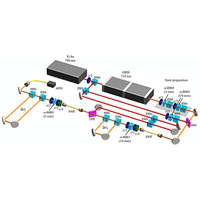
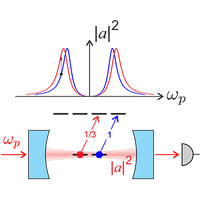
Typically, physicists treat cold atoms in a cavity as simple two-level atoms. Here, the authors go beyond this approximation to show that adding more levels causes light-matter coupling to be time dependent and results in nonlinear behavior. They experimentally confirm these effects using laser-cooled rubidium.

Separability and entanglement in superpositions of quantum states

Saronath Halder and Ujjwal Sen

Phys. Rev. A 107, 022413 (2023) - Published 10 February, 2023

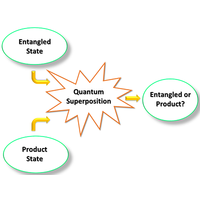
In bipartite quantum systems, mixtures of entangled and product states are always entangled, but superpositions of the same states may not be. Here, the authors detail the conditions for separability of such superpositions and outline applications in local quantum state discrimination.

Positronium density measurements using polaritonic effects

Erika Cortese, David B. Cassidy, and Simone De Liberato

Phys. Rev. A 107, 023306 (2023) - Published 10 February, 2023

The authors develop a theoretical proposal for the formation of polaritons in a gas of positronium atoms and the real-time measurement of positronium densities in present-day experimental setups. The results could be an important step towards the achievement of positronium BEC.

Laser-induced Coulomb explosion imaging of alkali-metal dimers on helium nanodroplets

Henrik H. Kristensen, Lorenz Kranabetter, Constant A. Schouder, Jacqueline Arlt, Frank Jensen, and Henrik Stapelfeldt

Phys. Rev. A 107, 023104 (2023) - Published 6 February, 2023

The authors use velocity-map imaging following Coulomb explosion of doubly ionized alkali homodimers on the surface of a helium nanodroplet to map out the distribution of internuclear distances in both the ground and lowest triplet state. They find that the distributions are generally broader than the internuclear wave function, which they attribute to resonance effects in the initial multiphoton ionization of the dimer and interaction of the ions with the He droplet.

Search for entanglement in the decay dynamics and anisotropic emission of a pair of H(2p) atoms produced by XUV photodissociation of H2

A. Dochain, B. Fabre, C. Lauzin, and X. Urbain

Phys. Rev. A 107, 013109 (2023) - Published 19 January, 2023

In this article, the authors experimentally investigate the possibility to produce a pair of entangled photons from the photodissociation of H2. They study the dynamics of the two-photon emission and introduce a simple model, assuming a transition from Hund’s case (a) to Hund’s case (c), to reproduce the measured angular distributions satisfactorily.

Exact solutions for the electromagnetic fields of a flying focus

D. Ramsey, A. Di Piazza, M. Formanek, P. Franke, D. H. Froula, B. Malaca, W. B. Mori, J. R. Pierce, T. T. Simpson, J. Vieira, M. Vranic, K. Weichman, and J. P. Palastro

Phys. Rev. A 107, 013513 (2023) - Published 19 January, 2023

A laser beam’s peak intensity may be programmed to move at an arbitrary velocity by adjusting the focal time and location of its frequencies, temporal slices, or annuli. Such “flying focus” beams show promise in enabling new laser-matter applications. To assess these possibilities, the authors analytically describe the electromagnetic fields of flying-focus pulses with arbitrary polarization and orbital angular momentum.

Unified lattice sums accommodating multiple sublattices for solutions of the Helmholtz equation in two and three dimensions

Dominik Beutel, Ivan Fernandez-Corbaton, and Carsten Rockstuhl

Phys. Rev. A 107, 013508 (2023) - Published 12 January, 2023

The authors derive expressions for lattice sums of solutions of the Helmholtz equation in two and three dimensions that can be efficiently evaluated in numerical implementations. The results are applicable to complex materials involving multiple sublattices, describing systems including metasurfaces and moire superlattices.

Intense continuous cold-atom source

William Huntington, Jeremy Glick, Michael Borysow, and Daniel J. Heinzen

Phys. Rev. A 107, 013302 (2023) - Published 6 January, 2023

The authors demonstrate an intense, continuous cold atomic beam generated via postnozzle seeding of a supersonic 4He jet with 7Li atoms, which is comparable to the highest flux sources based on laser cooling. The technique could potentially be widely applicable to any paramagnetic atom or molecule.

Quantum speed limit of a noisy continuous-variable system

Wei Wu and Jun-Hong An

Phys. Rev. A 106, 062438 (2022) - Published 27 December, 2022

The quantum speed limit quantifies the minimum time it takes for a system to evolve under the constraint of quantum mechanics. Here, the authors investigate the quantum speed limit in a continuous-variable system undergoing non-Markovian noise. Their results imply that this limit may be steerable with the use of spectral engineering.

Sign In to Your Journals Account

Filter

Section

Filter

Article Lookup

Enter a citation