Highlights

Retrieving information from a black hole using quantum machine learning

Lorenzo Leone, Salvatore F. E. Oliviero, Stefano Piemontese, Sarah True, and Alioscia Hamma

Phys. Rev. A 106, 062434 (2022) - Published 26 December, 2022

Information can be retrieved from a black hole that is sufficiently scrambling, assuming that the retriever has perfect control of the emitted Hawking radiation and perfect knowledge of the internal dynamics of the black hole. In this paper, the authors show that for black holes modeled by a certain class of random quantum circuits, information can be retrieved by using quantum machine learning to analyze out-of-time-order correlation functions.

Echo-enhanced molecular orientation at high temperatures

Ilia Tutunnikov, Long Xu, Yehiam Prior, and Ilya Sh. Averbukh

Phys. Rev. A 106, L061101 (2022) - Published 8 December, 2022

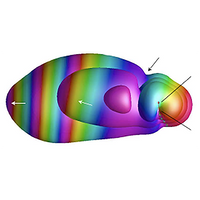
Efficient molecular orientation at high temperatures is induced by a terahertz pulse with the help of an intense nonresonant laser prepulse that dissects rotational phase space to narrow filaments. The authors use the echo effect to synchronize the terahertz response of all the filaments, leading to much enhanced orientation compared to other techniques.

Coincidence postselection for genuine multipartite nonlocality: Causal diagrams and threshold efficiencies

Valentin Gebhart and Augusto Smerzi

Phys. Rev. A 106, 062202 (2022) - Published 2 December, 2022

In a crucial step for securing many existing quantum technologies, the authors use causal diagrams to close the detection loophole in multipartite nonlocality demonstrations. Their results also imply that genuine N-partite nonlocality can be created from N independent photon sources.

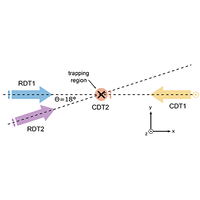
Measurement of Rb-Rb van der Waals coefficient via quantum diffractive universality

Riley A. Stewart, Pinrui Shen, James L. Booth, and Kirk W. Madison

Phys. Rev. A 106, 052812 (2022) - Published 30 November, 2022

The authors demonstrate a new method for measuring the C6 van der Waals coefficient of the Rb-Rb interaction potential from the loss rate of atoms confined in a shallow atom trap of tunable depth. The technique is based on the universal nature of the room-temperature collisions, which depends only on the long-range potential between the collision partners.

Intrinsic radio-frequency gradiometer

Robert J. Cooper, David W. Prescott, Karen L. Sauer, Nezih Dural, and Michael V. Romalis

Phys. Rev. A 106, 053113 (2022) - Published 23 November, 2022

The authors develop two optically pumped atomic magnetometers with sub-fT sensitivity operating at radio frequencies and compare their magnetic-field sensitivity and interference rejection. They identify ways to improve the sensitivity of unshielded magnetic detectors, which could advance the development of portable magnetometers for field uses.

Flow of quantum correlations in noisy two-mode squeezed microwave states

M. Renger, S. Pogorzalek, F. Fesquet, K. Honasoge, F. Kronowetter, Q. Chen, Y. Nojiri, K. Inomata, Y. Nakamura, A. Marx, F. Deppe, R. Gross, and K. G. Fedorov

Phys. Rev. A 106, 052415 (2022) - Published 15 November, 2022

The authors experimentally investigate the behavior of quantum discord and entanglement in two-mode squeezed states generated by superconducting Josephson parametric amplifiers. They show how correlations flow between the two modes and the noisy environment, and relate their findings to the security of entanglement-based quantum key distribution.

Self-regulating soliton switching waves in microresonators

Heming Wang, Boqiang Shen, Yan Yu, Zhiquan Yuan, Chengying Bao, Warren Jin, Lin Chang, Mark A. Leal, Avi Feshali, Mario Paniccia, John E. Bowers, and Kerry Vahala

Phys. Rev. A 106, 053508 (2022) - Published 10 November, 2022

The authors study theoretically and experimentally how Kerr frequency combs can be controlled using self-injection locking. The authors show how self-stabilized switching waves supported by microresonators with normal dispersion and feedback can be used to generate frequency combs more efficiently by tuning the pulse duty cycle into regimes that are difficult to access using other methods.

Optimized geometries for cooperative photon storage in an impurity coupled to a two-dimensional atomic array

Samuel Buckley-Bonanno, Stefan Ostermann, Oriol Rubies-Bigorda, Taylor L. Patti, and Susanne F. Yelin

Phys. Rev. A 106, 053706 (2022) - Published 7 November, 2022

Quantum emitter arrays with embedded impurities offer the ability to control interactions between individual photons and quantum matter. Here, the authors investigate the lifetime of optical excitations in such arrays and reveal the importance of placement.

Adiabatic quantum Zeno dynamics of bosonic atom pairs with large inelastic losses

Manel Bosch Aguilera, Alexis Ghermaoui, Rémy Vatré, Raphaël Bouganne, Jérôme Beugnon, and Fabrice Gerbier

Phys. Rev. A 106, 053304 (2022) - Published 4 November, 2022

The authors study experimentally the non-Hermitian dynamics and dissipative properties of pairs of two-level atoms tightly confined in an optical lattice and driven by a near-resonant laser towards a lossy state. They demonstrate the control of the quantum state of the pairs in the strong dissipation regime by adiabatically preparing them in a loss-protected state, where the dynamics is governed by the quantum Zeno effect.

Interplay between disorder and collective coherent response: Superradiance and spectral motional narrowing in the time domain

Hsing-Ta Chen, Zeyu Zhou, Maxim Sukharev, Joseph E. Subotnik, and Abraham Nitzan

Phys. Rev. A 106, 053703 (2022) - Published 2 November, 2022

Typically, in molecular ensembles, the fast random modulation of transition frequencies is merely considered to result in molecular dephasing. In contrast, the authors here show that such modulation may actually recover collective superradiant emission.

Mass-energy equivalence in gravitationally bound quantum states of the neutron

Germain Tobar, Simon Haine, Fabio Costa, and Magdalena Zych

Phys. Rev. A 106, 052801 (2022) - Published 1 November, 2022

The authors study quantum effects resulting from mass-energy equivalence using ultracold neutrons that are confined gravitationally by considering a quantum correction to the neutron’s mass due to the neutron spin in the presence of an external magnetic field. The authors show that the neutron’s additional weight due to the quantum treatment of mass-energy equivalence will cause a small shift in the neutron’s eigenenergies and eigenstates, which could provide signatures in an interferometric experiment.

Thermodynamics of quantum measurement and Maxwell's demon's arrow of time

Kagan Yanik, Bibek Bhandari, Sreenath K. Manikandan, and Andrew N. Jordan

Phys. Rev. A 106, 042221 (2022) - Published 27 October, 2022

In a single-qubit weak-measurement-based device, one may imagine feedback control as conducted by a quantum Maxwell’s demon. Here, the authors investigate both discrete and continuous measurements in such a device in order to connect work and entropy statistics to the demon’s perceived arrow of time.

Observation of low-field Feshbach resonances between Dy161 and K40

Zhu-Xiong Ye, Alberto Canali, Elisa Soave, Marian Kreyer, Yaakov Yudkin, Cornelis Ravensbergen, Emil Kirilov, and Rudolf Grimm

Phys. Rev. A 106, 043314 (2022) - Published 17 October, 2022

The authors report the observation of Feshbach resonances in the Fermi-Fermi mixture of ultracold 161Dy and 40K. The authors show experimental evidence that Dy-K offers a Feshbach resonance at 7.29 G with properties that could make the study of resonantly interacting mass-imbalanced Fermi-Fermi mixtures possible. In addition, they demonstrate the formation of DyK Feshbach molecules.

Local phase shift due to interactions in an atom interferometer

Zhibin Yao, Cyrille Solaro, Corentin Carrez, Pierre Cladé, and Saïda Guellati-Khelifa

Phys. Rev. A 106, 043312 (2022) - Published 14 October, 2022

The authors study the local phase shift induced by interactions in a light pulse atom interferometer with a Bose-Einstein condensate using a method based on the Feynman path integral. These effects are crucial for the sensitivity and accuracy of the atom interferometers. The theoretical results are verified by experimental measurements without adjustable parameters.

General time-dependent configuration-interaction singles. I. Molecular case

Stefanos Carlström, Michael Spanner, and Serguei Patchkovskii

Phys. Rev. A 106, 043104 (2022) - Published 10 October, 2022

The authors develop a grid-based implementation of the time-dependent configuration-interaction singles method suitable for computing the strong-field ionization of small gas-phase molecules. This method is then demonstrated in calculations of strong-field ionization of He, LiH, H2O, and C2H4.

Driven anti-Bragg subradiant correlations in waveguide quantum electrodynamics

Alexander N. Poddubny

Phys. Rev. A 106, L031702 (2022) - Published 29 September, 2022

It is theoretically predicted that strong electromagnetic driving of an array of two-level atoms, coupled to a waveguide, can make quantum excitations of the array decay faster.

Analytical non-Hermitian description of photonic crystals with arbitrary lateral and transverse symmetry

Xavier Letartre, Serge Mazauric, Sébastien Cueff, Taha Benyattou, Hai Son Nguyen, and Pierre Viktorovitch

Phys. Rev. A 106, 033510 (2022) - Published 19 September, 2022

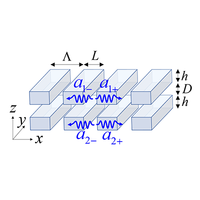
The authors propose a non-Hermitian Hamiltonian to describe the resonances of photonic crystal slabs formed by coupled high-index contrast gratings. This model can potentially enable the discovery of novel photonic specie through the manipulation of bound states in the continuum and exceptional points. The authors then demonstrate experimentally, as proof-of-concept, the formation of a Dirac point at the merging of three bound states in the continuum.

Geometric link between the Hardy nonlocality condition and the Clauser-Horne-Shimony-Holt inequality

Johannes Seiler, Thomas Strohm, and Wolfgang P. Schleich

Phys. Rev. A 106, 032211 (2022) - Published 13 September, 2022

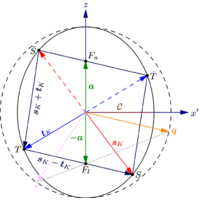
The Clauser-Horne-Shimony-Holt inequality and the Hardy condition are both used to detect nonlocality in quantum systems. The authors establish an equivalence between the two by providing a geometrical interpretation of the relevant optimization problem, and find that the golden ratio shows up in their result.

Spin-momentum locking in optical rectification

P. Moroshkin, J. Plumitallo, T. Ochiai, R. Osgood, III, and J. M. Xu

Phys. Rev. A 106, 023521 (2022) - Published 30 August, 2022

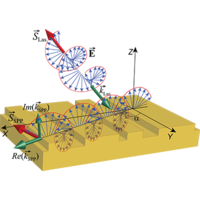
The authors report the direct electrical detection of spin-momentum locking, a mechanism underlying the surface-plasmon-polariton waves, via direct measurement of the optical rectification current induced in an asymmetric metallic grating by a circularly polarized light. The work could potentially be useful for the surface-plasmon-mediated electrical detection of chiral objects to distinguish enantiomers that are otherwise indistinguishable.

Aspects of two-photon absorption of squeezed light: The continuous-wave limit

C. Drago and J. E. Sipe

Phys. Rev. A 106, 023115 (2022) - Published 22 August, 2022

The authors present a theoretical analysis of two-photon absorption of classical and squeezed light that is valid for arbitrary intensity, both pulsed and cw light, and absorption both resonant and far-off-resonance from an intermediate state. Among other results, they find closed-form expressions for the cross sections and the scaling of the absorption with intensity.

Sign In to Your Journals Account

Filter

Section

Filter

Article Lookup

Enter a citation