Highlights

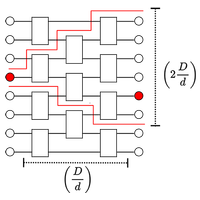
Optimization of algorithmic errors in analog quantum simulations

Nikita A. Zemlevskiy, Henry F. Froland, and Stephan Caspar

Phys. Rev. A 109, 052425 (2024) - Published 15 May, 2024

A method for analyzing uncertainties in so-called analog quantum simulations could help scientists make precise predictions using these models.

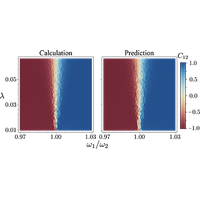
Predicting the onset of quantum synchronization using machine learning

F. Mahlow, B. Çakmak, G. Karpat, İ. Yalçınkaya, and F. F. Fanchini

Phys. Rev. A 109, 052411 (2024) - Published 7 May, 2024

In an open system, environment-induced synchronization can occur between the expectation values of spin observables of a pair of qubits. Here, the authors apply a machine learning method to predict the emergence of such synchronization.

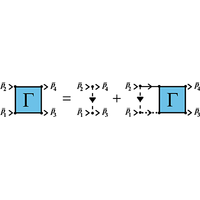
Exploring shallow-depth boson sampling: Toward a scalable quantum advantage

Byeongseon Go, Changhun Oh, Liang Jiang, and Hyunseok Jeong

Phys. Rev. A 109, 052613 (2024) - Published 7 May, 2024

Boson sampling is a promising candidate for showcasing quantum advantage. However, achieving this advantage involves pinpointing the optimal balance between shallow-depth circuits, which are susceptible to classical simulation, and larger-depth circuits prone to noise. Here, the authors introduce a linear-optical circuit design with nonlocal gates, aimed at enhancing the probability of demonstrating advantage even with shallow circuit depths.

Quantum Monte Carlo and perturbative study of two-dimensional Bose-Fermi mixtures

Jacopo D'Alberto, Lorenzo Cardarelli, Davide Emilio Galli, Gianluca Bertaina, and Pierbiagio Pieri

Phys. Rev. A 109, 053302 (2024) - Published 2 May, 2024

The authors investigate the thermodynamic properties of a two-dimensional dilute Bose-Fermi mixture of ultracold atoms at zero temperature through two complementary methods: perturbation theory to the second order in the interactions and quantum Monte Carlo. They find good agreement between analytic expressions and numerical results for weak interactions, while significant discrepancies appear in the regime close to mechanical instability, indicating phase separation of the bosonic component.

Error-corrected quantum repeaters with Gottesman-Kitaev-Preskill qudits

Frank Schmidt, Daniel Miller, and Peter van Loock

Phys. Rev. A 109, 042427 (2024) - Published 29 April, 2024

The authors theoretically analyze the performance of long-distance quantum communication protocols, specifically quantum repeaters based on Gottesman-Kitaev-Preskill (GKP) qudits. Previously, only the qubit case has been studied. They construct three quantum repeater schemes and find that, while in most cases any benefits of using higher dimensions is negated by worse error correction, there are some regimes where the use of qubits does increase the secret key rate.

Rotational-state dependence of interactions between polar molecules

Etienne F. Walraven and Tijs Karman

Phys. Rev. A 109, 043310 (2024) - Published 12 April, 2024

The authors study the interaction between two polar molecules in rotational states differing by two or more quanta. They find that the resultant repulsive van der Waals interaction can potentially suppress collisional losses at low temperatures.

Quantum control and noise protection of a Floquet 0−π qubit

Zhaoyou Wang and Amir H. Safavi-Naeini

Phys. Rev. A 109, 042607 (2024) - Published 3 April, 2024

The authors propose a Floquet qubit that is the superconducting circuit analog of a mechanical Kapitza pendulum. Under periodic driving, the bit and phase flip rates of the emerging qubit states are exponentially suppressed with respect to the ratio of the effective Josephson energy to charging energy. A cooling scheme to protect the system against charge noise is also proposed.

Inelastic scattering of transversely structured free electrons from nanophotonic targets: Theory and computation

Austin G. Nixon, Matthieu Chalifour, Marc R. Bourgeois, Michael Sanchez, and David J. Masiello

Phys. Rev. A 109, 043502 (2024) - Published 2 April, 2024

Recent experimental advances in transverse electron beam shaping have reignited interest in inelastic electron scattering observables and the information they contain. In this study, the authors present a detailed analysis of inelastic scattering of structured electron wave functions interacting with nanophotonic targets, providing theoretical models and implementing their theory in a simulation software.

Full counting statistics of charge in quenched quantum gases

Dávid X. Horváth and Colin Rylands

Phys. Rev. A 109, 043302 (2024) - Published 1 April, 2024

The authors study the full counting statistics of particle number in one-dimensional interacting Bose and Fermi gases which have been quenched far from equilibrium. They consider the time evolution of the Lieb-Liniger and Gaudin-Yang models, which could be relevant to experiments on ultracold one-dimensional gases.

Adaptive quantum state estimation for two optical point sources

Masataka Kimizu, Fuyuhiko Tanaka, and Akio Fujiwara

Phys. Rev. A 109, 032434 (2024) - Published 26 March, 2024

The authors propose a way to estimate object features smaller than the Rayleigh resolution limit, specifically the centroid location and the separation between two point sources. They explicitly provide an optimal measurement and show how it can be implemented numerically using adaptive quantum state estimation.

Sympathetic cooling of trapped Th3+ alpha-recoil ions for laser spectroscopy

G. Zitzer, J. Tiedau, M. V. Okhapkin, K. Zhang, C. Mokry, J. Runke, Ch. E. Düllmann, and E. Peik

Phys. Rev. A 109, 033116 (2024) - Published 22 March, 2024

The authors experimentally demonstrate the sympathetic cooling of Th3+ ions, captured from uranium alpha-recoil sources, in a linear Paul trap using laser-cooled 88Sr+ ions. They show the efficacy of their method via high-resolution laser spectroscopy. This demonstration is an important step in enabling the use of these ions as the reference of a highly accurate nuclear optical clock.

Feasibility and potential of a thorium-doped barium-lithium-fluoride single crystal as a candidate for solid-state nuclear optical clock material

Qiaorui Gong, SiLiang Tao, Shanming Li, Guoliang Deng, Chengchun Zhao, and Yin Hang

Phys. Rev. A 109, 033109 (2024) - Published 15 March, 2024

The authors study the feasibility of using Th:BaLiF3 single crystal as a solid-state nuclear clock material through density-functional-theory calculations. The authors then grow and characterize the crystal in the lab, demonstrating its potential for creating a solid-state nuclear clock in the future.

Electron-correlation-induced nonclassicality of light from high-order harmonic generation

Christian Saugbjerg Lange, Thomas Hansen, and Lars Bojer Madsen

Phys. Rev. A 109, 033110 (2024) - Published 15 March, 2024

In this paper, the authors use a fully quantum-mechanical description to study the effect of electron-electron correlations on the quantum state of light emitted via high-harmonic generation. The work represents a crucial step toward a fully quantized description of the interaction between intense laser fields and complex systems, with potential applications in quantum light engineering.

Pure quartic three-dimensional spatiotemporal Kerr solitons in graded-index media

Pedro Parra-Rivas, Yifan Sun, Fabio Mangini, Mario Ferraro, Mario Zitelli, and Stefan Wabnitz

Phys. Rev. A 109, 033516 (2024) - Published 15 March, 2024

The authors study the formation of three-dimensional spatiotemporal solitons in waveguides with a parabolic refractive index profile and pure quartic chromatic dispersion using variational and numerical methods. They find that pure quartic spatiotemporal solitons remain stable within a significantly larger energy range with respect to their second-order dispersion counterparts.

Three-dimensional imaging of single atoms in an optical lattice via helical point-spread-function engineering

Tangi Legrand, Falk-Richard Winkelmann, Wolfgang Alt, Dieter Meschede, Andrea Alberti, and Carrie A. Weidner

Phys. Rev. A 109, 033304 (2024) - Published 5 March, 2024

The authors develop a method for determining the three-dimensional location of single atoms in a quantum gas microscopy system using point-spread-function engineering of the atoms’ fluorescence signal. The technique extends quantum simulation with microscopy systems into the regime of three dimensions.

Recycling of a quantum field and optimal states for single-qubit rotations

Shanon Vuglar and Julio Gea-Banacloche

Phys. Rev. A 109, 022439 (2024) - Published 28 February, 2024

The authors introduce a protocol to generate the electromagnetic field state that is optimal for controlling a given qubit rotation. The protocol, based on the interaction of the field with ancilla qubits, allows for field “recycling” and could potentially reduce error rates and improve energy efficiency in quantum computing schemes.

Loss features in ultracold Dy162 gases: Two- versus three-body processes

Maxime Lecomte, Alexandre Journeaux, Loan Renaud, Jean Dalibard, and Raphael Lopes

Phys. Rev. A 109, 023319 (2024) - Published 14 February, 2024

The authors study the low-field loss features in ultracold thermal samples of 162Dy by examining the density and temperature dependence of various loss features. They demonstrate that a majority of loss features are accurately described by a two-body loss rate instead of the commonly assumed three-body rate.

Using non-Markovian dynamics in effective-negative-temperature-based transient quantum Otto engines

Arghya Maity and Ahana Ghoshal

Phys. Rev. A 109, 022207 (2024) - Published 8 February, 2024

Conventional quantum Otto engines based on effective-negative-temperature reservoirs rely on an assumption of perfect thermalization. In this study, the authors investigate the impact of non-Markovianity in these engines by terminating strokes before reaching thermal equilibrium, revealing that higher non-Markovianity enhances maximum efficiency but reduces overall performance over an extended period of functioning time. The authors also identify a class of effective-negative-temperature-based necessarily transient quantum Otto engines.

Analytical analysis for additional ionization peaks of He induced by chirped xuv pulses

Yong-Kang Fang, Lei Geng, and Liang-You Peng

Phys. Rev. A 109, 013113 (2024) - Published 29 January, 2024

The authors study two-photon double ionization induced by chirped pulses, which shows additional features in the photoelectron energy spectrum compared to the case without chirp. They develop an analytical model that is able to shed light on the origin of these peaks, discovered in earlier theoretical work but unexplained until now.

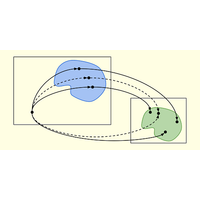
Estimating the volume of correlation sets in causal networks

Giulio Camillo, Pedro Lauand, Davide Poderini, Rafael Rabelo, and Rafael Chaves

Phys. Rev. A 109, 012220 (2024) - Published 24 January, 2024
The authors study the link between causal relations and quantum correlations. In particular, given a network of causal relationships between physical systems, the authors calculate how many classical, quantum, and “nonsignaling” types of correlations arise. They compare their method to other approaches, and find that the often-used inflation technique misses a significant portion of nonclassical behavior.

Sign In to Your Journals Account

Filter

Section

Filter

Article Lookup

Enter a citation