Highlights

Embedding cyclic information-theoretic structures in acyclic space-times: No-go results for indefinite causality

V. Vilasini and Renato Renner

Phys. Rev. A 110, 022227 (2024) - Published 29 August, 2024

Alongside its companion in Physical Review Letters, this paper reports on the similarities and differences between the information-theoretic and relativistic notions of causality, bringing them together under a single framework. This sheds light on a long-standing debate on whether experimentally realizable processes are truly indefinite causal ordered processes.

Formation of nonclassical and non-Gaussian states of a strong electromagnetic field due to its interaction with free electrons produced by ionization of a target gas

Evgeny S. Andrianov and Oleg I. Tolstikhin

Phys. Rev. A 110, 023115 (2024) - Published 28 August, 2024

The authors study the effects of the interaction of a strong laser field with free electrons produced by strong-field ionization on the quantum state of the field. They show that under experimentally realistic conditions the interaction can strongly affect the quantum state of the field by squeezing and displacing the coherent state of the free field, which can result in the formation of nonclassical and non-Gaussian field states.

Quantized Thouless pumps protected by interactions in dimerized Rydberg tweezer arrays

Sergi Julià-Farré, Javier Argüello-Luengo, Loïc Henriet, and Alexandre Dauphin

Phys. Rev. A 110, 023328 (2024) - Published 27 August, 2024

The authors study Thouless pumps, i.e., adiabatic topological transport, in an interacting spin chain described by the dimerized XXZ Hamiltonian. They show that a new adiabatic path for a Thouless pump is possible for an interacting spin chain in which interactions can induce a spontaneous antiferromagnetic order.

Dissociative recombination of rotationally cold ArH+

Ábel Kálosi, Manfred Grieser, Leonard W. Isberner, Holger Kreckel, Åsa Larson, David A. Neufeld, Ann E. Orel, Daniel Paul, Daniel W. Savin, Stefan Schippers, Viviane C. Schmidt, Andreas Wolf, Mark G. Wolfire, and Oldřich Novotný

Phys. Rev. A 110, 022816 (2024) - Published 22 August, 2024

The authors experimentally studied the dissociative recombination of electronically and vibrationally relaxed ArH^+ in its lowest rotational levels, using an electron-ion merged-beams setup at the Cryogenic Storage Ring. They find that the unusually slow reaction rate at low collision energies is driven by nonadiabatic interactions where dissociation occurs on the loosely bound electronic ground-state ArH.

Linearly polarized RABBIT beyond the dipole approximation

Yijie Liao, Yongkun Chen, Jan Marcus Dahlström, Liang-Wen Pi, Peixiang Lu, and Yueming Zhou

Phys. Rev. A 110, 023109 (2024) - Published 21 August, 2024

In this paper, the authors use numerical solutions to the time-dependent Schrödinger equation, perturbation theory, as well as analytic expressions to investigate nondipole effects in the RABBIT technique, studying a helium atom subject to a linearly polarized XUV and a weak IR field. By scanning the time delay between the two fields, they observe modulations in sidebands both for the angular-integrated photoelectron yield and for the forward-backward asymmetry in photoelectron distribution along the light-propagation direction.

Vibrational branching fractions for laser cooling of nonlinear strontium-containing molecules

Alexander Frenett, Zack Lasner, Lan Cheng, and John M. Doyle

Phys. Rev. A 110, 022811 (2024) - Published 14 August, 2024

The authors explore candidates for a next-generation search for the electron electric dipole moment (eEDM) by experimentally measuring the vibrational loss channels in three Sr-containing nonlinear molecules. They conclude that SrNH2 is the optimal choice for a future laser-cooled molecule-based eEDM experiment.

Spin noise spectroscopy of an alignment-based atomic magnetometer

M. Koźbiał, L. Elson, L. M. Rushton, A. Akbar, A. Meraki, K. Jensen, and J. Kołodyński

Phys. Rev. A 110, 013125 (2024) - Published 30 July, 2024

The authors propose a stochastic theoretical model that explains the dynamics of an alignment-based atomic magnetometer and verify the model in a series of experiments with good agreement. The results could potentially enable alignment-based magnetometers in real-time sensing tasks.

Homodyne detection is optimal for quantum interferometry with path-entangled coherent states

Z. M. McIntyre and W. A. Coish

Phys. Rev. A 110, L010602 (2024) - Published 29 July, 2024

The authors propose the use of homodyne detection to detect phase shifts and show that this method is optimal for path-entangled coherent states. This is notable because homodyne measurements do not require photon counting, and the resulting sensitivity is independent of the value of the phase shift itself.

Beyond the parametric approximation: Pump depletion, entanglement, and squeezing in macroscopic down-conversion

Karthik Chinni and Nicolás Quesada

Phys. Rev. A 110, 013712 (2024) - Published 25 July, 2024

The authors study the dynamics of the pump mode in the down-conversion Hamiltonian using the cumulant expansion method, perturbation theory, and the full numerical simulation. They obtain the properties of the pump mode, such as depletion, entanglement, and squeezing for an experimentally relevant initial state.

Quantum electrodynamics of lossy magnetodielectric samples in vacuum: Modified Langevin noise formalism

A. Ciattoni

Phys. Rev. A 110, 013707 (2024) - Published 19 July, 2024

In this work, the author develops an alternative to the Langevin noise formalism of macroscopic quantum electrodynamics in such a way that the bare photon fluctuations are separated from those of the medium polaritons.

Quantum optimal control of squeezing in cavity optomechanics

Anton Halaski, Matthias G. Krauss, Daniel Basilewitsch, and Christiane P. Koch

Phys. Rev. A 110, 013512 (2024) - Published 18 July, 2024

The authors show how to use optimal control theory to maximize squeezing in an optomechanical setup with two external drives and determine how fast the mechanical mode can be squeezed. The results provide a clear recipe for experimentalists to achieve optimized quantum control in such optomechanical systems.

Modified mean-field ansatz for charged polarons in a Bose-Einstein condensate

Ubaldo Cavazos Olivas, Luis A. Peña Ardila, and Krzysztof Jachymski

Phys. Rev. A 110, L011301 (2024) - Published 17 July, 2024

The authors propose a method to study charged Bose polarons that emerge from the interaction between an ion and a Bose-Einstein condensate based on a mean-field approach in a co-moving frame. The method allows obtaining the ground state and induced interactions between ions mediated by the bath and can be applied to dynamical scenarios, which may otherwise be challenging with other numerical techniques.

Disentanglement-induced multistability

Eyal Buks

Phys. Rev. A 110, 012439 (2024) - Published 15 July, 2024

Multistability is experimentally observed in a variety of quantum systems but cannot be derived from any theoretical model that is based on a monostable master equation. The author investigates the relation between disentanglement and multistability in the few-spin transverse Ising model and finds that multistability can be obtained in the presence of spontaneous disentanglement.

Amorphous quantum magnets in a two-dimensional Rydberg atom array

Sergi Julià-Farré, Joseph Vovrosh, and Alexandre Dauphin

Phys. Rev. A 110, 012602 (2024) - Published 1 July, 2024

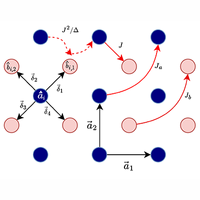
The authors present a comprehensive proposal for how to simulate amorphous quantum magnets using an array of Rydberg atoms. They describe an experimental protocol for generating various configurations, and theoretically explore some of the physics.

Absolute rate coefficient measurements of the reactions of vibrationally cold HD+ and H3+ ions with neutral C atoms

Florian Grussie, Lukas Berger, Manfred Grieser, Ábel Kálosi, Damian Müll, Oldřich Novotný, Aigars Znotins, Fabrice Dayou, Xavier Urbain, and Holger Kreckel

Phys. Rev. A 109, 062804 (2024) - Published 10 June, 2024

The authors obtained experimental rate coefficients for reactions between HD+ and H3+ ions and neutral C atoms using a recently commissioned ion-neutral collision setup at the Cryogenic Storage Ring (CSR), located at the Max Planck Institute for Nuclear Physics in Heidelberg. The measurements with vibrationally cold ions result in significantly higher rate coefficients when compared with previous studies using internally excited ions. The new data are supported by dedicated theoretical calculations and provide new insights into the dynamics of this type of reaction at interstellar conditions.

Positron annihilation and binding in aromatic and other ring molecules

E. Arthur-Baidoo, J. R. Danielson, C. M. Surko, J. P. Cassidy, S. K. Gregg, J. Hofierka, B. Cunningham, C. H. Patterson, and D. G. Green

Phys. Rev. A 109, 062801 (2024) - Published 4 June, 2024

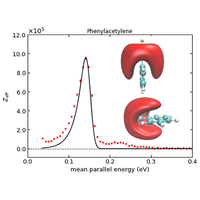
The authors present experimental data for annihilation spectra and binding energies for positron interactions with several aromatic and heterocyclic ring molecules. The results are compared with the predictions of an ab initio theory of positron binding with excellent agreement.

Observation of spin bistability with paraffin-coated vapor cells

Shuyuan Chen, Wentian Xiang, Xingqing Jin, Wei Xiao, Xiang Peng, and Hong Guo

Phys. Rev. A 109, 063101 (2024) - Published 3 June, 2024

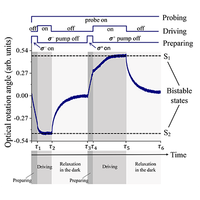
The authors investigate spontaneous polarization and bistability in a room-temperature coated Cs cell with remarkably long spin coherence times of 17 seconds. Their results shed new light onto the phenomenon of spin bistability and spin-exchange collisions, and may find applications in optical switches utilizing spin-bistability-relevant devices in integrated optics and potentially in quantum interfaces.

Dynamical formation of a prethermal Bose-Einstein condensate in a Floquet-engineered lattice

J. Maslek, C. A. Bracamontes, and J. V. Porto

Phys. Rev. A 109, 063302 (2024) - Published 3 June, 2024

The authors report the experimental realization of an effective Hamiltonian with a continuously adjustable staggered gauge field for weakly interacting bosons in an optical lattice using Floquet engineering. They observe recondensation of quench-excited atoms on time scales faster than global heating due to the drive.

Mesoscopic non-Hermitian skin effect

Alexander Poddubny, Janet Zhong, and Shanhui Fan

Phys. Rev. A 109, L061501 (2024) - Published 3 June, 2024

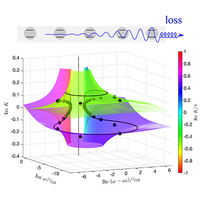
The authors derive the topological origin for the skin effect in a chiral waveguide quantum electrodynamics system which is lossless in the bulk. Unlike the conventional skin effect, this skin effect depends on the finite size of the lattice and is termed the “mesoscopic non-Hermitian skin effect.”

Quench-induced spontaneous currents in rings of ultracold fermionic atoms

Daniel G. Allman, Parth Sabharwal, and Kevin C. Wright

Phys. Rev. A 109, 053320 (2024) - Published 31 May, 2024

The authors report the experimental observation of the spontaneous appearance of currents in a ring of ultracold fermionic 6Li atoms with attractive interactions, following a quench to a BCS-like pair superfluid. The results are compared with the predictions from the Kibble-Zurek mechanism.

Sign In to Your Journals Account

Filter

Section

Filter

Article Lookup

Enter a citation