Recent Articles

Continuous Quantum Gate Sets and Pulse-Class Meta-Optimization

Francesco Preti, Tommaso Calarco, and Felix Motzoi

PRX Quantum 3, 040311 (2022) - Published 25 October, 2022

Machine-learning methods to easy gate optimization are presented, allowing one to find optimal control pulses that depend adaptively on a vast landscape of parameters.

Experimental Single-Setting Quantum State Tomography

Roman Stricker, Michael Meth, Lukas Postler, Claire Edmunds, Chris Ferrie, Rainer Blatt, Philipp Schindler, Thomas Monz, Richard Kueng, and Martin Ringbauer

PRX Quantum 3, 040310 (2022) - Published 21 October, 2022

An experimental demonstration of scalable system characterization via classical-shadow-based single-setting quantum state tomography.

Dynamical Hadron Formation in Long-Range Interacting Quantum Spin Chains

Joseph Vovrosh, Rick Mukherjee, Alvise Bastianello, and Johannes Knolle

PRX Quantum 3, 040309 (2022) - Published 19 October, 2022

Novel hadronic bound states in a long-range spin model are investigated, and two distinct controllable protocols indicate how one can clearly observe dynamical hadron formation.

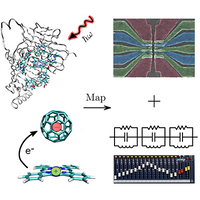
Analog Quantum Simulation of the Dynamics of Open Quantum Systems with Quantum Dots and Microelectronic Circuits

Chang Woo Kim, John M. Nichol, Andrew N. Jordan, and Ignacio Franco

PRX Quantum 3, 040308 (2022) - Published 17 October, 2022

A proposed quantum simulation architecture captures the effects of highly structured non-Markovian quantum environments, such as those found in chemical dynamics.

Protecting Fiber-Optic Quantum Key Distribution Sources against Light-Injection Attacks

Anastasiya Ponosova, Daria Ruzhitskaya, Poompong Chaiwongkhot, Vladimir Egorov, Vadim Makarov, and Anqi Huang

PRX Quantum 3, 040307 (2022) - Published 14 October, 2022

A clever defense strategy against light-injection attacks helps boost the security of practical quantum key distribution.

Secure Anonymous Conferencing in Quantum Networks

Federico Grasselli, Gláucia Murta, Jarn de Jong, Frederik Hahn, Dagmar Bruß, Hermann Kampermann, and Anna Pappa

PRX Quantum 3, 040306 (2022) - Published 13 October, 2022

A security framework for anonymous conference key agreement with different levels of anonymity is introduced, suggesting that multipartite entanglement is a better option for cryptographic tasks involving several users.

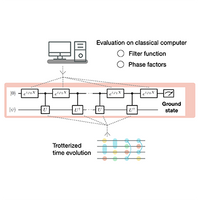
Ground-State Preparation and Energy Estimation on Early Fault-Tolerant Quantum Computers via Quantum Eigenvalue Transformation of Unitary Matrices

Yulong Dong, Lin Lin, and Yu Tong

PRX Quantum 3, 040305 (2022) - Published 12 October, 2022

An algorithm for estimating ground-state energy that is suitable for early fault-tolerant quantum devices can achieve near-optimal complexity, according to a new proposal.

Editorial: A Welcoming Home for Applied Science

Jessica Thomas and Michael Thoennessen

PRX Quantum 3, 040001 (2022) - Published 11 October, 2022

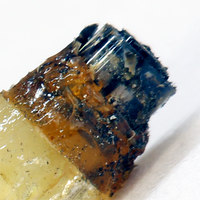
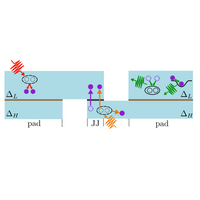
Distinguishing Parity-Switching Mechanisms in a Superconducting Qubit

S. Diamond, V. Fatemi, M. Hays, H. Nho, P. D. Kurilovich, T. Connolly, V. R. Joshi, K. Serniak, L. Frunzio, L. I. Glazman, and M. H. Devoret

PRX Quantum 3, 040304 (2022) - Published 10 October, 2022

An investigation of quasiparticle excitation dynamics in superconducting qubits, helping to inform the strategies one should use to mitigate single-charge-tunneling decoherence.

Optimal Scaling Quantum Linear-Systems Solver via Discrete Adiabatic Theorem

Pedro C.S. Costa, Dong An, Yuval R. Sanders, Yuan Su, Ryan Babbush, and Dominic W. Berry

PRX Quantum 3, 040303 (2022) - Published 7 October, 2022

A quantum algorithm for solving linear systems that is asymptotically optimal is developed, matching a known lower bound on the complexity and easing its practical implementation.

Local Variational Quantum Compilation of Large-Scale Hamiltonian Dynamics

Kaoru Mizuta, Yuya O. Nakagawa, Kosuke Mitarai, and Keisuke Fujii

PRX Quantum 3, 040302 (2022) - Published 5 October, 2022

A quantum algorithm, based on the Lieb-Robinson bound, is developed to accurately and efficiently compile time-evolution operators, providing extensive proofs that certify the performance of the method.

Spinor Matter-Wave Control with Nanosecond Spin-Dependent Kicks

Liyang Qiu, Lingjing Ji, Jiangyong Hu, Yizun He, Yuzhuo Wang, and Saijun Wu

PRX Quantum 3, 040301 (2022) - Published 3 October, 2022

An enhanced quantum manipulation technique is demonstrated, allowing fast and precise control of multicomponent atomic matterwave.

Practical Limits for Large-Momentum-Transfer Clock Atom Interferometers

Mauro Chiarotti, Jonathan N. Tinsley, Satvika Bandarupally, Shamaila Manzoor, Michele Sacco, Leonardo Salvi, and Nicola Poli

PRX Quantum 3, 030348 (2022) - Published 30 September, 2022

The effect of laser frequency noise on large momentum transfer clock atom interferometers is dramatically higher than previously thought, necessitating the design of laser systems with both high power and very narrow linewidths.

Homodyne Detection of Non-Gaussian Quantum Steering

Carlos E. Lopetegui, Manuel Gessner, Matteo Fadel, Nicolas Treps, and Mattia Walschaers

PRX Quantum 3, 030347 (2022) - Published 29 September, 2022

Witnessing steering in general continuous-variable bipartite states can be done using homodyne detection and a metrological protocol.

Dense Coding with Locality Restriction on Decoders: Quantum Encoders versus Superquantum Encoders

Masahito Hayashi and Kun Wang

PRX Quantum 3, 030346 (2022) - Published 28 September, 2022

The intersection of dense coding, symmetric encoders, and local decoders is investigated, pushing the development of more practical communication protocols.

Quantum Computation of Molecular Structure Using Data from Challenging-To-Classically-Simulate Nuclear Magnetic Resonance Experiments

Thomas E. O’Brien, Lev B. Ioffe, Yuan Su, David Fushman, Hartmut Neven, Ryan Babbush, and Vadim Smelyanskiy

PRX Quantum 3, 030345 (2022) - Published 27 September, 2022

A proposed quantum algorithm uses a digital quantum computer and time-resolved NMR experiments to extract the nuclear spin Hamiltonian of a molecular or material system.

Graph-Theoretic Approach for Self-Testing in Bell Scenarios

Kishor Bharti, Maharshi Ray, Zhen-Peng Xu, Masahito Hayashi, Leong-Chuan Kwek, and Adán Cabello

PRX Quantum 3, 030344 (2022) - Published 26 September, 2022

Tools to help identify when a Bell inequality will be useful for self-testing are proposed, an approach that also establishes a connection with open problems in discrete mathematics.

Optimal Steering of Matrix Product States and Quantum Many-Body Scars

Marko Ljubotina, Barbara Roos, Dmitry A. Abanin, and Maksym Serbyn

PRX Quantum 3, 030343 (2022) - Published 23 September, 2022

An approach to control quantum many-body systems based on matrix product states is introduced and applied to a system with quantum many-body scars, allowing one to improve the stability of revivals and to utilize scarred dynamics to manipulate entanglement with high fidelity.

Experimental Genuine Tripartite Nonlocality in a Quantum Triangle Network

Alessia Suprano, Davide Poderini, Emanuele Polino, Iris Agresti, Gonzalo Carvacho, Askery Canabarro, Elie Wolfe, Rafael Chaves, and Fabio Sciarrino

PRX Quantum 3, 030342 (2022) - Published 21 September, 2022

Using a quantum triangle network, in which each of the three parties can perform a number of separable and independent measurements, genuine tripartite nonlocality is achieved without the employment of a tripartite source.

Group-Invariant Quantum Machine Learning

Martín Larocca, Frédéric Sauvage, Faris M. Sbahi, Guillaume Verdon, Patrick J. Coles, and M. Cerezo

PRX Quantum 3, 030341 (2022) - Published 19 September, 2022

Strategies leading to group-invariant quantum machine learning models are identified, which can result in better generalization, classification accuracy, and data efficiency.

Sign In to Your Journals Account

Filter

Recent Issues

Vol. 7, Iss. 4
October - December 2026
Vol. 7, Iss. 3
July - September 2026
Vol. 7, Iss. 2
April - June 2026
Vol. 7, Iss. 1
January - March 2026
Category
Article Type

Filter

Article Lookup

Enter a citation