Recent Articles

Dualities in One-Dimensional Quantum Lattice Models: Topological Sectors

Laurens Lootens, Clement Delcamp, and Frank Verstraete

PRX Quantum 5, 010338 (2024) - Published 6 March, 2024

The problem of relating spectra of dual one-dimensional quantum lattice models is solved by elucidating how dualities intertwine closed boundary conditions and charge sectors.

Partially Fault-Tolerant Quantum Computing Architecture with Error-Corrected Clifford Gates and Space-Time Efficient Analog Rotations

Yutaro Akahoshi, Kazunori Maruyama, Hirotaka Oshima, Shintaro Sato, and Keisuke Fujii

PRX Quantum 5, 010337 (2024) - Published 5 March, 2024

A new architecture to bridge the gap between analog and full fault-tolerant quantum computing.

Fault-Tolerant Quantum Algorithm for Symmetry-Adapted Perturbation Theory

Cristian L. Cortes, Matthias Loipersberger, Robert M. Parrish, Sam Morley-Short, William Pol, Sukin Sim, Mark Steudtner, Christofer S. Tautermann, Matthias Degroote, Nikolaj Moll, Raffaele Santagati, and Michael Streif

PRX Quantum 5, 010336 (2024) - Published 4 March, 2024

A relevant computational method used in drug design is investigated and optimized under the lens of fault-tolerant quantum algorithms.

Generating Function for Projected Entangled-Pair States

Wei-Lin Tu, Laurens Vanderstraeten, Norbert Schuch, Hyun-Yong Lee, Naoki Kawashima, and Ji-Yao Chen

PRX Quantum 5, 010335 (2024) - Published 1 March, 2024

Excitation spectra and dynamical correlations become accessible for many-body quantum systems using projected entangled-pair states, allowing one to probe for new quasiparticles.

Limitations of Linear Cross-Entropy as a Measure for Quantum Advantage

Xun Gao, Marcin Kalinowski, Chi-Ning Chou, Mikhail D. Lukin, Boaz Barak, and Soonwon Choi

PRX Quantum 5, 010334 (2024) - Published 29 February, 2024

A novel framework helps to identify, exploit, and overcome intrinsic vulnerabilities of linear cross entropy, guiding the next generation of quantum advantage experiments.

Measurement-Free Fault-Tolerant Quantum Error Correction in Near-Term Devices

Sascha Heußen, David F. Locher, and Markus Müller

PRX Quantum 5, 010333 (2024) - Published 27 February, 2024

A fault-tolerant quantum error-correction scheme is presented that does not require measuring individual qubits and could thus revolutionize platforms that do not support midcircuit measurements.

Role of Dilations in Reversing Physical Processes: Tabletop Reversibility and Generalized Thermal Operations

Clive Cenxin Aw, Lin Htoo Zaw, Maria Balanzó-Juandó, and Valerio Scarani

PRX Quantum 5, 010332 (2024) - Published 26 February, 2024

New results on the time reversal of quantum and classical processes are obtained through a Bayesian framework, allowing one to identify cases that can be reversed without additional resources.

Stabilizer Subsystem Decompositions for Single- and Multimode Gottesman-Kitaev-Preskill Codes

Mackenzie H. Shaw, Andrew C. Doherty, and Arne L. Grimsmo

PRX Quantum 5, 010331 (2024) - Published 23 February, 2024

A method to decompose GKP error-correcting codes is introduced, improving theoretical understanding and allowing for an efficient simulation of noise over realistic channels.

Surface Acoustic Wave Cavity Optomechanics with Atomically Thin h-BN and WSe2 Single-Photon Emitters

Sahil D. Patel, Kamyar Parto, Michael Choquer, Nicholas Lewis, Sammy Umezawa, Landon Hellman, Daniella Polishchuk, and Galan Moody

PRX Quantum 5, 010330 (2024) - Published 22 February, 2024

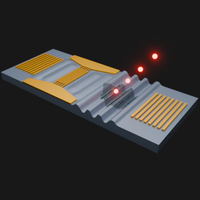
Single-photon emitters in two-dimensional materials are integrated with surface acoustic wave cavities, enabling control of their optical properties and opening up applications in entangled-photon-pair generation.

Quantum Complexity of the Kronecker Coefficients

Sergey Bravyi, Anirban Chowdhury, David Gosset, Vojtěch Havlíček, and Guanyu Zhu

PRX Quantum 5, 010329 (2024) - Published 21 February, 2024

The computational problem of approximating the Kronecker coefficients of the symmetric group is shown to be no harder than quantum approximate counting problems that appear in physics.

Analog Simulation of High-Harmonic Generation in Atoms

Javier Argüello-Luengo, Javier Rivera-Dean, Philipp Stammer, Andrew S. Maxwell, David M. Weld, Marcelo F. Ciappina, and Maciej Lewenstein

PRX Quantum 5, 010328 (2024) - Published 20 February, 2024

From attoscience platforms to atomic cloud simulators: An experimental protocol is proposed to access the emission spectrum of high-harmonic generation, providing new insights.

Emergent Macroscopic Bistability Induced by a Single Superconducting Qubit

Riya Sett, Farid Hassani, Duc Phan, Shabir Barzanjeh, Andras Vukics, and Johannes M. Fink

PRX Quantum 5, 010327 (2024) - Published 16 February, 2024

The progression toward a thermodynamic limit in a microscopic quantum system is experimentally observed.

Using Cryogenic CMOS Control Electronics to Enable a Two-Qubit Cross-Resonance Gate

Devin Underwood, Joseph A. Glick, Ken Inoue, David J. Frank, John Timmerwilke, Emily Pritchett, Sudipto Chakraborty, Kevin Tien, Mark Yeck, John F. Bulzacchelli, Chris Baks, Raphael Robertazzi, Matthew Beck, Rajiv V. Joshi, Dorothy Wisnieff, Scott Lekuch, Brian P. Gaucher, Daniel J. Friedman, Pat Rosno, Daniel Ramirez, and Jeff Ruedinger

PRX Quantum 5, 010326 (2024) - Published 14 February, 2024

CMOS chips comprised of a low-power processor and arbitrary waveform generator operating at 4 K are developed and tested, enabling two-qubit randomized benchmarking and highlighting the promise and challenges of cryogenic control.

Integrated Photonics for Quantum Communications and Metrology

Laurent Labonté, Olivier Alibart, Virginia D’Auria, Florent Doutre, Jean Etesse, Gregory Sauder, Anthony Martin, Éric Picholle, and Sébastien Tanzilli

PRX Quantum 5, 010101 (2024) - Published 12 February, 2024

Exploring cutting-edge advances of integrated photonics, recent breakthroughs and challenges are highlighted, showing a roadmap for developments in quantum communication and metrology technologies.

Higher-Order Process Matrix Tomography of a Passively-Stable Quantum Switch

Michael Antesberger, Marco Túlio Quintino, Philip Walther, and Lee A. Rozema

PRX Quantum 5, 010325 (2024) - Published 9 February, 2024

A tomography method for higher-order quantum processes is introduced and used to characterize a new design for an ultrastable quantum switch with an indefinite causal order.

Quantum Error Mitigated Classical Shadows

Hamza Jnane, Jonathan Steinberg, Zhenyu Cai, H. Chau Nguyen, and Bálint Koczor

PRX Quantum 5, 010324 (2024) - Published 9 February, 2024

The rich toolbox of quantum error-mitigation strategies is synergized with powerful classical shadows for the purpose of estimating properties of an ideal quantum state, aiding in the development of near-term and early fault-tolerant quantum computers.

Majorana Qubits and Non-Abelian Physics in Quantum Dot–Based Minimal Kitaev Chains

Athanasios Tsintzis, Rubén Seoane Souto, Karsten Flensberg, Jeroen Danon, and Martin Leijnse

PRX Quantum 5, 010323 (2024) - Published 8 February, 2024

The path toward demonstrating non-Abelian physics in quantum-dot-based Kitaev chains is laid out.

Theory of Quantum Super Impulses

Christopher Jarzynski

PRX Quantum 5, 010322 (2024) - Published 8 February, 2024

A new theory is put forward to describe unitary quantum dynamics subject to instantaneous impulses that are able to deform the wave function, leading to potential new applications in ultracold quantum gases.

Control of an Environmental Spin Defect beyond the Coherence Limit of a Central Spin

Alexander Ungar, Paola Cappellaro, Alexandre Cooper, and Won Kyu Calvin Sun

PRX Quantum 5, 010321 (2024) - Published 7 February, 2024

Polarization transfer along a spin chain is used to control dark electronic spins outside the direct coupling limit of a central spin, enabling larger quantum registers for sensing and computation.

Modeling Low- and High-Frequency Noise in Transmon Qubits with Resource-Efficient Measurement

Vinay Tripathi, Huo Chen, Eli Levenson-Falk, and Daniel A. Lidar

PRX Quantum 5, 010320 (2024) - Published 7 February, 2024

Environment-induced noise effects on a transmon qubit are modeled, accounting for the high- and low-frequency components.

Sign In to Your Journals Account

Filter

Recent Issues

Vol. 7, Iss. 4
October - December 2026
Vol. 7, Iss. 3
July - September 2026
Vol. 7, Iss. 2
April - June 2026
Vol. 7, Iss. 1
January - March 2026
Category
Article Type

Filter

Article Lookup

Enter a citation