Recent Articles

Probing Postmeasurement Entanglement without Postselection

Samuel J. Garratt and Ehud Altman

PRX Quantum 5, 030311 (2024) - Published 18 July, 2024

A novel approach shows that cross-correlations between classical and quantum simulations can be used to observe measurement-induced collective phenomena without postselection.

Symmetry-Enforced Many-Body Separability Transitions

Yu-Hsueh Chen and Tarun Grover

PRX Quantum 5, 030310 (2024) - Published 17 July, 2024

A new study analyzes the decomposability of many-body quantum systems in terms of ensembles of short-range entangled states.

Dynamic Cooling on Contemporary Quantum Computers

Lindsay Bassman Oftelie, Antonella De Pasquale, and Michele Campisi

PRX Quantum 5, 030309 (2024) - Published 16 July, 2024

New exact results place fundamental bounds on the temperature that a qubit system can reach when cooled by other qubits.

Lifetime Reduction of Single Germanium-Vacancy Centers in Diamond via a Tunable Open Microcavity

Rigel Zifkin, César Daniel Rodríguez Rosenblueth, Erika Janitz, Yannik Fontana, and Lilian Childress

PRX Quantum 5, 030308 (2024) - Published 15 July, 2024

An investigation of cavity coupling to germanium-vacancy centers indicates a possible path toward a practical, coherent spin-photon interface via tunable microcavities.

Quantum Criticality Under Imperfect Teleportation

Pablo Sala, Sara Murciano, Yue Liu, and Jason Alicea

PRX Quantum 5, 030307 (2024) - Published 12 July, 2024

Understanding the various impacts of imperfection on quantum teleportation leads to a stronger theory of measurement-altered quantum criticality and potentially more optimized teleportation protocol design.

Finite-Resource Performance of Small-Satellite-Based Quantum-Key-Distribution Missions

Tanvirul Islam, Jasminder S. Sidhu, Brendon L. Higgins, Thomas Brougham, Tom Vergoossen, Daniel K.L. Oi, Thomas Jennewein, and Alexander Ling

PRX Quantum 5, 030101 (2024) - Published 11 July, 2024

Exploring the challenges and opportunities of current and future small-satellite-based quantum key distribution is key to progress toward wider quantum networking capabilities.

Quantum Tensor-Product Decomposition from Choi-State Tomography

Refik Mansuroglu, Arsalan Adil, Michael J. Hartmann, Zoë Holmes, and Andrew T. Sornborger

PRX Quantum 5, 030306 (2024) - Published 10 July, 2024

A novel quantum-classical algorithm designed to classically capture the effective action of quantum circuits on bipartite systems is introduced to help predict nonlocality and reduce quantum computing resources.

Near-Unity Indistinguishability of Single Photons Emitted from Dissimilar and Independent Atomic Quantum Nodes

Félix Hoffet, Jan Lowinski, Lukas Heller, Auxiliadora Padrón-Brito, and Hugues de Riedmatten

PRX Quantum 5, 030305 (2024) - Published 9 July, 2024

Demonstration of high indistinguishability from disparate nodes presents a path toward interconnecting diverse quantum systems.

Edge Modes and Symmetry-Protected Topological States in Open Quantum Systems

Dawid Paszko, Dominic C. Rose, Marzena H. Szymańska, and Arijeet Pal

PRX Quantum 5, 030304 (2024) - Published 8 July, 2024

A study demonstrates the robustness of symmetry-protected topological order in mixed states and quantum trajectories dynamically generated by various dissipation channels.

Relative Entropy of Coherence Quantifies Performance in Bayesian Metrology

Ruvi Lecamwasam, Syed Assad, Joseph J. Hope, Ping Koy Lam, Jayne Thompson, and Mile Gu

PRX Quantum 5, 030303 (2024) - Published 3 July, 2024

A novel bound in Bayesian quantum metrology connects the unextractable information with the amount of quantum coherence in a state.

Inherent Thermal-Noise Problem in Addressing Qubits

Slawomir Simbierowicz, Massimo Borrelli, Volodymyr Monarkha, Ville Nuutinen, and Russell E. Lake

PRX Quantum 5, 030302 (2024) - Published 2 July, 2024

Combined experimental and theoretical results provide novel insights into how power is radiated to a superconducting quantum processor.

Dilute Measurement-Induced Cooling into Many-Body Ground States

Josias Langbehn, Kyrylo Snizhko, Igor Gornyi, Giovanna Morigi, Yuval Gefen, and Christiane P. Koch

PRX Quantum 5, 030301 (2024) - Published 1 July, 2024

A novel theoretical approach shows that sometimes a local fridge, realized via a set of detector qubits coupled to a single link of a many-body system, is sufficient to cool into the system’s ground state.

Generalized Quantum Signal Processing

Danial Motlagh and Nathan Wiebe

PRX Quantum 5, 020368 (2024) - Published 28 June, 2024

The class of functions that can be used in quantum signal processing is expanded, providing new tools for quantum algorithm development.

Learning Quantum Processes Without Input Control

Marco Fanizza, Yihui Quek, and Matteo Rosati

PRX Quantum 5, 020367 (2024) - Published 27 June, 2024

A statistical learning theory, based on empirical risk minimization and a generalization of shadow tomography, is developed for learning processes that map a classical input to a quantum output.

Optimal Zeno Dragging for Quantum Control: A Shortcut to Zeno with Action-Based Scheduling Optimization

Philippe Lewalle, Yipei Zhang, and K. Birgitta Whaley

PRX Quantum 5, 020366 (2024) - Published 26 June, 2024

Measurement-driven control can optimally use the Zeno effect to realize robust and rapid quantum state transfer.

Adiabatic Time Evolution of Highly Excited States

Hadi Yarloo, Hua-Chen Zhang, and Anne E. B. Nielsen

PRX Quantum 5, 020365 (2024) - Published 24 June, 2024

Novel results show that many-body scars are suitable for adiabatic evolution despite the absence of energy gaps.

Practical Trainable Temporal Postprocessor for Multistate Quantum Measurement

Saeed A. Khan, Ryan Kaufman, Boris Mesits, Michael Hatridge, and Hakan E. Türeci

PRX Quantum 5, 020364 (2024) - Published 21 June, 2024

A machine-learning approach to readout of general quantum systems improves real-time processing of measurement data by adapting to complex quantum noise conditions.

High-Rate and High-Fidelity Modular Interconnects between Neutral Atom Quantum Processors

Yiyi Li and Jeff D. Thompson

PRX Quantum 5, 020363 (2024) - Published 20 June, 2024

Enhanced scalability in Yb atom qubit arrays can be achieved by connecting neutral-atom quantum computer modules with high-fidelity entanglement at rates approaching 105 Bell pairs per second.

Early Fault-Tolerant Quantum Computing

Amara Katabarwa, Katerina Gratsea, Athena Caesura, and Peter D. Johnson

PRX Quantum 5, 020101 (2024) - Published 17 June, 2024

As quantum computing transitions into the fault-tolerant regime, understanding how best to utilize available architectures becomes paramount.

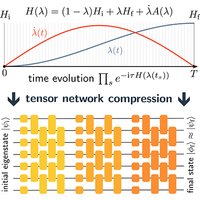
Towards Adiabatic Quantum Computing Using Compressed Quantum Circuits

Conor Mc Keever and Michael Lubasch

PRX Quantum 5, 020362 (2024) - Published 14 June, 2024

Tensor network algorithms optimize fixed-depth quantum circuits to capture adiabatic evolution, enabling adiabatic quantum computing on gate-based devices.

Sign In to Your Journals Account

Filter

Recent Issues

Vol. 7, Iss. 4
October - December 2026
Vol. 7, Iss. 3
July - September 2026
Vol. 7, Iss. 2
April - June 2026
Vol. 7, Iss. 1
January - March 2026
Category
Article Type

Filter

Article Lookup

Enter a citation