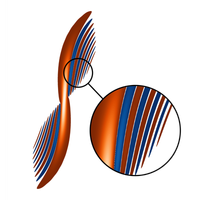
A new approach to assembling and maintaining arrays of ytterbium atoms combines the strengths of optical tweezers and optical lattices to enable larger atom arrays with defect repair by atom replacement.
Iterative Assembly of Atom Arrays with Cavity-Enhanced Optical Lattices
M. A. Norcia et al.
PRX Quantum 5, 030316 (2024)
M. A. Norcia et al.
PRX Quantum 5, 030316 (2024) - Published 25 July, 2024
A new approach to assembling and maintaining arrays of ytterbium atoms combines the strengths of optical tweezers and optical lattices to enable larger atom arrays with defect repair by atom replacement.
Alexander N. Craddock, Anne Lazenby, Gabriel Bello Portmann, Rourke Sekelsky, Mael Flament, and Mehdi Namazi
PRX Quantum 5, 030330 (2024) - Published 9 August, 2024
Progress toward practical, large-scale quantum networks is achieved via a demonstration of long-term, high-quality polarization-entanglement distribution.
Kevin C. Smith, Abid Khan, Bryan K. Clark, S.M. Girvin, and Tzu-Chieh Wei
PRX Quantum 5, 030344 (2024) - Published 4 September, 2024
An efficient and practical protocol to prepare certain matrix product states using measurements and feedforward operations.
Sandoko Kosen, Hang-Xi Li, Marcus Rommel, Robert Rehammar, Marco Caputo, Leif Grönberg, Jorge Fernández-Pendás, Anton Frisk Kockum, Janka Biznárová, Liangyu Chen, Christian Križan, Andreas Nylander, Amr Osman, Anita Fadavi Roudsari, Daryoush Shiri, Giovanna Tancredi, Joonas Govenius, and Jonas Bylander
PRX Quantum 5, 030350 (2024) - Published 12 September, 2024
Low crosstalk levels are achieved in a superconducting quantum processor, indicating the potential of scaling up to larger numbers of qubits.
Tanvirul Islam, Jasminder S. Sidhu, Brendon L. Higgins, Thomas Brougham, Tom Vergoossen, Daniel K.L. Oi, Thomas Jennewein, and Alexander Ling
PRX Quantum 5, 030101 (2024) - Published 11 July, 2024
Exploring the challenges and opportunities of current and future small-satellite-based quantum key distribution is key to progress toward wider quantum networking capabilities.
William F. Schiela, Peng Yu, and Javad Shabani
PRX Quantum 5, 030102 (2024) - Published 16 September, 2024
The state of the art on engineering topological superconductivity for the generation of Majorana bound states and applications on quantum technologies is discussed.
Stefano Gherardini and Gabriele De Chiara
PRX Quantum 5, 030201 (2024) - Published 18 September, 2024
A thorough presentation of quasiprobabilities elucidates their potentially pivotal use in many important areas of quantum research.
Josias Langbehn, Kyrylo Snizhko, Igor Gornyi, Giovanna Morigi, Yuval Gefen, and Christiane P. Koch
PRX Quantum 5, 030301 (2024) - Published 1 July, 2024
A novel theoretical approach shows that sometimes a local fridge, realized via a set of detector qubits coupled to a single link of a many-body system, is sufficient to cool into the system’s ground state.
Slawomir Simbierowicz, Massimo Borrelli, Volodymyr Monarkha, Ville Nuutinen, and Russell E. Lake
PRX Quantum 5, 030302 (2024) - Published 2 July, 2024
Combined experimental and theoretical results provide novel insights into how power is radiated to a superconducting quantum processor.
Ruvi Lecamwasam, Syed Assad, Joseph J. Hope, Ping Koy Lam, Jayne Thompson, and Mile Gu
PRX Quantum 5, 030303 (2024) - Published 3 July, 2024
A novel bound in Bayesian quantum metrology connects the unextractable information with the amount of quantum coherence in a state.
Dawid Paszko, Dominic C. Rose, Marzena H. Szymańska, and Arijeet Pal
PRX Quantum 5, 030304 (2024) - Published 8 July, 2024
A study demonstrates the robustness of symmetry-protected topological order in mixed states and quantum trajectories dynamically generated by various dissipation channels.
Félix Hoffet, Jan Lowinski, Lukas Heller, Auxiliadora Padrón-Brito, and Hugues de Riedmatten
PRX Quantum 5, 030305 (2024) - Published 9 July, 2024
Demonstration of high indistinguishability from disparate nodes presents a path toward interconnecting diverse quantum systems.
Refik Mansuroglu, Arsalan Adil, Michael J. Hartmann, Zoë Holmes, and Andrew T. Sornborger
PRX Quantum 5, 030306 (2024) - Published 10 July, 2024
A novel quantum-classical algorithm designed to classically capture the effective action of quantum circuits on bipartite systems is introduced to help predict nonlocality and reduce quantum computing resources.
Pablo Sala, Sara Murciano, Yue Liu, and Jason Alicea
PRX Quantum 5, 030307 (2024) - Published 12 July, 2024
Understanding the various impacts of imperfection on quantum teleportation leads to a stronger theory of measurement-altered quantum criticality and potentially more optimized teleportation protocol design.
Rigel Zifkin, César Daniel Rodríguez Rosenblueth, Erika Janitz, Yannik Fontana, and Lilian Childress
PRX Quantum 5, 030308 (2024) - Published 15 July, 2024
An investigation of cavity coupling to germanium-vacancy centers indicates a possible path toward a practical, coherent spin-photon interface via tunable microcavities.
Lindsay Bassman Oftelie, Antonella De Pasquale, and Michele Campisi
PRX Quantum 5, 030309 (2024) - Published 16 July, 2024
New exact results place fundamental bounds on the temperature that a qubit system can reach when cooled by other qubits.
Yu-Hsueh Chen and Tarun Grover
PRX Quantum 5, 030310 (2024) - Published 17 July, 2024
A new study analyzes the decomposability of many-body quantum systems in terms of ensembles of short-range entangled states.
Samuel J. Garratt and Ehud Altman
PRX Quantum 5, 030311 (2024) - Published 18 July, 2024
A novel approach shows that cross-correlations between classical and quantum simulations can be used to observe measurement-induced collective phenomena without postselection.
Christian A. Rosiek, Massimiliano Rossi, Albert Schliesser, and Anders S. Sørensen
PRX Quantum 5, 030312 (2024) - Published 19 July, 2024
Motional squeezing is shown to enhance Wigner negativity in quantum states of anharmonic mechanical oscillators, opening the way for experimental control that is more robust against decoherence.
ChunJun Cao, Michael J. Gullans, Brad Lackey, and Zitao Wang
PRX Quantum 5, 030313 (2024) - Published 22 July, 2024
A tensor-network approach significantly improves the efficiency of computing the quantum weight-enumerator polynomials, thereby pushing enumerators to quantum error-correction codes that contain hundreds of qubits.
Cenk Tüysüz, Su Yeon Chang, Maria Demidik, Karl Jansen, Sofia Vallecorsa, and Michele Grossi
PRX Quantum 5, 030314 (2024) - Published 23 July, 2024
The impact of hardware noise on the capabilities of equivariant quantum neural networks is explored, and strategies for mitigation are addressed.
Petr Ivashkov, Gideon Uchehara, Liang Jiang, Derek S. Wang, and Alireza Seif
PRX Quantum 5, 030315 (2024) - Published 24 July, 2024
A novel, hybridized method for generalized quantum measurements demonstrates improved resource scaling and fidelity on near-term quantum hardware.
M. A. Norcia et al.
PRX Quantum 5, 030316 (2024) - Published 25 July, 2024
A new approach to assembling and maintaining arrays of ytterbium atoms combines the strengths of optical tweezers and optical lattices to enable larger atom arrays with defect repair by atom replacement.
Bill Fefferman, Soumik Ghosh, Michael Gullans, Kohdai Kuroiwa, and Kunal Sharma
PRX Quantum 5, 030317 (2024) - Published 26 July, 2024
Realistic nonunital noise models are studied in the context of random quantum circuit experiments, imposing new constraints on near-term quantum advantage experiments.
Paul M. Riechers, Chaitanya Gupta, Artemy Kolchinsky, and Mile Gu
PRX Quantum 5, 030318 (2024) - Published 29 July, 2024
A novel thermodynamic framework constructs Hermitian operators to identify ideal inputs that optimize finite-time processes.
A.G. Catalano, S.M. Giampaolo, O. Morsch, V. Giovannetti, and F. Franchini
PRX Quantum 5, 030319 (2024) - Published 30 July, 2024
Topological frustration is shown to dramatically increase the performance of charging and discharging quantum batteries.
Maxwell T. West, Jamie Heredge, Martin Sevior, and Muhammad Usman
PRX Quantum 5, 030320 (2024) - Published 31 July, 2024
A new quantum neural network, which preserves rotational symmetries of two-dimensional data, outperforms previous quantum models for image classification tasks.
M.C. Smith, A.D. Leu, M.F. Gely, and D.M. Lucas
PRX Quantum 5, 030321 (2024) - Published 1 August, 2024
A new technique for controlling individual trapped ions using microwaves is demonstrated.
Jaehak Lee, Nuri Kang, Seok-Hyung Lee, Hyunseok Jeong, Liang Jiang, and Seung-Woo Lee
PRX Quantum 5, 030322 (2024) - Published 2 August, 2024
A continuous- and discrete-variable hybrid quantum computation scheme is developed to correct dominant loss errors and have high loss thresholds, opening up new resource-efficient routes toward fault-tolerant quantum computing.
Kévin Hémery, Khaldoon Ghanem, Eleanor Crane, Sara L. Campbell, Joan M. Dreiling, Caroline Figgatt, Cameron Foltz, John P. Gaebler, Jacob Johansen, Michael Mills, Steven A. Moses, Juan M. Pino, Anthony Ransford, Mary Rowe, Peter Siegfried, Russell P. Stutz, Henrik Dreyer, Alexander Schuckert, and Ramil Nigmatullin
PRX Quantum 5, 030323 (2024) - Published 5 August, 2024
A demonstration of the measurement of the Loschmidt amplitude in a Fermi-Hubbard simulator opens exciting perspectives for hybrid classical-quantum algorithms.
Niyaz R. Beysengulov, Øyvind S. Schøyen, Stian D. Bilek, Jonas B. Flaten, Oskar Leinonen, Morten Hjorth-Jensen, Johannes Pollanen, Håkon Emil Kristiansen, Zachary J. Stewart, Jared D. Weidman, and Angela K. Wilson
PRX Quantum 5, 030324 (2024) - Published 6 August, 2024
Through the optimization of applied gate voltages, two electrons trapped above liquid helium are shown to generate the entanglement needed for two-qubit operations via their mutual Coulomb interaction.
Albert Cabot, Gian Luca Giorgi, and Roberta Zambrini
PRX Quantum 5, 030325 (2024) - Published 6 August, 2024
A new unifying scenario is presented in which two different time-crystalline orders are separated by a nonequilibrium phase transition.
Lukas Postler, Friederike Butt, Ivan Pogorelov, Christian D. Marciniak, Sascha Heußen, Rainer Blatt, Philipp Schindler, Manuel Rispler, Markus Müller, and Thomas Monz
PRX Quantum 5, 030326 (2024) - Published 7 August, 2024
New results of the performance of Steane error correction in trapped ions demonstrate improved logical fidelities and reveal a competitive approach for fault-tolerant quantum computing.
Izabella Lovas, Utkarsh Agrawal, and Sagar Vijay
PRX Quantum 5, 030327 (2024) - Published 7 August, 2024
A regime of open system dynamics is shown to function as a quantum error-correcting code, dynamically protecting quantum information against generic weak boundary dissipation.
Zijian Liang (梁子健), Yijia Xu (许逸葭), Joseph T. Iosue, and Yu-An Chen (陳昱安)
PRX Quantum 5, 030328 (2024) - Published 8 August, 2024
A novel algorithm that can characterize topological orders in both prime- and nonprime-dimensional qudit stabilizer codes is introduced.
Youenn Le Gal, Xhek Turkeshi, and Marco Schirò
PRX Quantum 5, 030329 (2024) - Published 8 August, 2024
A new model of stochastic entanglement dynamics uncovers the impact of quantum jumps and non-Hermitian evolutions in measurement-induced phase transitions.
Alexander N. Craddock, Anne Lazenby, Gabriel Bello Portmann, Rourke Sekelsky, Mael Flament, and Mehdi Namazi
PRX Quantum 5, 030330 (2024) - Published 9 August, 2024
Progress toward practical, large-scale quantum networks is achieved via a demonstration of long-term, high-quality polarization-entanglement distribution.
Beate E. Asenbeck, Akito Kawasaki, Ambroise Boyer, Tom Darras, Alban Urvoy, Akira Furusawa, and Julien Laurat
PRX Quantum 5, 030331 (2024) - Published 12 August, 2024
A novel hybrid approach for detecting Bell states boosts the fidelity of quantum teleportation and entanglement swapping by combining different detection techniques.
Mircea Bejan, Campbell McLauchlan, and Benjamin Béri
PRX Quantum 5, 030332 (2024) - Published 13 August, 2024
Magic in monitored quantum circuits has an impact on classical simulability transitions that goes beyond entanglement; these transitions can be driven by the degree to which magic can spread within the system.
Teodor Parella-Dilmé, Korbinian Kottmann, Leonardo Zambrano, Luke Mortimer, Jakob S. Kottmann, and Antonio Acín
PRX Quantum 5, 030333 (2024) - Published 14 August, 2024
A physically inspired fermion-to-qubit mapping that significantly simplifies entanglement requirements helps enhance the performance of quantum and tensor network algorithms to simulate the ground states of small molecules.
Jordan Hines, Daniel Hothem, Robin Blume-Kohout, Birgitta Whaley, and Timothy Proctor
PRX Quantum 5, 030334 (2024) - Published 15 August, 2024
A new simplified randomized benchmarking protocol can be used to characterize large hardware with efficient classical postprocessing.
Simon Hollerith, Valentin Walther, Kritsana Srakaew, David Wei, Daniel Adler, Suchita Agrawal, Pascal Weckesser, Immanuel Bloch, and Johannes Zeiher
PRX Quantum 5, 030335 (2024) - Published 16 August, 2024
The experimental detection of macrodimerons confirms a novel, theoretically predicted molecular binding mechanism based on strong light-matter coupling.
B.A. McCullian, V. Sharma, H.Y. Chen, J.C. Crossman, E.J. Mueller, and G.D. Fuchs
PRX Quantum 5, 030336 (2024) - Published 19 August, 2024
An acoustic resonator is used to drive Rabi oscillations between excited-state orbitals with good agreement with a theoretical model of the dynamics.
M. Hinderling, S.C. ten Kate, D.Z. Haxell, M. Coraiola, S. Paredes, E. Cheah, F. Krizek, R. Schott, W. Wegscheider, D. Sabonis, and F. Nichele
PRX Quantum 5, 030337 (2024) - Published 20 August, 2024
A resonator is inductively coupled to a superconducting island, enabling fast and high-fidelity measurement of its parity.
Vittorio Vitale, Aniket Rath, Petar Jurcevic, Andreas Elben, Cyril Branciard, and Benoît Vermersch
PRX Quantum 5, 030338 (2024) - Published 21 August, 2024
State-of-the-art randomized measurement techniques allow for error-mitigated estimation of quantum Fisher information and verification of quantum metrological advantage on NISQ devices.
Elisa Bäumer, Vinay Tripathi, Derek S. Wang, Patrick Rall, Edward H. Chen, Swarnadeep Majumder, Alireza Seif, and Zlatko K. Minev
PRX Quantum 5, 030339 (2024) - Published 22 August, 2024
Dynamic circuits that exploit midcircuit measurements, conditional feed-forward operations, and real-time logic outperform unitary quantum circuits on a large-scale quantum device.
Jesús Cobos, David F. Locher, Alejandro Bermudez, Markus Müller, and Enrique Rico
PRX Quantum 5, 030340 (2024) - Published 26 August, 2024
A novel dissipative variational quantum algorithm, which outperforms previous unitary approaches, is proposed to study the ground-state properties of the ℤ lattice gauge theory.
Mallika T. Randeria, Thomas M. Hazard, Agustin Di Paolo, Kate Azar, Max Hays, Leon Ding, Junyoung An, Michael Gingras, Bethany M. Niedzielski, Hannah Stickler, Jeffrey A. Grover, Jonilyn L. Yoder, Mollie E. Schwartz, William D. Oliver, and Kyle Serniak
PRX Quantum 5, 030341 (2024) - Published 27 August, 2024
Experimental exploration of phase slips in fluxonium qubits validates theoretical models and identifies design parameter bounds to prevent decoherence.
Jie-Yu Zhang, Meng-Yuan Li, and Peng Ye
PRX Quantum 5, 030342 (2024) - Published 28 August, 2024
An investigation of higher-order cellular automata in the context of many-body physics shows the emergence of a large class of unexplored symmetry-protected topological phases of matter.
Michael Zurel, Cihan Okay, and Robert Raussendorf
PRX Quantum 5, 030343 (2024) - Published 3 September, 2024
Using tools from universal quantum computation with magic states, a widely believed hypothesis—that the inefficiency in quantum computations arises owing to tracking enormous amounts of classical data—is falsified.
Kevin C. Smith, Abid Khan, Bryan K. Clark, S.M. Girvin, and Tzu-Chieh Wei
PRX Quantum 5, 030344 (2024) - Published 4 September, 2024
An efficient and practical protocol to prepare certain matrix product states using measurements and feedforward operations.
Tao Zhang, Zhihao Chi, and Jiazhong Hu
PRX Quantum 5, 030345 (2024) - Published 5 September, 2024
A new protocol enables the generation of arbitrary symmetric entangled states using only global single-qubit rotations in a torn Hilbert space, offering applications in variational quantum optimization with existing technology.
Parth S. Shah, Frank Yang, Chaitali Joshi, and Mohammad Mirhosseini
PRX Quantum 5, 030346 (2024) - Published 6 September, 2024
Autonomous stabilization of remote entanglement is achieved experimentally with a pair of noninteracting superconducting qubits connected by an open waveguide.
Alexander Anferov, Shannon P. Harvey, Fanghui Wan, Jonathan Simon, and David I. Schuster
PRX Quantum 5, 030347 (2024) - Published 9 September, 2024
Higher-frequency superconducting qubits with increased thermal resilience are produced, allowing for scaling up of quantum processors with high heat dissipation budgets.
Sami Boulebnane and Ashley Montanaro
PRX Quantum 5, 030348 (2024) - Published 10 September, 2024
Numerical studies suggest that quantum optimization may provide a polynomial speedup over the best classical solvers for constraint satisfaction problems.
R. Veyron, J-B. Gerent, G. Baclet, V. Mancois, P. Bouyer, and S. Bernon
PRX Quantum 5, 030349 (2024) - Published 11 September, 2024
A new dressed-state-based method for imaging ultracold atoms achieves subwavelength resolution and reveals the complementary capabilities of two opposite imaging strength regimes to spatially resolve nanoscale quantum states.
Sandoko Kosen, Hang-Xi Li, Marcus Rommel, Robert Rehammar, Marco Caputo, Leif Grönberg, Jorge Fernández-Pendás, Anton Frisk Kockum, Janka Biznárová, Liangyu Chen, Christian Križan, Andreas Nylander, Amr Osman, Anita Fadavi Roudsari, Daryoush Shiri, Giovanna Tancredi, Joonas Govenius, and Jonas Bylander
PRX Quantum 5, 030350 (2024) - Published 12 September, 2024
Low crosstalk levels are achieved in a superconducting quantum processor, indicating the potential of scaling up to larger numbers of qubits.
Zhenfei Jiang, Tian Li, Matthew L. Boone, Zhenhuan Yi, Alexei V. Sokolov, Girish S. Agarwal, and Marlan O. Scully
PRX Quantum 5, 030351 (2024) - Published 13 September, 2024
A novel scattering-mitigation scheme, using only an integrating sphere, is experimentally demonstrated to recover nearly 50% of mutual information in a quantum correlated two-mode squeezed state of light, despite a photon loss exceeding 85% in one of the modes.
Yugo Takada and Keisuke Fujii
PRX Quantum 5, 030352 (2024) - Published 17 September, 2024
Optimizing the weights of decoders using flag-qubit information achieves an increase in the threshold for color codes in quantum computing.
Eric Hyyppä, Antti Vepsäläinen, Miha Papič, Chun Fai Chan, Sinan Inel, Alessandro Landra, Wei Liu, Jürgen Luus, Fabian Marxer, Caspar Ockeloen-Korppi, Sebastian Orbell, Brian Tarasinski, and Johannes Heinsoo
PRX Quantum 5, 030353 (2024) - Published 19 September, 2024
A new approach for shaping single-qubit control pulses is experimentally shown to achieve fast gates with low errors and efficient calibration.
Adam Wills, Min-Hsiu Hsieh, and Sergii Strelchuk
PRX Quantum 5, 030354 (2024) - Published 20 September, 2024
Probabilistic port-based teleportation is shown, for the first time, to allow a polynomial-size quantum circuit implementation.
Twesh Upadhyaya, William F. Braasch, Jr., Gabriel T. Landi, and Nicole Yunger Halpern
PRX Quantum 5, 030355 (2024) - Published 23 September, 2024
Three equivalent formulas for classical stochastic entropy production become inequivalent in the quantum domain, revealing new facets of entropy production for quantum systems.
Lenart Zadnik, Marko Ljubotina, Žiga Krajnik, Enej Ilievski, and Tomaž Prosen
PRX Quantum 5, 030356 (2024) - Published 25 September, 2024
A novel class of quantum circuits reveals how breaking space-reflection symmetry induces chiral spin transport, challenging traditional equilibrium concepts through a violation of the Gallavotti-Cohen symmetry.
M. Hinderling, S. C. ten Kate, M. Coraiola, D.Z. Haxell, M. Stiefel, M. Mergenthaler, S. Paredes, S.W. Bedell, D. Sabonis, and F. Nichele
PRX Quantum 5, 030357 (2024) - Published 27 September, 2024
Inductive coupling between a superconducting resonator and a Josephson junction in germanium by means of flip-chip bonding enables microwave spectroscopy, showing discrete and gate-tunable Andreev bound states in short and long junctions.
Jad C. Halimeh, Lukas Homeier, Annabelle Bohrdt, and Fabian Grusdt
PRX Quantum 5, 030358 (2024) - Published 30 September, 2024
A new experimentally feasible proposal for simulating large-scale non-Abelian lattice gauge theories with dynamical matter using spin-exchange interactions.
Alberto Di Meglio et al.
PRX Quantum 5, 037001 (2024) - Published 5 August, 2024
Quantum algorithms and quantum machine learning could assist high-energy physics, ranging from studying neutrino oscillations to reconstructing particle trajectories in colliders.