High-fidelity two-qubit gates are achieved with heavy-fluxonium qubits, circuits that break many conventional superconducting circuit paradigms, bringing more diversity for quantum applications.
Tunable Inductive Coupler for High-Fidelity Gates Between Fluxonium Qubits
Helin Zhang, Chunyang Ding, D.K. Weiss, Ziwen Huang, Yuwei Ma, Charles Guinn, Sara Sussman, Sai Pavan Chitta, Danyang Chen, Andrew A. Houck, Jens Koch, and David I. Schuster
PRX Quantum 5, 020326 (2024)
Randall D. Kamien and Daniel Ucko
PRX Quantum 5, 020001 (2024) - Published 21 May, 2024
V. Krutyanskiy, M. Canteri, M. Meraner, V. Krcmarsky, and B.P. Lanyon
PRX Quantum 5, 020308 (2024) - Published 10 April, 2024
Multiplexing entanglement attempts across multiple qubits in a quantum network node increases the entanglement rate without reducing fidelity.
S. C. Burd, H. M. Knaack, R. Srinivas, C. Arenz, A. L. Collopy, L. J. Stephenson, A. C. Wilson, D. J. Wineland, D. Leibfried, J. J. Bollinger, D. T. C. Allcock, and D. H. Slichter
PRX Quantum 5, 020314 (2024) - Published 17 April, 2024
An experimental demonstration shows that quantum squeezing can be used to amplify a Hamiltonian’s effect—even when the Hamiltonian is unknown.
Helin Zhang, Chunyang Ding, D.K. Weiss, Ziwen Huang, Yuwei Ma, Charles Guinn, Sara Sussman, Sai Pavan Chitta, Danyang Chen, Andrew A. Houck, Jens Koch, and David I. Schuster
PRX Quantum 5, 020326 (2024) - Published 2 May, 2024
High-fidelity two-qubit gates are achieved with heavy-fluxonium qubits, circuits that break many conventional superconducting circuit paradigms, bringing more diversity for quantum applications.
Daniel K. Ruttley, Alexander Guttridge, Tom R. Hepworth, and Simon L. Cornish
PRX Quantum 5, 020333 (2024) - Published 13 May, 2024
Site-resolved control and detection of rotational states of molecules trapped in an array of optical tweezers is demonstrated, opening up applications in quantum metrology, simulation, and sensing.
Lewis R. B. Picard, Gabriel E. Patenotte, Annie J. Park, Samuel F. Gebretsadkan, and Kang-Kuen Ni
PRX Quantum 5, 020344 (2024) - Published 28 May, 2024
Harnessing the multilevel structure and constituent atoms of polar molecules allows us to extend the state preparation and measurement capabilities for broad applicability in quantum information, simulation, and metrology.
S. Finelli, A. Ciamei, B. Restivo, M. Schemmer, A. Cosco, M. Inguscio, A. Trenkwalder, K. Zaremba-Kopczyk, M. Gronowski, M. Tomza, and M. Zaccanti
PRX Quantum 5, 020358 (2024) - Published 12 June, 2024
Production of ultracold lithium-chromium (LiCr) molecules and thorough characterization of their properties establishes LiCr as a prime candidate for the realization of quantum gases of doubly polar molecules.
Amara Katabarwa, Katerina Gratsea, Athena Caesura, and Peter D. Johnson
PRX Quantum 5, 020101 (2024) - Published 17 June, 2024
As quantum computing transitions into the fault-tolerant regime, understanding how best to utilize available architectures becomes paramount.
Gabriel T. Landi, Michael J. Kewming, Mark T. Mitchison, and Patrick P. Potts
PRX Quantum 5, 020201 (2024) - Published 2 April, 2024
A pedagogical overview of analytical and numerical techniques used to characterize current fluctuations in Markovian systems is presented, helping to bridge knowledge between condensed-matter physics and quantum optics.
Francesco Campaioli, Jared H. Cole, and Harini Hapuarachchi
PRX Quantum 5, 020202 (2024) - Published 10 June, 2024
A pedagogical hands-on guide to quantum master equations and their numerical implementations, tailored to newcomers interested in interdisciplinary research.
David van Driel, Bart Roovers, Francesco Zatelli, Alberto Bordin, Guanzhong Wang, Nick van Loo, Jan Cornelis Wolff, Grzegorz P. Mazur, Sasa Gazibegovic, Ghada Badawy, Erik P.A.M. Bakkers, Leo P. Kouwenhoven, and Tom Dvir
PRX Quantum 5, 020301 (2024) - Published 1 April, 2024
A quantum-dot charge sensor is used to probe Andreev bound states and Andreev molecules, enabling one to resolve even and odd states based on charge, without affecting the parity.
Pengtao Song, Zhongcheng Xiang, Yu-Xiang Zhang, Zhan Wang, Xueyi Guo, Xinhui Ruan, Xiaohui Song, Kai Xu, Yvonne Y. Gao, Heng Fan, and Dongning Zheng
PRX Quantum 5, 020302 (2024) - Published 3 April, 2024
Coherent control of Bloch oscillations is achieved for a nine-qubit one-dimensional superconducting circuit, opening a route to modulate electron transport.
Farhan T. Chowdhury, Matt C.J. Denton, Daniel C. Bonser, and Daniel R. Kattnig
PRX Quantum 5, 020303 (2024) - Published 4 April, 2024
GRAPE, a ubiquitous quantum control technique, is extended to allow the suppressing or boosting of biochemical radical-pair reactions.
Matteo Ippoliti and Vedika Khemani
PRX Quantum 5, 020304 (2024) - Published 5 April, 2024
Measurement-induced phase transitions in quantum many-body systems are studied from the perspective of the classical detection record and the corresponding information transfer.
Arpit Dua, Nathanan Tantivasadakarn, Joseph Sullivan, and Tyler D. Ellison
PRX Quantum 5, 020305 (2024) - Published 8 April, 2024
The interpretation of measurements as condensation and the idea of rewinding the measurement sequence are applied to Floquet codes, creating novel codes such as the three-dimensional Floquet toric code.
M. Villiers, W.C. Smith, A. Petrescu, A. Borgognoni, M. Delbecq, A. Sarlette, M. Mirrahimi, P. Campagne-Ibarcq, T. Kontos, and Z. Leghtas
PRX Quantum 5, 020306 (2024) - Published 9 April, 2024
A superconducting circuit experiment reveals a twofold increase in qubit-photon interactions using antisqueezing, marking a pioneering step toward dynamically controlled quantum interactions.
Yiru Zhou, Pooja Malik, Florian Fertig, Matthias Bock, Tobias Bauer, Tim van Leent, Wei Zhang, Christoph Becher, and Harald Weinfurter
PRX Quantum 5, 020307 (2024) - Published 10 April, 2024
An improved qubit encoding extends the lifetime of the quantum memory, enabling the distribution of entanglement over a metropolitan-scale distance.
V. Krutyanskiy, M. Canteri, M. Meraner, V. Krcmarsky, and B.P. Lanyon
PRX Quantum 5, 020308 (2024) - Published 10 April, 2024
Multiplexing entanglement attempts across multiple qubits in a quantum network node increases the entanglement rate without reducing fidelity.
Andrew Osborne, Trevyn Larson, Sarah Garcia Jones, Ray W. Simmonds, András Gyenis, and Andrew Lucas
PRX Quantum 5, 020309 (2024) - Published 11 April, 2024
An efficient algorithm for quantizing circuits is presented, allowing the exploration of new situations where standard methods based on a Lagrangian description fail.
Jacob C. Bridgeman, Aleksander Kubica, and Michael Vasmer
PRX Quantum 5, 020310 (2024) - Published 12 April, 2024
A novel class of quantum error-correcting codes, dubbed subsystem Abelian quantum double codes, is introduced and is used to better understand the single-shot property of topological codes.
Matteo Turco, Gonçalo Quinta, João Seixas, and Yasser Omar
PRX Quantum 5, 020311 (2024) - Published 15 April, 2024
A new, general protocol to simulate bound-state scattering with a quantum algorithm that directly excites wave packets in the interacting theory.
D.K. Weiss, Shruti Puri, and S.M. Girvin
PRX Quantum 5, 020312 (2024) - Published 16 April, 2024
New quantum random-access memory architectures based on high-coherence superconducting cavities allow suppression of the detrimental effects of noise.
Maria Tikhanovskaya, Subir Sachdev, and Rhine Samajdar
PRX Quantum 5, 020313 (2024) - Published 17 April, 2024
The complete solution of the equilibrium properties of an Ising model with all-to-all and random interactions between qubits in the presence of a field in multiple directions is obtained.
S. C. Burd, H. M. Knaack, R. Srinivas, C. Arenz, A. L. Collopy, L. J. Stephenson, A. C. Wilson, D. J. Wineland, D. Leibfried, J. J. Bollinger, D. T. C. Allcock, and D. H. Slichter
PRX Quantum 5, 020314 (2024) - Published 17 April, 2024
An experimental demonstration shows that quantum squeezing can be used to amplify a Hamiltonian’s effect—even when the Hamiltonian is unknown.
Roland C. Farrell, Marc Illa, Anthony N. Ciavarella, and Martin J. Savage
PRX Quantum 5, 020315 (2024) - Published 18 April, 2024
A new scalable algorithm for efficiently preparing ground states of gapped theories is demonstrated in the Schwinger model on 100 qubits.
Sandra Buob, Jonatan Höschele, Vasiliy Makhalov, Antonio Rubio-Abadal, and Leticia Tarruell
PRX Quantum 5, 020316 (2024) - Published 18 April, 2024
A novel experimental realization of a strontium quantum-gas microscope allows site-resolved imaging of a Bose-Hubbard superfluid in an optical lattice.
Sattwik Deb Mishra, Miguel Frías-Pérez, and Rahul Trivedi
PRX Quantum 5, 020317 (2024) - Published 19 April, 2024
A method that makes use of ideas from convex optimization is proposed for efficiently computing rigorous bounds on the performance of noisy quantum circuits.
Zhen-Peng Xu, René Schwonnek, and Andreas Winter
PRX Quantum 5, 020318 (2024) - Published 22 April, 2024
Graph-theoretic tools are used to obtain rigorous lower bounds on the ground-state energy of quantum many-body Hamiltonians made up of Pauli strings.
Pharnam Bakhshinezhad, Mohammad Mehboudi, Carles Roch i Carceller, and Armin Tavakoli
PRX Quantum 5, 020319 (2024) - Published 23 April, 2024
Novel results show that there are entanglement advantages even in protocols involving only two-party product measurements, opening the way to new entanglement certification schemes.
Hans Stærkind, Kasper Jensen, Jörg H. Müller, Vincent O. Boer, Eugene S. Polzik, and Esben T. Petersen
PRX Quantum 5, 020320 (2024) - Published 24 April, 2024
A competitive technique for measuring magnetic fields of several teslas is proposed, and applications in medical MRI are demonstrated.
Vivek Maurya, Haimeng Zhang, Daria Kowsari, Andre Kuo, Darian M. Hartsell, Clark Miyamoto, Jocelyn Liu, Sadman Shanto, Evangelos Vlachos, Azarin Zarassi, Kater W. Murch, and Eli M. Levenson-Falk
PRX Quantum 5, 020321 (2024) - Published 25 April, 2024
An active, on-demand dissipation device provides faster readout resonator reset and improved transmon coherence, creating a modular tool for entropy removal in circuit QED.
Tobias Asano, Enno Giese, and Fabio Di Pumpo
PRX Quantum 5, 020322 (2024) - Published 26 April, 2024
An effective quantum field theory for composite bosons is proposed that could facilitate modeling higher precision clocks and matter-wave interferometers including relativistic effects.
Amir Burshtein and Moshe Goldstein
PRX Quantum 5, 020323 (2024) - Published 29 April, 2024
In integrable quantum impurity models, inelastic photon scattering builds up from purely elastic scattering of quasiparticles, illuminating an elusive quantum phase transition.
Samson Wang, Sam McArdle, and Mario Berta
PRX Quantum 5, 020324 (2024) - Published 30 April, 2024
A framework for constructing qubit-efficient algorithms that sample properties of matrix functions is developed, with a concrete application for calculating Green’s functions of quantum many-body systems.
T. McBroom-Carroll, A. Schlabes, X. Xu, J. Ku, B. Cole, S. Indrajeet, M. D. LaHaye, M. H. Ansari, and B. L. T. Plourde
PRX Quantum 5, 020325 (2024) - Published 1 May, 2024
Enhanced control over qubit interactions is achieved using a ring resonator, with a left-handed dispersion relation and a dense mode structure, as a coupling bus for qubits.
Helin Zhang, Chunyang Ding, D.K. Weiss, Ziwen Huang, Yuwei Ma, Charles Guinn, Sara Sussman, Sai Pavan Chitta, Danyang Chen, Andrew A. Houck, Jens Koch, and David I. Schuster
PRX Quantum 5, 020326 (2024) - Published 2 May, 2024
High-fidelity two-qubit gates are achieved with heavy-fluxonium qubits, circuits that break many conventional superconducting circuit paradigms, bringing more diversity for quantum applications.
Jernej Rudi Finžgar, Aron Kerschbaumer, Martin J.A. Schuetz, Christian B. Mendl, and Helmut G. Katzgraber
PRX Quantum 5, 020327 (2024) - Published 3 May, 2024
A new study introduces quantum-informed recursive optimization algorithms, leveraging quantum resources for classical reductions in combinatorial optimization and demonstrating effectiveness on neutral-atom quantum processors.
Quynh T. Nguyen, Louis Schatzki, Paolo Braccia, Michael Ragone, Patrick J. Coles, Frédéric Sauvage, Martín Larocca, and M. Cerezo
PRX Quantum 5, 020328 (2024) - Published 6 May, 2024
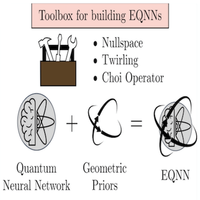
Group-equivariant quantum neural networks utilize symmetries to alleviate central challenges in trainability and generalization in quantum neural-network architectures.
Yakov Solomons, Roni Ben-Maimon, and Ephraim Shahmoon
PRX Quantum 5, 020329 (2024) - Published 7 May, 2024
A new theoretical framework to account for collective quantum optical effects in the scattering of photons by atomic arrays.
Kouhei Nakaji, Mohsen Bagherimehrab, and Alán Aspuru-Guzik
PRX Quantum 5, 020330 (2024) - Published 8 May, 2024
An algorithm, based on randomized compilation of the Hamiltonian terms, for high-precision quantum simulations is introduced.
Isaac Layton and Jonathan Oppenheim
PRX Quantum 5, 020331 (2024) - Published 9 May, 2024
New theoretical work demonstrates how consistent models of effective classical-quantum dynamics emerge in a limit of quantum theory.
Zhiyan Ding, Xiantao Li, and Lin Lin
PRX Quantum 5, 020332 (2024) - Published 10 May, 2024
A novel quantum algorithm, which exploits the relation between the Lindblad master equation, stochastic differential equations, and Hamiltonian simulations, is proposed to simulate open quantum systems on a quantum computer.
Daniel K. Ruttley, Alexander Guttridge, Tom R. Hepworth, and Simon L. Cornish
PRX Quantum 5, 020333 (2024) - Published 13 May, 2024
Site-resolved control and detection of rotational states of molecules trapped in an array of optical tweezers is demonstrated, opening up applications in quantum metrology, simulation, and sensing.
R.M. Goldblatt, A.M. Martin, and A.A. Wood
PRX Quantum 5, 020334 (2024) - Published 14 May, 2024
Nitrogen-vacancy centers in diamond can be used to access the state of optically dark paramagnetic nitrogen defects, which in turn can be used as quantum sensors to extract information about their local environment.
Patryk Lipka-Bartosik, Christopher T. Chubb, Joseph M. Renes, Marco Tomamichel, and Kamil Korzekwa
PRX Quantum 5, 020335 (2024) - Published 15 May, 2024
New results on asymptotic state interconversion open the way for novel coherent thermodynamic protocols.
Balint Pato, Theerapat Tansuwannont, Shilin Huang, and Kenneth R. Brown
PRX Quantum 5, 020336 (2024) - Published 16 May, 2024
Three optimization tools that make fault-tolerant error correction more practical are introduced to reduce resource requirements and improve the performance of a wide class of quantum error-correcting codes.
Cameron Calcluth, Nicolas Reichel, Alessandro Ferraro, and Giulia Ferrini
PRX Quantum 5, 020337 (2024) - Published 17 May, 2024
A sufficient condition for universal quantum computation with continuous-variable systems is derived through a novel generalized mapping between bosonic and qubit states.
Ken Xuan Wei, Isaac Lauer, Emily Pritchett, William Shanks, David C. McKay, and Ali Javadi-Abhari
PRX Quantum 5, 020338 (2024) - Published 20 May, 2024
An experimental realization of sᴡᴀᴘ and gates in fixed-coupling transmon processors shows that these systems support multiple high-fidelity native two-qubit gates.
V. Srinivasa, J. M. Taylor, and J. R. Petta
PRX Quantum 5, 020339 (2024) - Published 21 May, 2024
A new study unveils a step-by-step framework for engineering tunable entanglement between spin qubits in quantum dots via the sidebands of driven qubits, paving the way for modular quantum information processing in these solid-state platforms.
F.J. Matute-Cañadas, L. Tosi, and A. Levy Yeyati
PRX Quantum 5, 020340 (2024) - Published 22 May, 2024
A novel platform based on multiterminal Josephson junctions in hybrid semiconductor-superconductor structures provides a potential path toward the realization of protected qubits.
Changhun Oh, Bill Fefferman, Liang Jiang, and Nicolás Quesada
PRX Quantum 5, 020341 (2024) - Published 23 May, 2024
A quantum-inspired classical method is employed to solve graph theory problems with a comparable performance to Gaussian boson sampling.
Kirill Petrovnin, Jiaming Wang, Michael Perelshtein, Pertti Hakonen, and Gheorghe Sorin Paraoanu
PRX Quantum 5, 020342 (2024) - Published 24 May, 2024
Microwave single-photon detection has been realized experimentally with a superconducting Josephson device operated near the parametric critical point.
Ruihua Fan, Yimu Bao, Ehud Altman, and Ashvin Vishwanath
PRX Quantum 5, 020343 (2024) - Published 24 May, 2024
Novel results use intrinsic mixed-state properties of decohered topological quantum memory to characterize its optimal decoding threshold.
Lewis R. B. Picard, Gabriel E. Patenotte, Annie J. Park, Samuel F. Gebretsadkan, and Kang-Kuen Ni
PRX Quantum 5, 020344 (2024) - Published 28 May, 2024
Harnessing the multilevel structure and constituent atoms of polar molecules allows us to extend the state preparation and measurement capabilities for broad applicability in quantum information, simulation, and metrology.
Friederike Butt, Sascha Heußen, Manuel Rispler, and Markus Müller
PRX Quantum 5, 020345 (2024) - Published 28 May, 2024
New quantum circuit designs that implement fault-tolerant code-switching protocols are developed to run on realistic noisy quantum hardware.
Zahra Raissi, Edwin Barnes, and Sophia E. Economou
PRX Quantum 5, 020346 (2024) - Published 29 May, 2024
An approach to deterministically generate any multiphoton qudit graph state, including those needed for a range of photonic quantum information technologies, is presented.
Max McGinley
PRX Quantum 5, 020347 (2024) - Published 29 May, 2024
New techniques are developed that allow quantum many-body properties to be probed in a scalable way, facilitating future investigations of quantum measurements.
Andreas Fyrillas, Boris Bourdoncle, Alexandre Maïnos, Pierre-Emmanuel Emeriau, Kayleigh Start, Nico Margaria, Martina Morassi, Aristide Lemaître, Isabelle Sagnes, Petr Stepanov, Thi Huong Au, Sébastien Boissier, Niccolo Somaschi, Nicolas Maring, Nadia Belabas, and Shane Mansfield
PRX Quantum 5, 020348 (2024) - Published 30 May, 2024
A demonstration of practical, on-chip certified-random-number generation with photonic qubits achieves the highest standard in randomness.
Lucas Berent, Timo Hillmann, Jens Eisert, Robert Wille, and Joschka Roffe
PRX Quantum 5, 020349 (2024) - Published 30 May, 2024
Novel decoding methods leverage analog measurement information in bosonic quantum low-density parity-check codes.
F. Roeder, R. Pollmann, M. Stefszky, M. Santandrea, K.-H. Luo, V. Quiring, R. Ricken, C. Eigner, B. Brecht, and C. Silberhorn
PRX Quantum 5, 020350 (2024) - Published 31 May, 2024
SU(1,1) interferometry is used to measure the simultaneity of two photons from a time-frequency entangled pair, assessing their suitability for ultrafast quantum spectroscopy.
Mirjam Weilenmann, Costantino Budroni, and Miguel Navascués
PRX Quantum 5, 020351 (2024) - Published 3 June, 2024
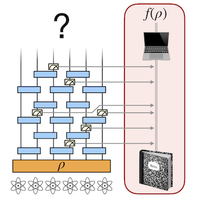
A new study introduces effective solutions for sequential quantum information tasks, enhancing finite-state automaton analysis, many-body entanglement detection, and adaptive protocol development for magic state detection.
Claudia Artiaco, Christoph Fleckenstein, David Aceituno Chávez, Thomas Klein Kvorning, and Jens H. Bardarson
PRX Quantum 5, 020352 (2024) - Published 4 June, 2024
The local-information time-evolution approach efficiently simulates the dynamics of local observables in many-body quantum systems by systematically removing large-scale correlations via the information lattice.
Stefano Bosco, Ji Zou, and Daniel Loss
PRX Quantum 5, 020353 (2024) - Published 5 June, 2024
A substantial enhancement in the speed and fidelity of shuttling due to a large spin-orbit interaction paves the way for realizing scalable semiconductor quantum computers.
Zixin Huang, Ludovico Lami, and Mark M. Wilde
PRX Quantum 5, 020354 (2024) - Published 6 June, 2024
Novel results determine the fundamental physical limitations on how well one can discriminate between two or more different bosonic dephasing noise mechanisms.
Sivaprasad Omanakuttan, Vikas Buchemmavari, Jonathan A. Gross, Ivan H. Deutsch, and Milad Marvian
PRX Quantum 5, 020355 (2024) - Published 7 June, 2024
Spin-cat codes in neutral-atom qubits yield the potential for fault tolerance with a high threshold and low resource overhead.
Bo Sun, Teresa Brecht, Bryan H. Fong, Moonmoon Akmal, Jacob Z. Blumoff, Tyler A. Cain, Faustin W. Carter, Dylan H. Finestone, Micha N. Fireman, Wonill Ha, Anthony T. Hatke, Ryan M. Hickey, Clayton A. C. Jackson, Ian Jenkins, Aaron M. Jones, Andrew Pan, Daniel R. Ward, Aaron J. Weinstein, Samuel J. Whiteley, Parker Williams, Matthew G. Borselli, Matthew T. Rakher, and Thaddeus D. Ladd
PRX Quantum 5, 020356 (2024) - Published 11 June, 2024
A qubit based on a triple quantum dot extends its coherence time by carefully shuffling the locations of its electrons.
Benchi Zhao, Mingrui Jing, Lei Zhang, Xuanqiang Zhao, Yu-Ao Chen, Kun Wang, and Xin Wang
PRX Quantum 5, 020357 (2024) - Published 12 June, 2024
A novel, scalable entanglement-enhanced method for retrieving high-order moments from noisy quantum states offers a promising approach for practical quantum devices.
S. Finelli, A. Ciamei, B. Restivo, M. Schemmer, A. Cosco, M. Inguscio, A. Trenkwalder, K. Zaremba-Kopczyk, M. Gronowski, M. Tomza, and M. Zaccanti
PRX Quantum 5, 020358 (2024) - Published 12 June, 2024
Production of ultracold lithium-chromium (LiCr) molecules and thorough characterization of their properties establishes LiCr as a prime candidate for the realization of quantum gases of doubly polar molecules.
Joshua J. Guanzon, Matthew S. Winnel, Deepesh Singh, Austin P. Lund, and Timothy C. Ralph
PRX Quantum 5, 020359 (2024) - Published 13 June, 2024
The Knill-Laflamme-Milburn teleporter is adapted to a proposed near-optimal linear-optics noiseless amplifier.
Ryohei Kobayashi and Guanyu Zhu
PRX Quantum 5, 020360 (2024) - Published 13 June, 2024
A novel study shows that nonorientable space enables new, almost transversal, logical gates that can help eliminate large error propagation in the standard surface code.
Hyeongjin Kim, Matthew Fishman, and Dries Sels
PRX Quantum 5, 020361 (2024) - Published 14 June, 2024
An adiabatic gauge potential is constructed to improve upon standard DMRG methods for computing low-energy spectra of quantum many-body systems, allowing the efficient and automatic scanning of the entire phase diagram.
Conor Mc Keever and Michael Lubasch
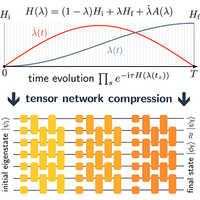
PRX Quantum 5, 020362 (2024) - Published 14 June, 2024
Tensor network algorithms optimize fixed-depth quantum circuits to capture adiabatic evolution, enabling adiabatic quantum computing on gate-based devices.
Yiyi Li and Jeff D. Thompson
PRX Quantum 5, 020363 (2024) - Published 20 June, 2024
Enhanced scalability in Yb atom qubit arrays can be achieved by connecting neutral-atom quantum computer modules with high-fidelity entanglement at rates approaching 10 Bell pairs per second.
Saeed A. Khan, Ryan Kaufman, Boris Mesits, Michael Hatridge, and Hakan E. Türeci
PRX Quantum 5, 020364 (2024) - Published 21 June, 2024
A machine-learning approach to readout of general quantum systems improves real-time processing of measurement data by adapting to complex quantum noise conditions.
Hadi Yarloo, Hua-Chen Zhang, and Anne E. B. Nielsen
PRX Quantum 5, 020365 (2024) - Published 24 June, 2024
Novel results show that many-body scars are suitable for adiabatic evolution despite the absence of energy gaps.
Philippe Lewalle, Yipei Zhang, and K. Birgitta Whaley
PRX Quantum 5, 020366 (2024) - Published 26 June, 2024
Measurement-driven control can optimally use the Zeno effect to realize robust and rapid quantum state transfer.
Marco Fanizza, Yihui Quek, and Matteo Rosati
PRX Quantum 5, 020367 (2024) - Published 27 June, 2024
A statistical learning theory, based on empirical risk minimization and a generalization of shadow tomography, is developed for learning processes that map a classical input to a quantum output.
Danial Motlagh and Nathan Wiebe
PRX Quantum 5, 020368 (2024) - Published 28 June, 2024
The class of functions that can be used in quantum signal processing is expanded, providing new tools for quantum algorithm development.