Joseph Tindall, Matthew Fishman, E. Miles Stoudenmire, and Dries Sels
PRX Quantum 5, 010308 (2024) - Published 23 January, 2024
Improved classical methods for Hamiltonian simulation further shift the threshold for quantum utility.
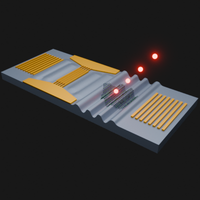
Dominik Schäffner, Tobias Schreiber, Fabian Lenz, Malte Schlosser, and Gerhard Birkl
PRX Quantum 5, 010311 (2024) - Published 26 January, 2024
A quantum sensor based on an array of neutral atoms measured in parallel is applied to obtain the spatial distribution of a magnetic field with microscale resolution.
Sascha Heußen, David F. Locher, and Markus Müller
PRX Quantum 5, 010333 (2024) - Published 27 February, 2024
A fault-tolerant quantum error-correction scheme is presented that does not require measuring individual qubits and could thus revolutionize platforms that do not support midcircuit measurements.
Laurent Labonté, Olivier Alibart, Virginia D’Auria, Florent Doutre, Jean Etesse, Gregory Sauder, Anthony Martin, Éric Picholle, and Sébastien Tanzilli
PRX Quantum 5, 010101 (2024) - Published 12 February, 2024
Exploring cutting-edge advances of integrated photonics, recent breakthroughs and challenges are highlighted, showing a roadmap for developments in quantum communication and metrology technologies.
Stephanie Simmons
PRX Quantum 5, 010102 (2024) - Published 13 March, 2024
An architecture that combines quantum networks and quantum processors into the same core entanglement distribution technology is introduced and discussed in the context of silicon color centers.
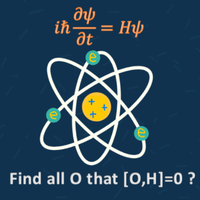
Shenglong Xu and Brian Swingle
PRX Quantum 5, 010201 (2024) - Published 22 January, 2024
A deep dive on scrambling dynamics in quantum many-body systems is presented, with a detailed overview of out-of-time-ordered correlators, including how to calculate and measure them.
Hans K.C. Beukers, Matteo Pasini, Hyeongrak Choi, Dirk Englund, Ronald Hanson, and Johannes Borregaard
PRX Quantum 5, 010202 (2024) - Published 29 March, 2024
General mechanisms of photon-mediated entanglement generation are elucidated in a pedagogical way, and codes are made available for the practical evaluation of protocols.
Santiago Serrano, MengKe Feng, Wee Han Lim, Amanda E. Seedhouse, Tuomo Tanttu, Will Gilbert, Christopher C. Escott, Nikolay V. Abrosimov, Hans-Joachim Pohl, Michael L.W. Thewalt, Fay E. Hudson, Andre Saraiva, Andrew S. Dzurak, and Arne Laucht
PRX Quantum 5, 010301 (2024) - Published 3 January, 2024
Combining modulation with correlation of multiple sensor signals promises an increase in qubit readout fidelities.
Héctor Bombín, Mihir Pant, Sam Roberts, and Karthik I. Seetharam
PRX Quantum 5, 010302 (2024) - Published 4 January, 2024
A general framework for fault-tolerant postselection of surface code channels is introduced that reduces logical error rates and lowers resource overhead, advancing the field of quantum error correction.
Eric Bersin et al.
PRX Quantum 5, 010303 (2024) - Published 8 January, 2024
A low-noise quantum frequency conversion system enables a solid-state qubit in diamond to directly interface with telecom-band systems.
David T. Stephen, Arpit Dua, Ali Lavasani, and Rahul Nandkishore
PRX Quantum 5, 010304 (2024) - Published 11 January, 2024
A new analysis sheds light on the phases of matter beyond the assumption of geometric locality, which would be key to understanding the physics that underpins quantum simulators.
Ryan L. Mann and Romy M. Minko
PRX Quantum 5, 010305 (2024) - Published 16 January, 2024
A general framework that uses the cluster expansion to establish efficient classical approximation algorithms for quantum problems.
M.J. Gullans, M. Caranti, A.R. Mills, and J.R. Petta
PRX Quantum 5, 010306 (2024) - Published 18 January, 2024
A new quantum process tomography framework tackles time-correlated noise, enhancing efficiency and fidelity in silicon spin qubits and paving the way for scalable quantum computing.
Yoshiki Sunada, Kenshi Yuki, Zhiling Wang, Takeaki Miyamura, Jesper Ilves, Kohei Matsuura, Peter A. Spring, Shuhei Tamate, Shingo Kono, and Yasunobu Nakamura
PRX Quantum 5, 010307 (2024) - Published 19 January, 2024
A nonlinear filter protects the qubit from noise-induced decoherence but automatically deactivates when a readout pulse is applied, enabling a fast, high-fidelity readout of a superconducting qubit.
Joseph Tindall, Matthew Fishman, E. Miles Stoudenmire, and Dries Sels
PRX Quantum 5, 010308 (2024) - Published 23 January, 2024
Improved classical methods for Hamiltonian simulation further shift the threshold for quantum utility.
Raúl Morral-Yepes, Adam Smith, S.L. Sondhi, and Frank Pollmann
PRX Quantum 5, 010309 (2024) - Published 24 January, 2024
A game in which two players compete to generate area- or volume-law entanglement may undergo novel types of quantum phase transitions.
Shraddha Agrawal, Sai Naga Manoj Paladugu, and Bryce Gadway
PRX Quantum 5, 010310 (2024) - Published 25 January, 2024
A new experimental approach is developed for building two-dimensional tight-binding models using selectively addressed Bragg resonances.
Dominik Schäffner, Tobias Schreiber, Fabian Lenz, Malte Schlosser, and Gerhard Birkl
PRX Quantum 5, 010311 (2024) - Published 26 January, 2024
A quantum sensor based on an array of neutral atoms measured in parallel is applied to obtain the spatial distribution of a magnetic field with microscale resolution.
Caspar Groiseau, Antonio I. Fernández-Domínguez, Diego Martín-Cano, and Carlos Sánchez Muñoz
PRX Quantum 5, 010312 (2024) - Published 29 January, 2024
Polar emitters are used in a proposal to realize single-photon sources in the terahertz regime, promising optical tunability of the frequency of emission and its nonclassical statistics.
Gideon Lee, Tony Jin, Yu-Xin Wang (王语馨), Alexander McDonald, and Aashish Clerk
PRX Quantum 5, 010313 (2024) - Published 31 January, 2024
The bosonic Kitaev chain connects non-Hermitian physics and many-body phase transitions by displaying a measurement-free entanglement phase transition enabled by the non-Hermitian skin effect.
Neil Dowling and Kavan Modi
PRX Quantum 5, 010314 (2024) - Published 1 February, 2024
A unifying operational characterization of quantum chaos is proposed using the formalism of multitime quantum processes.
Sam Roberts and Dominic J. Williamson
PRX Quantum 5, 010315 (2024) - Published 2 February, 2024
A fault-tolerant measurement-based scheme built on braiding and fusing of symmetry defects in the 3-fermion anyon theory is presented for universal topological quantum computation.
Ana Hudomal, Ryan Smith, Andrew Hallam, and Zlatko Papić
PRX Quantum 5, 010316 (2024) - Published 5 February, 2024
Classical simulations complement experiments and shed new light on the bound states of interacting photons.
Federica Maria Surace and Olexei Motrunich
PRX Quantum 5, 010317 (2024) - Published 5 February, 2024
A new quantitative analysis sheds light on apparently resilient bound states of interacting microwave photons observed in quantum-simulator experiments and suggests that they have a very small but finite decay rate.
Ray Ganardi, Ekta Panwar, Mahasweta Pandit, Bianka Woloncewicz, and Tomasz Paterek
PRX Quantum 5, 010318 (2024) - Published 6 February, 2024
Novel experimentally accessible inequalities are derived for quantifying the noncommutativity of two-body interactions involving a third physical system as mediator.
Dominic W. Berry, Yuan Su, Casper Gyurik, Robbie King, Joao Basso, Alexander Del Toro Barba, Abhishek Rajput, Nathan Wiebe, Vedran Dunjko, and Ryan Babbush
PRX Quantum 5, 010319 (2024) - Published 6 February, 2024
Advanced quantum algorithm techniques make topological data analysis feasible on quantum computers, providing dramatic speedup.
Vinay Tripathi, Huo Chen, Eli Levenson-Falk, and Daniel A. Lidar
PRX Quantum 5, 010320 (2024) - Published 7 February, 2024
Environment-induced noise effects on a transmon qubit are modeled, accounting for the high- and low-frequency components.
Alexander Ungar, Paola Cappellaro, Alexandre Cooper, and Won Kyu Calvin Sun
PRX Quantum 5, 010321 (2024) - Published 7 February, 2024
Polarization transfer along a spin chain is used to control dark electronic spins outside the direct coupling limit of a central spin, enabling larger quantum registers for sensing and computation.
Christopher Jarzynski
PRX Quantum 5, 010322 (2024) - Published 8 February, 2024
A new theory is put forward to describe unitary quantum dynamics subject to instantaneous impulses that are able to deform the wave function, leading to potential new applications in ultracold quantum gases.
Athanasios Tsintzis, Rubén Seoane Souto, Karsten Flensberg, Jeroen Danon, and Martin Leijnse
PRX Quantum 5, 010323 (2024) - Published 8 February, 2024
The path toward demonstrating non-Abelian physics in quantum-dot-based Kitaev chains is laid out.
Hamza Jnane, Jonathan Steinberg, Zhenyu Cai, H. Chau Nguyen, and Bálint Koczor
PRX Quantum 5, 010324 (2024) - Published 9 February, 2024
The rich toolbox of quantum error-mitigation strategies is synergized with powerful classical shadows for the purpose of estimating properties of an ideal quantum state, aiding in the development of near-term and early fault-tolerant quantum computers.
Michael Antesberger, Marco Túlio Quintino, Philip Walther, and Lee A. Rozema
PRX Quantum 5, 010325 (2024) - Published 9 February, 2024
A tomography method for higher-order quantum processes is introduced and used to characterize a new design for an ultrastable quantum switch with an indefinite causal order.
Devin Underwood, Joseph A. Glick, Ken Inoue, David J. Frank, John Timmerwilke, Emily Pritchett, Sudipto Chakraborty, Kevin Tien, Mark Yeck, John F. Bulzacchelli, Chris Baks, Raphael Robertazzi, Matthew Beck, Rajiv V. Joshi, Dorothy Wisnieff, Scott Lekuch, Brian P. Gaucher, Daniel J. Friedman, Pat Rosno, Daniel Ramirez, and Jeff Ruedinger
PRX Quantum 5, 010326 (2024) - Published 14 February, 2024
CMOS chips comprised of a low-power processor and arbitrary waveform generator operating at 4 K are developed and tested, enabling two-qubit randomized benchmarking and highlighting the promise and challenges of cryogenic control.
Riya Sett, Farid Hassani, Duc Phan, Shabir Barzanjeh, Andras Vukics, and Johannes M. Fink
PRX Quantum 5, 010327 (2024) - Published 16 February, 2024
The progression toward a thermodynamic limit in a microscopic quantum system is experimentally observed.
Javier Argüello-Luengo, Javier Rivera-Dean, Philipp Stammer, Andrew S. Maxwell, David M. Weld, Marcelo F. Ciappina, and Maciej Lewenstein
PRX Quantum 5, 010328 (2024) - Published 20 February, 2024
From attoscience platforms to atomic cloud simulators: An experimental protocol is proposed to access the emission spectrum of high-harmonic generation, providing new insights.
Sergey Bravyi, Anirban Chowdhury, David Gosset, Vojtěch Havlíček, and Guanyu Zhu
PRX Quantum 5, 010329 (2024) - Published 21 February, 2024
The computational problem of approximating the Kronecker coefficients of the symmetric group is shown to be no harder than quantum approximate counting problems that appear in physics.
Sahil D. Patel, Kamyar Parto, Michael Choquer, Nicholas Lewis, Sammy Umezawa, Landon Hellman, Daniella Polishchuk, and Galan Moody
PRX Quantum 5, 010330 (2024) - Published 22 February, 2024
Single-photon emitters in two-dimensional materials are integrated with surface acoustic wave cavities, enabling control of their optical properties and opening up applications in entangled-photon-pair generation.
Mackenzie H. Shaw, Andrew C. Doherty, and Arne L. Grimsmo
PRX Quantum 5, 010331 (2024) - Published 23 February, 2024
A method to decompose GKP error-correcting codes is introduced, improving theoretical understanding and allowing for an efficient simulation of noise over realistic channels.
Clive Cenxin Aw, Lin Htoo Zaw, Maria Balanzó-Juandó, and Valerio Scarani
PRX Quantum 5, 010332 (2024) - Published 26 February, 2024
New results on the time reversal of quantum and classical processes are obtained through a Bayesian framework, allowing one to identify cases that can be reversed without additional resources.
Sascha Heußen, David F. Locher, and Markus Müller
PRX Quantum 5, 010333 (2024) - Published 27 February, 2024
A fault-tolerant quantum error-correction scheme is presented that does not require measuring individual qubits and could thus revolutionize platforms that do not support midcircuit measurements.
Xun Gao, Marcin Kalinowski, Chi-Ning Chou, Mikhail D. Lukin, Boaz Barak, and Soonwon Choi
PRX Quantum 5, 010334 (2024) - Published 29 February, 2024
A novel framework helps to identify, exploit, and overcome intrinsic vulnerabilities of linear cross entropy, guiding the next generation of quantum advantage experiments.
Wei-Lin Tu, Laurens Vanderstraeten, Norbert Schuch, Hyun-Yong Lee, Naoki Kawashima, and Ji-Yao Chen
PRX Quantum 5, 010335 (2024) - Published 1 March, 2024
Excitation spectra and dynamical correlations become accessible for many-body quantum systems using projected entangled-pair states, allowing one to probe for new quasiparticles.
Cristian L. Cortes, Matthias Loipersberger, Robert M. Parrish, Sam Morley-Short, William Pol, Sukin Sim, Mark Steudtner, Christofer S. Tautermann, Matthias Degroote, Nikolaj Moll, Raffaele Santagati, and Michael Streif
PRX Quantum 5, 010336 (2024) - Published 4 March, 2024
A relevant computational method used in drug design is investigated and optimized under the lens of fault-tolerant quantum algorithms.
Yutaro Akahoshi, Kazunori Maruyama, Hirotaka Oshima, Shintaro Sato, and Keisuke Fujii
PRX Quantum 5, 010337 (2024) - Published 5 March, 2024
A new architecture to bridge the gap between analog and full fault-tolerant quantum computing.
Laurens Lootens, Clement Delcamp, and Frank Verstraete
PRX Quantum 5, 010338 (2024) - Published 6 March, 2024
The problem of relating spectra of dual one-dimensional quantum lattice models is solved by elucidating how dualities intertwine closed boundary conditions and charge sectors.
Aviv Karnieli, Shai Tsesses, Renwen Yu, Nicholas Rivera, Ady Arie, Ido Kaminer, and Shanhui Fan
PRX Quantum 5, 010339 (2024) - Published 6 March, 2024
A new work introduces free charged particles as flying qubits for ultrafast cavity QED, potentially advancing quantum technologies.
Kaiyuan Ji and Eric Chitambar
PRX Quantum 5, 010340 (2024) - Published 7 March, 2024
A new resource theory of quantum instruments provides ways to quantify measurement incompatibility and its relation to quantum memories.
Juan José Mendoza-Arenas and Stephen R. Clark
PRX Quantum 5, 010341 (2024) - Published 8 March, 2024
A novel mechanism for enhanced current rectification in interacting fermionic chains is uncovered, leading to new insights on the energetics of quantum transport.
Markus S. Kesselring, Julio C. Magdalena de la Fuente, Felix Thomsen, Jens Eisert, Stephen D. Bartlett, and Benjamin J. Brown
PRX Quantum 5, 010342 (2024) - Published 11 March, 2024
A theory for anyon condensation is presented, allowing the classification of topological objects, the design of novel fault-tolerant logic gates, and the discovery of new dynamically driven “Floquet” codes from the color code.
Sophia Simon, Raffaele Santagati, Matthias Degroote, Nikolaj Moll, Michael Streif, and Nathan Wiebe
PRX Quantum 5, 010343 (2024) - Published 12 March, 2024
A new quantum algorithm beats classical algorithms to provide a high-precision and efficient dynamical simulation of a quantum-classical system.
Stuart J. Masson, Jacob P. Covey, Sebastian Will, and Ana Asenjo-Garcia
PRX Quantum 5, 010344 (2024) - Published 14 March, 2024
A study reveals Dicke superradiance in ordered arrays of alkaline-earth atoms like strontium and ytterbium, showcasing the potential for quantum optical sources and insights into many-body dynamics.
Priyanka Mukhopadhyay, Torin F. Stetina, and Nathan Wiebe
PRX Quantum 5, 010345 (2024) - Published 15 March, 2024
A new work introduces a divide-and-conquer algorithm for simulating nonrelativistic QED dynamics, showing superior scaling over traditional qubitization methods for large systems.
Srilekha Gandhari, Victor V. Albert, Thomas Gerrits, Jacob M. Taylor, and Michael J. Gullans
PRX Quantum 5, 010346 (2024) - Published 18 March, 2024
By using classical shadows, a tool to compare the sample complexity of different continuous-variable tomography protocols is developed.
Arpit Dua, Aleksander Kubica, Liang Jiang, Steven T. Flammia, and Michael J. Gullans
PRX Quantum 5, 010347 (2024) - Published 19 March, 2024
Random single-qubit Clifford rotations are applied to Kitaev’s surface code to yield surface-code variants that outperform the and surface codes under noise biased toward dephasing.
György P. Gehér, Ophelia Crawford, and Earl T. Campbell
PRX Quantum 5, 010348 (2024) - Published 20 March, 2024
Tangled circuit schedules generate long-range entanglement that helps relax hardware constraints, getting us one step closer to fault-tolerant quantum computation.
Ori Somech and Ephraim Shahmoon
PRX Quantum 5, 010349 (2024) - Published 21 March, 2024
A new study reveals that entangled quantum states, known as coherently radiating spin states, bridge the gap between quantum and classical physics in Dicke superradiance.
Yongtao Zhan, Andreas Elben, Hsin-Yuan Huang, and Yu Tong
PRX Quantum 5, 010350 (2024) - Published 22 March, 2024
A new learning algorithm, with rigorous guarantees, to learn conserved quantities in quantum dynamics is presented.
Julius Wallnöfer, Frederik Hahn, Fabian Wiesner, Nathan Walk, and Jens Eisert
PRX Quantum 5, 010351 (2024) - Published 27 March, 2024
A new simulation platform for quantum repeaters aims to improve the understanding of quantum networks under realistic conditions, taking into account noise and imperfections.
Benoît Vermersch, Aniket Rath, Bharathan Sundar, Cyril Branciard, John Preskill, and Andreas Elben
PRX Quantum 5, 010352 (2024) - Published 28 March, 2024
An approach based on common random numbers is developed for reducing statistical errors on the estimation of quantum state properties.