Recent Articles

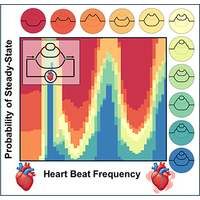
Hierarchical Loop Stabilization in Periodically Driven Elastic Networks

Purba Chatterjee and Eleni Katifori

PRX Life 4, 013006 (2026) - Published 13 January, 2026

Resonant frequencies prioritize multi-looped structures or higher-level loops close to the driving source, while the network is prone to vessel shunting away from resonances — underscoring the importance of short-term pulsatility on long-term structures in adapting, periodically driven elastic flow networks like mammalian vasculature.

Cell Rearrangement Progression Along the Apical-Basal Axis is Linked with 3D Epithelial Tissue Structure

Erika M. Kusaka, Sassan Ostvar, Xiaoyun Liu, Xun Wang, Tianyi Liu, and Karen E. Kasza

PRX Life 4, 013005 (2026) - Published 12 January, 2026

By studying three dimensional cell shapes and tissue structure in the developing fruit fly embryo, this study uncovers how epithelial cells exchange neighbors over their full apical-basal span during convergent extension — revealing new insights into the structure & dynamics of remodeling epithelia.

Chemotaxis-Driven Instabilities Govern Size, Shape and Migration Efficiency of Multicellular Clusters

Monika Sanoria, Gema Malet-Engra, Giorgio Scita, Nir Gov, and Ajay Gopinathan

PRX Life 4, 013004 (2026) - Published 9 January, 2026

Multicellular clusters remain fluid and move together in low chemoattractant gradients, while above a threshold gradient clusters become unstable due to local, cluster-shape dependent velocity differentials that cause them to eventually break apart.

Weak Transcription Factor Clustering at Binding Sites can Facilitate Information Transfer from Molecular Signals

Tamara Mijatović, Aimée R. Kok, Merlijn Brüggen, Jos W. Zwanikken, and Marianne Bauer

PRX Life 4, 013003 (2026) - Published 8 January, 2026

By analyzing bicoid regulation in the fruit fly embryo, this study shows that weak clustering of transcription factors can enable maximal transfer of information from molecular signals to downstream gene expression, and that timescales are crucial for determining the optimal clustering strength.

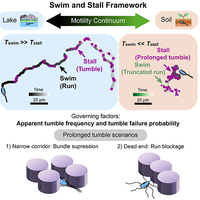
Bacterial Motility Patterns Vary Smoothly with Spatial Confinement and Disorder

Haibei Zhang, Miles T. Wetherington, Hungtang Ko, Cody E. FitzGerald, Leone V. Luzzatto, István A. Kovács, Edwin M. Munro, and Jasmine A. Nirody

PRX Life 4, 013002 (2026) - Published 6 January, 2026

A study of bacterial movement across a range of both unconfined and highly confined environments establishes a quantitative link between behavioral rules and environmental context and reveals how E. coli can navigate complex habitats.

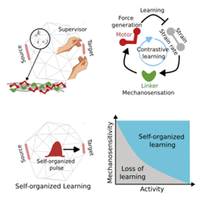
Learning via Mechanosensitivity and Activity in Cytoskeletal Networks

Deb S. Banerjee, Martin J. Falk, Margaret L. Gardel, Aleksandra M. Walczak, Thierry Mora, and Suriyanarayanan Vaikuntanathan

PRX Life 4, 013001 (2026) - Published 5 January, 2026

A cytoskeleton-inspired mechanical network with mechanosensitive proteins and motors performs contrastive learning from environmental cues via strain-rate dependent reactions and active forces, while maintaining learned responses despite continuous molecular turnover.

Erratum: Uncovering universal characteristics of homing paths using foraging robots [PRX Life 2, 033007 (2024)]

Somnath Paramanick, Arup Biswas, Harsh Soni, Arnab Pal, and Nitin Kumar

PRX Life 3, 049901 (2025) - Published 24 December, 2025

Noninvasive, Label-Free Imaging of Freely Moving C. elegans Nematodes

Rongbiao Tang, Feixiang Wang, Ke Li, and Yanan Fu

PRX Life 3, 043019 (2025) - Published 17 December, 2025

By combining ultrafast phase-contrast X-ray imaging and phase-contrast computed tomography imaging, this study details a way to simultaneously visualize nematode locomotion and obtain precise, whole-organism morphometric measurements.

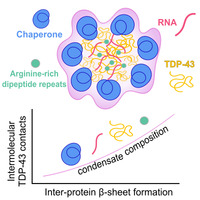
Compositional Control of Aging Kinetics in TDP-43 Condensates

Nuria H. Espejo, Alejandro Feito, Ignacio Sanchez-Burgos, Adiran Garaizar, Maria M. Conde, Antonio Rey, Eduardo Pedraza, Alejandro Castro, Rosana Collepardo-Guevara, Andres R. Tejedor, and Jorge R. Espinosa

PRX Life 3, 043018 (2025) - Published 11 December, 2025

While arginine-rich peptides accelerate the nucleation of inter-protein beta-sheet structures in TDP-43, RNA and HSP70 slow their emergence — revealing the importance of client biomolecules in the stability and aging kinetics of RNA binding proteins.

Energy Injection in an Epithelial Cell Monolayer Indicated by Negative Viscosity

Molly McCord and Jacob Notbohm

PRX Life 3, 043017 (2025) - Published 4 December, 2025

Negative effective viscosity in epithelial monolayers marks regions wherein cells expend more metabolic energy and move faster, hence quantifying the flow of energy in tissues.

Single Cells Can Resolve Graded Stimuli

Mirna Kramar, Lauritz Hahn, Aleksandra M. Walczak, Thierry Mora, and Mathieu Coppey

PRX Life 3, 043016 (2025) - Published 2 December, 2025

By quantifying the information transmitted from receptor to ERK, the study shows that individual cells can resolve graded stimuli, transmitting over 2 bits of information even with brief, sparse inputs.

3D Agent-Based Modeling without Chemical Signaling Recreates Collective Behaviors seen in Myxococcus xanthus Colonies

Katherine Copenhagen, Matthew Black, and Joshua W. Shaevitz

PRX Life 3, 043015 (2025) - Published 1 December, 2025

Motility changes during starvation preserve nematic order but intensify defect-driven flows, promoting aggregation in Myxococcus xanthus.

Physical Confinement Regulates Transitions in Nematode Motility

M Sreepadmanabh, Saheli Dey, Sayan Kundu, Ashitha B. Arun, Sandhya P. Koushika, Shashi Thutupalli, Duncan Hewitt, and Tapomoy Bhattacharjee

PRX Life 3, 043014 (2025) - Published 24 November, 2025

Within viscoelastic 3D granular matrices, C. elegans transition from inefficient thrashing under low confinement to efficient crawling under high confinement - a response dictated by the worm’s physical interaction with its environment, without involving soft-touch mechanosensation.

Stabilization of Active Tissue Deformation by a Dynamic Signaling Gradient

Muhamet Ibrahimi and Matthias Merkel

PRX Life 3, 043013 (2025) - Published 19 November, 2025

Oriented tissue deformation (convergent extension) is unstable when signaling-gradient-controlled active stresses contract the tissue along the gradient direction, even for large diffusion, but it can be stable when active stresses extend the tissue in gradient direction.

Cellular Flow Architecture Exposes the Hidden Mechanics of Biological Matter

Tianxiang Ma, Valeriia Grudtsyna, Robin V. Bölsterli, and Amin Doostmohammadi

PRX Life 3, 043012 (2025) - Published 18 November, 2025

Lagrangian coherent structures precede and drive long-term intercellular stress reorganization and are physically governed by the mechanical properties of intercellular junctions — revealing how cell motion can be used to infer biomechanical metrics.

Generic Temperature Response of Large Biochemical Networks

Julian B. Voits and Ulrich S. Schwarz

PRX Life 3, 043011 (2025) - Published 13 November, 2025

Combining concepts from stochastic dynamics, statistical physics and graph theory, a new theoretical study shows that large biochemical networks should have a quadratic Arrhenius plot, as seen in developmental processes.

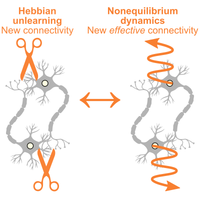
Connection between Hebbian Unlearning and Steady States Generated by Nonequilibrium Dynamics

Agnish Kumar Behera, Matthew Du, Uday K. Jagadisan, Srikanth Sastry, Madan Rao, and Suriyanarayanan Vaikuntanathan

PRX Life 3, 043010 (2025) - Published 12 November, 2025

Active persistent dynamics are shown to mimic some aspects of Hebbian unlearning — suggesting that nonequilibrium dynamics can provide an alternative way to improve associative recall in neural network models.

Morphogen Patterning in Dynamic Tissues

Alex M. Plum and Mattia Serra

PRX Life 3, 043009 (2025) - Published 6 November, 2025

A mathematical framework reveals how morphogenesis mediates morphogen transport and compartmentalization, formalizes cell-cell interaction ranges in dynamic tissues, and provides new nondimensional numbers to assess when tissue deformation affects patterning.

Cell Divisions Imprint Long Lasting Elastic Strain Fields in Epithelial Tissues

Ali Tahaei, Romina Piscitello-Gómez, S. Suganthan, Greta Cwikla, Jana F. Fuhrmann, Natalie A. Dye, and Marko Popović

PRX Life 3, 043008 (2025) - Published 5 November, 2025

Inferring division-induced force dipoles from tissue strain fields quantifies mechanical forces of cell division and their impact on tissue mechanics.

Quantum Computing for Genomics: Conceptual Challenges and Practical Perspectives

Aurora Maurizio and Guglielmo Mazzola

PRX Life 3, 047001 (2025) - Published 30 October, 2025

This review article on quantum computing applications in genomics highlights its realistic potential for the field, theoretical limitations, and the conditions that a problem and an algorithm must satisfy to benefit from quantum speedup.

Sign In to Your Journals Account

Filter

Recent Issues

Vol. 4, Iss. 4
October - December 2026
Vol. 4, Iss. 3
July - September 2026
Vol. 4, Iss. 2
April - June 2026
Vol. 4, Iss. 1
January - March 2026
Category
Article Type

Filter

Article Lookup

Enter a citation