Browse by Subject

Normal State of Nd1−xSrxNiO2 from Self-Consistent GW+EDMFT

Francesco Petocchi, Viktor Christiansson, Fredrik Nilsson, Ferdi Aryasetiawan, and Philipp Werner

Phys. Rev. X 10, 041047 (2020) - Published 8 December, 2020

New calculations settle a debate about the importance of single-orbital versus multiorbital models in describing the electronic structure of recently discovered nickel oxide superconductors.

Fundamental Thermal Noise Limits for Optical Microcavities

Christopher Panuski, Dirk Englund, and Ryan Hamerly

Phys. Rev. X 10, 041046 (2020) - Published 7 December, 2020

Noise from temperature fluctuations may limit the performance of small optical cavities in quantum computing applications.

Quantifying Rate- and Temperature-Dependent Molecular Damage in Elastomer Fracture

Juliette Slootman, Victoria Waltz, C. Joshua Yeh, Christoph Baumann, Robert Göstl, Jean Comtet, and Costantino Creton

Phys. Rev. X 10, 041045 (2020) - Published 4 December, 2020

Experiments with mechano-fluorescent molecules reveal that the number of broken bonds needed to grow a crack in rubbery elastomers depends strongly on molecular friction, which could aid the design of fracture-resistant materials.

Modeling the Influence of Data Structure on Learning in Neural Networks: The Hidden Manifold Model

Sebastian Goldt, Marc Mézard, Florent Krzakala, and Lenka Zdeborová

Phys. Rev. X 10, 041044 (2020) - Published 3 December, 2020

A new model for analyzing structured datasets can provide insights into how data structure impacts machine learning in deep neural networks.

Coupled Cluster Theory for Molecular Polaritons: Changing Ground and Excited States

Tor S. Haugland, Enrico Ronca, Eirik F. Kjønstad, Angel Rubio, and Henrik Koch

Phys. Rev. X 10, 041043 (2020) - Published 2 December, 2020

Predicting interactions between molecules and photons is now possible with a new model that combines quantum electrodynamics and a widely used formalism from quantum chemistry.

Public Discourse and Social Network Echo Chambers Driven by Socio-Cognitive Biases

Xin Wang, Antonio D. Sirianni, Shaoting Tang, Zhiming Zheng, and Feng Fu

Phys. Rev. X 10, 041042 (2020) - Published 1 December, 2020

Social media interactions with friends and political campaigns can lead to the emergence of polarized echo chambers of thought.

Low-Frequency Divergence and Quantum Geometry of the Bulk Photovoltaic Effect in Topological Semimetals

Junyeong Ahn, Guang-Yu Guo, and Naoto Nagaosa

Phys. Rev. X 10, 041041 (2020) - Published 30 November, 2020

High photocurrent generated by terahertz radiation impinging on topological semimetals derives from profound quantum-mechanical properties of these materials.

Two-Dimensional Quantum-Link Lattice Quantum Electrodynamics at Finite Density

Timo Felser, Pietro Silvi, Mario Collura, and Simone Montangero

Phys. Rev. X 10, 041040 (2020) - Published 25 November, 2020

Using a tree tensor network, a data structure developed to study many-body quantum systems on a lattice, a new analysis provides a tractable description of low-energy behavior of 2D quantum electrodynamics including matter.

Optical Preparation and Coherent Control of Ultrafast Nonlinear Quantum Superpositions in Exciton Gases: A Case Study for Atomically Thin Semiconductors

Florian Katsch and Andreas Knorr

Phys. Rev. X 10, 041039 (2020) - Published 24 November, 2020

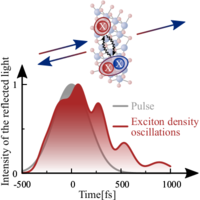
Microscopic simulations demonstrate how to optically prepare and coherently control temporal oscillations due to quantum superpositions in a gas of excitons (bound electron-hole pairs).

What Limits the Simulation of Quantum Computers?

Yiqing Zhou, E. Miles Stoudenmire, and Xavier Waintal

Phys. Rev. X 10, 041038 (2020) - Published 23 November, 2020

Classical computers can efficiently simulate the behavior of quantum computers if the quantum computer is imperfect enough.

Large-Scale Optical Reservoir Computing for Spatiotemporal Chaotic Systems Prediction

Mushegh Rafayelyan, Jonathan Dong, Yongqi Tan, Florent Krzakala, and Sylvain Gigan

Phys. Rev. X 10, 041037 (2020) - Published 20 November, 2020

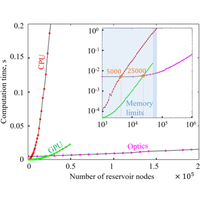
Experiments show that an optical approach to neural network implementation can solve complex problems in predicting large chaotic systems, a promising step in the quest to scale up artificial neural networks.

Phase-Space Geometry of Mass-Conserving Reaction-Diffusion Dynamics

Fridtjof Brauns, Jacob Halatek, and Erwin Frey

Phys. Rev. X 10, 041036 (2020) - Published 19 November, 2020

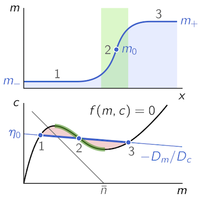
A new theoretical framework for describing the dynamics of proteins diffusing and interacting in cells provides a way to understand the emergence of self-organized patterns that control cell and tissue functions.

Robustness of Noether’s Principle: Maximal Disconnects between Conservation Laws and Symmetries in Quantum Theory

Cristina Cîrstoiu, Kamil Korzekwa, and David Jennings

Phys. Rev. X 10, 041035 (2020) - Published 18 November, 2020

A new analysis explores to what extent Noether’s theorem—relating conservation laws to symmetries—holds in open quantum systems and how it relates to physically impossible processes.

Editorial: Promoting Inclusive and Respectful Communications

Michael Thoennessen

Phys. Rev. X 10, 040001 (2020) - Published 18 November, 2020

Unified Approach to Enhanced Sampling

Michele Invernizzi, Pablo M. Piaggi, and Michele Parrinello

Phys. Rev. X 10, 041034 (2020) - Published 17 November, 2020

A new approach to atomic simulations combines two families of enhanced sampling to create a simpler protocol that leads to computations that are more robust and reliable.

Modeling COVID-19 Dynamics in Illinois under Nonpharmaceutical Interventions

George N. Wong, Zachary J. Weiner, Alexei V. Tkachenko, Ahmed Elbanna, Sergei Maslov, and Nigel Goldenfeld

Phys. Rev. X 10, 041033 (2020) - Published 16 November, 2020

A new model helps clarify the limits of pandemic predictions, which are notoriously difficult for the near future and impossible for longer timescales.

Concentration Dependence of Diffusion-Limited Reaction Rates and Its Consequences

Sumantra Sarkar

Phys. Rev. X 10, 041032 (2020) - Published 13 November, 2020

Simulations show that molecular diffusion on 2D biological surfaces can lead to reaction rates that depend nontrivially on concentrations, an insight with profound impacts on the stability of certain biomolecular systems.

Oxidation States, Thouless’ Pumps, and Nontrivial Ionic Transport in Nonstoichiometric Electrolytes

Paolo Pegolo, Federico Grasselli, and Stefano Baroni

Phys. Rev. X 10, 041031 (2020) - Published 12 November, 2020

The unusual properties of systems intermediate between normal metals and ionic conductors relate to topological features of the electronic ground state, leading to new insights into anomalous charge transport in electrolytes.

Effective Compression of Quantum Braided Circuits Aided by ZX-Calculus

Michael Hanks, Marta P. Estarellas, William J. Munro, and Kae Nemoto

Phys. Rev. X 10, 041030 (2020) - Published 11 November, 2020

A new method for compression of quantum computing algorithms, based on ZX-calculus, greatly reduces the resources required to realize fault-tolerant quantum circuits.

High-Throughput Study of Lattice Thermal Conductivity in Binary Rocksalt and Zinc Blende Compounds Including Higher-Order Anharmonicity

Yi Xia, Vinay I. Hegde, Koushik Pal, Xia Hua, Dale Gaines, Shane Patel, Jiangang He, Muratahan Aykol, and Chris Wolverton

Phys. Rev. X 10, 041029 (2020) - Published 10 November, 2020

Calculations of heat transfer properties in 37 binary cubic compounds pave the way for better thermal management design in microelectronics and energy-conversion devices.

Sign In to Your Journals Account

Filter

Subject

Filter

Article Lookup

Enter a citation