Browse by Subject

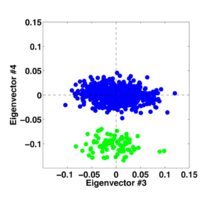
Superposition Enhanced Nested Sampling

Stefano Martiniani, Jacob D. Stevenson, David J. Wales, and Daan Frenkel

Phys. Rev. X 4, 031034 (2014) - Published 29 August, 2014

Sampling complex phase spaces is a challenge in the fields of astronomy, physics, and biology, among others. Researchers develop a new sampling technique based on nested sampling and global optimization that has far-reaching applications.

Orbital Ferromagnetism in Interacting Few-Electron Dots with Strong Spin-Orbit Coupling

Amin Naseri, Alex Zazunov, and Reinhold Egger

Phys. Rev. X 4, 031033 (2014) - Published 29 August, 2014

Investigations of quantum dots yield information about the properties of semiconductors on the smallest scales. Researchers show that quantum dots can exhibit an orbital ferromagnet phase due to the interplay of strong Rashba spin-orbit coupling and Coulomb interactions.

Feynman-Hellmann Theorem and Signal Identification from Sample Covariance Matrices

Lucy J. Colwell, Yu Qin, Miriam Huntley, Alexander Manta, and Michael P. Brenner

Phys. Rev. X 4, 031032 (2014) - Published 27 August, 2014

Stock prices, weather patterns, and gene expressions are examples of systems controlled by a large number of variables. Researchers show that determining which variables are correlated may be more complex that adopting the results of principal correlation analysis.

Light Guiding by Effective Gauge Field for Photons

Qian Lin and Shanhui Fan

Phys. Rev. X 4, 031031 (2014) - Published 22 August, 2014

Integrated photonics rely on optical waveguides in which light is confined to a core. Researchers theorize about a gauge-field waveguide that achieves single-mode, one-way guiding.

Boron-Proton Nuclear-Fusion Enhancement Induced in Boron-Doped Silicon Targets by Low-Contrast Pulsed Laser

A. Picciotto, D. Margarone, A. Velyhan, P. Bellutti, J. Krasa, A. Szydlowsky, G. Bertuccio, Y. Shi, A. Mangione, J. Prokupek, A. Malinowska, E. Krousky, J. Ullschmied, L. Laska, M. Kucharik, and G. Korn

Phys. Rev. X 4, 031030 (2014) - Published 19 August, 2014

Nuclear reactions that produce alpha particles have been studied for decades, but new experiments yield higher fluxes of alpha particles using only moderate-power lasers.

Assessing the Nonequilibrium Thermodynamics in a Quenched Quantum Many-Body System via Single Projective Measurements

L. Fusco, S. Pigeon, T. J. G. Apollaro, A. Xuereb, L. Mazzola, M. Campisi, A. Ferraro, M. Paternostro, and G. De Chiara

Phys. Rev. X 4, 031029 (2014) - Published 19 August, 2014

Nonequilibrium thermodynamics is relatively common in a range of scientific fields. Scientists show that observations of nonequilibrium thermodynamics can yield predictions of quantum many-body systems.

Prediction and Experimental Evidence for Thermodynamically Stable Charged Orbital Domain Walls

Qing’an Li, K. E. Gray, S. B. Wilkins, M. Garcia Fernandez, S. Rosenkranz, H. Zheng, and J. F. Mitchell

Phys. Rev. X 4, 031028 (2014) - Published 18 August, 2014

New theoretical calculations confirm the known thermodynamic stability of orbital domains in transition metal oxides, but only if there is charge transfer from the bulk domains onto their boundaries. In stark contrast, an external field is required to stabilize most domain structures commonly seen.

Periodically Driven Quantum Systems: Effective Hamiltonians and Engineered Gauge Fields

N. Goldman and J. Dalibard

Phys. Rev. X 4, 031027 (2014) - Published 18 August, 2014

Topological effects can result from a material’s intrinsic properties, or can be generated by external electromagnetic fields or mechanical deformations. Researchers analyze how driven quantum systems can lead to new topological states of matter.

Universal Borromean Binding in Spin-Orbit-Coupled Ultracold Fermi Gases

Xiaoling Cui and Wei Yi

Phys. Rev. X 4, 031026 (2014) - Published 13 August, 2014

Borromean binding describes the case in which three objects are more favorably bound than two. Scientists calculate that Borromean binding occurs in ultracold Fermi gases with synthetic spin-orbit coupling, which is universal against short-range details of interaction potentials.

Photonic Crystal Architecture for Room-Temperature Equilibrium Bose-Einstein Condensation of Exciton Polaritons

Jian-Hua Jiang and Sajeev John

Phys. Rev. X 4, 031025 (2014) - Published 13 August, 2014

Bose-Einstein condensates have previously been shown to exist at cryogenic temperatures. New results reveal that a microcavity based on CdTe can yield room-temperature, equilibrium Bose-Einstein condensation.

Focal Molography: Coherent Microscopic Detection of Biomolecular Interaction

Christof Fattinger

Phys. Rev. X 4, 031024 (2014) - Published 11 August, 2014

Noncovalent biospecific interactions between macromolecules play a crucial role in biology. The ability to detect them in real time is key for the understanding of biology at the molecular level and also for the development of diagnostic tests.

Exploration for Two-Dimensional Electrides via Database Screening and Ab Initio Calculation

Takeshi Inoshita, Sehoon Jeong, Noriaki Hamada, and Hideo Hosono

Phys. Rev. X 4, 031023 (2014) - Published 4 August, 2014

Electrides have valence electrons that occupy the space between ions. Researchers discover six new two-dimensional electrides that may play important roles in condensed matter magnetism.

Photonic Architecture for Scalable Quantum Information Processing in Diamond

Kae Nemoto, Michael Trupke, Simon J. Devitt, Ashley M. Stephens, Burkhard Scharfenberger, Kathrin Buczak, Tobias Nöbauer, Mark S. Everitt, Jörg Schmiedmayer, and William J. Munro

Phys. Rev. X 4, 031022 (2014) - Published 4 August, 2014

Building a quantum computer has long been thought to require futuristic technologies. New calculations reveal that physical qubits can be assembled that are scalable and function at the readily accessible temperature of 4 K.

Subdiffraction Focusing Enabled by a Fano Resonance

Shuwen Chen, Shilong Jin, and Reuven Gordon

Phys. Rev. X 4, 031021 (2014) - Published 1 August, 2014

Focusing beyond the diffraction limit can be achieved using radiationless electromagnetic interference. Now, simulations demonstrate this technique’s ability to visually image cells and look for defects inside of semiconductors.

Efimov Trimers under Strong Confinement

Jesper Levinsen, Pietro Massignan, and Meera M. Parish

Phys. Rev. X 4, 031020 (2014) - Published 31 July, 2014

Confined ultracold gases exhibit a baffling property: restricting the motion of the atoms causes fewer clusters to form, not more. Researchers theoretically show that strong confinement can be used to engineer more stable structures.

Locality of Temperature

M. Kliesch, C. Gogolin, M. J. Kastoryano, A. Riera, and J. Eisert

Phys. Rev. X 4, 031019 (2014) - Published 31 July, 2014

Measuring temperature on very small scales is a difficult task and it is not clear if temperature as a local property is even meaningful at such scales. New mathematical tools show that an intensive definition of temperature is possible whenever the global temperature is above a critical value.

Nonmetallic Low-Temperature Normal State of K0.7Fe1.46Se1.85Te0.15

Kefeng Wang (王克锋), Hyejin Ryu, Erik Kampert, M. Uhlarz, J. Warren, J. Wosnitza, and C. Petrovic

Phys. Rev. X 4, 031018 (2014) - Published 30 July, 2014

High-temperature superconductors can exhibit normal states below the critical temperature Tc in the presence of large magnetic fields. New results reveal than an iron-based superconductor undergoes a superconductor-insulator transition as Tc approaches zero.

Amperean Pairing and the Pseudogap Phase of Cuprate Superconductors

Patrick A. Lee

Phys. Rev. X 4, 031017 (2014) - Published 29 July, 2014

Cuprates exhibit high-temperature superconductivity, but many of their properties above the transition temperature remain mysterious. Scientists propose that a different kind of fluctuating superconductivity is responsible for these strange properties.

Quasi-Free-Standing Graphene Monolayer on a Ni Crystal through Spontaneous Na Intercalation

Young S. Park, Jae H. Park, Han N. Hwang, Tomba Singh Laishram, Kwang S. Kim, Myung H. Kang, and Chan C. Hwang

Phys. Rev. X 4, 031016 (2014) - Published 29 July, 2014

Graphene promises to be a revolutionary component of upcoming electronic devices. New calculations and experiments reveal that the electronic structure of graphene can be recovered even when the graphene is grown on a metal substrate.

Thermodynamics with Continuous Information Flow

Jordan M. Horowitz and Massimiliano Esposito

Phys. Rev. X 4, 031015 (2014) - Published 28 July, 2014

Information manipulation such as copying and erasing has associated thermodynamic implications. Scientists develop a unified framework describing the thermodynamics of information processing, suggesting that their analyses might be useful for biological sensing.

Sign In to Your Journals Account

Filter

Subject

Filter

Article Lookup

Enter a citation