Randall D. Kamien and Daniel Ucko
Phys. Rev. X 14, 020001 (2024) - Published 21 May, 2024
David G. Clark and L. F. Abbott
Phys. Rev. X 14, 021001 (2024) - Published 1 April, 2024
A new theoretical framework for plastic neural networks predicts dynamical regimes where synapses rather than neurons primarily drive the network’s behavior, leading to an alternative candidate mechanism for working memory in the brain.
Yishu Zhou, Freek Ruesink, Shai Gertler, Haotian Cheng, Margaret Pavlovich, Eric Kittlaus, Andrew L. Starbuck, Andrew J. Leenheer, Andrew T. Pomerene, Douglas C. Trotter, Christina Dallo, Katherine M. Musick, Eduardo Garcia, Robert Reyna, Andrew L. Holterhoff, Michael Gehl, Ashok Kodigala, John Bowers, Matt Eichenfield, Nils T. Otterstrom, Anthony L. Lentine, and Peter Rakich
Phys. Rev. X 14, 021002 (2024) - Published 2 April, 2024
A novel form of optical nonreciprocal dissipation engineering marks a milestone in the long-standing challenge of building practical on-chip isolators for photonic integrated circuits.
Pan-Yu Hou, Jenny J. Wu, Stephen D. Erickson, Giorgio Zarantonello, Adam D. Brandt, Daniel C. Cole, Andrew C. Wilson, Daniel H. Slichter, and Dietrich Leibfried
Phys. Rev. X 14, 021003 (2024) - Published 2 April, 2024
Certain motional modes in trapped-ion crystals are hard to cool. A technique to do so indirectly involves transferring motional quanta from these modes to ones that cool more efficiently.
Florian M. Gartner and Erwin Frey
Phys. Rev. X 14, 021004 (2024) - Published 3 April, 2024
A theoretical study of self-assembly finds that hexagon-shaped building blocks can form large structures faster than triangular or square blocks.
Thomas A. Callister and Will M. Farr
Phys. Rev. X 14, 021005 (2024) - Published 8 April, 2024
A new model describes the population of black hole binaries without assumptions on the shape of their distribution—a capability that could boost the discovery potential of gravitational-wave observations.
Giorgio Nicoletti and Daniel Maria Busiello
Phys. Rev. X 14, 021007 (2024) - Published 8 April, 2024
A novel theoretical framework unravels how processes in complex systems that occur at different timescales are coupled together at the functional level by sharing information.
Ilya Kull, Norbert Schuch, Ben Dive, and Miguel Navascués
Phys. Rev. X 14, 021008 (2024) - Published 9 April, 2024
A method of obtaining precise lower bounds on the minimum energy for quantum many-body systems with local interactions can be applied to a wide range of problems in quantum many-body physics.
Yicheng Qiang, Chengjie Luo, and David Zwicker
Phys. Rev. X 14, 021009 (2024) - Published 12 April, 2024
Standard descriptions of phase separation in elastic systems fail to explain structural patterns that emerge. A new theory based on nonlocal elasticity successfully does so.
Alexander Wietek, Sylvain Capponi, and Andreas M. Läuchli
Phys. Rev. X 14, 021010 (2024) - Published 15 April, 2024
A numerical investigation has revealed a surprising correspondence between a lattice spin model and a quantum field theory.
Hong-Yi Wang, Fei Song, and Zhong Wang
Phys. Rev. X 14, 021011 (2024) - Published 16 April, 2024
A new formulation of non-Hermitian band theory is applicable to any number of spatial dimensions, a development useful for the study of physical effects exclusive to open systems.
Rinsuke Yamada, Takuya Nomoto, Atsushi Miyake, Toshihiro Terakawa, Akiko Kikkawa, Ryotaro Arita, Masashi Tokunaga, Yasujiro Taguchi, Yoshinori Tokura, and Max Hirschberger
Phys. Rev. X 14, 021012 (2024) - Published 16 April, 2024
A new mechanism to enhance the Nernst effect—wherein heat flow in a solid is converted to voltage—via magnetic fluctuations may lead to new applications in energy-harvesting devices.
Clemens Kuhlenkamp, Wilhelm Kadow, Ataç Imamoğlu, and Michael Knap
Phys. Rev. X 14, 021013 (2024) - Published 19 April, 2024
Spin liquids are intrinsically difficult to prepare, observe, and characterize, but carefully designed multilayer structures in 2D materials may overcome these obstacles.
Fridtjof Brauns and M. Cristina Marchetti
Phys. Rev. X 14, 021014 (2024) - Published 19 April, 2024
A minimal model describes the emergence of traveling and oscillating states, unifying a broad range of multicomponent systems where effective interactions violate Newton’s third law.
Maurizio Fagotti
Phys. Rev. X 14, 021015 (2024) - Published 23 April, 2024
A quantum spin-1/2 chain model with kinetic constraints that trigger jamming of its quasiparticles reveals a potential way to explore quantum properties in some systems on a macroscopic scale.
Dushko Kuzmanovski, Jonathan Schmidt, Nicola A. Spaldin, Henrik M. Rønnow, Gabriel Aeppli, and Alexander V. Balatsky
Phys. Rev. X 14, 021016 (2024) - Published 23 April, 2024
Using the electric field of a laser pulse to rapidly shake the atoms in a material can stabilize a ferroelectric state, a proposal that extends the concept of “Kapitza engineering” to quantum critical points.
Unai Muniain, Ruben Esteban, Javier Aizpurua, and Jean-Jacques Greffet
Phys. Rev. X 14, 021017 (2024) - Published 24 April, 2024
An extended theory of electrical transport illuminates how light is emitted when an electrical current flows through a metal-insulator-metal tunneling junction.
Sheng Zhang, Jixuan Shi, Zhaibin Cui, Ye Wang, Yukai Wu, Luming Duan, and Yunfei Pu
Phys. Rev. X 14, 021018 (2024) - Published 25 April, 2024
A new quantum memory, based on a neutral-atom cloud, demonstrates the ability to manipulate a large stream of optical qubits and to support key applications essential to future, large-scale quantum networks.
A. Marquet, A. Essig, J. Cohen, N. Cottet, A. Murani, E. Albertinale, S. Dupouy, A. Bienfait, T. Peronnin, S. Jezouin, R. Lescanne, and B. Huard
Phys. Rev. X 14, 021019 (2024) - Published 26 April, 2024
Cat qubits—a promising route for quantum error correction—can be stabilized with engineered dissipation. A method for increasing the dissipation rate shows greater resiliency of such a qubit to bit-flip errors.
M. Ferraro, F. Mangini, F. O. Wu, M. Zitelli, D. N. Christodoulides, and S. Wabnitz
Phys. Rev. X 14, 021020 (2024) - Published 29 April, 2024
Calorimetry experiments with optical beams in multimode fibers reveal that “heat” flows only from a hotter photon gas to a colder one, showing that nonlinear beam propagation respects the second law of thermodynamics.
Ljiljana Stojanović, Jack Coker, Samuele Giannini, Giacomo Londi, Anders S. Gertsen, Jens Wenzel Andreasen, Jun Yan, Gabriele D’Avino, David Beljonne, Jenny Nelson, and Jochen Blumberger
Phys. Rev. X 14, 021021 (2024) - Published 29 April, 2024
In organic semiconductors, charge carriers may form delocalized or localized quasiparticles depending on molecular properties and environmental effects. Here, it is shown how structural and electrostatic disorder induce localization.
Ludovico Lami, Julen S. Pedernales, and Martin B. Plenio
Phys. Rev. X 14, 021022 (2024) - Published 1 May, 2024
A proposed experiment could bring scientists closer to answering the long-standing question of whether gravity is a classical or a quantum phenomenon.
Yao Luo, Dhruv Desai, Benjamin K. Chang, Jinsoo Park, and Marco Bernardi
Phys. Rev. X 14, 021023 (2024) - Published 1 May, 2024
Describing electron-phonon interactions from first principles requires matrices with billions of entries. A method to compress the matrices accelerates calculations by 2 orders of magnitude while preserving accuracy.
C. Hölzl, A. Götzelmann, E. Pultinevicius, M. Wirth, and F. Meinert
Phys. Rev. X 14, 021024 (2024) - Published 3 May, 2024
Researchers record the longest Rydberg-atom lifetime by placing strontium atoms in “circular” states, where the outer electrons move in planet-like orbits.
Jun Ge, Pinyuan Wang, Ying Xing, Qiangwei Yin, Anqi Wang, Jie Shen, Hechang Lei, Ziqiang Wang, and Jian Wang
Phys. Rev. X 14, 021025 (2024) - Published 13 May, 2024
In its superconducting state, an exotic metal harbors charge carriers that appear to have 4 and 6 times the charge of a single electron, suggesting the formation of Cooper-pair “molecules.”
Gonzalo Manzano, Gülce Kardeş, Édgar Roldán, and David H. Wolpert
Phys. Rev. X 14, 021026 (2024) - Published 13 May, 2024
A new framework provides the key ingredients for understanding the fundamental relationship between a computational task with an uncertain run-time and the energetic resources needed to implement it.
Edward Y. X. Ong, Anna R. Barth, Navneet Singh, Meera Ramaswamy, Abhishek Shetty, Bulbul Chakraborty, James P. Sethna, and Itai Cohen
Phys. Rev. X 14, 021027 (2024) - Published 14 May, 2024
Solids sometimes retain a memory of their processing history, thus altering their bulk properties. New experiments demonstrate how to exploit this behavior in flowing systems.
Andrew Lingenfelter, Mingxing Yao, Andrew Pocklington, Yu-Xin Wang (王语馨), Abdullah Irfan, Wolfgang Pfaff, and Aashish A. Clerk
Phys. Rev. X 14, 021028 (2024) - Published 20 May, 2024
Exact solutions for the steady state of two spin-chain models provides an experimentally friendly scheme for efficiently stabilizing large entangled states between remote systems.
T. Mendes-Santos, M. Schmitt, A. Angelone, A. Rodriguez, P. Scholl, H. J. Williams, D. Barredo, T. Lahaye, A. Browaeys, M. Heyl, and M. Dalmonte
Phys. Rev. X 14, 021029 (2024) - Published 21 May, 2024
A network-theory-based framework for describing quantum mechanical wave functions enables the discovery of a very deep inner structure—that of a scale-free network.
Wan Tong Lou, Halvard Sutterud, Gino Cassella, W. M. C. Foulkes, Johannes Knolle, David Pfau, and James S. Spencer
Phys. Rev. X 14, 021030 (2024) - Published 22 May, 2024
Modifications to the fermionic neural network allow it to tackle studies of a unitary Fermi gas with unrivaled accuracy, suggesting the architecture can also be used to study other strongly correlated systems such as exotic superfluids and superconductors.
Simon Yves, Emanuele Galiffi, Xiang Ni, Enrico M. Renzi, and Andrea Alù
Phys. Rev. X 14, 021031 (2024) - Published 24 May, 2024
A combination of twistronics, hyperbolic shear phenomena, and metasurface concepts provides a powerful tool for reconfiguring and steering the propagation of hyperbolic waves.
Sarah A. M. Loos, Samuel Monter, Felix Ginot, and Clemens Bechinger
Phys. Rev. X 14, 021032 (2024) - Published 24 May, 2024
Researchers discovered a trick for dragging an object in a fluid with minimal effort.
Sophie F. Weber, Andrea Urru, Sayantika Bhowal, Claude Ederer, and Nicola A. Spaldin
Phys. Rev. X 14, 021033 (2024) - Published 28 May, 2024
Group theory and first-principles calculations combine to predict which antiferromagnets have potentially useful net surface magnetization.
Shankar Balasubramanian, Sarang Gopalakrishnan, Alexey Khudorozhkov, and Ethan Lake
Phys. Rev. X 14, 021034 (2024) - Published 29 May, 2024
New connections between constrained systems and computational complexity theory provide insights into how constraints impact thermalization.
S. Popa, S. Schaller, A. Fielicke, J. Lim, B. G. Sartakov, M. R. Tarbutt, and G. Meijer
Phys. Rev. X 14, 021035 (2024) - Published 30 May, 2024
Characterization of ” hole states” in the molecule YbF provides information needed for trapping such molecules, which in turn can be used for tests of physics beyond the standard model.
Anton Bochkarev, Yury Lysogorskiy, and Ralf Drautz
Phys. Rev. X 14, 021036 (2024) - Published 3 June, 2024
Machine-learned interatomic potentials (MLIPs) are already a powerful tool for simulating atomic interactions. Including basis functions on graphs makes MLIPs physically and chemically transparent and even more accurate and efficient.
Andreas Morr and Niklas Boers
Phys. Rev. X 14, 021037 (2024) - Published 4 June, 2024
Statistical properties of fluctuations of certain parameters describing a complex system can reveal when that system is approaching a tipping point.
Josefine Enkner, Lorenzo Graziotto, Felice Appugliese, Vasil Rokaj, Jie Wang, Michael Ruggenthaler, Christian Reichl, Werner Wegscheider, Angel Rubio, and Jérôme Faist
Phys. Rev. X 14, 021038 (2024) - Published 5 June, 2024
An experiment puts limits on how much quantum vacuum fluctuations can alter the quantized Hall resistance in a 2D electron gas under a magnetic field.
Jérôme Garnier-Brun, Michael Benzaquen, and Jean-Philippe Bouchaud
Phys. Rev. X 14, 021039 (2024) - Published 6 June, 2024
Applying the physics of spin glasses to a multiplayer economic game shows that agents never reach collectively optimal strategies even when they learn from past outcomes.
Nathanan Tantivasadakarn, Ryan Thorngren, Ashvin Vishwanath, and Ruben Verresen
Phys. Rev. X 14, 021040 (2024) - Published 7 June, 2024
Measuring certain quantum states with short-range entanglement can give rise to long-range entanglement, an insight with direct practical significance for preparing exotic many-body states in quantum devices.
Malte Brammerloh, Renat Sibgatulin, Karl-Heinz Herrmann, Markus Morawski, Tilo Reinert, Carsten Jäger, Roland Müller, Gerald Falkenberg, Dennis Brückner, Kerrin J. Pine, Andreas Deistung, Valerij G. Kiselev, Jürgen R. Reichenbach, Nikolaus Weiskopf, and Evgeniya Kirilina
Phys. Rev. X 14, 021041 (2024) - Published 10 June, 2024
A new technique for measuring the magnetic properties of metals within cells provides a powerful tool for studying how metal accumulation in cells leads to certain diseases.
Xiaoyu Wang and Oskar Vafek
Phys. Rev. X 14, 021042 (2024) - Published 10 June, 2024
The first comprehensive theoretical study of the finite magnetic field phase diagram of twisted bilayer graphene provides an in-depth tool kit for analyzing experimental data on Chern insulating states.
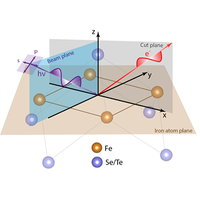
Y.-F. Li, S.-D. Chen, M. García-Díez, M. I. Iraola, H. Pfau, Y.-L. Zhu, Z.-Q. Mao, T. Chen, M. Yi, P.-C. Dai, J. A. Sobota, M. Hashimoto, M. G. Vergniory, D.-H. Lu, and Z.-X. Shen
Phys. Rev. X 14, 021043 (2024) - Published 11 June, 2024
Angle-resolved photoemission spectroscopy of an iron-based superconductor resolves debates about its electronic structure and confirms the existence of topological superconductivity in this material.
Zheng Zhou (周正), Liangdong Hu, W. Zhu, and Yin-Chen He
Phys. Rev. X 14, 021044 (2024) - Published 13 June, 2024
In the study of deconfined quantum critical points, the “fuzzy sphere” can act as a powerful microscope, magnifying and revealing a wealth of crucial information.
Mengyao Du, Huiqian Min, Ke Xia, Dazhi Hou, Lei Wang, and Zhiyong Qiu
Phys. Rev. X 14, 021045 (2024) - Published 14 June, 2024
Observations of spin spatial oscillations reveal a previously hidden behavior of spin transport dynamics and identify a new degree of freedom for manipulating spin current, with potential implications for spintronic devices.
Soumya Sankar, Ruizi Liu, Cheng-Ping Zhang, Qi-Fang Li, Caiyun Chen, Xue-Jian Gao, Jiangchang Zheng, Yi-Hsin Lin, Kun Qian, Ruo-Peng Yu, Xu Zhang, Zi Yang Meng, Kam Tuen Law, Qiming Shao, and Berthold Jäck
Phys. Rev. X 14, 021046 (2024) - Published 17 June, 2024
Electric transport measurements on antiferromagnetic FeSn show that an anisotropic Berry curvature distribution can induce a third-order nonlinear anomalous Hall effect.
Yuelin Shao and Xi Dai
Phys. Rev. X 14, 021047 (2024) - Published 18 June, 2024
The abrupt onset of electrical breakdown could serve as a unique “smoking gun” bit of evidence of elusive excitonic insulator states: insulators that originate from electron-hole pairings.
Xuezhi Chen, Le Wang, Jun Ishizuka, Renjie Zhang, Kosuke Nogaki, Yiwei Cheng, Fazhi Yang, Zhenhua Chen, Fangyuan Zhu, Zhengtai Liu, Jiawei Mei, Youichi Yanase, Baiqing Lv, and Yaobo Huang
Phys. Rev. X 14, 021048 (2024) - Published 20 June, 2024
Measurements of the electronic band structure in CeRhAs reveal coexisting features that may provide insight into its unusual, complex phase diagram.
Konrad Viebahn, Anne-Sophie Walter, Eric Bertok, Zijie Zhu, Marius Gächter, Armando A. Aligia, Fabian Heidrich-Meisner, and Tilman Esslinger
Phys. Rev. X 14, 021049 (2024) - Published 20 June, 2024
The quantized transport of particles usually requires sliding two lattices, which is difficult to do precisely. A new method realizes such a “Thouless pump” by instead tuning interparticle interactions.
Sebastiano Bontorin, Giulia Cencetti, Riccardo Gallotti, Bruno Lepri, and Manlio De Domenico
Phys. Rev. X 14, 021050 (2024) - Published 21 June, 2024
A simple model based on network theory can reproduce the complex structures seen in urban transportation networks.
Yanyu Jia, Guo Yu, Tiancheng Song, Fang Yuan, Ayelet J. Uzan, Yue Tang, Pengjie Wang, Ratnadwip Singha, Michael Onyszczak, Zhaoyi Joy Zheng, Kenji Watanabe, Takashi Taniguchi, Leslie M. Schoop, and Sanfeng Wu
Phys. Rev. X 14, 021051 (2024) - Published 21 June, 2024
A liquid-like spreading of metal atoms on a topological material can generate a superconductor—one that might benefit quantum computing.
Carl Philipp Zelle, Romain Daviet, Achim Rosch, and Sebastian Diehl
Phys. Rev. X 14, 021052 (2024) - Published 26 June, 2024
A field theory to describe systems driven out of thermal equilibrium hints at several unusual behaviors, such as time crystalline order, that could not exist in equilibrium yet can be realized rather simply.
Weicheng Ye and Liujun Zou
Phys. Rev. X 14, 021053 (2024) - Published 27 June, 2024
Given the symmetry properties of a quantum material, a new systematic framework can classify all the types of topological quantum spin liquids that can be realized in that material.