Recent Articles

High-harmonic generation in gases and solids

A. Thorpe, N. Boroumand, G. Bart, L. Wang, G. Vampa, and T. Brabec

Phys. Rev. Research 7, 043284 (2025) - Published 10 December, 2025

Feature-based information-theoretic approach for detecting interpretable, long-timescale pairwise interactions from time series

Aria Nguyen, Oscar McMullin, Joseph T. Lizier, and Ben D. Fulcher

Phys. Rev. Research 7, 043283 (2025) - Published 10 December, 2025

Universal approximation of continuous functions with minimal quantum circuits

Adrián Pérez-Salinas, Mahtab Yaghubi Rad, Alice Barthe, and Vedran Dunjko

Phys. Rev. Research 7, 043282 (2025) - Published 10 December, 2025

Entanglement-breaking channels are a quantum memory resource

Lucas B. Vieira, Huan-Yu Ku, and Costantino Budroni

Phys. Rev. Research 7, 043281 (2025) - Published 10 December, 2025

Control protocol for dynamic synthesis of qubit and qudit gates using photonic pulses and magnetic fields

A. F. Urquijo Rodríguez, Edgar A. Gómez, and H. Vinck-Posada

Phys. Rev. Research 7, 043280 (2025) - Published 10 December, 2025

Quantum measurements and equilibration: The emergence of objective outcomes via entropy maximization

Emanuel Schwarzhans, Felix C. Binder, Marcus Huber, and Maximilian P. E. Lock

Phys. Rev. Research 7, 043279 (2025) - Published 10 December, 2025

Criteria for optimal entanglement-assisted long baseline telescopy

Yujie Zhang and Thomas Jennewein

Phys. Rev. Research 7, 043278 (2025) - Published 10 December, 2025

Switching of magnetic domains in a noncollinear antiferromagnet at the nanoscale

Atul Pandey, Prajwal Rigvedi, Edouard Lesne, Jitul Deka, Jiho Yoon, Wolfgang Hoppe, Chris Koerner, Banabir Pal, James M. Taylor, Stuart S. P. Parkin, and Georg Woltersdorf

Phys. Rev. Research 7, L042058 (2025) - Published 9 December, 2025

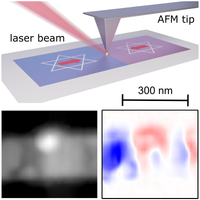
Chiral antiferromagnets like Mn3Sn are promising materials for ultrafast, low-power spintronic technologies, but they exhibit resistance to full magnetic ordering. This work shows that even in the presence of strong magnetic fields, regions of Mn3Sn thin films fail to align as they get pinned by grain boundaries.

Observation of supersensitivity of non-Hermitian skin effect

Qing Wang, Zhonghao Fu, Liping Ye, Hailong He, Weiyin Deng, Jiuyang Lu, Manzhu Ke, and Zhengyou Liu

Phys. Rev. Research 7, L042057 (2025) - Published 9 December, 2025

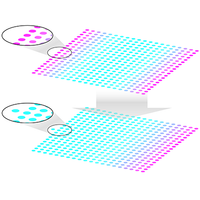
The supersensitivity of the non-Hermitian skin effect is revealed, showing that the addition of a single unit cell at the boundary can transform the skin effect from bidirectional to unidirectional. This supersensitivity offers an approach for wave manipulation and high-sensitivity measurements based on non-Hermitian systems.

Unified quantum framework for electrons and ions: The self-consistent harmonic approximation on a neural network curved manifold

Lorenzo Monacelli, Antonio Siciliano, and Nicola Marzari

Phys. Rev. Research 7, 043277 (2025) - Published 9 December, 2025

Nuclear spin diffusion in dynamic nuclear polarization of crystalline nanoscale silicon particles

Gevin von Witte, Konstantin Tamarov, Neva Şahin, Aaron Himmler, Vera Ganz, Jani O. Moilanen, Vesa-Pekka Lehto, Grzegorz Kwiatkowski, Sebastian Kozerke, and Matthias Ernst

Phys. Rev. Research 7, 043276 (2025) - Published 9 December, 2025

High-energy photon generation from self-organized plasma cavities in field-enhanced laser-preplasma interactions

P. Hadjisolomou, R. Shaisultanov, T. M. Jeong, C. P. Ridgers, and S. V. Bulanov

Phys. Rev. Research 7, 043275 (2025) - Published 9 December, 2025

Expanding the reach of diffusing wave spectroscopy and tracer bead microrheology

M. Helfer, C. Zhang, and F. Scheffold

Phys. Rev. Research 7, 043274 (2025) - Published 9 December, 2025

Enhanced thermoelectric effects in a driven one-dimensional system

C. X. Zhang, Alessandro Braggio, Alessandro Romito, and Fabio Taddei

Phys. Rev. Research 7, 043273 (2025) - Published 9 December, 2025

Micromotion-based DC sensing using continuously tracked trajectories of dipolar coupled nuclear spins

Ozgur Sahin, Hawraa Al Asadi, Paul M. Schindler, Arjun Pillai, Erica Sanchez, Matthew Markham, Mark Elo, Maxwell McAllister, Emanuel Druga, Christoph Fleckenstein, Marin Bukov, and Ashok Ajoy

Phys. Rev. Research 7, 043272 (2025) - Published 9 December, 2025

Observation of a fault tolerance threshold with concatenated codes

Grace M. Sommers, Michael Foss-Feig, David Hayes, David A. Huse, and Michael J. Gullans

Phys. Rev. Research 7, 043271 (2025) - Published 9 December, 2025

Upper limit on magnetic field expulsion in optically driven K3C60

G. De Vecchi, M. Buzzi, G. Jotzu, S. Fava, T. Gebert, G. Magnani, D. Pontiroli, M. Riccò, and A. Cavalleri

Phys. Rev. Research 7, 043270 (2025) - Published 9 December, 2025

Disorder-mediated linear and nonlinear magnetotransport in the charge-density-wave material Ta2NiSe7

Xiaodong Sun, Jiabin Qiao, Yuanzhe Li, Wanli He, Jiali Chen, Jinjin Liu, Yuxiang Chen, Yuchen Ma, Meiling Jin, Jianlin Luo, Jie Chen, Wei Wu, Zhiwei Wang, Wei Jiang, Xiang Li, and Yugui Yao

Phys. Rev. Research 7, L042056 (2025) - Published 8 December, 2025

This study investigates the disorder-mediated linear and nonlinear magnetotransport in the charge-density-wave regime of Ta2NiSe7. The work reveals a correlation between the sample’s residual resistance ratio and its charge-density-wave transition temperature and observes magnetic-field-dependent signals, suggesting the involvement of Berry curvature and quantum geometry.

Efficient driving of a spin qubit using single-atom magnets

Jose Reina-Gálvez, Hoang-Anh Le, Hong Thi Bui, Soo-hyon Phark, Nicolás Lorente, and Christoph Wolf

Phys. Rev. Research 7, L042055 (2025) - Published 8 December, 2025

Atomic dimers are the smallest building blocks for spin-based qubits. In this work, a quantum magnet under an ac voltage enables electric-field-driven control of a nearby spin-1/2 qubit through modulation of the exchange coupling.

Classical autoencoder distillation of quantum adversarial manipulations

Amena Khatun and Muhammad Usman

Phys. Rev. Research 7, L042054 (2025) - Published 8 December, 2025
A quantum-classical machine learning framework is presented in which a classical autoencoder is used to distill quantum-generated adversarial manipulations. This approach restores quantum classifier accuracy under FGSM and PGD attacks on MNIST and Fashion-MNIST datasets, demonstrating effective mitigation of quantum adversarial manipulations.

Sign In to Your Journals Account

Filter

Recent Issues

Vol. 8, Iss. 4
October - December 2026
Vol. 8, Iss. 3
July - September 2026
Vol. 8, Iss. 2
April - June 2026
Vol. 8, Iss. 1
January - March 2026
Category
Article Type

Filter

Article Lookup

Enter a citation