Recent Articles

Nematicity of correlated systems driven by anisotropic chemical phase separation

Ye Yuan, René Hübner, Magdalena Birowska, Chi Xu, Mao Wang, Slawomir Prucnal, Rafal Jakiela, Kay Potzger, Roman Böttger, Stefan Facsko, Jacek A. Majewski, Manfred Helm, Maciej Sawicki, Shengqiang Zhou, and Tomasz Dietl

Phys. Rev. Materials 2, 114601 (2018) - Published 2 November, 2018

The origin of nematicity, i.e., in-plane rotational symmetry breaking, and in particular the relative role played by spontaneous unidirectional ordering of spin, orbital, or charge degrees of freedom, is a challenging issue of magnetism, unconventional superconductivity, and quantum Hall effect systems. In this paper, experimental and theoretical results for In1−xFexAs demonstrate that anisotropic distribution of Fe cations at the growth surface (which has a lower symmetry than the bulk) can lead to a quenched nematic order of alloy components, which then governs low-temperature magnetic and magnetotransport properties.

Tunable half-metallicity and edge magnetism of H-saturated InSe nanoribbons

Weiqing Zhou, Guodong Yu, A. N. Rudenko, and Shengjun Yuan

Phys. Rev. Materials 2, 114001 (2018) - Published 1 November, 2018

Soft MAX phases with boron substitution: A computational prediction

Poulami Chakraborty, Aurab Chakrabarty, Amlan Dutta, and Tanusri Saha-Dasgupta

Phys. Rev. Materials 2, 103605 (2018) - Published 31 October, 2018

Intrinsic stacking domains in graphene on silicon carbide: A pathway for intercalation

T. A. de Jong, E. E. Krasovskii, C. Ott, R. M. Tromp, S. J. van der Molen, and J. Jobst

Phys. Rev. Materials 2, 104005 (2018) - Published 31 October, 2018

Polymorphism in Bi-based perovskite oxides: A first-principles study

Akansha Singh, Viveka N. Singh, Enric Canadell, Jorge Íñiguez, and Oswaldo Diéguez

Phys. Rev. Materials 2, 104417 (2018) - Published 31 October, 2018

Surface reconstructions and modified surface states in La1−xCaxMnO3

Rama K. Vasudevan, Hemant Dixit, Alexander Tselev, Liang Qiao, Tricia L. Meyer, Valentino R. Cooper, Arthur P. Baddorf, Ho Nyung Lee, P. Ganesh, and Sergei V. Kalinin

Phys. Rev. Materials 2, 104418 (2018) - Published 31 October, 2018

Ab initio calculations of electronic band structure and effective-mass parameters of thermoelectric Mg2X1−xYx(X,Y=Si, Ge, or Sn) pseudobinary alloys

Juan M. Guerra, Carsten Mahr, Marcel Giar, Michael Czerner, and Christian Heiliger

Phys. Rev. Materials 2, 104605 (2018) - Published 31 October, 2018

Quantum ferroelectric instabilities in superconducting SrTiO3

J. R. Arce-Gamboa and G. G. Guzmán-Verri

Phys. Rev. Materials 2, 104804 (2018) - Published 31 October, 2018

Automated construction of symmetrized Wannier-like tight-binding models from ab initio calculations

Dominik Gresch, QuanSheng Wu, Georg W. Winkler, Rico Häuselmann, Matthias Troyer, and Alexey A. Soluyanov

Phys. Rev. Materials 2, 103805 (2018) - Published 30 October, 2018

Magnetic structural unit with convex geometry: A building block hosting an exchange-striction-driven magnetoelectric coupling

Kenta Kimura, Yasuyuki Kato, Kunihiko Yamauchi, Atsushi Miyake, Masashi Tokunaga, Akira Matsuo, Koichi Kindo, Mitsuru Akaki, Masayuki Hagiwara, Shojiro Kimura, Masayuki Toyoda, Yukitoshi Motome, and Tsuyoshi Kimura

Phys. Rev. Materials 2, 104415 (2018) - Published 30 October, 2018

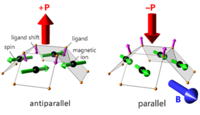
A magnetic structural unit with asymmetric geometry may be a source for symmetry-dependent unique phenomena such as the magnetoelectric effect. The authors report the discovery of ferroelectricity and a magnetic-field-induced sign reversal of ferroelectric polarization in Pb(TiO)Cu4(PO4)4, whose structure is characterized by a staggered array of Cu4O12 magnetic units with convex geometry known as square cupola. Their model and first-principles calculations reveal that the observed complex magnetoelectric behavior originates from an exchange striction, where leading exchange interactions between spins play a crucial role. This result demonstrates that materials with convex-shaped magnetic structural units deserve to be explored to achieve strong magnetoelectric couplings.

Cation distribution and magnetic properties in ultrathin (Ni1–xCox)Fe2O4(x=0–1) layers on Si(111) studied by soft x-ray magnetic circular dichroism

Yuki K. Wakabayashi, Yosuke Nonaka, Yukiharu Takeda, Shoya Sakamoto, Keisuke Ikeda, Zhendong Chi, Goro Shibata, Arata Tanaka, Yuji Saitoh, Hiroshi Yamagami, Masaaki Tanaka, Atsushi Fujimori, and Ryosho Nakane

Phys. Rev. Materials 2, 104416 (2018) - Published 30 October, 2018

Towards bipolar tin monoxide: Revealing unexplored dopants

Miglė Graužinytė, Stefan Goedecker, and José A. Flores-Livas

Phys. Rev. Materials 2, 104604 (2018) - Published 30 October, 2018

Mechanical instability of electrode-electrolyte interfaces in solid-state batteries

Giovanna Bucci, Brandon Talamini, Ananya Renuka Balakrishna, Yet-Ming Chiang, and W. Craig Carter

Phys. Rev. Materials 2, 105407 (2018) - Published 30 October, 2018

Publisher's Note: Accurate force field for molybdenum by machine learning large materials data [Phys. Rev. Materials 1, 043603 (2017)]

Chi Chen, Zhi Deng, Richard Tran, Hanmei Tang, Iek-Heng Chu, and Shyue Ping Ong

Phys. Rev. Materials 2, 109902 (2018) - Published 30 October, 2018

Dynamics of interaction between dislocations and point defects in bcc iron

Luis Casillas-Trujillo, Andrew S. Ervin, Liubin Xu, Alexander Barashev, and Haixuan Xu

Phys. Rev. Materials 2, 103604 (2018) - Published 29 October, 2018

Kinetics of charge carrier recombination in β−Ga2O3 crystals

T. T. Huynh, L. L. C. Lem, A. Kuramata, M. R. Phillips, and C. Ton-That

Phys. Rev. Materials 2, 105203 (2018) - Published 29 October, 2018

Influence of π-conjugated cations and halogen substitution on the optoelectronic and excitonic properties of layered hybrid perovskites

Joshua Leveillee, Claudine Katan, Liujiang Zhou, Aditya D. Mohite, Jacky Even, Sergei Tretiak, André Schleife, and Amanda J. Neukirch

Phys. Rev. Materials 2, 105406 (2018) - Published 29 October, 2018

Thickness dependent electronic structure of exfoliated mono- and few-layer 1T′−MoTe2

A.-S. Pawlik, S. Aswartham, I. Morozov, M. Knupfer, B. Büchner, D. V. Efremov, and A. Koitzsch

Phys. Rev. Materials 2, 104004 (2018) - Published 26 October, 2018

Negative-pressure-induced helimagnetism in ferromagnetic cubic perovskites Sr1−xBaxCoO3

H. Sakai, S. Yokoyama, A. Kuwabara, J. S. White, E. Canévet, H. M. Rønnow, T. Koretsune, R. Arita, A. Miyake, M. Tokunaga, Y. Tokura, and S. Ishiwata

Phys. Rev. Materials 2, 104412 (2018) - Published 26 October, 2018

Unmasking the interior magnetic domain structure and evolution in Nd-Fe-B sintered magnets through high-field magnetic imaging of the fractured surface

David Billington, Kentaro Toyoki, Hiroyuki Okazaki, Yoshinori Kotani, Tomoki Fukagawa, Takeshi Nishiuchi, Satoshi Hirosawa, and Tetsuya Nakamura

Phys. Rev. Materials 2, 104413 (2018) - Published 26 October, 2018

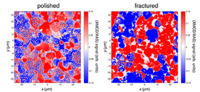
In Nd-Fe-B sintered magnets, observations of how reversed magnetic domains propagate throughout the entire hysteresis loop have been restricted to polished surfaces or transmittable thin films. However, the mechanical processing of the surface introduces defects that nucleate additional reversed magnetic domains which mask the underlying domain pattern. To unmask the interior magnetic domain structure that represents the bulk, soft x-ray absorption microscopy is utilized in this paper to track the reversal of individual grains in the polished and fractured surfaces. Significant variation in the reversal behavior is observed and intergranular correlations are identified. Videos of the magnetic domain propagation accompany this paper.

Sign In to Your Journals Account

Filter

Recent Issues

Vol. 10, Iss. 11
November 2026
Vol. 10, Iss. 10
October 2026
Vol. 10, Iss. 9
September 2026
Vol. 10, Iss. 8
August 2026
Category
Article Type
Section

Filter

Article Lookup

Enter a citation