Highlights

Synthesis and characterization of bulk Nd1−xSrxNiO2 and Nd1−xSrxNiO3

Bi-Xia Wang, Hong Zheng, E. Krivyakina, O. Chmaissem, Pietro Papa Lopes, J. W. Lynn, Leighanne C. Gallington, Y. Ren, S. Rosenkranz, J. F. Mitchell, and D. Phelan

Phys. Rev. Materials 4, 084409 (2020) - Published 21 August, 2020

Epitaxial “infinite layer” Nd1−xSrxNiO2 thin films on SrTiO3 substrates may represent the realization of long-sought, cupratelike superconductivity in an isoelectronic Ni1+ oxide. Unfortunately, high quality bulk Ni1+ compounds are notoriously challenging to synthesize. In this work, the authors provide details of successful synthesis approaches to the bulk polycrystalline precursor Nd1−xSrxNiO3, using soft chemistry followed by high-pO2 synthesis, and its subsequent reduction to the infinite layer compound. In situ x-ray diffraction is used to track the reduction pathway from NdNiO3 to NdNiO2 along with a structural model for Nd0.9Sr0.1NiO2 refined from neutron diffraction data. However, superconductivity remains elusive in bulk Nd1−xSrxNiO2, potentially underscoring the important role of epitaxy in this new nickelate superconductor family.

Epitaxial engineering of flat silver fluoride cuprate analogs

Adam Grzelak, Haibin Su, Xiaoping Yang, Dominik Kurzydłowski, José Lorenzana, and Wojciech Grochala

Phys. Rev. Materials 4, 084405 (2020) - Published 11 August, 2020

Silver(II) fluoride AgF2 is a charge-transfer insulator with layered structure, similar in many ways to precursors of cuprate superconductors. However, its bulk structure consists of corrugated layers, which precludes the emergence of strong antiferromagnetic interactions. The authors predict that a flat AgF2 monolayer can be stabilized by epitaxy on an appropriate substrate, which leads to unprecedented enhancement of magnetic interactions and could potentially lead to superconductivity upon charge doping. Assuming a magnetic mechanism and extrapolating from the data for cuprates, they show that the superconducting critical temperature of a single AgF2 layer can reach 195 K.

Correlating dynamic microstructure to observed color in electrophoretic displays via in situ small-angle x-ray scattering

Scott C. Bukosky, Joshua A. Hammons, Brian Giera, Elaine Lee, Jinkyu Han, Megan C. Freyman, Anna Ivanovskaya, Kerry G. Krauter, Joshua D. Kuntz, Marcus A. Worsley, T. Yong-Jin Han, William D. Ristenpart, and Andrew J. Pascall

Phys. Rev. Materials 4, 075802 (2020) - Published 27 July, 2020

Electronic displays are nearly ubiquitous in modern society. With the drive to lower power consumption, reflective displays based on reversible electrophoretic deposition of nanoparticles have emerged as a candidate next generation display technology. Understanding the origins of color in these displays is challenging because the color is determined by the transient arrangement of particles in the electric field. In this article, a new technique, based on small angle x-ray scattering, is developed to simultaneously interrogate nanoparticle arrangement and measure color while the display is in operation. Furthermore, a particle-based numerical model of electrophoretic deposition is demonstrated to quantitatively predict transient interparticle distances during operation.

First-principles prediction of two-dimensional copper borides

Xiao-Ji Weng, Xin-Ling He, Jing-Yu Hou, Chun-Mei Hao, Xiao Dong, Guoying Gao, Yongjun Tian, Bo Xu, and Xiang-Feng Zhou

Phys. Rev. Materials 4, 074010 (2020) - Published 23 July, 2020

Ordered borides of group IB and IIB metals (Cu, Ag, Au, Zn, Cd, Hg), as the well-known immiscible materials, are practically unknown due to the small electronegativity difference and large mismatch in their atomic sizes. Nevertheless, such rule may be broken under extreme conditions, i.e., high pressure or low dimensionality. Here two-dimensional (2D) copper borides were predicted from ab initio evolutionary searches, identifying that two structures are metallic whereas another one is strikingly a nodal line semimetal. These results challenge the long lasting puzzle in the immiscible systems and add new members to the 2D materials.

Magnetic and electronic properties of spin-orbit coupled Dirac electrons on a (001) thin film of double-perovskite Sr2FeMoO6

Masahiko G. Yamada and George Jackeli

Phys. Rev. Materials 4, 074007 (2020) - Published 21 July, 2020

This paper presents an interacting model for the electronic and magnetic behavior of a strained (001) atomic layer of Sr2FeMoO6. The authors find that the strong spin-orbit coupling in the molybdenum 4d shell gives rise to a robust ferrimagnetic state with an emergent spin-polarized electronic structure consisting of flat bands and four massive or massless Dirac dispersions. Based on the spin-wave theory, they demonstrate that the magnetic order remains intact for a wide range of doping, leading to the possibility of exploring flat band physics, such as Wigner crystallization.

Tuning magnetic order in the van der Waals metal Fe5GeTe2 by cobalt substitution

Andrew F. May, Mao-Hua Du, Valentino R. Cooper, and Michael A. McGuire

Phys. Rev. Materials 4, 074008 (2020) - Published 21 July, 2020

The magnetic van der Waals materials with the highest ordering temperatures are generally metallic ferromagnets, such as Fe5GeTe2 with a Curie temperature near 300 K. In this work, the authors have demonstrated an ability to produce an antiferromagnetic state with an enhanced critical temperature by substituting cobalt for iron. While such a change to the magnetism is not uncommon, the important finding here is that the change in magnetic order is coupled not just to the chemical modification but also to a change in layer stacking that is induced by the cobalt substitution.

Relationship between grain boundary segregation and grain boundary diffusion in Cu-Ag alloys

R. K. Koju and Y. Mishin

Phys. Rev. Materials 4, 073403 (2020) - Published 15 July, 2020

Segregation of alloy components to grain boundaries (GBs) and the drastically accelerated atomic mobility in GB regions are two phenomena of significant fundamental interest and technological importance. Surprisingly, the relationships between them remain virtually unexplored. In this paper, atomistic simulations are applied to understand the effect of GB segregation on GB diffusion using a Cu-Ag alloy as a model. It is shown that GB segregation can cause acceleration or reduction in GB diffusivity of the alloy components, depending on the amount of segregation, temperature, and alloy composition. The diffusion-segregation interplay can be explained by the site-blocking effect and the GB premelting at high temperatures.

Spin dynamics and a nearly continuous magnetic phase transition in an entropy-stabilized oxide antiferromagnet

Benjamin A. Frandsen, K. Alec Petersen, Nicolas A. Ducharme, Alexander G. Shaw, Ethan J. Gibson, Barry Winn, Jiaqiang Yan, Junjie Zhang, Michael E. Manley, and Raphaël P. Hermann

Phys. Rev. Materials 4, 074405 (2020) - Published 9 July, 2020

Studying magnetism in entropy-stabilized oxides (ESOs) is an exciting new research avenue following the recent discovery of antiferromagnetic order in (Mg0.2Co0.2Ni0.2Cu0.2Zn0.2)O (MgO-ESO). Muon spin relaxation and neutron scattering experiments reveal a continuous transition that occurs across a broad distribution of antiferromagnetic ordering temperatures throughout the MgO-ESO sample. The ground state exhibits a magnon gap and significant quasielastic neutron scattering, suggesting unusual intrinsic magnetic fluctuations. These results resolve several open questions about magnetic order in MgO-ESO and pave the way for future investigations of magnetic ESOs.

Dynamical vortex phase diagram of two-dimensional superconductivity in gated MoS2

Yu Saito, Yuki M. Itahashi, Tsutomu Nojima, and Yoshihiro Iwasa

Phys. Rev. Materials 4, 074003 (2020) - Published 7 July, 2020

2D superconductors exhibit novel aspects which are distinct from those of the 3D counterparts. Vortex matter is one of them. Here, the authors report a dynamical vortex phase diagram at zero magnetic field for ion-gated MoS2. They find that superconductivity is destroyed by current through the dissociation of vortex-antivortex pairs with multiple steps. They are accounted for by the kinematic vortex flow states, including phase slip line formation. Based on the present result, the authors present a comprehensive vortex phase diagram for clean 2D superconductors.

Determining the Rashba parameter from the bilinear magnetoresistance response in a two-dimensional electron gas

D. C. Vaz, F. Trier, A. Dyrdał, A. Johansson, K. Garcia, A. Barthélémy, I. Mertig, J. Barnaś, A. Fert, and M. Bibes

Phys. Rev. Materials 4, 071001(R) (2020) - Published 2 July, 2020

The Rashba spin-orbit coupling is a relativistic interaction appearing in systems lacking inversion symmetry such as surfaces or interfaces. It locks the electrons’ spin and angular momentum and enables efficient means to interconvert spin currents and charge currents through the direct and inverse Edelstein effects. The Rashba coefficient sets the amplitude of the Rashba spin-orbit coupling but its quantification, using for instance angle-resolved photoemission spectroscopy, is very challenging. The authors demonstrate that the Rashba coefficient can be reliably extracted from a simple magnetotransport experiment and apply it to LaAlO3/SrTiO3 interfaces for a broad range of Fermi energies, tuned by an electrostatic gate.

Temperature scaling behavior of the linear magnetoresistance observed in high-temperature superconductors

John Singleton

Phys. Rev. Materials 4, 061801(R) (2020) - Published 25 June, 2020

The observation of linear magnetoresistance (LMR) in “strange metals” such as cuprate superconductors has generated a great deal of interest and speculation. This paper presents an analytical magnetoresistance model invoking variations in the charge-carrier density. Magnetoresistance curves generated by the model are almost indistinguishable from those produced by sophisticated numerical approaches, demonstrating that, though disorder is pivotal in causing LMR, the form of the magnetoresistance is insensitive to details of the disorder. Using the analytical model, realistic levels of disorder are sufficient to explain the LMR and field-temperature resistance scaling observed in high-temperature superconductors, without the need to invoke “strangeness”.

Search for vacancies in concentrated solid-solution alloys with fcc crystal structure

L. Resch, M. Luckabauer, N. Helthuis, N. L. Okamoto, T. Ichitsubo, R. Enzinger, W. Sprengel, and R. Würschum

Phys. Rev. Materials 4, 060601(R) (2020) - Published 22 June, 2020

For fcc concentrated solid-solution alloys (CSA), the concentration of quenched-in thermal vacancies was experimentally determined by the direct and vacancy-specific technique of positron annihilation lifetime spectroscopy. Whereas fcc alloys with only three constituents in nonequimolar fractions (CrFeNi) exhibit vacancy concentrations of about 10−5, the CSA (CoCrFeNi, CoCrFeMnNi) with four or five equimolar components do not show a vacancy-specific positron lifetime. Hence, there is either a vanishingly small concentration (10−6) of vacancies being generated at high temperatures close to the onset of melting, or the generated vacancies are inherently unstable. Both indications are completely unexpected and support that CSA can be regarded as a special class of metallic material.

Structural evolution and skyrmionic phase diagram of the lacunar spinel GaMo4Se8

Emily C. Schueller, Daniil A. Kitchaev, Julia L. Zuo, Joshua D. Bocarsly, Joya A. Cooley, Anton Van der Ven, Stephen D. Wilson, and Ram Seshadri

Phys. Rev. Materials 4, 064402 (2020) - Published 1 June, 2020

The lacunar spinel family, which contains multiferroic skyrmion hosts GaV4S8 and GaV4Se8, is characterized by unique metal–metal bonding leading to strong coupling between crystal structure and magnetism. Synchrotron diffraction analysis of the low temperature crystal structure of GaMo4Se8, a less studied member of the family, reveals coexistence of the reported rhombohedral crystal structure and a new metastable orthorhombic structure. Computational and experimental characterization of the magnetic phase diagram of GaMo4Se8 indicates that slight crystal structure differences lead to distinct magnetic properties; the reported R3m phase hosts skyrmions similar to GaV4Se8, while the novel Imm2 phase is a strongly uniaxial ferromagnet.

Anisometric mesoscale nuclear and magnetic texture in sintered Nd-Fe-B magnets

Ivan Titov, Dirk Honecker, Denis Mettus, Artem Feoktystov, Joachim Kohlbrecher, Pavel Strunz, and Andreas Michels

Phys. Rev. Materials 4, 054419 (2020) - Published 29 May, 2020

Nd-Fe-B magnets are an important class of functional materials which find widespread technological application. Neutron scattering experiments suggest the presence of an anisometric mesoscale structure in textured Nd-Fe-B magnets. Comparison of the neutron data to a microstructural model based on the superquadric form factor allows the estimation of the shape and of lower bounds for the size of the structure, the origin of which remains unknown. It is a challenge for future research to find out whether the anisotropic scattering pattern is due to some arrangement of preferentially oriented particles or due to larger-scale structural or compositional inhomogeneities.

Ionic liquid dynamics in nanoporous carbon: A pore-size- and temperature-dependent neutron spectroscopy study on supercapacitor materials

Mark Busch, Tommy Hofmann, Bernhard Frick, Jan P. Embs, Boris Dyatkin, and Patrick Huber

Phys. Rev. Materials 4, 055401 (2020) - Published 27 May, 2020

Ionic liquids imbibed in nanoporous carbons are promising hybrid materials for electrochemical energy storage, conversion and harvesting. These functionalities crucially depend on the ionic mobility in the pore space. The authors demonstrate that quasielastic neutron scattering, specifically the so-called fixed energy window experimental technique, is particularly suitable for a fast access of the confined ionic liquid’s dynamic landscape as a function of pore-size and temperature. Compared to the bulk they find reduced self-diffusion mobilities. However, despite this slowing-down, the temperature range of the liquid state upon nanoconfinement is remarkably extended to much lower temperatures, which is beneficial for potential technical applications of such liquid-infused solids.

In situ TEM observation of nanodomain mechanics in barium titanate under external loads

Takashi Sumigawa, Ken Hikasa, Akihisa Kusunose, Hiroki Unno, Kairi Masuda, Takahiro Shimada, and Takayuki Kitamura

Phys. Rev. Materials 4, 054415 (2020) - Published 19 May, 2020

The difficulty in nanomechanical testing has hindered real-time in-situ observation of stress-induced domain wall motions in ferroelectrics. By fabricating rationally designed specimens, the authors conducted controlled nanoscale tensile and bending tests, and showed real-time domain wall motions in ferroelectrics. They directly imaged domain wall motions in transmission electron microscope and find the mechanical criterion that governs the behavior of domain walls. The paper provides information on how to control domain wall dynamics from an engineering standpoint.

Correlating magnetic structure and magnetotransport in semimetal thin films of Eu1−xSmxTiO3

Zach Porter, Ryan F. Need, Kaveh Ahadi, Yang Zhao, Zhijun Xu, Brian J. Kirby, Jeffrey W. Lynn, Susanne Stemmer, and Stephen D. Wilson

Phys. Rev. Materials 4, 054411 (2020) - Published 15 May, 2020

In magnetic Weyl semimetals, anomalous magnetotransport phenomena arise as the result of broken time reversal symmetry and a particular type of topologically nontrivial band structure. Here, the authors report neutron scattering studies of one such magnetic Weyl semimetal candidate material, Eu1−xSmxTiO3. The formation and character of magnetic order are tracked under applied magnetic field as a means of understanding the unusual magnetoresistance in this compound. Direct correlations between a field-driven spin-flop transition and depth-dependent magnetism are discussed as the origins of the previously reported anisotropic magnetoresistance and topological Hall effect for this material.

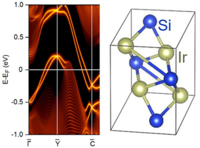
Monoclinic semimetal IrSi synthesized under high pressure above 25 GPa: Crystal structure, electronic, and magnetic properties

Y. Fujishiro, N. Kanazawa, T. Shinmei, M. Nishi, T. Nakajima, T. Arima, D. Hashizume, M. S. Bahramy, T. Irifune, and Y. Tokura

Phys. Rev. Materials 4, 055002 (2020) - Published 15 May, 2020

Transition metal monosilicides exhibit diverse physical properties depending on their crystal structures. Regarding IrSi, only the MnP-type orthorhombic form has been known so far. In this paper, the authors report a successful synthesis of a monoclinic phase through high-pressure high-temperature treatment above 25 GPa, while the theoretically predicted B20-type cubic structure has not been identified up to 48 GPa. Magneto-transport measurements reveal a semimetallic nature of the monoclinic form with a low carrier density of ~1019 /cm3. Combined with large Rashba spin splitting of surface electronic bands, monoclinic IrSi may offer a potential material platform for versatile spintronic applications in the two-dimensional limit.

Unexpected crystalline homogeneity from the disordered bond network in La(Cr0.2Mn0.2Fe0.2Co0.2Ni0.2)O3 films

Matthew Brahlek, Alessandro R. Mazza, Krishna Chaitanya Pitike, Elizabeth Skoropata, Jason Lapano, Gyula Eres, Valentino R. Cooper, and T. Zac Ward

Phys. Rev. Materials 4, 054407 (2020) - Published 12 May, 2020

The ability to host five or more cations on a sublattice within a single crystal oxide offers new opportunities to design materials with tailored bonding environments and functional properties. La(Cr0.2Mn0.2Fe0.2Co0.2Ni0.2)O3, which straddles the phase-boundary between orthorhombic and rhombohedral, is expected to exhibit a tremendous level of local distortion. Despite this, La(Cr0.2Mn0.2Fe0.2Co0.2Ni0.2)O3 is found to exhibit a surprisingly well-ordered lattice, which homogeneously favors the orthorhombic phase. The observation of long-range order that emerges out of a configurationally complex local bonding environment suggests unforeseen cooperative effects at play in entropy stabilized materials.

Understanding the molecular origin of shear thinning in associative polymers through quantification of bond dissociation under shear

Irina Mahmad Rasid, Jorge Ramirez, Bradley D. Olsen, and Niels Holten-Andersen

Phys. Rev. Materials 4, 055602 (2020) - Published 11 May, 2020

Transient network theory is the state of the art for understanding the mechanical response of associative networks. However, the predictions of the models are difficult to verify in the absence of direct observations of the bond states. This manuscript introduces a method to quantitatively measure force-induced bond dissociation in associative networks through the design of an opto-mechanically coupled model polymer system and a rheo-fluorescence set-up. The findings show that shear thinning in the model associative polymers cannot be explained by classical theories, and likely involves alternative modes as suggested by newer models.

Sign In to Your Journals Account

Filter

Section

Filter

Article Lookup

Enter a citation