Highlights

Experimental Realization of Weyl Exceptional Rings in a Synthetic Three-Dimensional Non-Hermitian Phononic Crystal

Jing-jing Liu, Zheng-wei Li, Ze-Guo Chen, Weiyuan Tang, An Chen, Bin Liang, Guancong Ma, and Jian-Chun Cheng

Phys. Rev. Lett. 129, 084301 (2022) - Published 17 August, 2022

A synthetic Weyl exceptional ring is experimentally demonstrated in a 1D phononic crystal with non-Hermiticity introduced by active acoustic components.

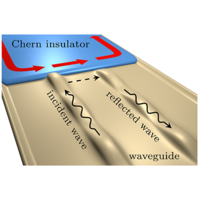
Non-Hermitian Physics without Gain or Loss: The Skin Effect of Reflected Waves

Selma Franca, Viktor Könye, Fabian Hassler, Jeroen van den Brink, and Cosma Fulga

Phys. Rev. Lett. 129, 086601 (2022) - Published 17 August, 2022

Waves reflected from the boundaries of topological insulators exhibit phenomena usually associated with non-Hermitian systems.

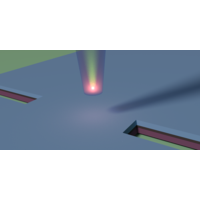
Imaging the Breakdown of Ohmic Transport in Graphene

Alec Jenkins, Susanne Baumann, Haoxin Zhou, Simon A. Meynell, Yang Daipeng, Kenji Watanabe, Takashi Taniguchi, Andrew Lucas, Andrea F. Young, and Ania C. Bleszynski Jayich

Phys. Rev. Lett. 129, 087701 (2022) - Published 17 August, 2022

A special microscope has visualized changes of electron current distribution that clearly indicate a transition from ohmic to viscous electron flow in graphene.

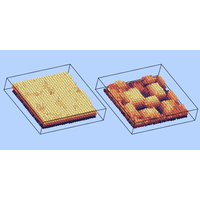
Direct Measurements of Surface Strain-Mediated Lateral Interactions between Adsorbates in Colloidal Heteroepitaxy

Manodeep Mondal and Rajesh Ganapathy

Phys. Rev. Lett. 129, 088003 (2022) - Published 17 August, 2022

By epitaxially growing films from colloids, researchers show that they can monitor interactions and behaviors of the particles that are difficult—and sometimes impossible—to capture for similar films grown from atoms.

Oscillations of Drops with Mobile Contact Lines on the International Space Station: Elucidation of Terrestrial Inertial Droplet Spreading

J. McCraney, V. Kern, J. B. Bostwick, S. Daniel, and P. H. Steen

Phys. Rev. Lett. 129, 084501 (2022) - Published 16 August, 2022

Experiments in zero-gravity show how a static droplet oscillates on a vibrating hydrophobic surface.

Nonvolatile Electric Field Control of Thermal Magnons in the Absence of an Applied Magnetic Field

Eric Parsonnet, Lucas Caretta, Vikram Nagarajan, Hongrui Zhang, Hossein Taghinejad, Piush Behera, Xiaoxi Huang, Pravin Kavle, Abel Fernandez, Dmitri Nikonov, Hai Li, Ian Young, James Analytis, and Ramamoorthy Ramesh

Phys. Rev. Lett. 129, 087601 (2022) - Published 15 August, 2022

A new experiment shows that spin currents can be controlled electrically in the room temperature multiferroic material BiFeO3.

Evidence for PeV Proton Acceleration from Fermi-LAT Observations of SNR G106.3+2.7

Ke Fang, Matthew Kerr, Roger Blandford, Henrike Fleischhack, and Eric Charles

Phys. Rev. Lett. 129, 071101 (2022) - Published 10 August, 2022

An analysis of 12 years of gamma-ray observations has allowed researchers to pinpoint a Galactic source of high-energy cosmic rays.

Angular Momentum Transport by Keplerian Turbulence in Liquid Metals

M. Vernet, S. Fauve, and C. Gissinger

Phys. Rev. Lett. 129, 074501 (2022) - Published 10 August, 2022

Using a magnetically stirred liquid metal, researchers have reproduced a key feature of astrophysical accretion disks: a turbulence-based transfer of angular momentum.

Radio-Frequency Manipulation of State Populations in an Entangled Fluorine-Muon-Fluorine System

David Billington, Edward Riordan, Majdi Salman, Daniel Margineda, George J. W. Gill, Stephen P. Cottrell, Iain McKenzie, Tom Lancaster, Michael J. Graf, and Sean R. Giblin

Phys. Rev. Lett. 129, 077201 (2022) - Published 9 August, 2022

Muon spin relaxation is used to demonstrate the experimental manipulation of entangled states of the spin of implanted positive muons in a bulk crystal.

Lawson Criterion for Ignition Exceeded in an Inertial Fusion Experiment

H. Abu-Shawareb et al. (Indirect Drive ICF Collaboration)

Phys. Rev. Lett. 129, 075001 (2022) - Published 8 August, 2022

A laser-fusion scheme has achieved ignition—an important step on the road to energy production.

All-Optical Synchronization of Remote Optomechanical Systems

Jin Li, Zhong-Hao Zhou, Shuai Wan, Yan-Lei Zhang, Zhen Shen, Ming Li, Chang-Ling Zou, Guang-Can Guo, and Chun-Hua Dong

Phys. Rev. Lett. 129, 063605 (2022) - Published 5 August, 2022

Researchers have optically synced the motion of two micrometer-sized objects separated by 5 km, a distance around a hundred million times longer than previous demonstrations.

Surfing on Turbulence: A Strategy for Planktonic Navigation

Rémi Monthiller, Aurore Loisy, Mimi A. R. Koehl, Benjamin Favier, and Christophe Eloy

Phys. Rev. Lett. 129, 064502 (2022) - Published 5 August, 2022

Simulations indicate that plankton can gain quicker access to food by riding ascending turbulent ocean currents.

Observation of WWW Production in pp Collisions at s=13  TeV with the ATLAS Detector

G. Aad et al. (ATLAS Collaboration)

Phys. Rev. Lett. 129, 061803 (2022) - Published 4 August, 2022

The ATLAS Collaboration has detected triple W-boson production—a rare event that could eventually offer signs of new physics.

Giant and Controllable Photoplasticity and Photoelasticity in Compound Semiconductors

Jiahao Dong, Yifei Li, Yuying Zhou, Alan Schwartzman, Haowei Xu, Bilal Azhar, Joseph Bennett, Ju Li, and R. Jaramillo

Phys. Rev. Lett. 129, 065501 (2022) - Published 3 August, 2022

A new model suggests that lattice defects are responsible for the way some semiconductors become harder under illumination.

Excitations of Quantum Many-Body Systems via Purified Ensembles: A Unitary-Coupled-Cluster-Based Approach

Carlos L. Benavides-Riveros, Lipeng Chen, Christian Schilling, Sebastián Mantilla, and Stefano Pittalis

Phys. Rev. Lett. 129, 066401 (2022) - Published 2 August, 2022

Quantum computers may efficiently investigate many-body systems through mapping a variational calculation of many excitations onto one for a single state.

First Identification of a CMB Lensing Signal Produced by 1.5 Million Galaxies at z∼4: Constraints on Matter Density Fluctuations at High Redshift

Hironao Miyatake, Yuichi Harikane, Masami Ouchi, Yoshiaki Ono, Nanaka Yamamoto, Atsushi J. Nishizawa, Neta Bahcall, Satoshi Miyazaki, and Andrés A. Plazas Malagón

Phys. Rev. Lett. 129, 061301 (2022) - Published 1 August, 2022

Gravitational lensing of the cosmic microwave background has been used to probe the distribution of dark matter around some of the earliest galaxies in the Universe.

Optically Controlled Femtosecond Polariton Switch at Room Temperature

Fei Chen, Hui Li, Hang Zhou, Song Luo, Zheng Sun, Ziyu Ye, Fenghao Sun, Jiawei Wang, Yuanlin Zheng, Xianfeng Chen, Huailiang Xu, Hongxing Xu, Tim Byrnes, Zhanghai Chen, and Jian Wu

Phys. Rev. Lett. 129, 057402 (2022) - Published 29 July, 2022

A subpicosecond optical switch demonstrated in a semiconductor material moves researchers a step closer to an all-optical computer.

Postselected Entanglement between Two Atomic Ensembles Separated by 12.5 km

Xi-Yu Luo, Yong Yu, Jian-Long Liu, Ming-Yang Zheng, Chao-Yang Wang, Bin Wang, Jun Li, Xiao Jiang, Xiu-Ping Xie, Qiang Zhang, Xiao-Hui Bao, and Jian-Wei Pan

Phys. Rev. Lett. 129, 050503 (2022) - Published 28 July, 2022

On the road to a quantum internet, researchers demonstrate entanglement of two memory elements located 12.5 kilometers apart in an urban environment.

Toward a Photonic Demonstration of Device-Independent Quantum Key Distribution

Wen-Zhao Liu, Yu-Zhe Zhang, Yi-Zheng Zhen, Ming-Han Li, Yang Liu, Jingyun Fan, Feihu Xu, Qiang Zhang, and Jian-Wei Pan

Phys. Rev. Lett. 129, 050502 (2022) - Published 27 July, 2022

A proof-of-concept demonstration of device-independent quantum key distribution is achieved in a photonic setup in the asymptotic limit.

Dispersionless Coupling among Optical Waveguides by Artificial Gauge Field

Wange Song, Ting Li, Shengjie Wu, Zhizhang Wang, Chen Chen, Yuxin Chen, Chunyu Huang, Kai Qiu, Shining Zhu, Yi Zou, and Tao Li

Phys. Rev. Lett. 129, 053901 (2022) - Published 26 July, 2022

More frequencies of light can pass between two coupled wavy waveguides than between two coupled straight ones, something that could allow for more flexible designs of optics-based circuits on silicon chips.

Sign In to Your Journals Account

Filter

Section

Filter

Article Lookup

Enter a citation