Highlights

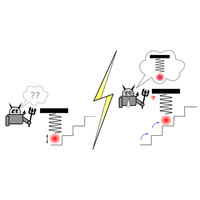
Bayesian Information Engine that Optimally Exploits Noisy Measurements

Tushar K. Saha, Joseph N. E. Lucero, Jannik Ehrich, David A. Sivak, and John Bechhoefer

Phys. Rev. Lett. 129, 130601 (2022) - Published 21 September, 2022

A “filtering” algorithm allows information engines to perform efficiently even when they are subjected to high noise.

Wave Packet Dynamics in Synthetic Non-Abelian Gauge Fields

Mehedi Hasan, Chetan Sriram Madasu, Ketan D. Rathod, Chang Chi Kwong, Christian Miniatura, Frédéric Chevy, and David Wilkowski

Phys. Rev. Lett. 129, 130402 (2022) - Published 19 September, 2022

Researchers produce analogues of hard-to-study quantum phenomena in a gas of strontium atoms near absolute zero.

Self-Kerr Effect across the Yellow Rydberg Series of Excitons in Cu2O

Corentin Morin, Jérôme Tignon, Juliette Mangeney, Sukhdeep Dhillon, Gerard Czajkowski, Karol Karpiński, Sylwia Zielińska-Raczyńska, David Ziemkiewicz, and Thomas Boulier

Phys. Rev. Lett. 129, 137401 (2022) - Published 19 September, 2022

Researchers have demonstrated that a solid can exhibit an enhanced nonlinear optical phenomenon usually seen only in cold atomic gases.

Observation of Dirac Hierarchy in Three-Dimensional Acoustic Topological Insulators

Linyun Yang, Yin Wang, Yan Meng, Zhenxiao Zhu, Xiang Xi, Bei Yan, Shuxin Lin, Jingming Chen, Bin-jie Shi, Yong Ge, Shou-qi Yuan, Hongsheng Chen, Hong-xiang Sun, Gui-Geng Liu, Yihao Yang, and Zhen Gao

Phys. Rev. Lett. 129, 125502 (2022) - Published 16 September, 2022

Acoustic measurements reveal the full hierarchy of Dirac cones and the corresponding hierarchy of band topology in 3D acoustic crystals.

Perturbative Quantum Simulation

Jinzhao Sun, Suguru Endo, Huiping Lin, Patrick Hayden, Vlatko Vedral, and Xiao Yuan

Phys. Rev. Lett. 129, 120505 (2022) - Published 15 September, 2022

In this protocol, the main component of the Hamiltonian is simulated on a quantum computer, and classical perturbation theory is used to approximate interactions.

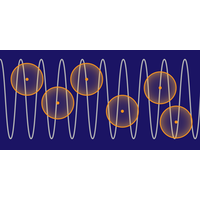
Engineering Symmetry-Selective Couplings of a Superconducting Artificial Molecule to Microwave Waveguides

Mohammed Ali Aamir, Claudia Castillo Moreno, Simon Sundelin, Janka Biznárová, Marco Scigliuzzo, Kowshik Erappaji Patel, Amr Osman, D. P. Lozano, Ingrid Strandberg, and Simone Gasparinetti

Phys. Rev. Lett. 129, 123604 (2022) - Published 15 September, 2022

Considering symmetry in waveguide couplings to transmon qubits, quasiselection rules are implemented in superconducting quantum optics.

MICROSCOPE Mission: Final Results of the Test of the Equivalence Principle

Pierre Touboul et al. (MICROSCOPE Collaboration)

Phys. Rev. Lett. 129, 121102 (2022) - Published 14 September, 2022

The MICROSCOPE satellite experiment has tested the equivalence principle with an unprecedented level of precision.

Two-Dimensional Programmable Tweezer Arrays of Fermions

Zoe Z. Yan, Benjamin M. Spar, Max L. Prichard, Sungjae Chi, Hao-Tian Wei, Eduardo Ibarra-García-Padilla, Kaden R. A. Hazzard, and Waseem S. Bakr

Phys. Rev. Lett. 129, 123201 (2022) - Published 14 September, 2022

An optical tweezer with a stroboscopic twist can trap cold atoms in lattices of all shapes.

Eulerian vs Lagrangian Irreversibility in an Experimental Turbulent Swirling Flow

Adam Cheminet, Damien Geneste, Antoine Barlet, Yasar Ostovan, Tarek Chaabo, Valentina Valori, Paul Debue, Christophe Cuvier, François Daviaud, Jean-Marc Foucaut, Jean-Philippe Laval, Vincent Padilla, Cécile Wiertel-Gasquet, and Bérengère Dubrulle

Phys. Rev. Lett. 129, 124501 (2022) - Published 14 September, 2022

High-resolution Eulerian and Lagrangian measurement in a turbulent facility is used to identify the flow dynamics responsible for the development of the observed time irreversibility.

Anomalous Electromagnetic Tunneling in Bianisotropic ϵ−μ-Zero Media

Menglin L. N. Chen, Yangang Bi, Hsun-Chi Chan, Zemeng Lin, Shaojie Ma, and Shuang Zhang

Phys. Rev. Lett. 129, 123901 (2022) - Published 13 September, 2022

An unexplored form of tunneling for electromagnetic waves in a medium that exhibits both ϵ−μ−zero and bianisotropy demonstrates opposite behaviors from the electric and magnetic fields.

Nanoscale Magnetism Probed in a Matter-Wave Interferometer

Yaakov Y. Fein, Sebastian Pedalino, Armin Shayeghi, Filip Kiałka, Stefan Gerlich, and Markus Arndt

Phys. Rev. Lett. 129, 123001 (2022) - Published 12 September, 2022

A matter-wave interferometer can probe the magnetism of a broad range of species, from single atoms to very large, weakly magnetic molecules.

Analysis of Ringdown Overtones in GW150914

Roberto Cotesta, Gregorio Carullo, Emanuele Berti, and Vitor Cardoso

Phys. Rev. Lett. 129, 111102 (2022) - Published 9 September, 2022

A new analysis questions whether researchers found so-called overtones in the first detected gravitational-wave signal from a black hole merger.

Moiré Landau Fans and Magic Zeros

Nisarga Paul, Philip J. D. Crowley, Trithep Devakul, and Liang Fu

Phys. Rev. Lett. 129, 116804 (2022) - Published 9 September, 2022

Universal conditions under which electrons of generic dispersion in a moiré superlattice and magnetic field realize perfectly flat Chern bands have been identified.

Rotation-Time Symmetry Breaking in Frustrated Chiral Nematic Driven by a Pulse-Train Waveform

Vitaly P. Panov, Jiseon Yang, L. K. Migara, Hyun-Jin Yoon, and Jang-Kun Song

Phys. Rev. Lett. 129, 117801 (2022) - Published 9 September, 2022

A liquid crystal can support traveling waves that demonstrate a new ability to control the molecules’ orientations.

Search for Dark Matter Annihilation Signals in the H.E.S.S. Inner Galaxy Survey

H. Abdalla et al. (H.E.S.S. Collaboration)

Phys. Rev. Lett. 129, 111101 (2022) - Published 8 September, 2022

A search for dark matter annihilation signals from a new gamma-ray survey of the Galactic Center sets new exclusion limits on the annihilation cross section.

Subrecoil Clock-Transition Laser Cooling Enabling Shallow Optical Lattice Clocks

X. Zhang, K. Beloy, Y. S. Hassan, W. F. McGrew, C.-C. Chen, J. L. Siegel, T. Grogan, and A. D. Ludlow

Phys. Rev. Lett. 129, 113202 (2022) - Published 8 September, 2022

Researchers have cooled ytterbium atoms to a few tens of nanokelvin, which might usher in the next generation of optical atomic clocks.

Proximity-Induced Gap Opening by Twisted Plumbene in Epitaxial Graphene

Chitran Ghosal, Markus Gruschwitz, Julian Koch, Sibylle Gemming, and Christoph Tegenkamp

Phys. Rev. Lett. 129, 116802 (2022) - Published 8 September, 2022

Intercalation-stabilized plumbene, a lead-based graphene analog, shows a gap at low temperatures that results in a metal-insulator transition.

Heat Equilibration of Integer and Fractional Quantum Hall Edge Modes in Graphene

G. Le Breton, R. Delagrange, Y. Hong, M. Garg, K. Watanabe, T. Taniguchi, R. Ribeiro-Palau, P. Roulleau, P. Roche, and F. D. Parmentier

Phys. Rev. Lett. 129, 116803 (2022) - Published 8 September, 2022

Neutral modes — chargeless, chiral transport channels that carry energy against the flow of electric current along the edges of the sample — can be coupled to the whole set of charged channels.

Observation of Axisymmetric Standard Magnetorotational Instability in the Laboratory

Yin Wang, Erik P. Gilson, Fatima Ebrahimi, Jeremy Goodman, and Hantao Ji

Phys. Rev. Lett. 129, 115001 (2022) - Published 7 September, 2022

Magnetorotational instability—a process that might explain the dynamics of astrophysical accretion disks—has finally been observed in the laboratory.

Resonance-Enhanced Vibrational Spectroscopy of Molecules on a Superconductor

Jan Homberg, Alexander Weismann, Troels Markussen, and Richard Berndt

Phys. Rev. Lett. 129, 116801 (2022) - Published 7 September, 2022
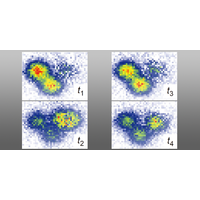
Using superconducting materials can increase the strength of scanning-tunneling-spectroscopy signals by up to a factor of 50, allowing the detection of tiny changes in a single molecule’s vibration energy.

Sign In to Your Journals Account

Filter

Section

Filter

Article Lookup

Enter a citation