Highlights

Controlling Magnetism with Light in a Zero Orbital Angular Momentum Antiferromagnet

Mattias Matthiesen, Jorrit R. Hortensius, Samuel Mañas-Valero, Itzik Kapon, Dumitru Dumcenco, Enrico Giannini, Makars Šiškins, Boris A. Ivanov, Herre S. J. van der Zant, Eugenio Coronado, Alexey B. Kuzmenko, Dmytro Afanasiev, and Andrea D. Caviglia

Phys. Rev. Lett. 130, 076702 (2023) - Published 17 February, 2023

Coherent spins can be excited in an antiferromagnetic insulator in spite of the absence of orbital angular momentum.

Non-Gaussian Diffusion Near Surfaces

Arthur Alexandre, Maxime Lavaud, Nicolas Fares, Elodie Millan, Yann Louyer, Thomas Salez, Yacine Amarouchene, Thomas Guérin, and David S. Dean

Phys. Rev. Lett. 130, 077101 (2023) - Published 15 February, 2023

An analytical model paired with precise experimental measurements explains the origin of the complex dynamics of a colloidal particle close to a flat surface.

Bottom-Up Growth of Monolayer Honeycomb SiC

C. M. Polley, H. Fedderwitz, T. Balasubramanian, A. A. Zakharov, R. Yakimova, O. Bäcke, J. Ekman, S. P. Dash, S. Kubatkin, and S. Lara-Avila

Phys. Rev. Lett. 130, 076203 (2023) - Published 14 February, 2023

Adapting a method for making graphene, researchers have created a 2D honeycomb material that is predicted to have desirable mechanical, thermal, and optical properties.

Measurement of the Electron Magnetic Moment

X. Fan, T. G. Myers, B. A. D. Sukra, and G. Gabrielse

Phys. Rev. Lett. 130, 071801 (2023) - Published 13 February, 2023

Measurements of the magnetic moment of the electron have achieved unprecedented accuracy, showing great potential for the search of physics beyond the standard model.

Final Result of the Majorana Demonstrator’s Search for Neutrinoless Double-β Decay in Ge76

I. J. Arnquist et al. (Majorana Collaboration)

Phys. Rev. Lett. 130, 062501 (2023) - Published 10 February, 2023

The final results from the Majorana Demonstrator’s search for neutrinoless double-beta decay in 76Ge set an upper limit on the half-life of this decay to be T1/2>8.3×1025 years.

Non-Hermitian Spectral Flows and Berry-Chern Monopoles

Lucien Jezequel and Pierre Delplace

Phys. Rev. Lett. 130, 066601 (2023) - Published 10 February, 2023

A generalization of the correspondence between a spectral flow and the topological charges to non-Hermitian systems leads to the emergence of Berry-Chern monopoles.

Superradiant Droplet Emission from Parametrically Excited Cavities

Valeri Frumkin, John W. M. Bush, and Konstantinos Papatryfonos

Phys. Rev. Lett. 130, 064002 (2023) - Published 9 February, 2023

Experiments reveal a hydrodynamic analog of an important effect in quantum optics called superradiance.

Ultra-Large-Scale Deterministic Entanglement Containing 2×20 400 Optical Modes Based on Time-Delayed Quantum Interferometer

Yanfen Zhou, Wei Wang, Tingting Song, Xutong Wang, Qiqi Zhu, Kai Zhang, Shengshuai Liu, and Jietai Jing

Phys. Rev. Lett. 130, 060801 (2023) - Published 7 February, 2023

A time-delayed quantum interferometer is used to generate deterministic continuous-variable entanglement with 40800 optical modes.

Exotic Compact Objects and the Fate of the Light-Ring Instability

Pedro V. P. Cunha, Carlos Herdeiro, Eugen Radu, and Nicolas Sanchis-Gual

Phys. Rev. Lett. 130, 061401 (2023) - Published 7 February, 2023

The results of new simulations negate the argument that some objects thought to be black holes are instead hypothetical exotic systems called bosonic stars.

First Probe of Sub-GeV Dark Matter beyond the Cosmological Expectation with the COHERENT CsI Detector at the SNS

D. Akimov et al.

Phys. Rev. Lett. 130, 051803 (2023) - Published 3 February, 2023

Hypothetical accelerator-produced light scalar particles, within a mass range around 25 MeV, for the first time are ruled out from being all of the expected dark matter.

Enrichment of Scavenged Particles in Jet Drops Determined by Bubble Size and Particle Position

Lena Dubitsky, Oliver McRae, and James C. Bird

Phys. Rev. Lett. 130, 054001 (2023) - Published 3 February, 2023

Experiments reveal new details of the process by which contaminants in the ocean could reach the atmosphere through the bursting of bubbles in foam.

Entanglement of Trapped-Ion Qubits Separated by 230 Meters

V. Krutyanskiy, M. Galli, V. Krcmarsky, S. Baier, D. A. Fioretto, Y. Pu, A. Mazloom, P. Sekatski, M. Canteri, M. Teller, J. Schupp, J. Bate, M. Meraner, N. Sangouard, B. P. Lanyon, and T. E. Northup

Phys. Rev. Lett. 130, 050803 (2023) - Published 2 February, 2023

Researchers have achieved long-distance entanglement between two calcium ions, each of which lies in a different building, showing that trapped ions could be used to create quantum networks.

Search for the Majorana Nature of Neutrinos in the Inverted Mass Ordering Region with KamLAND-Zen

S. Abe et al. (KamLAND-Zen Collaboration)

Phys. Rev. Lett. 130, 051801 (2023) - Published 30 January, 2023

Detecting neutrinoless double-beta decay would confirm that the neutrino is its own antiparticle. Data from the KamLAND-Zen experiment contain no strong evidence of such events, constraining neutrino properties.

Homophily-Based Social Group Formation in a Spin Glass Self-Assembly Framework

Jan Korbel, Simon D. Lindner, Tuan Minh Pham, Rudolf Hanel, and Stefan Thurner

Phys. Rev. Lett. 130, 057401 (2023) - Published 30 January, 2023

Homophilic interactions drive the formation dynamics of social groups, according to a model of opinions expressed on social networks which uses a spin-glass framework.

Curvature-Regulated Multiphase Patterns in Tori

Ting Wang, Zhijun Dai, Michel Potier-Ferry, and Fan Xu

Phys. Rev. Lett. 130, 048201 (2023) - Published 25 January, 2023

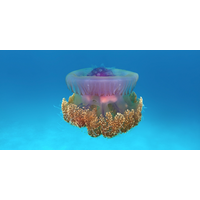
A new model explains the wrinkling patterns seen in nature’s donut-shaped objects, such as those found in jellyfish.

Fano Combs in the Directional Mie Scattering of a Water Droplet

Javier Tello Marmolejo, Adriana Canales, Dag Hanstorp, and Ricardo Méndez-Fragoso

Phys. Rev. Lett. 130, 043804 (2023) - Published 24 January, 2023

Captivating patterns found in the light scattered by an evaporating water droplet could be used to infer the properties of the droplet as it shrinks.

Two-Dimensional Topological Insulator State in Cadmium Arsenide Thin Films

Alexander C. Lygo, Binghao Guo, Arman Rashidi, Victor Huang, Pablo Cuadros-Romero, and Susanne Stemmer

Phys. Rev. Lett. 130, 046201 (2023) - Published 24 January, 2023

Utilizing surface state hybridization, a 2D topological insulator state has been demonstrated in 20 nm thin film of a 3D topological insulator, Cd3As2, using gate-voltage-tuned magnetotransport measurements.

Synchronous Observation of Bell Nonlocality and State-Dependent Contextuality

Peng Xue, Lei Xiao, G. Ruffolo, A. Mazzari, T. Temistocles, M. Terra Cunha, and R. Rabelo

Phys. Rev. Lett. 130, 040201 (2023) - Published 23 January, 2023

Theoretical and experimental results demonstrate that Bell nonlocality and contextuality tests can be witnessed at the same time, contrary to a previous theorem.

Thermal Convection in a Central Force Field Mediated by Sound

John P. Koulakis, Yotam Ofek, Seth Pree, and Seth Putterman

Phys. Rev. Lett. 130, 034002 (2023) - Published 20 January, 2023

A recently discovered acoustic effect allows a hot gas to simulate the gravity-induced convection within a star or giant planet.

Growth of Mesoscale Ordered Two-Dimensional Hydrogen-Bond Organic Framework with the Observation of Flat Band

Minghu Pan, Xin Zhang, Yinong Zhou, Pengdong Wang, Qi Bian, Hang Liu, Xingyue Wang, Xiaoyin Li, Aixi Chen, Xiaoxu Lei, Shaojian Li, Zhengwang Cheng, Zhibin Shao, Haoxuan Ding, Jianzhi Gao, Fangsen Li, and Feng Liu

Phys. Rev. Lett. 130, 036203 (2023) - Published 20 January, 2023

Topological flat bands are observed in a self-assembled monolayer of a 2D hydrogen bond organic framework.

Sign In to Your Journals Account

Filter

Section

Filter

Article Lookup

Enter a citation