Highlights

Helical Locomotion in Yield Stress Fluids

Farshad Nazari, Kourosh Shoele, and Hadi Mohammadigoushki

Phys. Rev. Lett. 130, 114002 (2023) - Published 16 March, 2023

If a helical bacteria’s tail propulsion is strong enough to deform the yield-stress fluid ahead of the swimmer, locomotion proceeds.

Universal Quantum Rewinding Protocol with an Arbitrarily High Probability of Success

D. Trillo, B. Dive, and M. Navascués

Phys. Rev. Lett. 130, 110201 (2023) - Published 14 March, 2023

A new technique for reversing the evolution of a quantum system could become a key tool in quantum information technology.

Electronic Excitation Response of DNA to High-Energy Proton Radiation in Water

Christopher Shepard, Dillon C. Yost, and Yosuke Kanai

Phys. Rev. Lett. 130, 118401 (2023) - Published 13 March, 2023

A study of the electron excitation response of DNA to proton radiation has elucidated mechanisms of damage incurred during proton radiotherapy.

Spin, Charge, and η-Spin Separation in One-Dimensional Photodoped Mott Insulators

Yuta Murakami, Shintaro Takayoshi, Tatsuya Kaneko, Andreas M. Läuchli, and Philipp Werner

Phys. Rev. Lett. 130, 106501 (2023) - Published 10 March, 2023

A derivation of the exact expression for the wave function of photodoped metastable states in one-dimensional Mott insulators shows that these systems host a number of correlations among the active degrees freedom, such as spin, charge and η-spin separation.

Light-Induced Subnanometric Modulation of a Single-Molecule Electron Source

Hirofumi Yanagisawa, Markus Bohn, Hirotaka Kitoh-Nishioka, Florian Goschin, and Matthias F. Kling

Phys. Rev. Lett. 130, 106204 (2023) - Published 8 March, 2023

The molecular orbitals of a single C60 molecule on a tungsten tip can be used to shape the emission pattern of electrons.

Electronic Excited States in Extreme Limits via Ensemble Density Functionals

Tim Gould, Derk P. Kooi, Paola Gori-Giorgi, and Stefano Pittalis

Phys. Rev. Lett. 130, 106401 (2023) - Published 8 March, 2023

A venerable strategy for approximating a system’s ground states has now been extended to accommodate its excited states.

Evidence of Antineutrinos from Distant Reactors Using Pure Water at SNO+

A. Allega et al. (The SNO+ Collaboration)

Phys. Rev. Lett. 130, 091801 (2023) - Published 1 March, 2023

Researchers have captured the signal of neutrinos from a nuclear reactor using a water-filled neutrino detector, a first for such a device.

Proofs of Network Quantum Nonlocality in Continuous Families of Distributions

Alejandro Pozas-Kerstjens, Nicolas Gisin, and Marc-Olivier Renou

Phys. Rev. Lett. 130, 090201 (2023) - Published 28 February, 2023

A conjecture initially formulated by applying machine learning techniques to network nonlocality is rigorously proved.

Chiral Light Amplifier with Pumped Weyl Semimetals

Yusuke Nishida

Phys. Rev. Lett. 130, 096903 (2023) - Published 28 February, 2023

While not yet experimentally realizable, a theory shows that a pumped Weyl semimetal could potentially be used as a “chiral light amplifier” with helicity selectivity whose performance could be tuned using electric, chiral magnetic, and anomalous Hall conductivities.

Rigorous Criteria for the Collapse of Nonlinear Cooperative Networks

Rui-Jie Wu, Yi-Xiu Kong, Zengru Di, Jordi Bascompte, and Gui-Yuan Shi

Phys. Rev. Lett. 130, 097401 (2023) - Published 27 February, 2023

An analytic approach for obtaining rigorous bounds on tipping points for general nonlinear cooperative networks makes it possible to calculate accurately the criteria for the collapse of such networks.

Single-Collision Statistics Reveal a Global Mechanism Driven by Sample History for Contact Electrification in Granular Media

Galien Grosjean and Scott Waitukaitis

Phys. Rev. Lett. 130, 098202 (2023) - Published 27 February, 2023

The results of new experiments indicate that surface-adsorbed water molecules are responsible for contact electrification in granular matter, a finding that challenges established models of this phenomenon.

Nonaffine Deformation of Semiflexible Polymer and Fiber Networks

Sihan Chen, Tomer Markovich, and Fred C. MacKintosh

Phys. Rev. Lett. 130, 088101 (2023) - Published 24 February, 2023

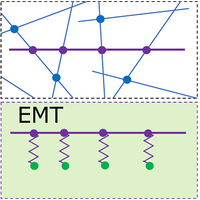
The nonaffine properties of semiflexible networks (common in biomaterials) are captured by an analytical model under various conditions in both 2D and 3D.

Energetics of Microwaves Probed by Double Quantum Dot Absorption

Subhomoy Haldar, Harald Havir, Waqar Khan, Sebastian Lehmann, Claes Thelander, Kimberly A. Dick, and Ville F. Maisi

Phys. Rev. Lett. 130, 087003 (2023) - Published 23 February, 2023

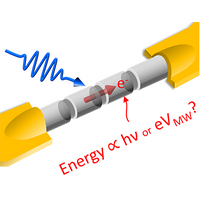
Detuning and stopping-potential measurements in a quantum dot photodiode demonstrate a microwave analog of the photoelectric effect.

Nonlinear Effects in Black Hole Ringdown

Mark Ho-Yeuk Cheung, Vishal Baibhav, Emanuele Berti, Vitor Cardoso, Gregorio Carullo, Roberto Cotesta, Walter Del Pozzo, Francisco Duque, Thomas Helfer, Estuti Shukla, and Kaze W. K. Wong

Phys. Rev. Lett. 130, 081401 (2023) - Published 22 February, 2023

Simulations show that nonlinear spacetime dynamics manifest in the postmerger gravitational-wave signal of binary black hole coalescence.

Nonlinearities in Black Hole Ringdowns

Keefe Mitman, Macarena Lagos, Leo C. Stein, Sizheng Ma, Lam Hui, Yanbei Chen, Nils Deppe, François Hébert, Lawrence E. Kidder, Jordan Moxon, Mark A. Scheel, Saul A. Teukolsky, William Throwe, and Nils L. Vu

Phys. Rev. Lett. 130, 081402 (2023) - Published 22 February, 2023

Simulations show that nonlinear spacetime dynamics manifest in the postmerger gravitational-wave signal of binary black hole coalescence.

Optimal Cooling of Multiple Levitated Particles through Far-Field Wavefront Shaping

Jakob Hüpfl, Nicolas Bachelard, Markus Kaczvinszki, Michael Horodynski, Matthias Kühmayer, and Stefan Rotter

Phys. Rev. Lett. 130, 083203 (2023) - Published 22 February, 2023

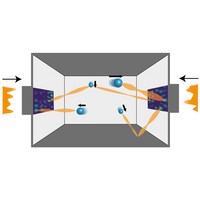
Researchers predict that the “scattering matrix” of a collection of particles could be used to slow the particles down, potentially allowing for the cooling of significantly more particles than is possible with current techniques.

Quantifying Energy Conversion in Higher-Order Phase Space Density Moments in Plasmas

Paul A. Cassak, M. Hasan Barbhuiya, Haoming Liang, and Matthew R. Argall

Phys. Rev. Lett. 130, 085201 (2023) - Published 22 February, 2023

From first principles, the energy conversion associated with higher moments is calculated for a plasma that is far from local thermodynamic equilibrium.

Quantum-Path-Resolved Attosecond High-Harmonic Spectroscopy

Antoine Camper, Amélie Ferré, Valérie Blanchet, Dominique Descamps, Nan Lin, Stéphane Petit, Robert Lucchese, Pascal Salières, Thierry Ruchon, and Yann Mairesse

Phys. Rev. Lett. 130, 083201 (2023) - Published 21 February, 2023

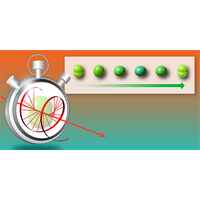
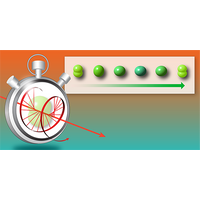
Two groups demonstrate innovative ways to capture the ultrafast motion of electrons in atoms and molecules.

Attosecond Imaging of Electronic Wave Packets

Gabriel A. Stewart, Paul Hoerner, Duke A. Debrah, Suk Kyoung Lee, H. Bernhard Schlegel, and Wen Li

Phys. Rev. Lett. 130, 083202 (2023) - Published 21 February, 2023

Two groups demonstrate innovative ways to capture the ultrafast motion of electrons in atoms and molecules.

Half-Integer Conductance Plateau at the ν=2/3 Fractional Quantum Hall State in a Quantum Point Contact

J. Nakamura, S. Liang, G. C. Gardner, and M. J. Manfra

Phys. Rev. Lett. 130, 076205 (2023) - Published 17 February, 2023

Aharanov-Bohm interference is observed in some devices but not others depending on their edge properties in certain quantum Hall regimes.

Sign In to Your Journals Account

Filter

Section

Filter

Article Lookup

Enter a citation