Highlights

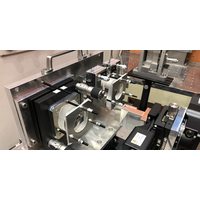
Measurement of the Earth Tides with a Diamagnetic-Levitated Micro-Oscillator at Room Temperature

Yingchun Leng, Yiming Chen, Rui Li, Lihua Wang, Hao Wang, Lei Wang, Han Xie, Chang-Kui Duan, Pu Huang, and Jiangfeng Du

Phys. Rev. Lett. 132, 123601 (2024) - Published 22 March, 2024

A new gravimeter is compact and stable and can detect the daily solar and lunar gravitational oscillations that are responsible for the tides.

Precision-Spectroscopic Determination of the Binding Energy of a Two-Body Quantum System: The Hydrogen Atom and the Proton-Size Puzzle

Simon Scheidegger and Frédéric Merkt

Phys. Rev. Lett. 132, 113001 (2024) - Published 11 March, 2024

Researchers have measured the transition energy of several highly excited states, which could help resolve a discrepancy about the size of the proton.

Positronium Laser Cooling via the 13S−23P Transition with a Broadband Laser Pulse

L. T. Glöggler et al. (AEḡIS Collaboration)

Phys. Rev. Lett. 132, 083402 (2024) - Published 22 February, 2024

Researchers have managed to cool an atom-like system made of an electron and a positron using a technique commonly used in cold-atom experiments.

Equation of State and Thermometry of the 2D SU(N) Fermi-Hubbard Model

G. Pasqualetti, O. Bettermann, N. Darkwah Oppong, E. Ibarra-García-Padilla, S. Dasgupta, R. T. Scalettar, K. R. A. Hazzard, I. Bloch, and S. Fölling

Phys. Rev. Lett. 132, 083401 (2024) - Published 21 February, 2024

Ultracold Yb gas in an optical lattice realizes the equation of state of the Fermi-Hubbard model across the Mott crossover temperature.

Photonic Flatband Resonances in Multiple Light Scattering

Thanh Xuan Hoang, Daniel Leykam, and Yuri Kivshar

Phys. Rev. Lett. 132, 043803 (2024) - Published 23 January, 2024

Light–matter interactions in certain one-dimensional photonic materials can bring light nearly to a standstill, an effect that researchers show requires consideration of long-range interactions between the material’s components.

Development of Neutron Interferometer Using Multilayer Mirrors and Measurements of Neutron-Nuclear Scattering Length with Pulsed Neutron Source

Takuhiro Fujiie, Masahiro Hino, Takuya Hosobata, Go Ichikawa, Masaaki Kitaguchi, Kenji Mishima, Yoshichika Seki, Hirohiko M. Shimizu, and Yutaka Yamagata

Phys. Rev. Lett. 132, 023402 (2024) - Published 12 January, 2024

Researchers have demonstrated a mirror-based neutron interferometer that should be more sensitive to beyond-standard-model particle interactions than previous instruments.

Signatures of Prethermalization in a Quenched Cavity-Mediated Long-Range Interacting Fermi Gas

Zemao Wu, Jijie Fan, Xue Zhang, Jiansheng Qi, and Haibin Wu

Phys. Rev. Lett. 131, 243401 (2023) - Published 12 December, 2023

Relaxation dynamics of an ultracold Fermi gas inside an optical resonator are observed experimentally by quenching the system across the Dicke phase transition to reveal a prethermalized quantum state.

Mass Difference of Tritium and Helium-3

Moisés Medina Restrepo and Edmund G. Myers

Phys. Rev. Lett. 131, 243002 (2023) - Published 11 December, 2023

Measurement of the mass difference between tritium and helium-3 achieves better precision by a factor of three for the Q-value of tritium beta-decay.

Single-Shot Measurements of Phonon Number States Using the Autler-Townes Effect

Marion Mallweger, Murilo Henrique de Oliveira, Robin Thomm, Harry Parke, Natalia Kuk, Gerard Higgins, Romain Bachelard, Celso Jorge Villas-Boas, and Markus Hennrich

Phys. Rev. Lett. 131, 223603 (2023) - Published 28 November, 2023

A new method based on the Autler-Townes effect can be used to measure the motional states of trapped ions in the number basis.

Photon Pathways and the Nonperturbative Scaling Law of High Harmonic Generation

Mekha Vimal, Martin Luttmann, Titouan Gadeyne, Matthieu Guer, Romain Cazali, David Bresteau, Fabien Lepetit, Olivier Tcherbakoff, Jean-François Hergott, Thierry Auguste, and Thierry Ruchon

Phys. Rev. Lett. 131, 203402 (2023) - Published 16 November, 2023

A new interpretation of high-harmonic generation—the cornerstone of attosecond physics—paves the way for quantum applications of this process.

Trapping and Imaging Single Dysprosium Atoms in Optical Tweezer Arrays

Damien Bloch, Britton Hofer, Sam R. Cohen, Antoine Browaeys, and Igor Ferrier-Barbut

Phys. Rev. Lett. 131, 203401 (2023) - Published 14 November, 2023

Trapping and imaging single dysprosium atoms extends the utility of optical tweezer arrays to electronically complex species, opening the door to new quantum physics studies.

Engineering Field-Insensitive Molecular Clock Transitions for Symmetry Violation Searches

Yuiki Takahashi, Chi Zhang, Arian Jadbabaie, and Nicholas R. Hutzler

Phys. Rev. Lett. 131, 183003 (2023) - Published 31 October, 2023

Researchers have engineered ultracold molecular transitions ideally suited for probing beyond-standard-model effects of symmetry violations.

High-Purity Generation and Switching of Twisted Single Photons

Haoqi Zhao, Yichen Ma, Zihe Gao, Na Liu, Tianwei Wu, Shuang Wu, Xilin Feng, James Hone, Stefan Strauf, and Liang Feng

Phys. Rev. Lett. 131, 183801 (2023) - Published 31 October, 2023

An experiment combines the two-dimensional semiconductor WSe2 with a spin-orbit-coupled microring resonator to demonstrate the high-purity generation of twisted single photons and its convenient switching between different orbital angular momentum states.

Emergence of a Spin Microemulsion in Spin-Orbit Coupled Bose-Einstein Condensates

Ethan C. McGarrigle, Kris T. Delaney, Leon Balents, and Glenn H. Fredrickson

Phys. Rev. Lett. 131, 173403 (2023) - Published 26 October, 2023

A phase that shares some properties with mayonnaise can form in a Bose-Einstein condensate.

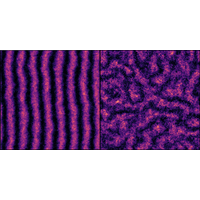
Observation of Anisotropic Superfluid Density in an Artificial Crystal

J. Tao, M. Zhao, and I. B. Spielman

Phys. Rev. Lett. 131, 163401 (2023) - Published 18 October, 2023

Trapping a Bose-Einstein condensate (BEC) in an optical lattice, researchers confirm a 53-year-old theory that connects BECs to superfluids and supersolids.

Femtosecond Reduction of Atomic Scattering Factors Triggered by Intense X-Ray Pulse

Ichiro Inoue, Jumpei Yamada, Konrad J. Kapcia, Michal Stransky, Victor Tkachenko, Zoltan Jurek, Takato Inoue, Taito Osaka, Yuichi Inubushi, Atsuki Ito, Yuto Tanaka, Satoshi Matsuyama, Kazuto Yamauchi, Makina Yabashi, and Beata Ziaja

Phys. Rev. Lett. 131, 163201 (2023) - Published 17 October, 2023

Measurements indicate that intense x-ray pulses can change the electronic structure of a material on femtosecond timescales, a finding that could improve imaging of light–matter interactions.

Long-Lived Squeezed Ground States in a Quantum Spin Ensemble

Lin Xin, Maryrose Barrios, Julia T. Cohen, and Michael S. Chapman

Phys. Rev. Lett. 131, 133402 (2023) - Published 29 September, 2023

Spin squeezed ground states of a Bose-Einstein condensate are achieved by a shortcut to adiabaticity involving Hamiltonian tuning.

Hamiltonian Ratchet for Matter-Wave Transport

N. Dupont, L. Gabardos, F. Arrouas, N. Ombredane, J. Billy, B. Peaudecerf, and D. Guéry-Odelin

Phys. Rev. Lett. 131, 133401 (2023) - Published 28 September, 2023

Researchers have turned an optical lattice into a ratchet that moves atoms from one site to the next.

Scalable Multipartite Entanglement Created by Spin Exchange in an Optical Lattice

Wei-Yong Zhang, Ming-Gen He, Hui Sun, Yong-Guang Zheng, Ying Liu, An Luo, Han-Yi Wang, Zi-Hang Zhu, Pei-Yue Qiu, Ying-Chao Shen, Xuan-Kai Wang, Wan Lin, Song-Tao Yu, Bin-Chen Li, Bo Xiao, Meng-Da Li, Yu-Meng Yang, Xiao Jiang, Han-Ning Dai, You Zhou, Xiongfeng Ma, Zhen-Sheng Yuan, and Jian-Wei Pan

Phys. Rev. Lett. 131, 073401 (2023) - Published 18 August, 2023

Quantum mechanically entangled groups of eight and ten ultracold atoms provide a critical demonstration for optical-lattice-based quantum processing.

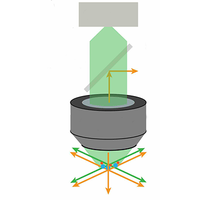
Bichromatic Imaging of Single Molecules in an Optical Tweezer Array

Connor M. Holland, Yukai Lu, and Lawrence W. Cheuk

Phys. Rev. Lett. 131, 053202 (2023) - Published 4 August, 2023

The proposed bichromatic imaging scheme could lead to high-fidelity detection of single CaF molecules trapped in an optical tweezer array.

Sign In to Your Journals Account

Filter

Section

Filter

Article Lookup

Enter a citation