Highlights

Quantum Droplets in Two-Dimensional Bose Mixtures at Finite Temperature

G. Spada, S. Pilati, and S. Giorgini

Phys. Rev. Lett. 133, 083401 (2024) - Published 19 August, 2024

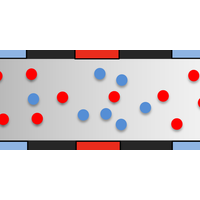
Quantum Monte Carlo simulations of Bose mixtures in 2D at finite temperature reveal the coexistence of liquid droplets and gas phases.

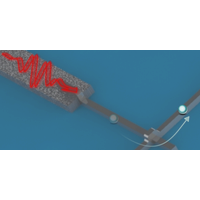
Efficient Microwave Photon-to-Electron Conversion in a High-Impedance Quantum Circuit

O. Stanisavljević, J.-C. Philippe, J. Gabelli, M. Aprili, J. Estève, and J. Basset

Phys. Rev. Lett. 133, 076302 (2024) - Published 16 August, 2024

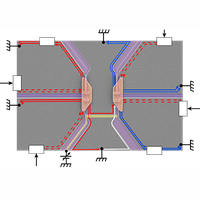
A new device converts a stream of microwave photons into an electric current with high efficiency, which will benefit quantum information technologies.

Topological Thermal Hall Conductance of Even-Denominator Fractional States

Arup Kumar Paul, Priya Tiwari, Ron Melcer, Vladimir Umansky, and Moty Heiblum

Phys. Rev. Lett. 133, 076601 (2024) - Published 16 August, 2024

The topological order of two even-denominator fractional Hall states is determined by thermal Hall conductance measurements, confirming their non-Abelian order, hence supporting Majorana quasiparticles.

Stringent Tests of Lorentz Invariance Violation from LHAASO Observations of GRB 221009A

Zhen Cao et al. (The LHAASO Collaboration)

Phys. Rev. Lett. 133, 071501 (2024) - Published 15 August, 2024

An analysis of the brightest gamma-ray burst ever observed reveals no difference in the propagation speed of different frequencies of light—placing some of the tightest constraints on certain violations of general relativity.

MoEDAL Search in the CMS Beam Pipe for Magnetic Monopoles Produced via the Schwinger Effect

B. Acharya et al.

Phys. Rev. Lett. 133, 071803 (2024) - Published 15 August, 2024

A search for the magnetic monopoles that carry 2 to 45 Dirac units of magnetic charge that could have been produced by heavy-ion collisions places world-leading limits on the monopole masses.

Temporal Refraction in an Acoustic Phononic Lattice

Brian L. Kim, Christopher Chong, and Chiara Daraio

Phys. Rev. Lett. 133, 077201 (2024) - Published 15 August, 2024

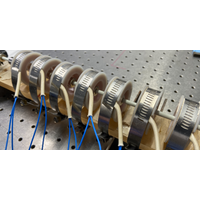
A magnet-and-coil system reveals how acoustic waves reflect and refract when the host medium suddenly changes elasticity.

Measurement of Energy Correlators inside Jets and Determination of the Strong Coupling αS(mZ)

A. Hayrapetyan et al. (CMS Collaboration)

Phys. Rev. Lett. 133, 071903 (2024) - Published 14 August, 2024

The measurements of the two- and three-particle energy correlators at LHC results in the most precise value of the strong coupling constant αs(mZ) obtained using jet-substructure observables.

Discontinuous Transition in Electrolyte Flow through Charge-Patterned Nanochannels

Tine Curk, Sergi G. Leyva, and Ignacio Pagonabarraga

Phys. Rev. Lett. 133, 078201 (2024) - Published 14 August, 2024

Electrically patterning the walls of a nanochannel could provide a route to creating “valves” that abruptly alter the speed at which a charged fluid flows through a nanofluidic device.

Observation of Non-Hermitian Edge Burst in Quantum Dynamics

Lei Xiao, Wen-Tan Xue, Fei Song, Yu-Min Hu, Wei Yi, Zhong Wang, and Peng Xue

Phys. Rev. Lett. 133, 070801 (2024) - Published 13 August, 2024

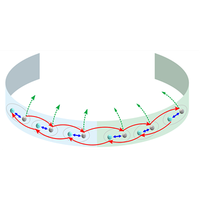
In non-Hermitian systems, boundary effects are more pronounced than in Hermitian systems.

Measuring Entanglement in Physical Networks

Cory Glover and Albert-László Barabási

Phys. Rev. Lett. 133, 077401 (2024) - Published 13 August, 2024

A new mathematical measure of knottiness could help improve the transport efficiencies of subway and road systems, as well as other physical networks.

Neural-network Density Functional Theory Based on Variational Energy Minimization

Yang Li, Zechen Tang, Zezhou Chen, Minghui Sun, Boheng Zhao, He Li, Honggeng Tao, Zilong Yuan, Wenhui Duan, and Yong Xu

Phys. Rev. Lett. 133, 076401 (2024) - Published 12 August, 2024

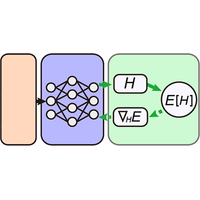
Instead of training the neural networks with predictions derived from DFT, unsupervised learning by treating the energy functional of variational DFT as the loss function of the neural network yields predictions of material properties.

Many-Body Quantum Interference Route to the Two-Channel Kondo Effect: Inverse Design for Molecular Junctions and Quantum Dot Devices

Sudeshna Sen and Andrew K. Mitchell

Phys. Rev. Lett. 133, 076501 (2024) - Published 12 August, 2024

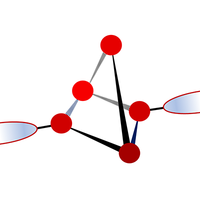
Many-body quantum interference can be used in molecular transistors and quantum dot nanostructures to engineer fractionalized Kondo anyons.

Runaway Gravitational Production of Dark Photons

Christian Capanelli, Leah Jenks, Edward W. Kolb, and Evan McDonough

Phys. Rev. Lett. 133, 061602 (2024) - Published 9 August, 2024

Gravitational production of the hypothetical dark photons due to its nonminimal coupling to gravity can suffer from an instability which leads to runaway particle production.

Simulating Holographic Conformal Field Theories on Hyperbolic Lattices

Santanu Dey, Anffany Chen, Pablo Basteiro, Alexander Fritzsche, Martin Greiter, Matthias Kaminski, Patrick M. Lenggenhager, René Meyer, Riccardo Sorbello, Alexander Stegmaier, Ronny Thomale, Johanna Erdmenger, and Igor Boettcher

Phys. Rev. Lett. 133, 061603 (2024) - Published 9 August, 2024

A proof-of-principle demonstration suggests that holographic correspondences may be simulated in electrical circuits.

Complexity Scaling of Liquid Dynamics

Ian M. Douglass, Jeppe C. Dyre, and Lorenzo Costigliola

Phys. Rev. Lett. 133, 068001 (2024) - Published 9 August, 2024

A data compression algorithm based on Kolmogorov complexity theory allows estimation of dynamic properties of simple liquids, specifically the diffusion coefficient, from a single equilibrium configuration.

Origin of a Topotactic Reduction Effect for Superconductivity in Infinite-Layer Nickelates

Shengwei Zeng, Chi Sin Tang, Zhaoyang Luo, Lin Er Chow, Zhi Shiuh Lim, Saurav Prakash, Ping Yang, Caozheng Diao, Xiaojiang Yu, Zhenxiang Xing, Rong Ji, Xinmao Yin, Changjian Li, X. Renshaw Wang, Qian He, Mark B. H. Breese, A. Ariando, and Huajun Liu

Phys. Rev. Lett. 133, 066503 (2024) - Published 8 August, 2024

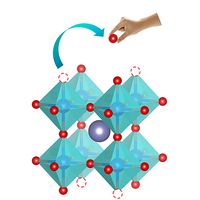
Spectroscopic and transport measurements on optimally reduced nickelate films show a single dx2−y2 orbital occupancy leading to the minimization of the c-axis parameter, a correlation between the orbital asymmetry and the Tc which supports the electronic analogy between nickelate and cuprate superconductors.

Loophole-Free Test of Local Realism via Hardy’s Violation

Si-Ran Zhao, Shuai Zhao, Hai-Hao Dong, Wen-Zhao Liu, Jing-Ling Chen, Kai Chen, Qiang Zhang, and Jian-Wei Pan

Phys. Rev. Lett. 133, 060201 (2024) - Published 7 August, 2024

Local realism is ruled out again in the first loophole-free demonstration of Hardy’s all versus nothing quantum nonlocality test.

Bidirectional Cascaded Superfluorescent Lasing in Air Enabled by Resonant Third Harmonic Photon Exchange from Nitrogen to Argon

Zan Nie, Noa Nambu, Kenneth A. Marsh, Daniel Matteo, C. Kumar Patel, Chaojie Zhang, Yipeng Wu, Stefanos Carlström, Felipe Morales, Serguei Patchkovskii, Olga Smirnova, Misha Ivanov, and Chan Joshi

Phys. Rev. Lett. 133, 063201 (2024) - Published 7 August, 2024

A resonance between energy levels in argon atoms and nitrogen molecules could be used to remotely sense contaminants in air.

Quantum Anomalous Hall Crystal at Fractional Filling of Moiré Superlattices

D. N. Sheng, Aidan P. Reddy, Ahmed Abouelkomsan, Emil J. Bergholtz, and Liang Fu

Phys. Rev. Lett. 133, 066601 (2024) - Published 7 August, 2024

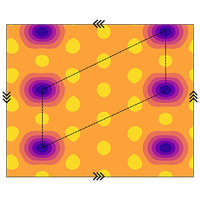
States called quantum anomalous Hall crystals exhibit a quantized Hall conductance with a larger than expected value.

Constraints on Ultraheavy Dark Matter Properties from Dwarf Spheroidal Galaxies with LHAASO Observations

Zhen Cao et al. (LHAASO Collaboration)

Phys. Rev. Lett. 133, 061001 (2024) - Published 6 August, 2024
An analysis of LHAASO data in the direction of sixteen dwarf spheroidal galaxies puts tight constraints on the annihilation and decay of ultra heavy dark matter candidates.

Sign In to Your Journals Account

Filter

Section

Filter

Article Lookup

Enter a citation