Highlights

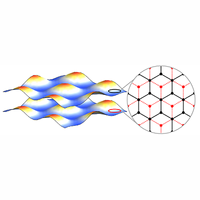
Unbuckling Mechanics of Epithelial Monolayers under Compression

Chandraniva Guha Ray and Pierre A. Haas

Phys. Rev. Lett. 134, 118402 (2025) - Published 18 March, 2025

At sufficiently large compression, buckling amplitude in cell sheets decreases with increasing compression.

First Measurement of a Weak r-Process Reaction on a Radioactive Nucleus

M. Williams et al.

Phys. Rev. Lett. 134, 112701 (2025) - Published 17 March, 2025

The first measurement of a weak r-process reaction on a radioactive nucleus was made possible by novel solid helium targets.

Temperature Sensitivity of a Thorium-229 Solid-State Nuclear Clock

Jacob S. Higgins, Tian Ooi, Jack F. Doyle, Chuankun Zhang, Jun Ye, Kjeld Beeks, Tomas Sikorsky, and Thorsten Schumm

Phys. Rev. Lett. 134, 113801 (2025) - Published 17 March, 2025

Researchers have characterized the temperature-induced frequency shifts of a thorium-229 nuclear transition—an important step in establishing thorium clocks as next-generation frequency standards.

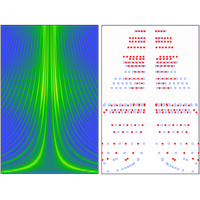
Ideal Flat and Resolved SU(3) Landau Levels in Three Dimensions

Mian Peng, Qiang Wei, Jiale Yuan, Da-Wei Wang, Mou Yan, Han Cai, and Gang Chen

Phys. Rev. Lett. 134, 116601 (2025) - Published 17 March, 2025

Inhomogeneous hoppings in an acoustic lattice introduce pseudomagnetic fields that generate three-dimensional Landau levels with three bosonic degrees of freedom at each Landau level.

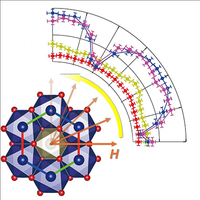
Field-Angle-Resolved Specific Heat in Na2Co2TeO6: Evidence against Kitaev Quantum Spin Liquid

Shengjie Fang, Kumpei Imamura, Yuta Mizukami, Ryuichi Namba, Kota Ishihara, Kenichiro Hashimoto, and Takasada Shibauchi

Phys. Rev. Lett. 134, 106701 (2025) - Published 13 March, 2025

Field-angle-resolved specific heat measurements provide thermodynamic evidence that Na2Co2TeO6 is not a Kitaev spin liquid.

Antiferroelectric Altermagnets: Antiferroelectricity Alters Magnets

Xunkai Duan, Jiayong Zhang, Ziye Zhu, Yuntian Liu, Zhenyu Zhang, Igor Žutić, and Tong Zhou

Phys. Rev. Lett. 134, 106801 (2025) - Published 13 March, 2025

Researchers have proposed methods to tune the properties of altermagnets, a step toward practical applications for this new form of magnet.

Ferroelectric Switchable Altermagnetism

Mingqiang Gu, Yuntian Liu, Haiyuan Zhu, Kunihiro Yananose, Xiaobing Chen, Yongkang Hu, Alessandro Stroppa, and Qihang Liu

Phys. Rev. Lett. 134, 106802 (2025) - Published 13 March, 2025

Researchers have proposed methods to tune the properties of altermagnets, a step toward practical applications for this new form of magnet.

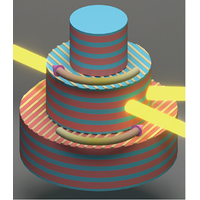
Loss-Enabled Chirality Inversion in Terahertz Metasurfaces

Weibao He, Shun Wan, Yunlan Zuo, Siyang Hu, Ziheng Ren, Zhongyi Yu, Dongsheng Yang, Xiang’ai Cheng, Keyu Xia, Yuze Hu, Hui Jing, and Tian Jiang

Phys. Rev. Lett. 134, 106901 (2025) - Published 13 March, 2025

Illuminating a metasurface with a laser can enable the rapid modulation of the polarization of terahertz light transmitted through the metasurface.

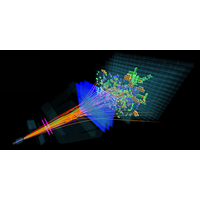
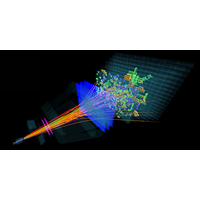
First Evidence for Direct CP Violation in Beauty to Charmonium Decays

R. Aaij et al. (LHCb Collaboration)

Phys. Rev. Lett. 134, 101801 (2025) - Published 12 March, 2025

A symmetry violation has been observed in a particle-decay process that—together with five related decays—could shed light on the matter–antimatter imbalance in the Universe.

Study of Λb0 and Ξb0 Decays to Λh+h′− and Evidence for CP Violation in Λb0→ΛK+K− Decays

R. Aaij et al. (LHCb Collaboration)

Phys. Rev. Lett. 134, 101802 (2025) - Published 12 March, 2025

A symmetry violation has been observed in a particle-decay process that—together with five related decays—could shed light on the matter–antimatter imbalance in the Universe.

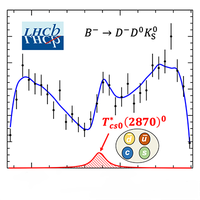
Observation of the Open-Charm Tetraquark Candidate Tcs0*(2870)0 in the B−→D−D0KS0 Decay

R. Aaij et al. (LHCb Collaboration)

Phys. Rev. Lett. 134, 101901 (2025) - Published 11 March, 2025

An indication of isospin breaking is seen in certain decay modes of Tcs0*(2870) and Tcs1*(2900), which might shed light on the nature of these tetraquark candidates.

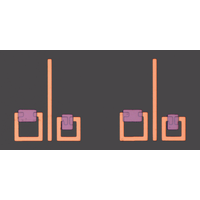
Topological Degeneracy Induced by Twisting

Han Peng, Qiang Wang, Meng Xiao, Xiayi Wang, Shining Zhu, and Hui Liu

Phys. Rev. Lett. 134, 106601 (2025) - Published 11 March, 2025

Twisting two metasurfaces breaks mirror symmetry to generate tunable topological degeneracies, producing mechanism for controlling dispersion and polarization in photonics.

Metadensity Functional Theory for Classical Fluids: Extracting the Pair Potential

Stefanie M. Kampa, Florian Sammüller, Matthias Schmidt, and Robert Evans

Phys. Rev. Lett. 134, 107301 (2025) - Published 11 March, 2025

Combining classical density functional theory and machine learning gives access to a generalized universal functional for truncated, pairwise interacting model fluids.

Dynamical Scaling and Planckian Dissipation Due to Heavy-Fermion Quantum Criticality

Andreas Gleis, Seung-Sup B. Lee, Gabriel Kotliar, and Jan von Delft

Phys. Rev. Lett. 134, 106501 (2025) - Published 10 March, 2025

A two-site cellular dynamical mean-field theory calculation suggests that the Kondo-breakdown quantum critical point is a novel disorder-free strange-metal fixed point.

Higher Vortexability: Zero-Field Realization of Higher Landau Levels

Manato Fujimoto, Daniel E. Parker, Junkai Dong, Eslam Khalaf, Ashvin Vishwanath, and Patrick Ledwith

Phys. Rev. Lett. 134, 106502 (2025) - Published 10 March, 2025

Chern bands at zero magnetic field can have wave functions that share essential features with first Landau level, and are promising for realizing non-Abelian topological order.

Thermomajorization Mpemba Effect

Tan Van Vu and Hisao Hayakawa

Phys. Rev. Lett. 134, 107101 (2025) - Published 10 March, 2025

The thermomajorization Mpemba effect implies the occurrence of the Mpemba effect within a bounded time for any monotone distance measure, utilized to quantify the anomalous relaxation speed.

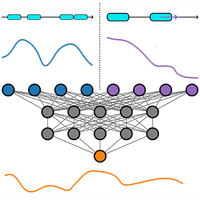
Measurement of Atmospheric Neutrino Oscillation Parameters Using Convolutional Neural Networks with 9.3 Years of Data in IceCube DeepCore

R. Abbasi et al. (IceCube Collaboration)

Phys. Rev. Lett. 134, 091801 (2025) - Published 7 March, 2025

Strong constraints from atmospheric neutrinos are placed on oscillation parameters using the DeepCore subdetector of the IceCube Neutrino Observatory.

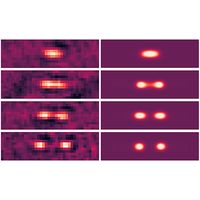
Dynamical Formation of Multiple Quantum Droplets in a Bose-Bose Mixture

L. Cavicchioli, C. Fort, F. Ancilotto, M. Modugno, F. Minardi, and A. Burchianti

Phys. Rev. Lett. 134, 093401 (2025) - Published 7 March, 2025

A single quantum droplet in a two-component bosonic mixture of ultracold atoms breaks up into multiple droplets, a behavior consistent with capillary instability.

Auroralike Light from a Polymer p−n Junction Emitting Free Electrons

Dongze Wang and Jun Gao

Phys. Rev. Lett. 134, 096203 (2025) - Published 7 March, 2025

The discovery of a mini aurora above a light-emitting polymer material reveals an electron-ejection process that might be useful in field-emission displays and material fabrication.

Raman Forbidden Layer-Breathing Modes in Layered Semiconductor Materials Activated by Phonon and Optical Cavity Effects

Miao-Ling Lin, Jiang-Bin Wu, Xue-Lu Liu, Tao Liu, Rui Mei, Heng Wu, Shan Guan, Jia-Liang Xie, Jun-Wei Luo, Lin-Wang Wang, Andrea C. Ferrari, and Ping-Heng Tan

Phys. Rev. Lett. 134, 096903 (2025) - Published 7 March, 2025

Layered semiconductor multilayers can serve as photon-phonon cavities to enable wavevector matching between photon and standing waves of a layer-breathing phonon displacement field along the out-of-plane axis, leading to emergence of Raman forbidden layer-breathing modes.

Sign In to Your Journals Account

Filter

Section

Filter

Article Lookup

Enter a citation