Highlights

Synergistic Signatures of Group Mechanisms in Higher-Order Systems

Thomas Robiglio, Matteo Neri, Davide Coppes, Cosimo Agostinelli, Federico Battiston, Maxime Lucas, and Giovanni Petri

Phys. Rev. Lett. 134, 137401 (2025) - Published 31 March, 2025

A new study of complex systems supports a growing trend that focuses more on analyzing a system’s collective behavior rather than on trying to uncover the underlying interaction mechanisms.

Which Is Which? Identification of the Two Compact Objects in Gravitational-Wave Binaries

Davide Gerosa, Viola De Renzis, Federica Tettoni, Matthew Mould, Alberto Vecchio, and Costantino Pacilio

Phys. Rev. Lett. 134, 121402 (2025) - Published 28 March, 2025

A semisupervised machine-learning approach based on constrained clustering could improve black-hole spin measurements from gravitational waves by 50%, and correct data features like multimodalities and nongaussianities.

Protein Structure Classification Based on X-Ray-Laser-Induced Coulomb Explosion

Tomas André, Ibrahim Dawod, Sebastian Cardoch, Emiliano De Santis, Nicuşor Tîmneanu, and Carl Caleman

Phys. Rev. Lett. 134, 128403 (2025) - Published 27 March, 2025

An intense x-ray pulse from a free-electron laser sends a protein’s atoms flying off in directions that reveal the protein’s structure.

Free-Space Optical Modulation of Free Electrons in the Continuous-Wave Regime

Cruz I. Velasco and F. Javier García de Abajo

Phys. Rev. Lett. 134, 123804 (2025) - Published 26 March, 2025

Stimulated Compton scattering uses light beams to compress free-electron pulses, an approach that bypasses the need for nanostructures.

Unusual Energy Spectra of Matrix Product States

J. Maxwell Silvester, Giuseppe Carleo, and Steven R. White

Phys. Rev. Lett. 134, 126503 (2025) - Published 26 March, 2025

High-energy contributions to the spectra of approximate ground states are a universal feature of matrix product states.

Locomotion of Active Polymerlike Worms in Porous Media

R. Sinaasappel, M. Fazelzadeh, T. Hooijschuur, Q. Di, S. Jabbari-Farouji, and A. Deblais

Phys. Rev. Lett. 134, 128303 (2025) - Published 26 March, 2025

T. Tubifex worms display active polymerlike behavior as they navigate complex environments.

Biermann-Battery-Driven Magnetized Collisionless Shock Precursors in Laser-Produced Plasmas

T. M. Johnson, G. D. Sutcliffe, J. A. Pearcy, A. Birkel, G. Rigon, N. V. Kabadi, B. Lahmann, P. J. Adrian, B. L. Reichelt, J. H. Kunimune, S. G. Dannhoff, M. Cufari, C. K. Li, F. Tsung, H. Chen, J. Katz, and V. T. Tikhonchuk

Phys. Rev. Lett. 134, 125101 (2025) - Published 25 March, 2025

State of the art experiments show that Biermann-battery magnetic fields in laser-driven plasmas can produce a magnetized collisionless shock precursor, mimicking the scenario of Venus bow-shock formation.

g Factor of Boronlike Tin

J. Morgner, B. Tu, M. Moretti, C. M. König, F. Heiße, T. Sailer, V. A. Yerokhin, B. Sikora, N. S. Oreshkina, Z. Harman, C. H. Keitel, S. Sturm, and K. Blaum

Phys. Rev. Lett. 134, 123201 (2025) - Published 24 March, 2025

The g factor of highly ionized tin is measured with a 0.5 parts-per-billion precision.

Microwave-Controlled Cold Chemistry

Fernanda B. V. Martins, Hansjürg Schmutz, Josef A. Agner, Valentina Zhelyazkova, and Frédéric Merkt

Phys. Rev. Lett. 134, 123401 (2025) - Published 24 March, 2025

The heating effect of microwaves has long been used to accelerate reactions. A new experiment shows that microwaves can also excite molecules into a less reactive state.

Topological Phenomena in Artificial Quantum Materials Revealed by Local Chern Markers

Catalin D. Spataru, Wei Pan, and Alexander Cerjan

Phys. Rev. Lett. 134, 126601 (2025) - Published 24 March, 2025

The spectral localizer, a framework for calculating local topological markers, efficiently predicts topology in experimentally realizable materials regardless of whether they are disordered, aperiodic, or metallic.

Anomalous Hall Effect due to Magnetic Fluctuations in a Ferromagnetic Weyl Semimetal

Ola Kenji Forslund, Xiaoxiong Liu, Soohyeon Shin, Chun Lin, Masafumi Horio, Qisi Wang, Kevin Kramer, Saumya Mukherjee, Timur Kim, Cephise Cacho, Chennan Wang, Tian Shang, Victor Ukleev, Jonathan S. White, Pascal Puphal, Yasmine Sassa, Ekaterina Pomjakushina, Titus Neupert, and Johan Chang

Phys. Rev. Lett. 134, 126602 (2025) - Published 24 March, 2025

A signal similar to that produced by the anomalous Hall effect arises in topological materials, but without also exhibiting spontaneous time-reversal symmetry breaking.

Photonic Spin Hall Effect by Electro-optically Induced Pancharatnam-Berry Phases

Xingliang Xie, Hongdao Cheng, Huifeng Chen, Huadan Zheng, Yongchun Zhong, Jieyuan Tang, Jianhui Yu, Zhe Chen, and Wenguo Zhu

Phys. Rev. Lett. 134, 113805 (2025) - Published 21 March, 2025

A new photonic spin Hall effect based on spatially varying Pancharatnam-Berry phases is demonstrated in a spatially homogeneous anisotropic crystal.

Acoustic Exceptional Line Semimetal

Yejian Hu, Jien Wu, Peidong Ye, Weiyin Deng, Jiuyang Lu, Xueqin Huang, Ziyu Wang, Manzhu Ke, and Zhengyou Liu

Phys. Rev. Lett. 134, 116606 (2025) - Published 21 March, 2025

A three-dimensional non-Hermitian phononic crystal hosts an exceptional line semimetal with drumhead surface states and geometry-dependent skin effect protected by wavefunction and spectral topology, respectively.

First Search for Light Dark Matter in the Neutrino Fog with XENONnT

E. Aprile et al. (XENON Collaboration)

Phys. Rev. Lett. 134, 111802 (2025) - Published 20 March, 2025

Bounds on GeV-scale dark matter are placed for the first time in the range of parameter space effected by the neutrino fog.

Chiral Resonant Modes Induced by Intrinsic Birefringence in Lithium Niobate Metasurfaces

Bo Wang, Tingyue Zhu, Yunan Liu, Haifang Yang, Ruhao Pan, and Junjie Li

Phys. Rev. Lett. 134, 113802 (2025) - Published 20 March, 2025

An achiral metasurface selectively transmits two beams of opposite chirality.

Entanglement as a Probe of Hadronization

Jaydeep Datta, Abhay Deshpande, Dmitri E. Kharzeev, Charles Joseph Naïm, and Zhoudunming Tu

Phys. Rev. Lett. 134, 111902 (2025) - Published 19 March, 2025

The entropy of hadrons produced within highly energetic jets can be related to the fragmentation function if the initial quarks and gluons in the jets are maximally entangled.

Backbone Exponent and Annulus Crossing Probability for Planar Percolation

Pierre Nolin, Wei Qian, Xin Sun, and Zijie Zhuang

Phys. Rev. Lett. 134, 117101 (2025) - Published 19 March, 2025

An exact derivation reveals that the the backbone exponent of 2D percolation is a transcendental number

Locality Approach to the Bootstrap Percolation Paradox

Ivailo Hartarsky and Augusto Teixeira

Phys. Rev. Lett. 134, 117102 (2025) - Published 19 March, 2025

A new algorithm to simulate bootstrap percolation achieves perfect agreement with theoretical prediction up to the third order.

Discovery of the Origin of the Enormous Zr88 Neutron-Capture Cross Section and Quantifying Its Impact on Applications

Athanasios Stamatopoulos, Paul E. Koehler, Brad DiGiovine, Veronika Mocko, Artem Matyskin, Christiaan Vermeulen, Aaron Couture, Andrew Cooper, Jonathan Morrell, and Ellen O’Brien

Phys. Rev. Lett. 134, 112702 (2025) - Published 18 March, 2025

Measuring how efficiently an isotope captures neutrons of various energies both confirms and refutes some surprising recent results.

Two Characteristic Contributions to the Superconducting State of 2H−NbSe2

A. Alshemi, E. M. Forgan, A. Hiess, R. Cubitt, J. S. White, K. Schmalzl, and E. Blackburn

Phys. Rev. Lett. 134, 116001 (2025) - Published 18 March, 2025

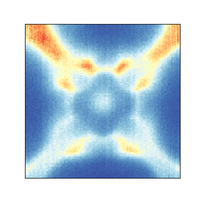
Small angle neutron scattering measurements of the form factor of the magnetic field in the vortex lattice of NbSe2 yield unambiguous evidence for two characteristic length scales for the vortex core-size, compatible with the existence of two bands with different superconducting gap values.

Sign In to Your Journals Account

Filter

Section

Filter

Article Lookup

Enter a citation