Highlights

Flavor Ratio of Astrophysical Neutrinos above 35 TeV in IceCube

M. G. Aartsen et al. (IceCube Collaboration)

Phys. Rev. Lett. 114, 171102 (2015) - Published 28 April, 2015

The highest energy neutrinos ever recorded have a flavor distribution of neutrinos that is consistent with the particles having a cosmic origin.

Quantum Oscillations, Thermoelectric Coefficients, and the Fermi Surface of Semimetallic WTe2

Zengwei Zhu, Xiao Lin, Juan Liu, Benoît Fauqué, Qian Tao, Chongli Yang, Youguo Shi, and Kamran Behnia

Phys. Rev. Lett. 114, 176601 (2015) - Published 27 April, 2015

Measurements of the Fermi surface of WTe2 demonstrate that it is nearly a perfectly compensated semimetal.

Dynamics of a Volvox Embryo Turning Itself Inside Out

Stephanie Höhn, Aurelia R. Honerkamp-Smith, Pierre A. Haas, Philipp Khuc Trong, and Raymond E. Goldstein

Phys. Rev. Lett. 114, 178101 (2015) - Published 27 April, 2015

Images of an algal embryo transitioning into an adult give physicists a rare opportunity to test a mechanical model of morphogenesis.

Probing Atmospheric Electric Fields in Thunderstorms through Radio Emission from Cosmic-Ray-Induced Air Showers

P. Schellart et al.

Phys. Rev. Lett. 114, 165001 (2015) - Published 24 April, 2015

Radio waves generated by cosmic rays provide an unprecedented view of the elusive electric fields in thunderstorms.

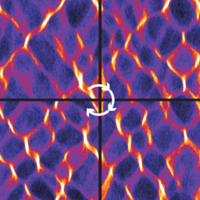
Collective Motion of Self-Propelled Particles with Memory

Ken H. Nagai, Yutaka Sumino, Raul Montagne, Igor S. Aranson, and Hugues Chaté

Phys. Rev. Lett. 114, 168001 (2015) - Published 24 April, 2015

Large vortex and lane structures, as well as other coherent patterns, form in active systems when underdamped stochastic dynamics are modeled.

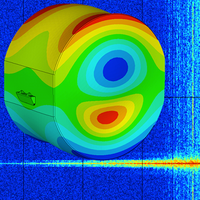
Observation of Parametric Instability in Advanced LIGO

Matthew Evans et al.

Phys. Rev. Lett. 114, 161102 (2015) - Published 23 April, 2015

Ground-based interferometric gravitational wave detectors are predicted to suffer from instabilities that strongly limit the sensitivity of the detectors. Arising from a coupling between optical and mechanical resonances, these instabilities are experimentally observed for the first time.

Public Good Diffusion Limits Microbial Mutualism

Rajita Menon and Kirill S. Korolev

Phys. Rev. Lett. 114, 168102 (2015) - Published 23 April, 2015

Microbial cooperation involves the diffusion of nutrients from one species to another, but too high a diffusion rate weakens the cooperative bond.

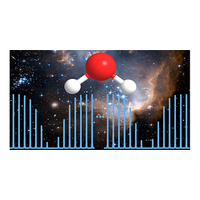
Decade-Spanning High-Precision Terahertz Frequency Comb

Ian A. Finneran, Jacob T. Good, Daniel B. Holland, P. Brandon Carroll, Marco A. Allodi, and Geoffrey A. Blake

Phys. Rev. Lett. 114, 163902 (2015) - Published 21 April, 2015

A new scheme to generate terahertz frequency combs features unprecedented bandwidth and frequency accuracy.

Single-Electron Detection and Spectroscopy via Relativistic Cyclotron Radiation

D. M. Asner et al. (Project 8 Collaboration)

Phys. Rev. Lett. 114, 162501 (2015) - Published 20 April, 2015

An electron’s energy can be determined with high accuracy by detecting the radiation it emits when moving in a magnetic field.

Monoenergetic Positronium Emission from Metal-Organic Framework Crystals

A. C. L. Jones, H. J. Goldman, Q. Zhai, P. Feng, H. W. K. Tom, and A. P. Mills, Jr.

Phys. Rev. Lett. 114, 153201 (2015) - Published 17 April, 2015

A series of low-energy peaks are observed for positronium emitted by the metal-organic framework crystal ZIF-8.

Signature of Anomalous Exciton Localization in the Optical Response of Self-Assembled Organic Nanotubes

E. A. Bloemsma, S. M. Vlaming, V. A. Malyshev, and J. Knoester

Phys. Rev. Lett. 114, 156804 (2015) - Published 17 April, 2015

Self-assembled tubular molecular aggregates are robust against exciton localization, and could therefore act as exciton wires.

Fast-Moving Bacteria Self-Organize into Active Two-Dimensional Crystals of Rotating Cells

Alexander P. Petroff, Xiao-Lun Wu, and Albert Libchaber

Phys. Rev. Lett. 114, 158102 (2015) - Published 17 April, 2015

Rotating bacteria suck other bacteria into a 2D crystal structure, an unprecedented pattern for living organisms.

Entanglement Entropy of Dispersive Media from Thermodynamic Entropy in One Higher Dimension

M. F. Maghrebi and M. T. H. Reid

Phys. Rev. Lett. 114, 151602 (2015) - Published 16 April, 2015

Entanglement entropy – an inherently quantum mechanical property – is related to classical thermodynamic entropy in one higher dimension.

Identifying a Superfluid Reynolds Number via Dynamical Similarity

M. T. Reeves, T. P. Billam, B. P. Anderson, and A. S. Bradley

Phys. Rev. Lett. 114, 155302 (2015) - Published 16 April, 2015

Numerical simulations of a Bose-Einstein condensate flowing past an obstacle uncover a single dimensionless parameter that characterizes the onset of superfluid turbulence.

High-Pressure Hydrogen Sulfide from First Principles: A Strongly Anharmonic Phonon-Mediated Superconductor

Ion Errea, Matteo Calandra, Chris J. Pickard, Joseph Nelson, Richard J. Needs, Yinwei Li, Hanyu Liu, Yunwei Zhang, Yanming Ma, and Francesco Mauri

Phys. Rev. Lett. 114, 157004 (2015) - Published 16 April, 2015

The coupling of electrons to anharmonic crystal vibrations may explain the record high-temperature superconductivity in highly pressurized hydrogen sulfide.

Intermediate Band Solar Cell with Extreme Broadband Spectrum Quantum Efficiency

A. Datas, E. López, I. Ramiro, E. Antolín, A. Martí, A. Luque, R. Tamaki, Y. Shoji, T. Sogabe, and Y. Okada

Phys. Rev. Lett. 114, 157701 (2015) - Published 16 April, 2015

The spectral range over which intermediate band gap solar cell devices absorb is significantly increased, with absorption for wavelengths from 250 nm to 6000 nm. In these materials a photocurrent is produced when the material is irradiated with photons with energies below the bandgap of the material.

No-Hair Theorem for Black Holes in Astrophysical Environments

Norman Gürlebeck

Phys. Rev. Lett. 114, 151102 (2015) - Published 15 April, 2015

The no-hair theorem was originally formulated to describe isolated black holes, but an extended version now describes the more realistic case of a black hole distorted by nearby matter.

Tevatron Constraints on Models of the Higgs Boson with Exotic Spin and Parity Using Decays to Bottom-Antibottom Quark Pairs

T. Aaltonen et al. (CDF Collaboration†, D0 Collaboration‡)

Phys. Rev. Lett. 114, 151802 (2015) - Published 15 April, 2015

An analysis of data from the now-shuttered Tevatron excludes certain Higgs bosons with exotic properties.

Cavity-Enhanced Field-Free Molecular Alignment at a High Repetition Rate

Craig Benko, Linqiang Hua, Thomas K. Allison, François Labaye, and Jun Ye

Phys. Rev. Lett. 114, 153001 (2015) - Published 14 April, 2015

A frequency comb can align an ensemble of molecules 150 million times per second.

Linear Mode Stability of the Kerr-Newman Black Hole and Its Quasinormal Modes

Óscar J. C. Dias, Mahdi Godazgar, and Jorge E. Santos

Phys. Rev. Lett. 114, 151101 (2015) - Published 13 April, 2015

Kerr-Newman black holes – a general family of stationary asymptotically flat black holes – are shown to be linear mode stable. No instability exists for any of the gavito-electomagnetic modes.

Sign In to Your Journals Account

Filter

Section

Filter

Article Lookup

Enter a citation